Indian Prime Minister Narendra Modi set out an ambitious plan to boost exports while reducing imports – and it is working.
According to data collected from the Centre Government, India’s exports to the USA amounted to USD 5.1 billion in September 2020, 15.5% more than the figures for the corresponding month (USD 4.4 billion) in 2019.
In addition, imports from the United States decreased by a substantial 34.3% to USD 1.8 billion in September 2020, compared to USD 2.8 billion in September 2019.
Similarly, in the period from April to September this year, imports from China, one of the largest producers of commodities across industries, decreased to USD 27.4 billion. Therefore, imports have decreased by 24.5% from the USD 36.3 billion amount for the same duration last year.
Meanwhile, Indian exports to China increased by 26.3% to hit USD 10.6 billion in the above-mentioned period, a substantial increase from USD 8.4 billion for the period April-September 2019.
New defence ties in the Indian Ocean region are rolling out on a regular basis – the latest one reports Australia will join three-way Malabar naval exercises – involving the United States, Japan and India.
Australia left the program after participating in 2007 – leaving following some strong criticism from China.
The move back by Australia shows how much regional attitudes to China have changed.
This new move could raise concerns in China, which has criticised similar joint drills as “destabilising”. China has been slamming import restrictions on Australian cola, cotton, wine and other products.
In contrast to declining relations with China, Australian PM Morrison and Indian PM Modi are working closely together.
India took the initiative of inviting Australia back in a sign of cooperation between the “Quad” countries.
The Malabar exercises are held in the Bay of Bengal.
The joint drills are super significant because they are the first concrete action of the Quad grouping.
China has denounced the Quad as an attempt to contain its development.
India’s decision on expanding the exercises comes at a time when it is locked in a military stand-off on the disputed land border with China.
As India moves gradually from tough “lockdown” to enter an “unlock’ phase, economic and market indicators remain positive for investors – according to the latest Indian Markets report from Shibani Kurian, Head – Equity Research, Kotak Mahindra Asset Management Company Limited. Extracts from their report:
Key highlights
High frequency economic indicators in India continued to show improving trends
All eyes are now on the festive season starting from the end of October till the first half of November.
Government sticks to its borrowing plan for dated securities in H2FY21; Bodes well for bond yields though some concerns on increase in supply still linger on; state finance remain vulnerable
Monetary Policy Committee (MPC): New external member appointed; Rates likely to remain on hold in the upcoming policy meet on October 9, 2020
GST collections: Trends improve in August; Trend is positive but partly due to a low base as well as collections pf payments due during May-July 2020
Rainfall trends remain healthy; This bodes well for farm cash flows and rural demand; Food-grain production likely higher by 2.8% YoY
Indian markets witnessed a fair degree of volatility in the month of September 2020 on the back of global uncertainty heading into the US elections. The large cap Nifty Index fell 1.50% while the NSE midcap index fell 1.52% in September (both in USD terms).
Among the indicators we track, the e-way bill generation is now up to the Feb’20 peak run-rate levels, and up YoY for 7 weeks. Expressway-toll collections are now 3% above pre-COVID levels. Rail freight, unemployment data, electricity consumption and petrol consumption were some of the other indictors which showed improvement.
The key to the direction of the domestic equity markets would be the trajectory of demand post the festive season and the path towards economic growth normalization.
There are expectations around a possible announcement on the fiscal front along with market awaiting the outcome of the monetary policy meeting now scheduled on October 9.
Even as the high frequency activity indicators improved, some cities like Pune, Bengaluru and Mumbai saw a “second wave” of infections with a rise in daily new cases. However, while the new additions rose, the pace of recovery also improved resulting in the reduction in the addition to the active cases. The case fatality rate in India remains below the global averages thereby significantly reducing the probability of another nationwide lockdown.
Thanks to Shibani Kurian, Head – Equity Research, Kotak Mahindra Asset Management Company Limited, and Nikhil Iyer, EVP, Kotak Mahindra (UK) Ltd. – Singapore Branch
Direct Communication is one of the global PR, because when done well it ensure the brand engages directly with audiences and influencers.
It is rarely done well – but Indian firm Godrej is showing the way.
Of course, direct engagement is not a replacement but represents a complementary approach to traditional communications based on paid, earned and owned media.
Godrej is pioneering direct communications in India through its owned media platforms L’Affaire, Vikroli Cucina, Design Deko, etc.
Sujit Patil, VP & Head Corporate Brand and Communications Godrej Industries Limited & Associate Companies was driven into this because research few years back showed that the affinity towards for brand Godrej amongst Millennials and youngsters could be much better. There are 450 million millennials in India. so you better take notice when they are not.
Patil says: “The three pillars of our owned media platform strategy are – content creation, experiential engagement and building a community of advocates for the brand Godrej.”
Godrej began with the food space as seven of Godrej businesses have a significant share of the kitchen (Interio kitchens, appliances’, Real Good Chicken, Cartini Knives, Protekt hand wash etc.).
Patil again: “The runaway success of ‘Vikhroli Cucina’ as a platform to engage with KOLs in the food space encouraged us to launch ‘L’Affaire’ which is our owned media property that enables brands and businesses in the lifestyle space to meaningfully engage with audiences in an experiential manner.”
“Since the customer experience and brand ethos are the core of owned media platforms, it pushes brands to create Relevancy among its target consumers to drive Engagement using interesting Content which eventually leads to Community building through Experience.
“The authentic content that gets created is used as a constant fuel for the social media handles of the participating brands.
Godrej has innovated to support people during Covid19.
“We started the L’Affaire Saturday night live music series during the initial phase of the lockdown. This was basically started to keep our followers engaged by giving them a good dose of happiness and positivity during the uncertain times. It still continues every Saturday and due to a good traction for the Masterbrand, we added Wilderness Wednesdays, Travel Tuesdays and now Writers Wednesdays. “
Sujit Patil says the PR industry is undergoing a huge cultural and behavioral change.
“The ‘R’ in PR today represents Reality, Resolution, and Reputation. Brands will look at building closer ties through experiences and engaging content with the audience. In fact, the skew will be towards building more direct channels with the target audience offering bi-directional engagement opportunities. The trust in earned and owned media will witness an increase. Therefore, brands which have utilized the lockdown time to re-assess, introspect, and adapt their communication strategy have an edge over others” he concludes.
Most westerners place a high importance on rules, laws, regulations and contracts. They are almost “set in stone” and apply without exception. Most importantly, rules come before relationships – even if it is a family member. Variations to agreement cause confusion and even anger.
In Asia and especially in India, there are all the rules and contracts and so on, but the common view is that each circumstance and each relationship is different, so the rule may or may not apply. It becomes a moment by moment thing. Variations to agreements are taken for granted and fully expected to happen.
How does this work in business? For many westerners, any change to a contract becomes a time to consult the lawyers and can be a relationship ending event. For Asians, change is expected and accepted.
Why western individualism hits the collective wall
Even children are encouraged to make their own decisions in the west – including on courses, careers and most definitely on choice of partner. Under individualism, you make your choices and must take care of yourself – and in some countries this is harshly applied, in others there is a more compassionate welfare safety net.
Most Asian families make decisions for their children, including courses, careers and partners. The view is that the group – the family and so on – is more important than the individual. In return, the group looks after any member at time of need.
How does this work in business? An American is ready to sign the deal now – but the Asian partner wants time to talk to colleagues and ensure a group decision. Pressure versus group consultation.
Why westerners misunderstand indirect communication
In the west people can work together without having a good relationship and direct communication is highly valued. In fact, any indirect communication – going around the bush – creates mistrust in the other or is simply missed by the westerner. They just want the facts – a simple “yes” or “no” will do.
In India there is an overlap between work and personal life and they choose indirect communication because their major concern is to keep the relationship. Being direct such as saying “no” is difficult.
How does this work in business? People in the west keep work and personal lives separate so are less likely to socialise with Asian colleagues – or any colleagues – after work.
Why some hide face, while others save it
Most westerners make a big effort to hide emotions – this varies of course. They see “reason” as more important than “feelings”, so they often keep thoughts to themselves.
In Asia, spontaneous emotional responses can break out and this often surprises westerners. Saving face can become the most important thing.
How does this work in business? An Asian colleague will give or expect some emotional outbursts but is also looking for the following harmony.
Why becoming someone clashes with born something
Westerners value people by what they do or what they have achieved. Performance is king, no matter who you are.
Asian culture generally values people for who they are, so power, title and respect matter greatly, but of course the person should behave according to this status.
How does this work in business? Westerners will often “high five” with everyone including junior colleagues and everyone gets in to share the celebration, while in Asia the leader might receive most of the credit.
Why order dominates the western mind
“Order’ is highly prized in the west. That means doing things on schedule, being punctual, sticking to your plans and a “time is money” view of most things. They react badly to any disturbance to the smooth schedule.
“Time” is viewed differently across Asia, with the past, present and future seen as interwoven and so plans and commitments are more flexible.
How does this work in business? This different view of schedules and time causes relationship breakdowns and can see the end of the deal.
Why westerners feel in control of everything, including climate change
“Control” is big in the west – to the extent they see people as controlling nature or the environment, down to how they work with teams and with the organisation. Conflict is fine so long as the job gets done.
Asian cultures see nature and the environment more as controlling them – events, circumstances are in control more than the team. Conflict is avoided even at the expense of timely delivery.
How does this work in business? Westerners will need to give more reassurance and feedback to their Asian teams and setting clear objectives becomes paramount for both sides.
Adapting via Cross-Cultural Understanding Courses
These cultural differences can have big impacts, but with learning and adaptability, both sides can find they quickly work well, understand more and feel better about how things are going. Cultural understanding provides quick and positive results. Cultural ignorance can be the deal breaker. My “Cross-Culture Understand” training program can set you on the right course – whether an Indian wanting to engage the west, or westerner wanting to engage India.
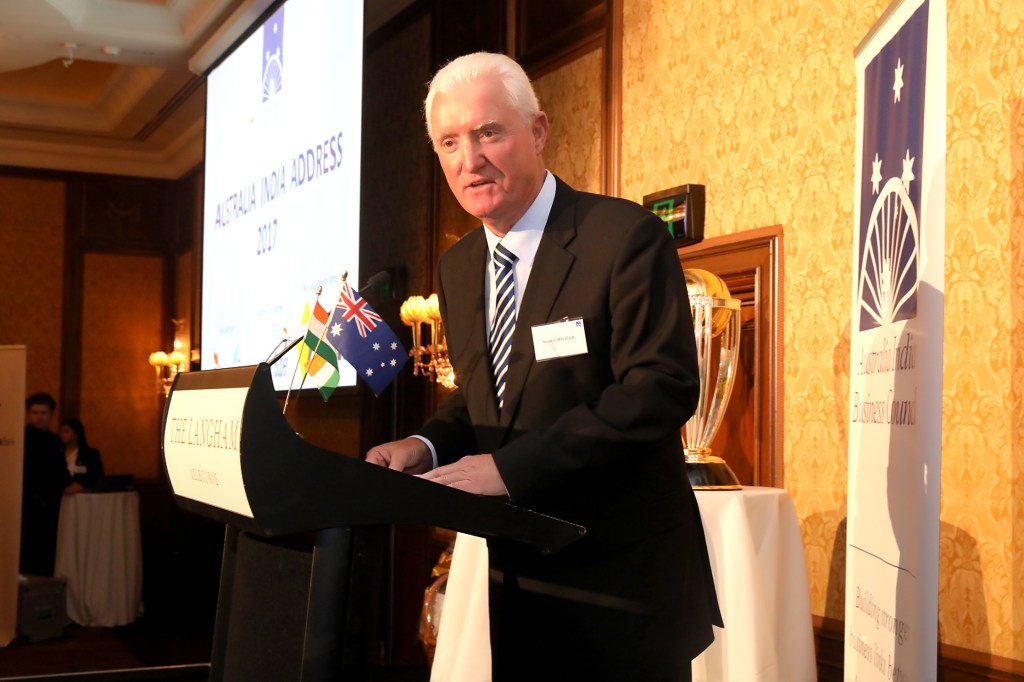
Stephen Manallack speaking at the Australia India Address
The Vidhi Centre for Legal Policy (‘Vidhi’) is an independent think-tank doing legal research to make better laws and improve governance for the public good – and right now it is the Indian Government’s “go to” advisor on policy areas, research, drafting and other legal matters.
Vidhi is a combination of great brains but the one to watch is Arghya Sengupta, Founder and Research Director at Vidhi, Rhodes Scholar who spent time at Oxford and prior to founding Vidhi, he was at Oxford as a Lecturer in Administrative Law at Pembroke College.
His special areas include regulation of the digital economy – the hot topic of the day.
Vidhi is a strongly independent think tank.
But, just to give you some idea of their amazing achievements and output – Vidhi has produced 2 books, 87 blogs, 8 briefing books, 43 conferences, 1 film, gained 32 international partnerships, 30 journal articles, 411 Op-Ed pieces and 112 reports.
Vidhi has assisted the government in 29 draft statutes and in 35 rules and regulations drafts.
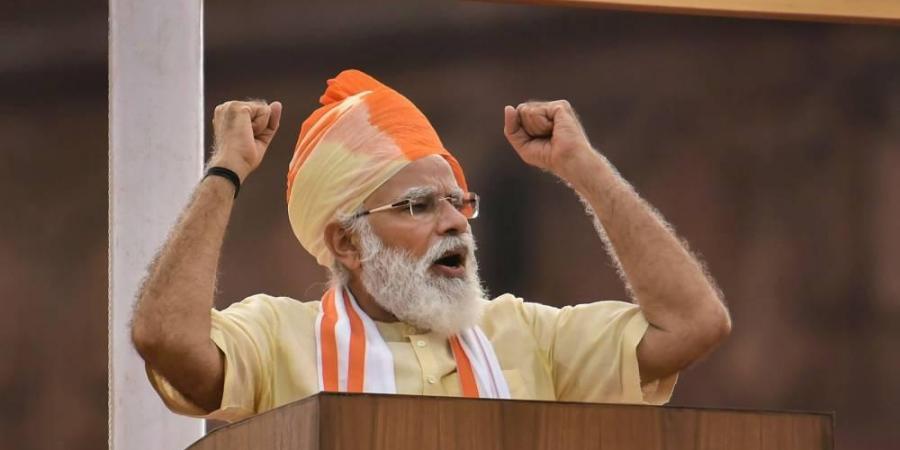
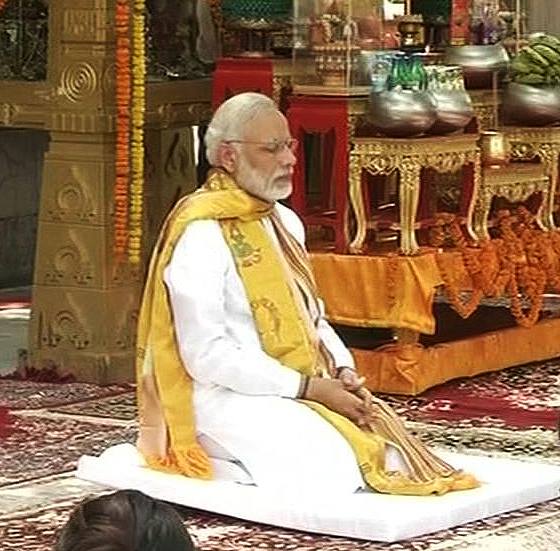
Pictured above is Indian Prime Minister Narendra Modi
I am often asked about India’s democracy – most people know of India as “the world’s biggest democracy” but few know the structure of it. Here is a short summary:
Indian government
The Republic of India is a federal democracy comprising 28 states and nine union territories. The Head of State is the President and the Head of Government is the Prime Minister – currently PM Narendra Modi.
Indian Parliament
The Indian Parliament is bicameral, comprising the 545-member Lok Sabha (‘people’s’ or lower house) and the 245-member Rajya Sabha (‘states’ or upper house). Lok Sabha members are elected by universal adult suffrage every five years (except for two appointed Anglo-Indian members) using the ‘first past the post’ voting system. The Rajya Sabha is not subject to dissolution; one third of its members retire every second year. One third of Rajya Sabha members are elected every two years by the legislative assemblies of the Indian states.
BJP is the current Government
The 2019 Indian national election for the Lok Sabha saw the Bharatiya Janata Party (BJP) win a second consecutive term with 303 out of 543 seats.
The relationship between India should flourish in strategic and defence areas plus trade and investment.
Both Australia and India are significant powers in the Indian Ocean region.
India, the world’s largest democracy, is a major power.
The trade relationship
India was Australia’s eighth-largest trading partner and fifth-largest export market in 2018-19, driven by coal and international education. Two-way goods and services trade with India was $30.3 billion in 2018-19, and the level of two-way investment was $30.7 billion in 2018.
Strategic relations much closer now
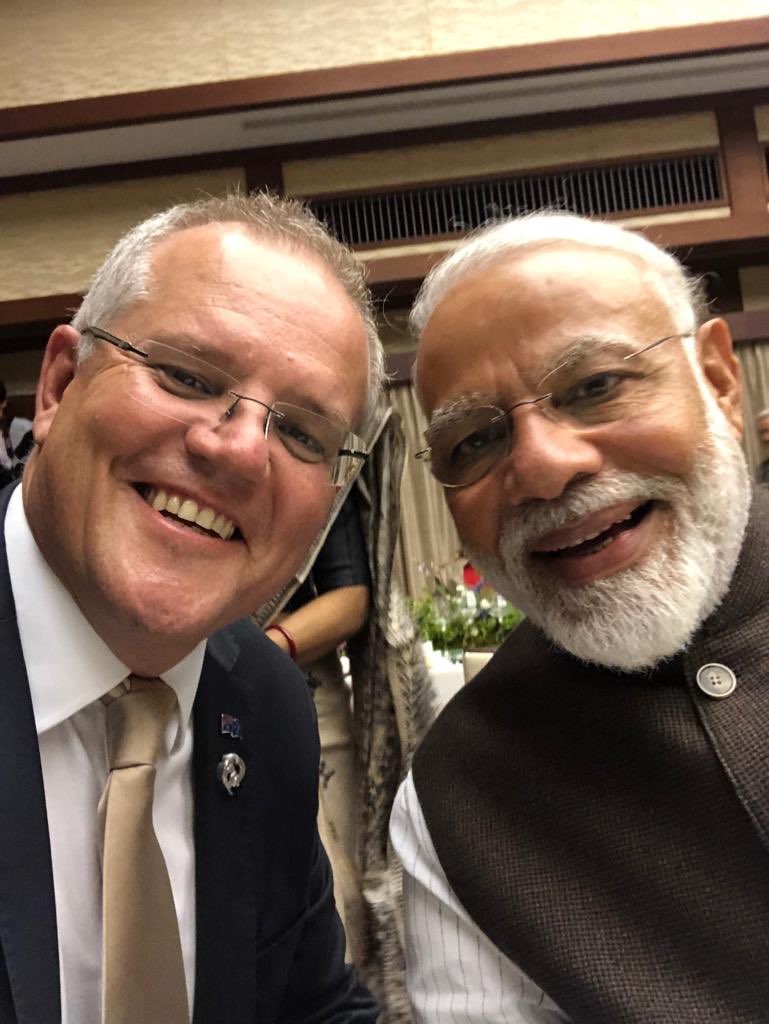
Australian Prime Minister Scott Morrison has worked hard on the India relationship and his personal connection with Indian PM Narendra Modi.
On 4 June 2020, Prime Minister Scott Morrison and Prime Minister of India, Narendra Modi, participated in the Australia-India Leaders’ Virtual Summit. At this meeting, the two Prime Ministers elevated the bilateral Strategic Partnership concluded in 2009 to a Comprehensive Strategic Partnership (CSP).
The CSP is based on mutual understanding, trust, common interests and the shared values of democracy and rule of law. Through the CSP, both countries have committed to work together across a range of areas.
The CSP also marks a step forward in the two countries’ ambitious agenda to expand our trade and economic relationship, as outlined in the India Economic Strategy (IES), which was released in July 2018 and endorsed by the Australian Government in November 2018.
India’s growing economy and young population need Australian goods and services
Over the next 20 years, a growing India will need many of Australia’s goods and services, including agriculture, education and skills training, and healthcare. There will of course be growth across most areas – but these are the standouts.
Since 2000, India’s GDP has grown seven-fold to reach USD3 trillion. India’s economy is forecast to become the third largest by 2030 (currently seventh) in market exchange rate terms. India already has the third largest economy in PPP terms and is set to maintain this ranking. The two-way stock of investment was valued at AUD30.7 billion in 2018. In 2018, Australia’s investment in India was valued at AUD15.6 billion and India’s investment in Australia was valued at AUD15.1 billion. India was Australia’s 18th largest investment destination.
The Aussie “India Economic Strategy”
Australia’s economic engagement with India is underpinned by the India Economic Strategy (IES), which was commissioned by the Australian Government in 2017 and led by Mr Peter Varghese, former Secretary of the Department of Foreign Affairs and Trade (2012-2016) and High Commissioner to India (2009-2012). This document is the guide for future growth.
Education is huge but facing challenges
Education is Australia’s largest service export to India, valued at AUD5.5 billion and accounting for around 85 per cent of the total. Indian students in Australia number almost 110, 000 (year to date September 2019), which marks a 33 per cent increase over the previous year. These students made 132,079 enrolments in Australia, comprising 15 per cent of international enrolments. As an education export market, India is second only to China, with exports valued at AUD12.1 billion in 2018-19 and 246,454 enrolments in Australia. Adapting to post-Covid19 education market changes will be a challenge for Australian universities.
Austrade is showing and creating the way
The Australia-India Business Exchange (AIB-X) is a new, Austrade-led, Australia-India business marketing platform that will build on the success of Australian Business Week in India, last held in 2017. This multi-month campaign included a coordinated program of activities and events. Minister Birmingham led a business mission to India in late February as part of AIB-X, with sectoral events and workshops to be held in five cities.
This will provide an opportunity to deepen trade and investment ties, focusing on small and medium across the IES’ priority sectors. Further information can be found on the Austrade website.
Plus Austrade has set up The Australian Store at Amazon India – primed to take off over the next few years.
People-to-people links
Australia and India are building strong and lasting ties through our people-to-people links.
The Indian diaspora (comprising both Australians of Indian origin and Indians resident in Australia) is now Australia’s fastest growing large diaspora. According to the most recent (2016) Census, the number of people born in India amounts to 592,000, representing 2.4 per cent of the Australian population, or 1 in 50 people. Around 700,000 people claim Indian ancestry.
India remains Australia’s largest source of skilled migrants and the second largest source of international students. Hinduism is our fastest growing religion and Punjabi is our fastest growing language.
The Australia India Council
The Australia-India Council is also advancing Australia’s foreign and trade policy interests with India. Each year it provides grants for programs linking the two countries. I was fortunate to support the Genesis Horticulture Services research mission to India in November – part funded by AIC.
(Thanks to DFAT for lots of the above information)
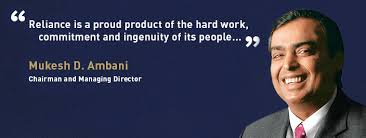
Billionaire Mukesh Ambani’s oil-to-telecom conglomerate Reliance Industries has been ranked second biggest brand after Apple on the FutureBrand Index 2020.
“This year’s highest entrant at number two, Reliance Industries excels on every attribute,” FutureBrand said, releasing its 2020 Index.
“One of the most profitable companies in India, Reliance is, very well respected and is seen as behaving ethically as well as being associated with growth, innovative products and great customer service. People have a strong emotional connection with the organisation,” it added.
FutureBrand, a global brand transformation company, said part of Reliance’s success could be attributed to Mukesh Ambani’s recasting of the firm as a one-stop-shop for Indians.
“The chairman built on the existing petrochemicals business, transforming it into a digital behemoth designed to meet every customer need. Today, this company is engaged in several sectors including energy, petrochemicals, textiles, natural resources, retail, and telecommunications. Now that Google and Facebook are taking equity stakes in the firm, we may see Reliance jostling for the top spot in the next Index,” it said.
Indian PM Modi’s emotion in Ayodhya, “British” rule and the power of the Mughals – how can we understand what is happening today?
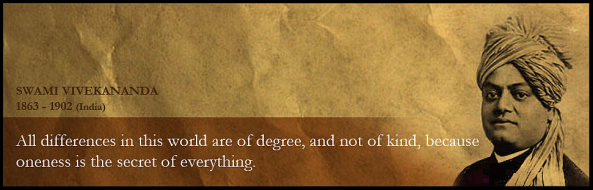
To understand modern India and even PM Modi, I feel we need to turn to Swami Vivekananda – who said:
We talk about the British conquering India and this defines today, but as William Dalrymple writes in The Anarchy, the seizing of power in India was done by a private company – probably the first outsourced act of violence in history.
That company was the East India Company and as Dalrymple writes: “The Company’s conquest of India almost certainly remains the supreme act of corporate violence in world history.” Worth reading that line again!
It is hard to know and even relate to how my Indian friends feel about the two major invasions of their country in recent centuries – first, the Mughal empire and then this East India Company.
Which brings me to Ayodhya.
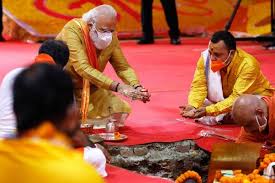
Indian Prime Minister Narendra Modi sprinkled sacred water and flowers into a small hole on Wednesday, part of a ritual marking the start of construction of a grand Hindu temple in the city of Ayodhya.
With emotion Modi said: “Today centuries of waiting are over.” For many of my Indian friends, this was a shared emotion.
Western media persists with the line that all this is “Hindu nationalism”. I am not so sure.
It will be up to Indians – and not to people like me or the media – to define what is happening under PM Modi and what the national motivation is. Most change is painful at first but in lifting people out of poverty and restoring confidence, he has brought great optimism to India.
Now India faces another struggle – Covid 19 – which makes arguments about history seem like something of an indulgence.
From our hearts to yours, we wish India success in this life and death battle against the virus.
With Covid19 we are seeing the vast and deep truth of that classic Indian saying Vasudhaiva Kutumbakam – meaning “the world is one family”.














 Into India