Four Indian startups become unicorns during Covid19

Great Indian story of succeeding in tough times – four Indian startups, Postman, Nykaa, Unacademy and Razorpay, have become unicorns amid covid-19.

In the venture capital world, a “unicorn” is a startup with a value of $1 billion.

The nation is on track to have 8 unicorns in 2020, almost the same number of additions as in 2019.

According to a study titled ‘Covid-19 and the Antifragility of the Indian Startup Ecosystem,’ India is on its way to having 100 unicorns by 2025.

The study was launched by TiE-Delhi, a global non-profit organisation supporting entrepreneurship in collaboration with Zinnov, a global management and strategy consulting company.

It revealed that total funding fell by 50% compared to pre-covid levels during the lockdown. As a result, around 40% of start-ups have been adversely affected and 15% have been forced to discontinue operations.

The third largest start-up ecosystem in the world was jolted by the multi-dimensional pandemic and the effect was extreme during the lockdown period from March to June 2020. However, the rate of recovery, both in demand and in investor sentiment, was faster than anticipated as the economy opened.

Why is India doing so well in tough times?

During Covid19 there has been a big move to digital consumption – so startups in education, healthcare and trade have boomed.  

India to be focus of Canada’s giant pension fund investments

 Canada’s massive pension fund plans to invest up to a third of its funds in emerging markets over the next five years and India is an important destination, according to a senior executive. 

The Canada Pension Plan Investment Board (CPPIB) manages about 434.4 billion Canadian dollars ($329.75 billion) as of June 30. A bulk of its investments are in North America — around 34% of total assets are allocated in the United States — followed by Asia. 

“We expect to invest up to one third of the Fund in emerging markets by 2025 and India is a key component of that,” Suyi Kim,  CPPIB’s Asia Pacific head, told CNBC by email.

“Our investments in India span different asset classes including infrastructure, real estate, public and private equities, funds and co-investments and credit,” Kim said, adding, “We see domestic consumption, technology and increasing demand for infrastructure to support the growth underpinning many of the themes and opportunities we look at in India.”

CEO Mark Machin recently told CNBC that the pension fund was reviewing its bond holdings in light of near zero interest rates. watch nowVIDEO02:50Near zero interest rates are challenging for Canada’s massive pension fund, CEO says

CPPIB has an office in India. Some of its investments thereinclude a stake in Kotak Mahindra Bank as well as $225 million to the India Resurgence Fund, which invests in distressed assets in the country. 

In December, CPPIB said it agreed to invest up to $600 million in India’s National Investment and Infrastructure Fund that included a $150 million commitment in NIIF’s Master Fund and co-investment rights of up to $450 million in future opportunities.  

Time for Australian superannuation funds to increase commitment to India?

Indian economic indicators positive for investors – Kotak

As India moves gradually from tough “lockdown” to enter an “unlock’ phase, economic and market indicators remain positive for investors – according to the latest Indian Markets report from Shibani Kurian, Head – Equity Research, Kotak Mahindra Asset Management Company Limited. Extracts from their report:

Key highlights

  1. High frequency economic indicators in India continued to show improving trends
  2. All eyes are now on the festive season starting from the end of October till the first half of November.
  3. Government sticks to its borrowing plan for dated securities in H2FY21; Bodes well for bond yields though some concerns on increase in supply still linger on; state finance remain vulnerable
  4. Monetary Policy Committee (MPC): New external member appointed; Rates likely to remain on hold in the upcoming policy meet on October 9, 2020
  5. GST collections: Trends improve in August; Trend is positive but partly due to a low base as well as collections pf payments due during May-July 2020
  6. Rainfall trends remain healthy; This bodes well for farm cash flows and rural demand; Food-grain production likely higher by 2.8% YoY

Indian markets witnessed a fair degree of volatility in the month of September 2020 on the back of global uncertainty heading into the US elections. The large cap Nifty Index fell 1.50% while the NSE midcap index fell 1.52% in September (both in USD terms).

Among the indicators we track, the e-way bill generation is now up to the Feb’20 peak run-rate levels, and up YoY for 7 weeks. Expressway-toll collections are now 3% above pre-COVID levels. Rail freight, unemployment data, electricity consumption and petrol consumption were some of the other indictors which showed improvement.

The key to the direction of the domestic equity markets would be the trajectory of demand post the festive season and the path towards economic growth normalization.

There are expectations around a possible announcement on the fiscal front along with market awaiting the outcome of the monetary policy meeting now scheduled on October 9.

Even as the high frequency activity indicators improved, some cities like Pune, Bengaluru and Mumbai saw a “second wave” of infections with a rise in daily new cases. However, while the new additions rose, the pace of recovery also improved resulting in the reduction in the addition to the active cases. The case fatality rate in India remains below the global averages thereby significantly reducing the probability of another nationwide lockdown.

Thanks to Shibani Kurian, Head – Equity Research, Kotak Mahindra Asset Management Company Limited, and Nikhil Iyer, EVP, Kotak Mahindra (UK) Ltd. – Singapore Branch

New global mining rush brings India and Australia together

When Australia and India signed a strategic partnership in June, we knew it was “about China” but we did not know was just how much it was about China.

Now we find that the strategic partnership allows for Australia to supply “rare earth” resources to India.

Why is this so strategically important?

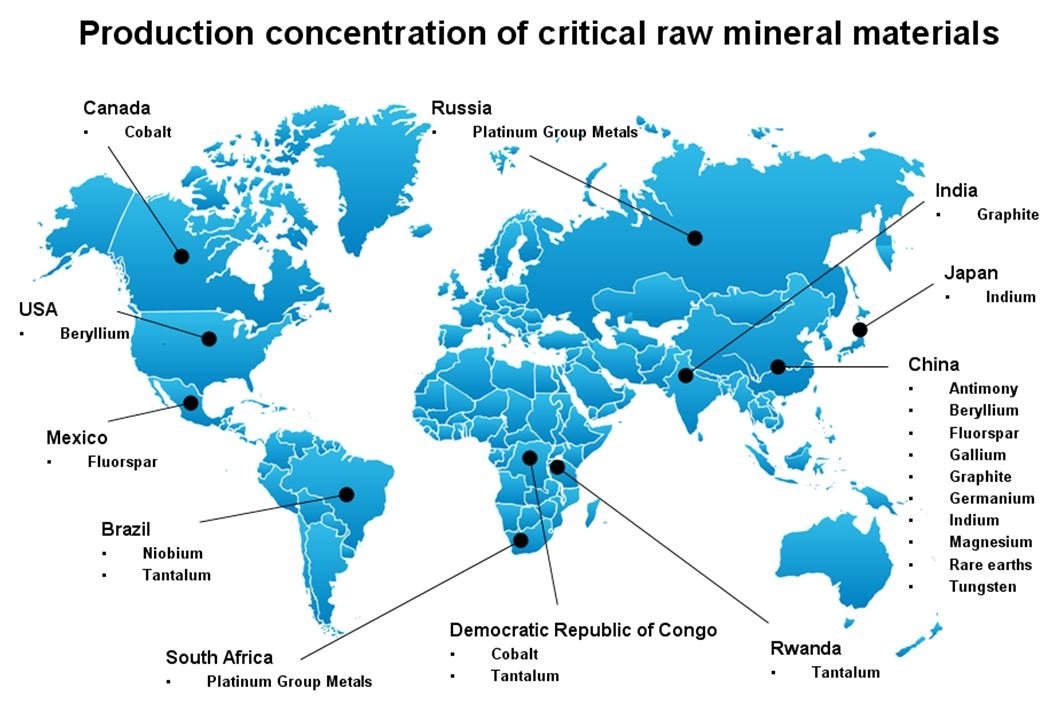
Your phone, camera or electric car are completely dependent on key “rare earth” minerals that are processed only in China.

Only a year or so ago, this dependence on China seemed to be OK. Now nations are not so sure, and the Japan, India and Australia collaboration on supply chains is just one of many responses.

Here is how vital these “rare earth” minerals are – there are 0.15 grams of palladium in an iPhone, 472 kilograms of combined rare earths in an F35 fighter jet and four tonnes in a Virginia-class submarine.

But the big one in this group is graphite – it is a key for the lithium-ion batteries in phones, laptops, military and medical equipment and electric cars.

China provides 70 per cent of the world’s exports of graphite and has declared it a “strategic material”.

Graphite illustrates the scale of the world’s dependence on China and you can see how global concerns have now become a mix of commerce and defence. Graphite is in demand because it is the most electrically conductive mineral known.

Australian Resources Minister Keith Pitt expressed the global concerns this way: “It does not matter if you are importing loaves of bread or anything else, if you only have one supply line, that is an increased risk.”

Graphite and other “rare earth” minerals are far from being loaves of bread, for they hold the key to making most of our digital economies and defences work. Australia has lots of graphite – there is one graphite reserve in South Australia of 200 million tonnes.

In addition to the deal with India, Australia has recently announced several deals in the US and there could be more to come.

No wonder the world is keeping an eye on Australia for “rare earth’ minerals, and no wonder India and Australia have firmed up their strategic partnership.

It is easy to see how Australia’s deals on “rare earth” minerals work in conjunction with strategic arrangements – therefore the deals are with the US, Japan, India and parts of Europe.

Everyone is now making a priority of having a diverse source of materials – not just China – and this whole new “minerals rush” is bringing India and Australia closer together.

Which 3 Indian states are the best for startup ecosystems?

The Results of the second edition of Ranking of States on Support to Start-up Ecosystems were released by Minister of Commerce & Industry and Railways Shri Piyush Goyal this week.

The “top 3” might surprise you?

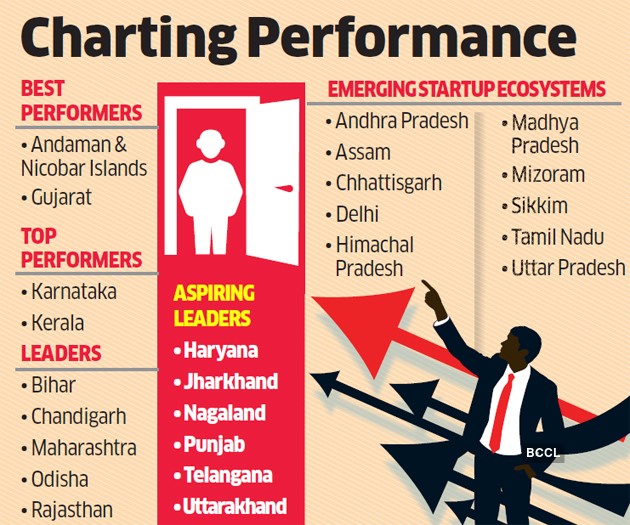
The States’ Start-up Ranking Framework 2019 has 7 broad reform areas, consisting of 30 action points ranging from Institutional Support, Easing Compliance, Relaxation in Public Procurement norms, Incubation support, Seed Funding Support, Venture Funding Support, and Awareness & Outreach.

The top 3 states – in order – Gujarat, Karnataka and Kerala.

India and Australia are perfectly placed to become closer allies in the post-Covid19 world

The relationship between India should flourish in strategic and defence areas plus trade and investment.

Both Australia and India are significant powers in the Indian Ocean region.

India, the world’s largest democracy, is a major power.

The trade relationship

India was Australia’s eighth-largest trading partner and fifth-largest export market in 2018-19, driven by coal and international education. Two-way goods and services trade with India was $30.3 billion in 2018-19, and the level of two-way investment was $30.7 billion in 2018.

Strategic relations much closer now

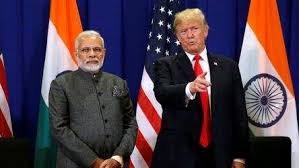
Australian Prime Minister Scott Morrison has worked hard on the India relationship and his personal connection with Indian PM Narendra Modi.

On 4 June 2020, Prime Minister Scott Morrison and Prime Minister of India, Narendra Modi, participated in the Australia-India Leaders’ Virtual Summit. At this meeting, the two Prime Ministers elevated the bilateral Strategic Partnership concluded in 2009 to a Comprehensive Strategic Partnership (CSP).

The CSP is based on mutual understanding, trust, common interests and the shared values of democracy and rule of law. Through the CSP, both countries have committed to work together across a range of areas.

The CSP also marks a step forward in the two countries’ ambitious agenda to expand our trade and economic relationship, as outlined in the India Economic Strategy (IES), which was released in July 2018 and endorsed by the Australian Government in November 2018.

India’s growing economy and young population need Australian goods and services

Over the next 20 years, a growing India will need many of Australia’s goods and services, including agriculture, education and skills training, and healthcare. There will of course be growth across most areas – but these are the standouts.

Since 2000, India’s GDP has grown seven-fold to reach USD3 trillion. India’s economy is forecast to become the third largest by 2030 (currently seventh) in market exchange rate terms. India already has the third largest economy in PPP terms and is set to maintain this ranking. The two-way stock of investment was valued at AUD30.7 billion in 2018. In 2018, Australia’s investment in India was valued at AUD15.6 billion and India’s investment in Australia was valued at AUD15.1 billion. India was Australia’s 18th largest investment destination.

The Aussie “India Economic Strategy”

Australia’s economic engagement with India is underpinned by the India Economic Strategy (IES), which was commissioned by the Australian Government in 2017 and led by Mr Peter Varghese, former Secretary of the Department of Foreign Affairs and Trade (2012-2016) and High Commissioner to India (2009-2012). This document is the guide for future growth.

Education is huge but facing challenges

Education is Australia’s largest service export to India, valued at AUD5.5 billion and accounting for around 85 per cent of the total. Indian students in Australia number almost 110, 000 (year to date September 2019), which marks a 33 per cent increase over the previous year. These students made 132,079 enrolments in Australia, comprising 15 per cent of international enrolments. As an education export market, India is second only to China, with exports valued at AUD12.1 billion in 2018-19 and 246,454 enrolments in Australia. Adapting to post-Covid19 education market changes will be a challenge for Australian universities.

Austrade is showing and creating the way

The Australia-India Business Exchange (AIB-X) is a new, Austrade-led, Australia-India business marketing platform that will build on the success of Australian Business Week in India, last held in 2017. This multi-month campaign included a coordinated program of activities and events. Minister Birmingham led a business mission to India in late February as part of AIB-X, with sectoral events and workshops to be held in five cities.

This will provide an opportunity to deepen trade and investment ties, focusing on small and medium across the IES’ priority sectors. Further information can be found on the Austrade website.

Plus Austrade has set up The Australian Store at Amazon India – primed to take off over the next few years.

amazon2

People-to-people links

Australia and India are building strong and lasting ties through our people-to-people links.

The Indian diaspora (comprising both Australians of Indian origin and Indians resident in Australia) is now Australia’s fastest growing large diaspora. According to the most recent (2016) Census, the number of people born in India amounts to 592,000, representing 2.4 per cent of the Australian population, or 1 in 50 people. Around 700,000 people claim Indian ancestry.

India remains Australia’s largest source of skilled migrants and the second largest source of international students. Hinduism is our fastest growing religion and Punjabi is our fastest growing language.

The Australia India Council

The Australia-India Council is also advancing Australia’s foreign and trade policy interests with India. Each year it provides grants for programs linking the two countries. I was fortunate to support the Genesis Horticulture Services research mission to India in November – part funded by AIC.

(Thanks to DFAT for lots of the above information)

world3


India’s Reliance second to Apple in “FutureBrand Index”

Who said India could not produce strong brands?

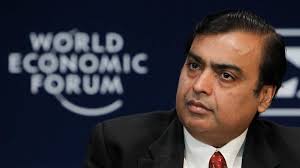
Billionaire Mukesh Ambani’s oil-to-telecom conglomerate Reliance Industries has been ranked second biggest brand after Apple on the FutureBrand Index 2020.

“This year’s highest entrant at number two, Reliance Industries excels on every attribute,” FutureBrand said, releasing its 2020 Index.

ril

“One of the most profitable companies in India, Reliance is, very well respected and is seen as behaving ethically as well as being associated with growth, innovative products and great customer service. People have a strong emotional connection with the organisation,” it added.

FutureBrand, a global brand transformation company, said part of Reliance’s success could be attributed to Mukesh Ambani’s recasting of the firm as a one-stop-shop for Indians.

“The chairman built on the existing petrochemicals business, transforming it into a digital behemoth designed to meet every customer need. Today, this company is engaged in several sectors including energy, petrochemicals, textiles, natural resources, retail, and telecommunications. Now that Google and Facebook are taking equity stakes in the firm, we may see Reliance jostling for the top spot in the next Index,” it said.

India attracting investment during the pandemic and USA is the largest trading partner for a second year

Since March, India has received over $20 billion of new investment from Western companies despite the pandemic.

Thanks to John Bell, Client Relations, Amritt, Inc, Malibu California for this information.

Here are  four examples of significant improvement in bilateral trade between the two countries (India and USA) during the pandemic:

Dozens of large and small organizations depend on Amritt as their trusted advisor to succeed in India, whether selling, sourcing or leveraging talent.

You can Email John Bell at johnb@amritt.com


Start your India journey with Chennai – and start your India outsourcing with Sundaram

Tamil Nadu has the second-largest economy in India and by area is the fourth largest state of India. The capital is Chennai and over 60% of the state is urbanised.

Chennai is one of my personal favourites – doing business there is good and there is plenty of tourism and activity to keep life interesting.

sundaram-financejpg

One of the leading firms is the Sundaram Finance group, led by Managing Director TT Srinivasaraghavan. The firm has a code of ethics and behaviour which it calls “The Sundaram Way” – an inspiring document worth looking up.

Within the Sundaram group is an outsourcing and business consulting arm, Sundaram Business Services (SBS).

SBS is strong in Australia and provides services to many leading brands, including a major superannuation outsourcing practice.

SBS is led here by Harish Rao who pioneered Australia’s superannuation outsourcing to India (pictured below, Harish Rao has won several awards in Australia).

IMG_0212

As a southern India state, it is highly courteous, very friendly, conservative in approach to business and a good starting place to find a trusted business partner.

Tamil Nadu has a diversified manufacturing sector and features among the leaders in several industries like automobiles and auto components, engineering, pharmaceuticals, garments, textile products, leather products, chemicals, plastics, etc.

chennai4

It has a well-developed infrastructure with an excellent road and rail network, three major ports, 15 minor ports, and seven airports across the state providing excellent connectivity.

As of February 2020, the state had 54 formally approved Special Economic Zone (SEZs), 50 notified SEZs and four with in- principle approval SEZs and has total 40 exporting SEZs.

For most of you, Chennai and the state of Tamil Nadu make a good starting point on your India journey.

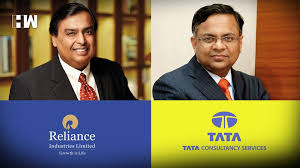
Two Indian business giants are innovating during Covid19.

Expansion often means exploring the unexplored.

Two of India’s largest companies have done it.

Reliance Industries Ltd on Wednesday said it’s going to expand its food-and-grocery play in JioMart to include fashion, consumer electronics, and smartphones by this festive season. Tata Consulting Services (TCS) on July 8 launched Quartz smart solution to offer cryptocurrency trading.

jiomart

JioMart’s plan to revolutionise the e-grocery space involves the Kirana stores, the oldest form of local mum and dad retail in India.

JioMart has been bringing small stores online, thereby putting kirana store owners at the centre of its plans. What’s in it for Reliance? The Kirana stores become last point of delivery in the logistics trail, plus, by digitising a local store you open a minefield of hyperlocal information. With a larger size of kirana-store customers, B2B e-commerce platforms get a robust database of actual sales instead of estimates. This data can be sold to brand manufacturers. It’s one of the biggest revenue streams for any company taking kirana stores online. RIL is one smart business!

tcs

TCS is looking to get an early-mover advantage with Quartz, having a big impact in the global enterprise blockchain-solutions market. Its new product, Quartz, aims to make swift inroads into cryptocurrency trading in countries such as Switzerland and Singapore where it’s legal. TCS is eyeing high-net-worth investors, private banking, and wealth-management segments. However, Quartz may not find takers in India in the absence of regulatory clarity.