UK and India pragmatic negotiators achieve a trade and investment deal

INTO INDIA has been advocating for Australia to do what deals can be done with India, and “park” a Free Trade Agreement for later on.

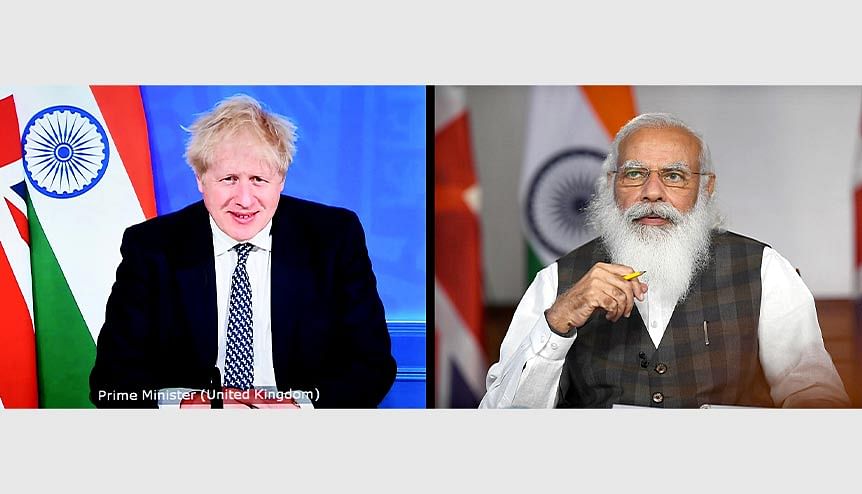
The UK-India Virtual Summit has done just that.

Their newly created Enhanced Trade Partnership (bureaucratic speak for “these are the things we can agree on now) will create immediate opportunities for British businesses in India across industries including food and drink, life sciences and the service sector.

Non-tariff barriers on fruit and medical devices will be lowered, allowing British businesses to export more of their products to India and boosting UK growth and jobs. It also commits both sides to addressing immediate market access barriers as well as continuing to seek further opportunities on the road to an FTA. That is, “parking” the FTA for later on – it is just too hard to achieve.

Prime ministers Narendra Modi and Boris Johnson held their Virtual Summit this week and agreed on a “Comprehensive Strategic Partnership” – the first European country to gain this status.

Australian PM Morrison achieved a CSP with India in 2020 and set out collaboration across science and technology, maritime issues, defence and more.

CSP deals are a sign that India is become more outward looking and – like everyone else – concerned about the behaviour of China.

The trade and investment package unveiled by the British government contains over £533 million of new Indian investment into the UK, covering areas such as healthcare and technology.

British businesses have also secured new export deals with India worth more than £446 million, which is expected to create more than 400 British jobs.

I hope our Australian trade officials are going through all the detail to see if any deals Australia has with India can now be updated on a deal-by-deal basis.

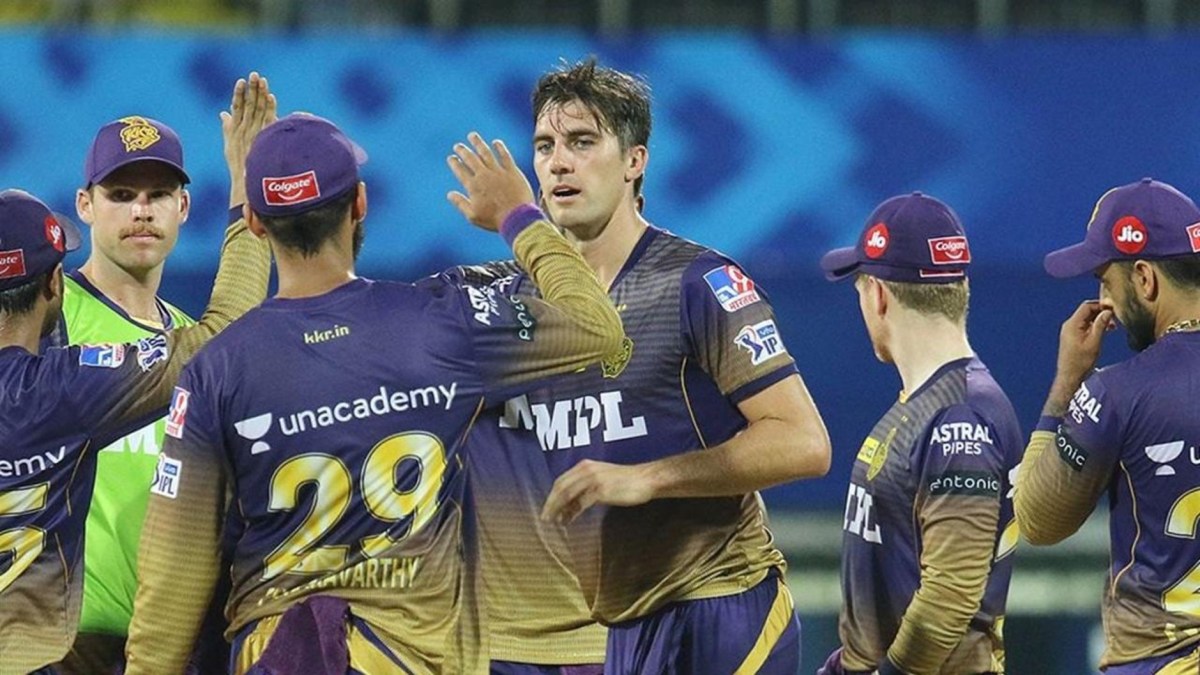
Pat Cummins role model for how all of us can help India

Many of us in business relations with India are wondering what is the right thing to do in the midst of India suffering so much from the pandemic.

Pat Cummins has showed us what to do.

He is staying because IPL creates some joy for lockdown people – and he has made a big donation.

For business and trade the message is striking – keep in touch, build business relations and where you can, donate to support India.

Cummins has starred for the Kolkata Knight Riders so far this season.

The Australian superstar wrote on Twitter on Monday night to announce a donation in the fight against the virus, and to urge fellow cricketers to donate.

I am reproducing his entire Tweet because it is moving and inspirational:

“India is a country I’ve come to love dearly over the years and the people here are some of the warmest and kindest I’ve ever met.

“To know so many are suffering so much at this time saddens me greatly.

“There has been quite a bit of discussion over here as to whether it is appropriate for the IPL to continue while Covid-19 infection rates remain high. I’m advised that the Indian government is of the view that playing the IPL while the population is in lockdown provides a few hours of joy and respite each day at an otherwise difficult time for the country.

“As players, we are privileged to have a platform that allows us to reach millions of people that we can use for good. With that in mind, I have made a contribution to the “PM Cares Fund”, specifically to purchase oxygen supplies for India’s hospitals.

“I encourage my fellow IPL players – and anyone around else the world who has been touched by India’s passion and generosity – to contribute. I will kick it off with $50,000.

“At times like this it is easy to feel helpless. I’ve certainly felt that of late. But I hope by making this public appeal we can all channel our emotions into action that will bring light into people’s lives.

“I know my donation isn’t much in the grand scheme of things, but I hope it will make a difference to someone.”

Come on India and Australia – time for an FTA to be number 1 priority

It is high time the close friendship between the PM’s Modi and Morrison led to an FTA.

It is great to see so much friendship and collaboration between India and Australia – but it is time to go to another level and have a serious shot at getting a free-trade agreement between the two countries.

Here’s 3 reasons why an FTA is now urgent:

India wants greater access to Australia’s resources.

Australia wants alternatives to China for resources and wine.

India wants investment and Australia has huge funds under management.

Patience around the FTA has been a good approach but now we have to step up the pace and get on with it.

We need some form of harvest agreements to take the heat out of agriculture – which is always a super-hot political topic in India.

Also, India seriously wants investment flows and Australia has not been forthcoming. Time for the Australian Government to lead our huge investment funds into India.

The reality is – close relations in trade mostly follow investment, and Australia has not invested heavily in India.

Wine barriers to India are huge – there is a 150% tariff – and yet wines like Orlando Jacob’s Creek have done well there.

One problem for India is they are encouraging their own wine industry, typically at the low end of the market. Perhaps they can free up tariffs on high end wine imports?

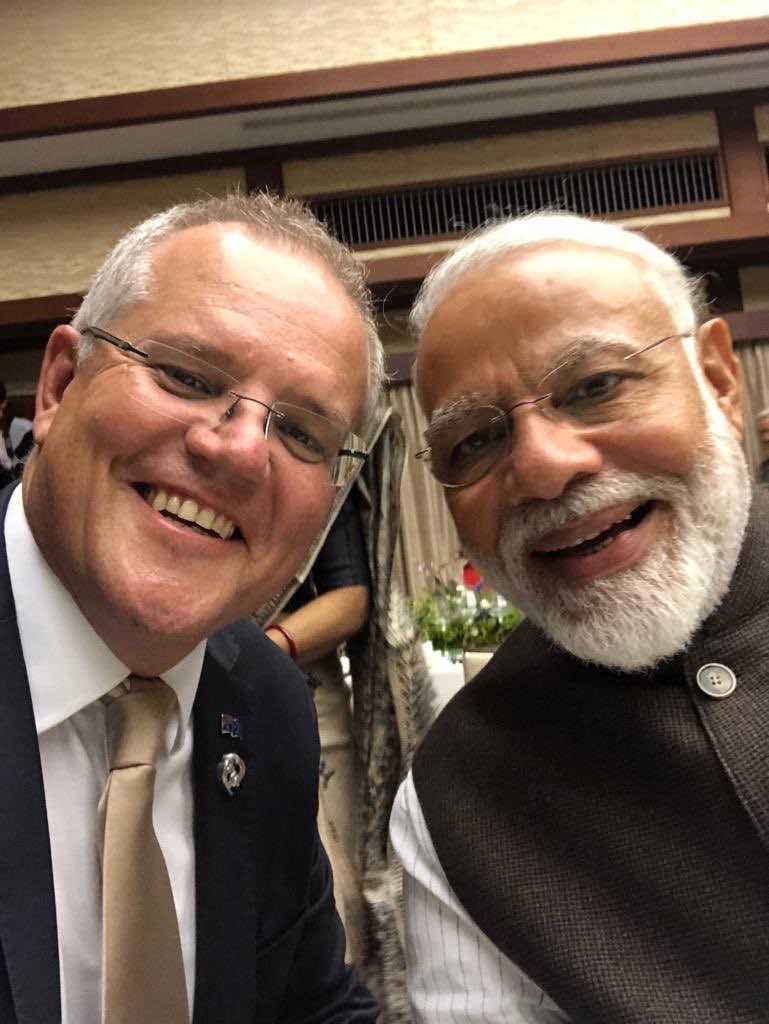
The relationship between Prime Ministers Modi and Morrison is close and could be a building block for an FTA.

Let’s put it top of the agenda!

IMF Projects India’s Growth Rate to Jump to Impressive 12.5 Per Cent in 2021

My good friend Mugunthan Siva is the CEO of India Avenue Investment Management – an India and Australia investment company – and he has advised me of great news for the Indian economy and investors.

The International Monetary Fund is now forecasting India to grow GDP at 12.5% in 2021 – the only double digit forecast amongst developed and emerging economies.

Expected global growth of 6% will also play a role in India’s growth given its incrementally increasing role in supply chains, the rise again of the IT outsourcing industry and its strength in pharmaceutical manufacture and export.

In 2022 the IMF forecasts a further 6.9% GDP growth for India – once again the leader of the pack. If India continues to grow like this the US$5tn goal of the Modi’s Government appears within reach in the next 4-5 years.

According to Mugunthan, India’s equity market is evolving nicely given the pivot post COVID. Market breadth has normalised and active managers are dominating the landscape again, as they should in an inefficient equity market like India’s. The next 3 years should see a strong recovery in corporate profit.

India to become the 3rd largest economy and “sweet spot” for investors over next decade

Indranil Sen Gupta, BofA Securities

Indranil Sen Gupta, BofA Securities, recently expressed the view that India is likely to become the 3rd largest economy over this decade. This will be driven by:
– sweetspot for the demographic dividend
– significant FX reserves to protect the economy
– 9-10% nominal GDP growth over the decade
– Low interest rates will lead to the next capex cycle, earnings growth

He said: “We see the economy growing at 9% nominal, that is 6% growth, 5% inflation, and 2% depreciation for the next two years. There are three drivers. The demographic dividend which we have all been talking about for the last 15 to 20 years is actually going to kick in from 2020 and help savings and investments. Secondly, there is financial deepening. Compare it to GDP ratio, which is around 40 to 50 per cent of GDP, should jump almost 100%. And thirdly, there is the emergence of mass markets, which the US probably saw 100 years ago. For example, the price of an entry level car today is 2.5x down from 14x 20 years ago. We think that is close to 1x on export basis.”

Read more at:
https://economictimes.indiatimes.com/news/economy/indicators/india-to-be-the-third-largest-economy-in-10-years-bofa-securities/articleshow/81685020.cms?utm_source=contentofinterest&utm_medium=text&utm_campaign=cppst

USA coming to terms with India’s “longstanding relationship with Russia”

India’s decision to purchase S-400 missile systems from Russia sparked debate in the USA

INTO INDIA has often reminded readers that India has a close and long relationship with Russia – and is capable of being friends with both sides of international disputes.

Now they’re talking about this in the US.

Here’s what Admiral John Aquilino said during his confirmation hearing on Tuesday to be the next commander of the US Indo-Pacific Command or INDOPACOM: “The United States needs to understand that India has had a longstanding relationship with the Russians for security cooperation and military equipment.”

“India is really a terrific partner and as we’ve seen from the recent Quad discussions, I think the importance of India and the rest of the nations in the Quad will increase. We’re at a balance. However, India has had a longstanding relationship with the Russians for security cooperation and for military equipment,” he said.

Let’s hope the USA can also move away from the “goodies and baddies” approach to international affairs and see that it is possible to sustain healthy connections with apparently competing countries and ideologies.

Global “Indo-Pacific” strategies appear to target China

HMS Queen Elizabeth

Global “Indo-Pacific” strategies appear to target China

Here is a selected list of recent initiatives that might be designed to contain China:

  • The British Government is about to announce a foreign and defence policy review with the “new big idea” of a focus on the Indo-Pacific
  • The new UK aircraft carrier HMS Queen Elizabeth and accompanying fleet will deploy in May on a maiden voyage to the Indian Ocean coordinated with the US
  • On the flight deck will be a squadron of F35 jets from the US Marine Corps, showing UK and US cooperation
  • The UK mission looks very much like a strike force, including two Type 45 destroyers, an Astute Submarine and two Type 43s
  • At the same time the recent QUAD (Japan, India, Australia, USA) meeting was the first attended by all four leaders and was strong on a free and open Indo-Pacific
  • India, Australia and Japan have an active working party examining supply chain security (code for not buying everything from China)
  • Many foreign ministries from France to Germany have recently produced Indo-Pacific strategies
  • Former Australian Foreign Minister Alexander Downer recently said “The single most geopolitical issue in the world today is the rise of China”
  • Downer went much further in his comments: “This is an issue of war and peace.”
  • Meanwhile Australia is in the 10th month of a trade war with Beijing
  • France and Germany are also deploying large warships to the region this year
  • The UK also wants to turn the G7 into an alliance of 10 democracies by inviting South Korea, India and Australia – yet another concern for China

The Indo-Pacific packs some punch – it now accounts for close to half of global economic output and more than half the world’s population: it contains the world’s two most populous nations, China and India; the world’s second and third largest economies, China and Japan; the world’s largest democracy, India.

Add these up – and draw your own conclusions. What do you think?

Is the QUAD becoming more like NATO?

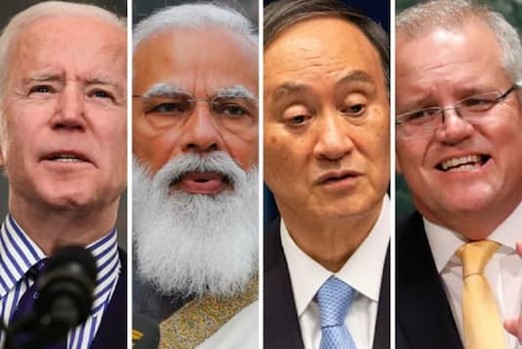
The QUAD meeting in March was the first where all four national leaders attended – signalling a new higher level for the group which is India, Australia, Japan and the USA.

China will see this meeting as “containing China”, an attitude likely to harden stances between China and the countries of the region. Although it is far from being another NATO, there is no doubt this meeting moved the QUAD in that direction.

Since its creation in 2004, the Quadrilateral Security Dialogue has striven to be a loose cooperation and has tried not to become an overtly security group along the lines of NATO. It is a fine line to tread, as the increasing focus of the QUAD has been China.

Although the word “China” does not appear in the recent statement, all the language points to it – promote free, open rules based order, international law, counter threats, freedom of navigation and overflight, democratic values and meet challenges to the rules based maritime order in the East and South China Sea.

The US did not hold back in its language – US National Security Adviser Jake Sullivan, who sat in on the summit, declared “these four leaders made a massive joint commitment today”.

“We have taken the Quad to a new level,” Mr Sullivan said from the White House.

Yet the QUAD partners have diverse perspectives and perhaps very different reasons for coming together. Certainly, Chinese belligerence has been a big motivation.

Australia has been bruised and somewhat taken by surprise by the recent Chinese trade war which has seen massive decline in Australian products in China – at the same time as Covid has hit the high paying international education market from China. When Prime Minister Morrison went public and alone in calling for an inquiry into the Chinese origins of Covid19, the diplomatic lines of the two countries went blank and the trade war “punishment” from China rolled out – the two countries have not been speaking for some time.

India on the other hand has close commercial and personal (leaders) ties with Japan, plus it has experienced border clashes with China in the Himalayan region.

For India and Australia, the meeting adds to their increasing close relationship with Japan, boosted by recently creating a three-country working group to improve supply chain collaboration. Further bad news for China.

In another step up, the Foreign Ministers will meet at least once a year.

It’s all about – in the QUAD’s own words – “leveraging our partnership to help the world’s most dynamic region respond to historic crisis, so that it may be the free, open, accessible, diverse, and thriving Indo-Pacific we all seek.”

China will not like what it has seen from this meeting.

China’s “close the doors” diplomacy (as seen with India and Australia) and punitive actions have certainly added urgency to the QUAD dialogue and might in the end be regretted in Beijing. But of course, how would we know? When the doors are closed, there is no diplomacy or discussion with China.

You’ve gotta love Jacob’s Creek wines – consumers in India are loving it!

Despite a tariff as high as 150% plus state taxes, Australia’s Jacob’s Creek is a standout leader in the imported wine market of India. This Aussie winemaker is owned by global giant Pernod Ricard.

Here are some stunning statistics – imported wine accounts for 40% of wines sales in India. 70% of that 40% is Jacob’s Creek. This means Jacob’s Creek accounts for over 20% of the wine market in India.

Another stat – every year 19 million Indians reach legal drinking age.

Wine is mainly an urban success story in India, with three cities dominating the consumption – Mumbai, Delhi and Bengaluru. Apparently women are driving demand for wine – while men stick to whiskey and beer, women have become major consumers of red wine.

Jacob’s Creek has succeeded despite stiff competition from local winemakers, including Sula and Fratelli.

In the context of exporters urgently seeking alternatives to China, Jacob’s Creek is a success story that should be studied by those seeking to succeed in India.

Now – about those tariffs. Australia needs a coordinated campaign to get some relief for wine. This campaign needs to encompass governments, industry and culture/education. My advice – don’t go head-on against the tariff. Subtle approaches are best. Work out what we can offer India and how some reduction in tariff therefore becomes mutually beneficial.

Wow – this is a scene from the South Australian vineyards of Jacob’s Creek

India’s “vaccine diplomacy” a template for the region

We have heard about soft power diplomacy and hard diplomacy, but India is showing another way through “vaccine diplomacy”. It could show Australia and other Indo-Pacific Region countries an alternative diplomacy template.

Right now, Australia is too often the first country to call others out, it is known for “hard talking diplomacy” (sometimes at great cost such as the recent trade dispute with China) and Australia is also known predominately as a close ally of the United States of America. These are not positions that find much favour in a rapidly changing region.

How has India created an alternative diplomacy?

First, India accepts global realities, such as the future dominance of China and the USA, so it tries to find the right niche or niches for itself. It has worked hard to develop and promote a reliable reputation in global pharmaceuticals, to the point it is more trusted in this area of production than Russia or China. The UN Secretary General Antonio Guterres has called India’s vaccine manufacturing capacity the “best asset in the world.”

Second, in a distinctively Indian way, India has built generosity into its diplomacy. India has already supplied more than five million vaccines to its neighbouring countries—Bangladesh, Sri Lanka, Nepal, Bhutan and Myanmar—as well as additional quantities to other emerging economies like Brazil. This Vaccine Maitri (Vaccine Friendship) will not be forgotten by the people of those countries.

To put this generosity in context, India is the worst affected by Covid19 in terms of numbers and needs to vaccinate 700 million people at home.

Third, Indian Prime Minister Narendra Modi is a strong advocate of business and of building transparency and trust across business activities. This, in part, has led to the development of a globally competitive pharmaceutical and biotech industry in India. The “vaccine diplomacy” is built on this foundation of strong private industry.

Part of the success of India’s pharmaceutical industry is an almost accidental outcome of long-term price controls in their domestic markets which forced the pharmaceutical sector into world markets, thereby becoming more competitive with higher quality.  

It is one thing to have a strong pharmaceutical sector – it is quite another creative step to use “vaccine diplomacy” as India seeks to define its niche in the modern world.

For countries that struggle with the subtleties required in diplomacy, India has created a template – accept the reality of global power, find your niche and use “out of the square” thinking such as generosity to reinforce that niche.