Can the India-USA relationship survive President Trump?

We have just had 25 years of India and the USA gradually getting closer together.

But claims from US commentators that the two countries have “shared values” and “shared interests” have shown that they miss the point about India.

In the last 25 years India has been engaging with “the world” and has seen the USA as just one among many – it is today, for example, much closer than ever to countries like China, Japan and Russia.

When India joined the “Quad” (USA, Japan, India and Australia) it was celebrated in the USA (and to some extent Australia) as if India had “changed sides”. It had done no such thing.

In fact, within one week of attending a recent Quad meeting, Indian PM Narendra Modi was also high profile at the Shanghai Cooperative Organisation – the world’s largest regional organisation in terms of geographic scope and population, covering approximately 24% of the world’s total area and 42% of the world population.

At heart, this misunderstanding arises from the dramatic differences in world view of the USA and India. The USA and many of its partners see you as being on their side or against them. India, by contrast, takes a more universal view and sees many polarities, many arrangements and alternatives.

In addition, India is not generally evangelical on “democracy” and certainly does not see its mission as imposing democracy on others. It tends to accept others as they are.

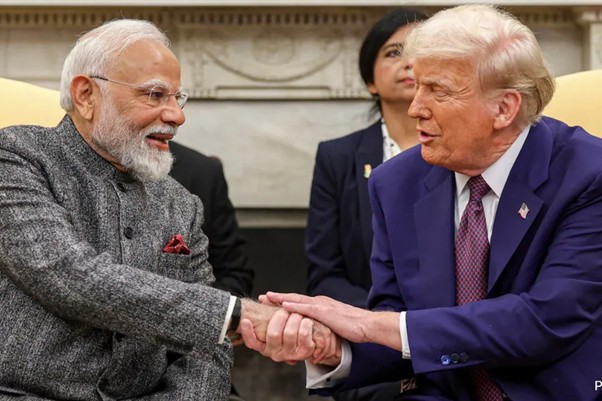
Today India faces a 50% tariff from the USA, imposed, it is said, because India continues to buy oil from Russia, which is at war with Ukraine.

On this and other issues with the USA, India takes a quiet non-confronting line – understanding that anger is unlikely to work where reason has failed.

India’s favored policy of “Mult alignment”—seeking friends everywhere while refusing to forge clear single country alliances – is aggravating and confusing to Washington but is an obvious outcome of the Indian world view.

INTO INDIA predicts that the Indian response to Trump’s tariffs and rough tactics will lead to India seeking more diverse trade relationships and to be even more active in building multi alignments.

It’s just a matter of how you see the world.

What do you think?

Indians shaping as the big thing in Aussie tourism

Indian tourists to Australia on the rise, spending more and trending to younger

Australia is now the second highest in India for awareness, consideration and active planning for touring Australia, just below Dubai and surrounds. The “big three” for Indians are Dubai, USA and Australia.

What is exciting about the Indian traveller market is that there is an attitudinal shift – from saving to spending.

Arrivals from India for the year 2023 were at 396,000; which were on par with 2019 levels.

Indian travellers are spending more – spending A$2.2 bn on their Australia trips (an increase of 20% when compared with 2019).

In addition to the shift to spending, there is a generational shift: Indians are travelling at a much younger age.

In my home state of Victoria and the city of Melbourne, India was Victoria’s second largest tourism market by value in 2019 and is the fastest growing international visitor market to return to Victoria following the reopening of Australia’s international borders.

Factors of greatest importance to Indian travellers are safety/ security, beautiful natural environments and value for money.

Seven in ten Indian travellers are aware of Australia as a holiday destination, with half considering travelling to Australia within the next four years and one in five who are actively planning their holiday.

Australia is strongly associated by Indians with world class beaches/ coastlines/ marine wildlife, having different and interesting wildlife, having a good range of accommodation, being family friendly and having good infrastructure.

That’s why our tourism organisations, Austrade and State Government trade offices are placing such focus on promoting Australian tourism.

It’s and exciting future for Australia.

Is India the new China?

The stunning economic rise of India is causing a re- think – in 2023, India’s GDP was US$14.54 trillion, the world’s fourth largest economy, behind the United States, China and the European Union.

But what is prompting a rethink by many countries is India’s annual GDP growth of 7.6% – now outstripping all those other countries. India could match China’s 2023 GDP of $34.64 trillion in 14 years. On top of the growth rate advantage, India’s population overtook China’s in 2023, and the “demographic dividend” is kicking in.

This growth comes with an interesting twist, no doubt occupying minds in Washington and Beijing.

India’s military expenditure is now third behind the US and China.

When it comes to regional security in the Indo-Pacific region, India now counts as a major player. In addition to defence spending, location of this large landmass (the world’s seventh largest) means India is pivotal to trade routes crossing the Indian Ocean, as well as being close to China, the preeminent trading nation at the heart of the Indo-Pacific region.

Someone who is well aware of the growing power of India is of course Prime Minister Narendra Modi, a strong leader who stands as an equal with Chinese President Xi Jinping and soon-to-be President of the USA, Donald Trump.

The big question for countries like Australia and New Zealand is where do we fit in with this new scenario, who is listening to us, what does emerging “multi-lateralism” (championed by India) mean for us and how can future trade be assured?

Our diplomats and trade people are well placed and respected in New Delhi – but as the position of India becomes stronger, the diplomatic skills of both Australia and New Zealand will be needed to define our place in what is a new order.

Thanks to Chris Ogden, Associate Professor in Global Studies, University of Auckland, Waipapa Taumata Rau, for some of the above data.

9 Rules for Thriving in India

Rules compiled from my personal experience – and with some reference to “Rules for Living” by the School of Life…

1. ACCEPTING IMPERFECTION

You will never be happy in India if you seek perfection. Hang on…maybe seeking perfection anywhere is a flawed idea. Is it possible we humans are inherently flawed and broken? Is perfection beyond us? Even the west with its “belief” in science has not stamped out stupidity and pain. Life will always include suffering – this is a big Indian idea. Accepting this makes everything so much better.

2. VULNERABILITY & COMPASSION MAKE LIFE SHINE

This follows from “Accepting Imperfection”. We are all in the same boat, and recognising that we all share weaknesses, fears and mistakes can make us feel generous towards others who are also imperfect – and feel compassion for ourselves.  I learnt in India that sharing your vulnerability, talking about it to people you have just met, can lead to amazing connections.

3. ALWAYS BE KIND

To be kind to others is a choice. Being kind is a form of respect in action. In India many people accept that what happen to us is mostly out of our control, so stop struggling and find a way to live. It also acknowledges that terrible things can happen anywhere, anytime to anyone – so we can be scared or even resentful, or we can just be kind instead. It feels good.

4. HAVE A GOOD LAUGH

I seem to smile and laugh more when in India. There is a kind of blanket acceptance that life is weird, and humans are pretty funny, so have a good laugh. Accepting all of this with good grace goes a long way to easing our frustrations at our own stupidity. Back home we often see acceptance as just doing nothing – but in India acceptance becomes the first step to boldly trying your best, knowing that any outcomes will not be perfect. Why would you expect a planet of 7.8 billion people just as foolish as you to run smoothly, why expect it to be better, why look for “it SHOULD be better”? Just have a chuckle.

5. WE ARE GOOD ENOUGH – AND NOT

I dropped my obsession with “perfection” on my first arrival in India. Sure, the luggage system looked a bit messy, but they never seemed to lose my luggage. I found that the alternative to perfection is not failure, This small thing (luggage) can lead to a greater idea – rough and flawed as we all are, we can make our peace with the idea that we are, each of us, ‘good enough’. We in the west are way too quick to call out “failure”, especially in ourselves. But being ordinary or not measuring up to someone’s standards is not failure – it is just how things are.

6. FINDING WHY ROMANTICISM IS A WASTE OF SPACE

I have learnt a lot from young Indians here in Melbourne and in India. In India there is much to learn about the gradual growth of friendship into love, as a more stable approach than “falling head over heels in love”. But even that is not perfect.  I learn that love grows out of friendship, and that compatibility grows out of love – while in the west we see it as a prerequisite for love. But I also learned that having said all of this, no one is ever wholly ‘right’ nor wholly wrong. We are just learners, or as Gandhi said, seekers.

7. ACCEPTANCE IS BETTER THAN CONSTANT STRUGGLE

When the great Indian philosopher Krishnamurti was on his death bed, he was asked how he maintained such a composted and happy mind. His reply was a teaching for me. He said: “I don’t mind what happens”. It made me realise that almost all of the time, with whatever is happening, my mind made up stories or created ideas – most of which were not helpful because they led to struggle or resistance to what was happening. Things might be bad, but we can still be cheerful. Don’t mind what happens.

8. CLEARLY SEE WHAT IS HAPPENING

Despite our seeming importance, we are not at the centre of the universe – probably not at the centre of anything. Seeing ourselves at the centre means we do not really see as it is, we see as we are. Back to the baggage at the first airport I visited in India – I did not see what was happening, I saw it as I was – impatient, not trusting, agitated and emotional. Putting myself at the centre, when I meet people, I meet them where I am at. With wisdom from India (“I am not the centre”) – I can meet people where they are at. It is a clearer vision.

9, YOU WILL FORGET ALL THIS

I can forget anything – and probably you can too. Our minds might be amazing but they also just – forget stuff. So, any big ideas need to be revisited, again and again, almost so they become a habit. Even if only one of these ideas works for you, go over it and keep it for your next visit to India.

Can renewable energy vastly improve incomes and jobs for Australia’s First Nations people?

Can renewable energy vastly improve incomes and jobs for Australia’s First Nations people?

It seems the two might be about to come together.

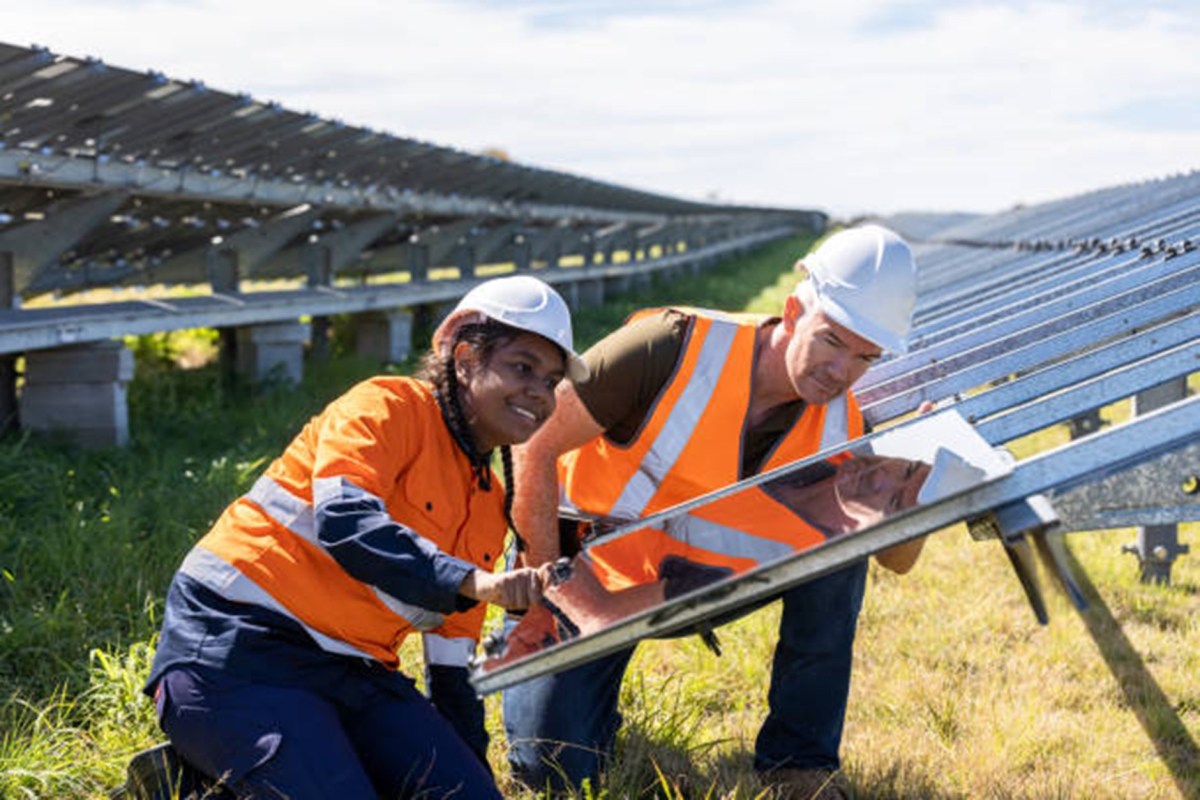
Australia’s plentiful solar and wind resources and proximity to Asia means it can become a renewable energy superpower. As the renewable energy rollout continues, Aboriginal and Torres Strait Islander people could benefit.

Renewables projects can provide income and jobs to Aboriginal landowners. Access to clean energy can also help First Nations people protect their culture and heritage, and remain on Country.

It seems Canada and the United States are already on this path.

The Australian government is developing a First Nations Clean Energy Strategy and has sought comment on a consultation paper. Submissions have closed, but If, like me, you feel strongly about the issue, have your say to Government and to MP’s.

This could be a gamechanger for Australia.

As an “energy superpower”, selling power to India and Asian neighbours, we make a difference for them, gain new export markets and create a big shift in how Australia is perceived in the region.

By speaking up, you can help our government do what is so obviously the right thing.

Women, the Global South and inclusive development clear winners of India leading the G20

In the sense that the G20 is mainly about global conversations and agendas, India succeeded in directing those conversations and setting out an agenda which will be picked up by the next G20 presidency country – Brazil.

India’s G20 presidency was focused on sustainable and inclusive growth, including women-led development initiatives.

India also shifted the G20 somewhat from a fundamental economic platform, to addressing the challenges of climate change, disasters, growing water and energy insecurity, democratic backsliding and gender inequality.

India was also successful in building consensus – something which has been a challenge over the years. It welcomed the African Union as the newest member and signalled the need for great inclusion of countries, including the Global South.

Drawing women-led development into the mainstream was a priority of India’s presidency, resulting in the G20 announcing the creation of a new Working Group on Empowerment of Women to support the G20 Women’s Ministerial that will start during Brazil’s term.

Indians embraced and celebrated the G20 – and India as president clearly made a positive difference.

India now wants to lead development in the “Global South”

For several years we have speculated about India’s foreign policy agenda – fuelled by its multi-alignment strategy – where does India stand, ask many western commentators.

But just quietly India has gradually revealed its priority.

Of course, part of this is a response to China – a country which shares contested borders with India.

Many western leaders hoped to “bring India into the fold”, becoming an alliance partner of the USA and others in the west.

But India has made its own choices.

New Delhi plays an active role in multiple organisations – the QUAD (Japan, USA, Australia and India), the SCO (Shanghai Cooperation Organisation) and the BRICS (Brazil, Russia, India, China and South Africa) and remains in these in part to prevent China dominating.

But the “Global South” is now a top priority for Delhi.

India is building a unique bond between the developed and the developing world of the “Global South”. India alone can help the west engage and truly contribute to economic development in the region. For the USA, India can help Washington as it struggles to define and commit to the “Global South”.

It’s an exciting vision, put together by Prime Minister Modi and Foreign Minister Jaishankar.

This “Global South” vision of India does not stop its connections with the west – which remains an important source of technology and capital for India’s growth. It is a great balancing act by the Indian Government.

Since Australia shares its future with many of these “Global South” countries, where can Australia support India in this emerging vision?

Read a more detailed Lowy Institute analysis of India and “Global South” here:

https://www.lowyinstitute.org/the-interpreter/why-india-keeps-foot-both-camps#msdynttrid=FB8Fb-XPrVU8xav4ltaVW09Lm0iwxwP8NNavfmZ3oew

India and Australia? The best analysis you can read

Former Australian diplomat, John McCarthy AO, continues to be by far our best analyst and writer on relations with India.

John is a Vice Chancellor’s Fellow at the University of Melbourne, an Adviser to the Asialink Board and a former High Commissioner to India.

It is worth revisiting an Asialink Insight he wrote in May of this year.

The Insight is titled “The Strategic Illusion of India” and in two short paragraphs he makes the case for closer diplomatic ties with India:

“Over the past two decades Australia has rightly recognized the rise of India. Its population at 1.4 billion exceeds China’s. It is the world’s third biggest economy in purchasing power parity terms and it should soon be third in nominal terms.

“We now have four diplomatic offices on the ground in India. It is our biggest source of immigrants. It is our fourth biggest export destination. Education links are burgeoning. All to the good.”

But John McCarthy’s enthusiasm for India comes with warnings.

His first was “India does not share our world view.”

His second was: “It does not expect others to come to its aid and it will not join someone else’s war.”

So, he recommends we build the relationship with patience and realism.

Great analysis. Top advice. Read more…

https://asialink.unimelb.edu.au/insights/the-strategic-illusion-of-india

India will respond to China’s power on its own terms, not as a junior partner of the USA

Sometimes the shortest messages are the best.

Good friend and colleague Vinay Sarawagi is Senior Vice President Digital for the Times Network and is based in Delhi.

If you think India has shifted “our way” or is ready to follow “our friends” then here is some food for thought – so simply and elegantly put by Vinay.

🌍 India’s growing role in containing China’s power will be on its own terms, not as an appendage of the United States.

🤝 Collaborating with India in the Indian Ocean and developing niche military capabilities can strengthen the US-Indian partnership for regional security.

🔒 A realistic and resilient strategic partnership with India can contribute to stability without imposing unreasonable expectations, benefiting both nations and deterring potential crises.

Makes sense to me – INTO INDIA has long had reservations about the cheerleaders who think via the QUAD and other moves that India is somehow now part of the US alliance.

Not happening.

6 big changes in India – and 5 reasons growth will boom

Only 8% of Indian households own a car – so big growth is ahead

INTO INDIA has consistently said India is the growth story of this century.

Now Anish Mathew, CEO and CIO of the very successful Sundaram Asset Management Singapore Pte Ltd, has found a unique way to describe why India is indeed THE growth story.

6 big changes in India

  • The number of income tax filers has increased by 57.5% between FY15 and FY21.  This is obviously the impact of the growing use of Aadhar (biometric unique identity card) as the preferred KYC document and the implementation of GST, both of which is pushing up the tax compliance in the country.  
  • Indirect (GST) tax base stood at 14mn in November 2022, a 2.3x increase from mid 2017.   
  • Number of PAN cards (unique tax identity number issued by the Income Tax Department) allotted has increased by 2.5x in the last 7 years.
  • 80% of the railway tracks were electrified as of end FY22 as compared to 31% in FY11.
  • Road infrastructure measured in number of kilometres has increased by 36.6% in the last 11 years.
  • Major port capacity has nearly doubled in the last 8 years.

5 reasons growth will boom

  • Only 8% of the households owned a car, 24% an air conditioner and 38% a refrigerator.
  • Only 1% of Indians account for 45% of all flights.
  • Only 3% of Indians make up all unique card holders.
  • Only 2.6% of Indians invest in mutual funds.
  • The Indian diaspora remitted USD 100bn into the country in 2022, eclipsing the gross FDI flow during the same period. 

Mathew advises that the three big growth drivers for the next decade are consumption (driven by the Demographic Dividend and rising incomes); manufacturing, and; digitisation (which is the formalisation of the Indian economy)

He makes a powerful case for investment and trade with India.