We are now a few weeks into 2022 so this is a good time to revisit your “new year resolutions” and perhaps take a different view.
This is from a friend and colleague Debashish Chatterjee who is a Director of Indian Institute of Management in Kozhikode, India:
3 Unusual Insights for 2022
#1. We begin the year with resolutions. They are often a laundry list of personal desires. A desire is an energy formation. When your desires are woven around a web personal pleasures, the energy they receive comes from your ego. This energy is limited. When your desires are for the greater good, the whole universe supports your desires. Enhance the circumference of your desires, you are bound to succeed.
#2. You do not have a busy life. You only have a busy mind. The world out there is nothing but a projection of the mind. Slow down the mind. Your world will transform around you. You will begin to see things that you had overlooked earlier. You will fumble less and create more.
#3. That which has a beginning also has an end. This was Buddha’s insight into the impermanence of life. Begin with the end in mind. Ask where are my actions and thoughts eventually leading me?
A significant majority of people in wealthy countries now believe that having people of different ethnic, religious, and racial backgrounds improves society.
In the US, Canada, UK, Australia, New Zealand and Taiwan, 8 out of 10 people believe greater diversity is a benefit, and even in relatively culturally homogenous countries like Japan and Greece, the share has increased by double digits in the last four years.
Former PM Tony Abbott was instrumental in getting trade talks going again
INTO INDIA believes the two big issues facing Australia are allowing greater people movement from India to Australia, and directing more of our massive A$ 2.3 trillion pension fund sector that could be a regular source of investments in the Indian infrastructure and disinvestment story.
The key for Australia is to see India as more than a “quick sale” – Indian negotiators will be looking to push the two countries to become partners, adopting policies that streamline physical movement, including, on-arrival visas, multiple entry long term business visas, etc.
From India’s perspective, it will want to ensure that trade deficits in the post agreement period do not widen. And two, non-tariff barriers and differences in standards or recognition of qualifications do not offset higher access through the trade deal. As an Indian report recently wrote: “This is the crux of the matter.”
In the larger CECA agreement, investments from Australia will play a big role in the growth of bilateral trade between the two countries, because the growth trajectory of India will create new opportunities for Australian companies, including in areas like water management and up in future, for which Australia can be a long term reliable supplier.
In the early harvest agreement, Australia wants services included with goods – an area where India has not performed well in earlier trade deals such as with ASEAN.
Australia however just needs to accept the sensitivity of the agribusiness sector in India – the deal will fall over if Australia demands substantially lower tariffs across the board for fruits, dairy, agriculture and processed food items.
INTO INDIA RECOMMENDS Australia narrow its ambitions down to selected niche items in the agriculture sector. Finding ways that Australian expertise, technology innovation and scale can actually transform Indian agriculture sector towards value addition would give Australia a big advantage.
Finally, you can expect India could show flexibility in tariff lines related to commodities and minerals, which are needed for its growing economy and the e-mobility program. In turn, Australia could be accommodative in tariff lines related to refined petroleum, medicaments, railway vehicles, gems and jewellery, auto components and made up textile items, which it imports in any case from countries around the world, in addition to India.
Thanks to Confederation of Indian Industry (CII), in collaboration with KPMG and led byAmb Anil Wadhwa, who is Former Secretary (East), Ministry of External Affairs, Government of India.
The Indian diaspora is now Australia’s largest migrant group – and this is showing up in leadership and change. More achievements will be ahead – but INTO INDIA now honours our “top 10”:
TARUN GUPTA, Managing Director and CEO, Stockland
Tarun Gupta, CEO, Stockland
In June 2021, Tarun Gupta joined Australia-based Stockland as the Managing Director and Chief Executive Officer.
Founded in 1952, Stockland is one of the most diversified property groups in Australia. Today, Stockland owns, develops and manages a comprehensive portfolio of residential communities, retirement living villages, workplace and logistics assets, as well as retain town centres.
Tarun Gupta has held a wide range of senior roles in the past. Previously, Gupta was the Chief Financial Officer with Lendlease.
In 1994, Tarun Gupta had come to Australia (after graduating from University of Delhi) as an international student to gain an MBA at Uni of Newcastle
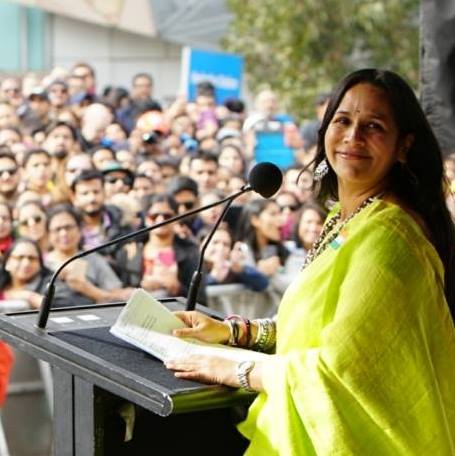
Mitu Bhowmick Lange, Director of Mind Blowing Films
Mitu Bhowmick Lange
Mitu is Festival Director of the Indian Film Festival of Melbourne (IFFM) which was established in 2010 and has become one of the biggest and most successful Indian film festivals held outside of India.
Mitu is the Director of Mind Blowing Films, a film production and distribution company that specialises in the distribution of Indian films in Australia, New Zealand and Fiji. It also provides local production support to Indian films shot in Australia and New Zealand. She has also produced Spice Girls of India, which was screened at the London Feminist Film Festival.
Mitu also worked in Bombay for six years directing several TV shows including entertainment, news and fashion magazine programs and a daily breakfast show for most of the leading channels including BBC World, Star Plus, Zee TV and Sony TV. Since living in Australia, Mitu has introduced and produced several Indian productions in the country, including producing 13 episodes shot in Australia of India’s number one daily television serial Kahani Ghar Ghar Kii, Bollywood film Koi Aap Saa and blockbusters like Salaam Namaste, Chak De India and Bachna Aye Haseeno as well as several leading television commercials made for the Indian market.
In 2017, Mitu received the Jill Robb Award from Film Victoria recognising her achievements, leadership and mentorship of other women from the sector.
Mitu is a Board Member, Film Victoria, Board member, Natalie Miller Fellowship, and was educated at Hindu College, University of Delhi and gained a master’s degree at St Xavier’s College.
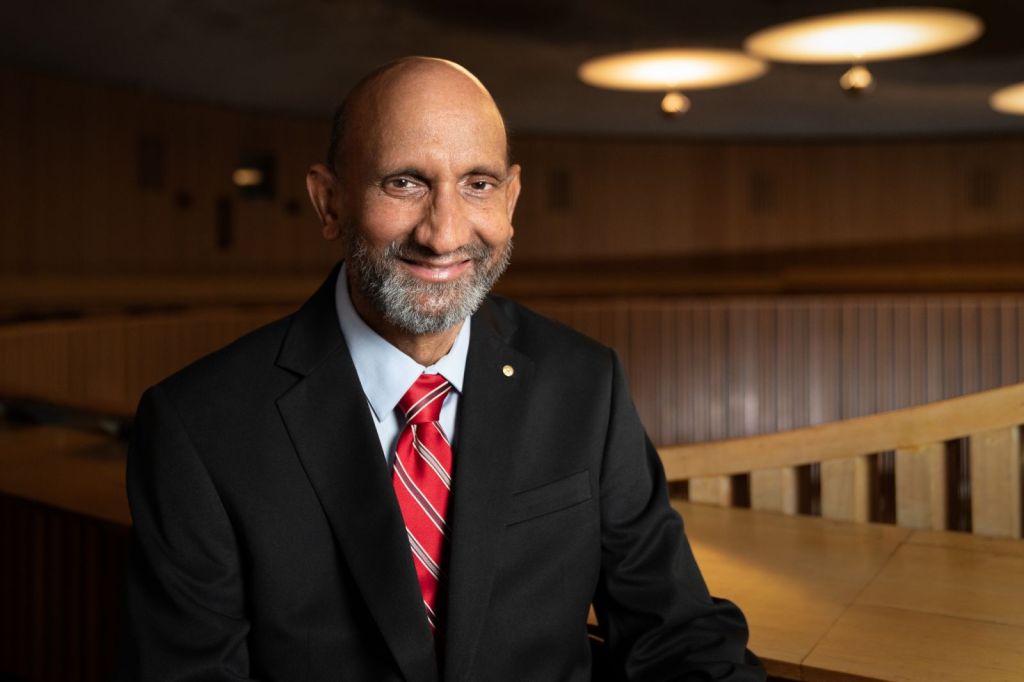
Distinguished Professor Chennupati Jagadish AC, incoming President, Australian Academy of Science
Nanotechnology pioneer Distinguished Professor Chennupati Jagadish AC FAA FTSE is the next President of Australia’s premier science organisation, the Australian Academy of Science. He is the first Australian of Indian heritage to take on the role.
The Academy plays an important role providing independent, authoritative and influential scientific advice to the Australian Parliament.
He is an Indian-Australian physicist and academic, a Distinguished Professor of Physics at the Australian National University Research School of Physics and Engineering. He is head of the Semiconductor Optoelectronics and Nanotechnology Group which he established in 1990.
He plays a leading role in helping Australia transition from a resource-based economy to a knowledge and technology-based economy.
Throughout his career Professor Jagadish has supervised 65 PhD students, is currently supervising a further 12 PhD students and has mentored 50 post-doctoral and other fellows, with many of them now in leading research institutions across the world.
Sanjeev Gandhi, Managing Director and CEO of Orica Limited
Sanjeev Gandhi was previously Orica’s Group Executive and President of Australia Pacific Asia, and was appointed as the Managing Director and CEO of Orica Limited in February 2021.
Mr Gandhi joined Orica in July 2020 after spending 26 years with German chemical company BASF SE, the global leader in the chemical industry. During his tenure with BASF, he held senior marketing, commercial, business leadership and director roles, in India, Germany, Japan, Singapore and Hong Kong.
Most recently, Mr Gandhi was an Executive Director of BASF SE and Head of Asia Pacific as well as Head of Global Chemicals Segment (Intermediates & Petrochemicals) based out of Hong Kong. Leading a workforce of more than 18,500 people across 19 countries, 125 production sites and 140 sales offices, Sanjeev and his team were accountable for the delivery of €13.3 billion in revenue, and €1 billion in EBIT in 2019.
Mr Gandhi leads a global team of more than 13,000 colleagues.
Orica is the world’s largest provider of commercial explosives and innovative blasting systems to the mining, quarrying, oil and gas and construction industries. They are also a leading supplier of sodium cyanide for gold extraction, and a specialist provider of ground support services in mining and tunnelling.
Mr Gandhi gained an MBA at the Institute of Management and Entrepreneurial Development, Pune
Kaushaliya Vaghela, Member of Legislative Council, Parliament of Victoria
Kaushaliya Vaghela is the first India-born elected Member of Victorian state parliament, representing the Australian Labor Party in Victoria’s upper house.
Before being elected as an MP, Kaushaliya was working as a Risk and Compliance Manager and prior to that as a scientist in research and diagnostic laboratory.
She came to Australia as an international student to study a Master of Applied Science at RMIT in 1998.
Indians form a large community in Victoria, and she as elected an MLC for Western Metropolitan region in 2018.
Vivek Bhatia CEO Link Group
As CEO of Link Group, Vivek Bhatia leads 6000 employees in a company that administers financial ownership data and drives user engagement, analysis and insight through technology. Link provides complete solutions for companies, large asset owners and trustees across the globe.
Vivek is an experienced chief executive, having led a number of complex businesses throughout his career. Vivek joined Link Group from QBE Insurance Group where from 2018 he was Chief Executive Officer of the ASX-listed general insurance and reinsurance company’s Australia Pacific division.
Vivek joined QBE from icare where he held the position of inaugural Chief Executive Officer and Managing Director. Prior to this, he co-led the Asia-Pacific Restructuring and Transformation practice at McKinsey & Company and also previously held senior executive roles at Wesfarmers Insurance, including responsibility for leading the Australian underwriting businesses of Lumley, WFI and Coles Insurance.
Vivek holds an undergraduate degree in engineering, a post-graduate in business administration and is a Chartered Financial Analyst (ICFAI).
Sanjay Dayal CEO Pact
Sanjay Dayal became Group Chief Executive Officer, Managing Director, Executive Director of Pact in April 3, 2019. Sanjay joined Pact most recently from BlueScope Steel where he held the position of Chief Executive, Building Products, Corporate Strategy and Innovation.
Sanjay had a very successful career with Orica and ICI, including Regional General Manager for Manufacturing and Supply Chain and General Manager for the DynoNobel Integration, based out of London.
Sanjay holds a Bachelor of Technology (Chemical Engineering) from Indian Institute of Technology – Delhi.
Pact is a packaging, re-use and recycling manufacturing firm. Which recently received $20 million in funding from the Federal Government’s Modern Manufacturing Initiative for Recycling and Clean Energy Manufacturing projects to support its investments in world-leading technology which will increase the amount of recycled materials in locally made plastic packaging.
The group employs around 2400 people, operates in Australia, New Zealand, Asia, the United Kingdom and the United States,
The Company designs and manufactures bottles, containers, trays, tubes, closure systems, and other customized packaging solutions.
Ravneet Pawha, Deputy Vice President, Deakin University
Ravneet Pawha is Deakin University Deputy Vice President (Global Engagement) and CEO (South Asia). She is also President of Australia India Business Council (AIBC), Victoria.
Ravneet gained a master’s degree at Panjab University and was a gold medallist in her postgraduate studies. In 2018 she won the prestigious Business Leader of the Year at the India Australia Business and Community Awards.
With over 27 years of experience in the international education sector, Ravneet has been instrumental in establishing global collaborations and strategic partnerships. She has developed Australian Education collaborations specifically for Deakin University in India/South Asia and has contributed to the immense success globally. She is an inspirational leader and a passionate entrepreneur.
Sandeep Biswas, CEO, Newcrest Ltd
Mr Biswas was appointed Managing Director and Chief Executive Officer of Newcrest on 4 July 2014. He joined Newcrest in January of that year, as Executive Director and Chief Operating Officer.
Mr Biswas was previously Chief Executive Officer of Pacific Aluminium, a wholly owned subsidiary within the Rio Tinto group, which incorporated the bauxite, alumina, refining and smelting operations in Australia and New Zealand.
He began his career with Mount Isa Mines, working in both Australia and Europe. Mr Biswas has also worked for Western Mining in Australia and Rio Tinto in Canada and Australia.
He is Vice Chairman of the Minerals Council of Australia, Vice Chairman of the World Gold Council and Member of the ICMM Council.
He gained a BEng (Chem) (Hons) at the University of Queensland.
Newcrest is the largest gold producer listed on the Australian Securities Exchange and one of the world’s largest gold mining companies.
Dr Astha Singh, Senior Marketing Manager, Servers Australia
Dr Astha Singh is a Science and Technology Marketing professional with over 14 years of experience specialising in STEM (Science Technology Engineering and Mathematics) and has shared her innovative idea at TEDx Sydney. She currently works as a Senior Marketing Manager at a Cloud Hosting Technology company called Servers Australia.
Astha has initiated and implemented several STEM focussed multicultural marketing campaigns in her career with programs and organisations such as FameLab, Soapbox Science, Sydney Science Festival, Spark Festival (Australia’s largest festival for entrepreneurship) and at iAccelerate (Australia’s largest University business incubator).
Astha led a nation-wide campaign in 2019 to raise awareness for Diversity in STEM with over 30 top scientists around Australia featured on the Australia’s Science Channel. With her particular interest in diversity & equity, Astha has served as the advisory board member at Multicultural NSW, Australian Football League, NSW. Continuing her passion for highlighting South-Asian talent in STEM, Astha was the STEM ambassador for the Australia India Business and Community Awards 2020-21.
Currently Astha serves as a mentor for commercial research at the CSIRO’s ON Accelerator and DStart programs.
Melbourne’s Federation Square is the focus of the annual Diwali celebrations
Born here, I naturally love Melbourne.
But in my lifetime the city has been transformed via migration and especially by the increase in local Indians and students. It is now an exciting place – for example, in normal non-covid times, the city centre and Federation Square is taken over by Diwali celebrations.
India accounted for around 178,000 visitors to Victoria every year.
More than 67,000 international students were here before the COVID-19 outbreak in Australia – and now we can welcome them back!
We have the largest Indian population in Australia, with more than 209,000 Victorians reporting Indian heritage at the 2016 census. Since 2001 the number of Indian-born migrants in Melbourne has more than tripled.
Indians living in Melbourne love:
living in Melbourne’s suburbs with safe, accessible transport
local supermarkets, Indian grocery stores and restaurants
Melbourne’s festivals, museums and cultural events (including Diwali, Holi and more)
Victoria’s world-class education system
dining out in Melbourne’s renowned restaurants.
If you’re thinking about migrating to Australia from India, Melbourne could be the perfect home for you.
Melbourne has the 10th largest immigrant population among world metropolitan areas. In Greater Melbourne at the 2016 census, 37% of residents were born outside of Australia.
Qantas’ Melbourne-Delhi service starts will start on December 22 and operate four times a week year-round.
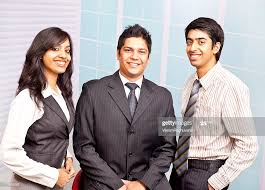
Confident young Indians like these are driving new entrepreneurial spirit
CAUTION – generalisations are just that, and you will almost always encounter those who do not fit in this list. This is offered to assist those visiting India for business, education or tourism.
1. Successful and confident
Economic success has restored Indian confidence. Indian entrepreneurs are now recognized around the world and there is a national expectation that the next Bill Gates will be an Indian. This entrepreneurial spirit permeates the nation (most dream of becoming entrepreneurs) which is now confident.
2. Never forget rural people
Indian business and political leaders may live the urban lifestyles, but they do not forget the small towns and villages at the centre of rural life – and it’s not just the politicians with an eye for votes, with major corporates such as Infosys pouring resources and funding into village developments.
3. Avoid pointing the finger
Indians become instantly passionate when challenged on subjects like their high tariffs, especially if the challenge comes from the west. The message is, point the finger at India and you can expect a robust response.
4. Oceans of patience
Indians have oceans of patience which can drive westerners crazy, but it gives them a special strength in negotiations. This patience is derived from deeply held spiritual views such as impermanence – Indians are constantly reminded of the impermanence of this life, everything changes, and they can wait when often we cannot. Who has the advantage in this situation?
5. Not just an IT miracle
Do not be fooled with the view that the Indian economic miracle is just driven by call centres and IT. Important as these are, look also at insurance, energy, retail, clean technology, manufacturing, pharmaceuticals and even agriculture as areas where efficiency is producing startling results.
6. Not especially “Asian”
While India feels great about the success of “Asia”, in many ways it does not feel particularly “Asian”. First and foremost, Indians feel Indian, and to them that is vastly more relevant than being geographically part of Asia.
7. Remember the “Father of the Nation”
Whether dealing with the young or the old, in India never forget the “Father of the Nation”, Mahatma Gandhi.
8. Equity up there with democracy
Partly because of Gandhi, Indian leaders are more concerned with equity than with spreading democracy around the world – and cannot understand the enthusiasm of the USA and its allies to champion democracy in unlikely locations.
One billion vaccines: The cumulative coronavirus (Covid-19) vaccine doses administered across the country surpassed the 1-billion milestone, today. Over 700 million people have been administered the first dose of Covid-19 vaccine, while 290 million have been fully vaccinated, according to the government’s CoWin website. The government has set a target to vaccinate all adults by the end of 2021.
Moody’s banking rating: Moody’s Investors Service has upgraded the outlook for the Indian banking system to ‘stable’ from ‘negative’. It believes that the deterioration of asset quality since the onset of Covid-19 pandemic has been moderate and an improving operating environment will support asset quality. Moody’s expects asset quality to further improve, leading to decline in credit costs, as economic activity normalises. The rating agency has projected India’s real GDP growth for 2021-22 at 9.3 per cent.
Tax targets overshoot: The Centre is likely to exceed the budgeted tax collection target of Rs.22.2 trillion for the current fiscal year by Rs.2.5 trillion, according to experts. This is driven by better indirect tax mop-up, compliance measures and recovery in most sectors following the second wave of the pandemic. Personal income and corporate tax collections grew by 74 per cent to Rs.5.7 trillion in the first half of the current financial year, mainly due to advance tax and tax deduction at source (TDS) payments.
Power deficit: The power shortage situation in the country is improving as per the data released by the Central Electricity Authority. Power shortage came down to 1,456 MW on 17 October 2021 from 2,714 MW a week back. Peak power shortage stood at a massive 11,626 MW on 7 October 2021. According to power sector experts, demand has moderated due to the onset of autumn and heavy rains in many parts of the country. Moreover, an improvement in coal supplies would further bring down the power deficit.
Data consumption: India has the highest mobile data consumption in the world which is about 11 to 12 GB per user a month. The country is adding as much as 25 million new smartphone users every quarter making it a flourishing ground to launch digital initiatives, Ram Sewak Sharma, chief executive of the National Health Authority of India said. By 2025, India’s data consumption is likely to be doubled to nearly 25 GB per person a month, driven by affordable mobile broadband services and changing video viewing habits, Swedish gear maker Ericsson said.
E-Commerce sales: The share of e-commerce in the overall sales pie has touched new highs in the first fortnight of October 2021, according to market trackers and companies. Several categories, including smartphones, consumer electronics, apparel and daily necessities are growing faster than last year. The share of smartphone sales online surged to around 60 per cent in the first fortnight of Navratri-Dussehra from around 55 per cent, early estimates by market tracker Counterpoint Research showed. Televisions grew to 40 per cent from 31 per cent in the same period last year, while refrigerators, air-conditioners, washing machines and kitchen appliances rose to 9-10 per cent from 6-8 per cent. Market research firm RedSeer Consulting said the overall online shopper base has grown by around 20 per cent this festive season compared to last year, with tier II markets contributing to almost 61 per cent of all shoppers
Foreign investment: India witnessed net foreign investment inflows of USD 8.3 billion in August 2021, as compared to net inflows of USD 649 million in the preceding month. Net inflows of foreign direct investment (FDI) rose to USD 5 billion from nearly USD 3 billion in July 2021. Net inflows of foreign portfolio investment (FPI) worth USD 3.3 billion were seen in August 2021, after witnessing net outflows of USD 1.6 billion in July 2021.
Thanks to ASK Capital Management Pte Ltd for the above information.
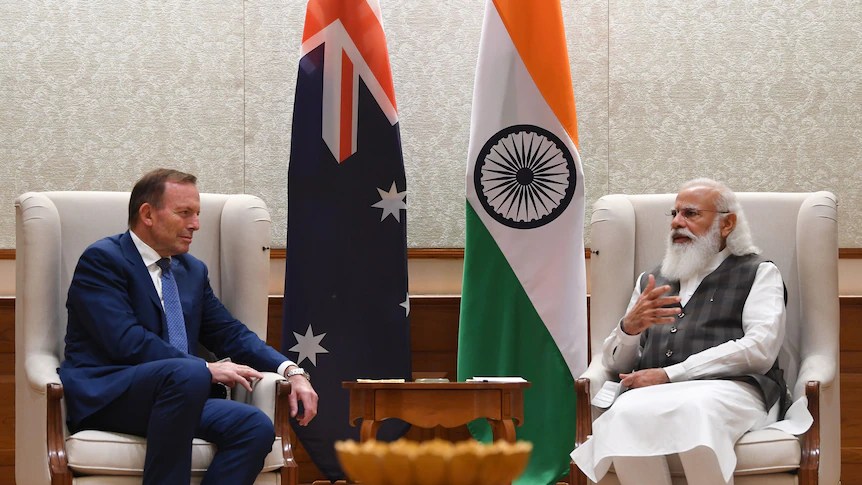
Indian PM Narendra Modi meets recently on trade with former Australian PM Tony Abbott
What has changed for India? It seems that having resisted trade deals for years, it now plans by the end of March 2022, to complete multiple quick-fire bilateral trade agreements.
Something has not changed however – the Indian government, distrustful of full scale FTA’s, is prioritizing “early harvest” pacts over comprehensive free trade agreements.
What has changed is the pandemic and the rise of China.
Therefore, the Indian government is focusing on strengthening the trade with G-7 nations with strong Indo-Pacific strategies and those with growing influence in central Asia such as the United Arab Emirates.
Australia, at a key position in the Indo-Pacific, is a high priority. As a fellow member of the QUAD, India and Australia have never been so close strategically and are keen to add trade now.
In large part, this is India’s push to do well as supply chain realignments take place – there is only a narrow window of opportunity to get these deals done.
How big is this? The government is negotiating bilateral trade agreements with 20 countries and expects to complete half a dozen deals, including those with Australia and Britain by this December and March 2022.
India is ambitious – Mr. Piyush Goyal has set kept a target of US$ 400 billion for annual merchandise exports – almost 38% higher than US$ 290 billion achieved in last year and plans to achieve US$ 2 trillion annual merchandise exports by the end of this decade.
Outcome? Lots of deals that will not be quite world class Free Trade Agreement (FTA) but which will have some wriggle room.
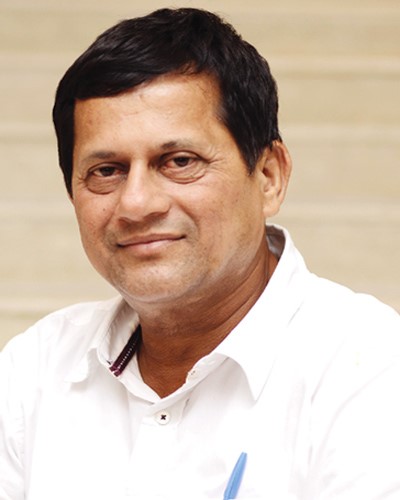
Dr Achyuta Samanta dedicates award to young tribals
Awards and recognitions are no mere feathers in the cap for the KIIT and KISS founder Dr. Achyuta Samanta, but it has become a reality about inheritance of ideals built on a foundation of benevolence and concern for others.
Dr Samanta is a social worker, educationist and philanthropist.
He has pioneered an Art of Giving program that is a force for change.
Kalinga Institute of Social Sciences – KISS, comprises of KISS Foundation, KISS School & College and KISS University. KISS Foundation is an NGO in India headquartered in Bhubaneswar, Odisha. School, College and University is the educational wing of this initiative located at the intersection of food, education and empowerment.
Dr Samanta’s ventures are powered by a belief that a better world – free from hunger, poverty & illiteracy – is possible. We provide free education, accommodation, food and healthcare to over 30,000 indigenous students currently studying at our main campus in Bhubaneswar. We are currently 20,000 alumni strong. We aim to serve an additional 10,000 students across our satellite centres which are going to be functional soon.
Dr. Achyuta Samanta, is also a Member of Parliament (Lok Sabha), Kandhamal, and has been conferred with the prestigious “Sandipani Gourav Maharshi Samman-2020” by Bharatiya Sanskrutik Sambhardhak Trust, Porbandar, Gujarat on the eve of celebration of the Silver Jubilee of the trust.
In a ceremonial event held in the presence of Shri Nimaben Acharya, Hon’ble Speaker, Gujarat Legislative Assembly, a galaxy of intellectuals and saints of the nation, this honour was bestowed upon Dr. Samanta for his exemplary dedication and lifetime contribution towards Social Work and Spiritualism. Humbled by the honour, Dr. Samanta extended his respectful gratitude towards Shri Ramesh Bhai Oza, Founder of Bharatiya Sanskrutika Sambhardhak Trust and all the members & office bearers of the trust.
It’s noteworthy that every year the trust has been honouring spiritual figures, saints, sages, intellectuals, thought leaders and social workers with coveted titles and honours namely ‘Devarshi’, ‘Brahmarshi’, ‘Rajarshi’ and ‘Maharshi’ since 1996.
Apart from Dr. Samanta, Kokila Ben Dhirubhai Ambani was conferred with ‘Rajarshi’ Samman whereas treasurer of Sriram Janmabhumi Tirthakhetra, Pune Swami Govind Devagiri Maharaj received Devarshi Samman and former Vice-Chancellor of Sampurnanand Sanskrit University Dr. Rajaram Shukla was conferred with Brahmarshi Samman.
“Maharshi award is extremely special as it comes from the organisation led by the most revered and venerable Pujya Bhaishri, Shri Ramesh Bhai Oza ji. It will be remembered by our KIIT & KISS family and me forever. I dedicate this coveted recognition to our team that has worked relentlessly and to all the tribal young girls and boys who have struggled and have transformed their lives with resilience.”; said Dr. Samanta.
With Avinash Kshirsagar travelling in the Himalayas on my last trip to India
Yesterday was Mental Health Day – but really, it should be every day of the year. Many have found that good mental health and an optimistic outlook go together and there is a wonderful course suitable for all ages and FREE from the Centre for Optimism.
This has been reviewed by my friend Avinash Kshirsagar – a young Indian from Maharashtra state who is completing his accountancy qualifications. We met while travelling in the Himalayas and I joined him on his daily quest to find great cafes for lunch. Here is his review:
“Steve and I have had several discussions on optimism particularly a blend between optimism and realism.
We’ve shared our thoughts as well on this.
I’m very thankful to Steve that he shared with me a course on Project Optimism.
This course is all what one needs to do to be an optimist. Lots of takeaways on being positive and spreading optimism. I have highlighted the points that I particularly found were best inputs;
• Smile like an optimist. The importance of smiling and how the optimist does it. It shared a quote by Charlie Chaplin “You’ll never find a rainbow if you are looking down.”
• Habits of an optimist highlighted the importance of habits, and I could totally relate it to the book I’m currently reading by James Clear named “Atomic Habits.”
• Another important aspect that was largely emphasised was Social media and being optimistic. The relationship between the two and impact of procrastination leading to a low key on positivity was very well illustrated.
• The impact of asking oneself “What make you optimistic” ona regular basic or giving affirmations to check whether one is optimistic is relatable because I personally practice giving myself such affirmations. But this course doesn’t stop here. It teaches one to ask each other these questions so that the environment is healthy too. Imagine implementing the same in small groups. It will do wonders and promote mental health as well. This is spread optimism through optimism.
• Optimism and success are very well connected. I would say that they complement one another. Would be of great help to those working in the corporates to check on this.
Each chapter had a questionnaire on how does one practice optimism in real life. The questions were really easy at first but didn’t seem as easy when I had to pen down the answers. They were very basic but made me press upon a lot to see where I stand. Totally worth it.
The chapters don’t have written context. It is more through video illustrations showing animated figures so that one won’t feel monotonous. Also, after each chapter they have added points through different research papers and other references. This would be of help to those who want to read more on it.
This course is a gift. It’s free of cost.
I have totally found this course worth the time and would recommend it to those who want to know what optimism is how can one practice being optimistic.
It’s not a choice. It’s a way to acceptance and leading an positive life in a realistic manner.











 Into India