Australia’s PM Morrison should visit India to protect our education trade

Australian Prime Minister Scott Morrison needs to move fast to protect Australia’s education trade with India, now that the world’s biggest democracy has given Prime Minister Narendra Modi a second term in power.

Modi is a reformer – he can move fast and in surprising ways. We know he wants to transform education and there might be some shocks ahead for Australian universities.

Modi knows Indians mainly study abroad because their Indian universities are not up to standard. So he wants to change that.

The second Modi Government is aiming to boost India’s very low rankings among global universities. Freeing up his university sector will see closer ties with elite universities in England and America, and we could fall down the list if we do not act now.

Based on his track record so far, the Indian PM could make massive changes, deregulating up to one hundred of its best universities at any time soon.

Many in Delhi are critical of Australian universities which they claim have simply wanted a one-way transaction to make money out of Indian students. While some of our universities have created serious collaborations with India, in general this criticism is valid.

The next wave of education will see success for those who can create real collaboration, with two-way exchanges of students. Whether Australia can move fast on this is in doubt.

PM Modi is a politician who is not afraid of delivering surprises, as shown with his demonetisation move in his first term aimed at reducing corruption and driving the economy to digital rather than cash transactions. Surprises can transform into shocks if the leaders do not have a close personal connection – that’s why PM Morrison needs to act now to shore up our education trade.

What will PM Modi do for India in his second term?

What will Modi 2.0 do for India?

With the world’s biggest democracy opting for stability and returning the Narendra Modi Government for a second five-year term, all eyes are on what will Modi 2.0 do?

Here are some actions to look out for. As my friend Amith Karanth from India Australia Exchange Forum says: “Modi will also pull some surprises”.

modi2.0

Looking ahead at Modi’s priorities

Health – telemedicine, more doctors, increase immunisation

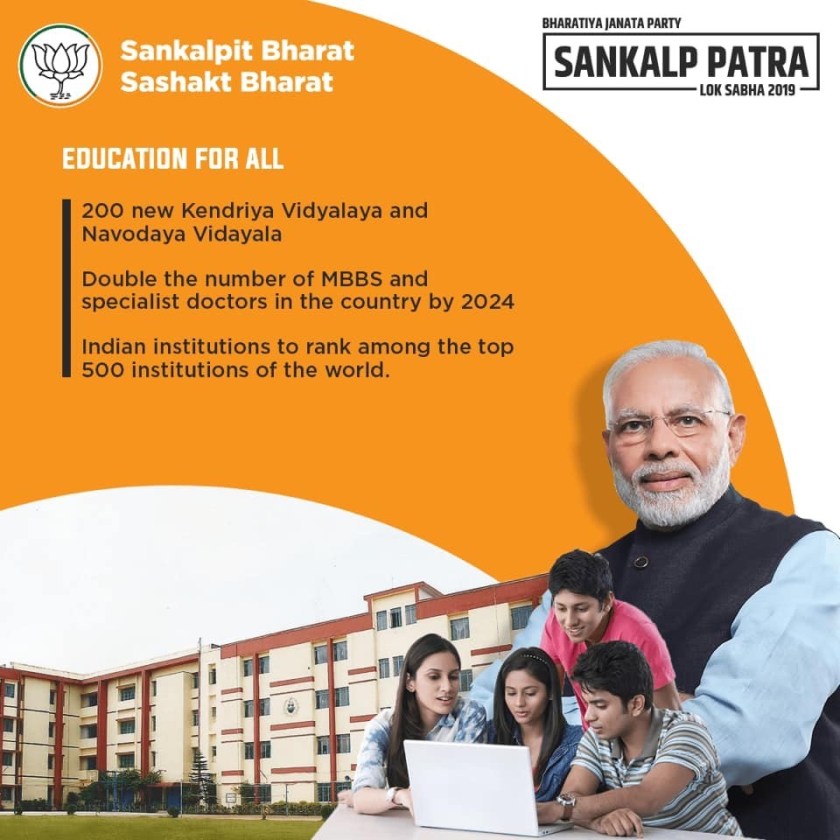
Education – Modi wants India to have a top 100 global university – he will deregulate many top universities to allow this improvement

Add 50 city metros

Inclusion – banking for all, reduce poverty to single digit

Employment creation and lifting farm/shopkeeper incomes will continue to be a focus

Building more infrastructure

Devolving more responsibility and power to the state governments, extending the level of competition between them and empowering local leaders

Streamlining the GST, which was a minor miracle itself, but has multiple complexities

While privatisation of government institutions such as banks and more is needed – this might remain in the “too hard basket” in term two

Modi2.02

Looking at what Modi has already achieved

Moves against corruption such as demonetisation (one of his major surprises), reduction in cash and movement towards digital payments

Introduction of a GST, arguably the world’s biggest tax reform – meaning the central and state governments are now awash with funds and can now do things

Focus on startups and cheaper loans for SME’s has created real growth in new enterprises

National campaigns such as “Clean India” have begun the big job – providing access for many millions to toilets is just one of the outcomes

Some reforms to the insolvency and bankruptcy has increased confidence in doing business

Modi has been a relentless global salesperson for India and attracted record foreign investment

India’s infrastructure has changed massively in five years – with more to do

Modi

Professor Bhargava of RMIT University shows how to respond to Industry 4.0

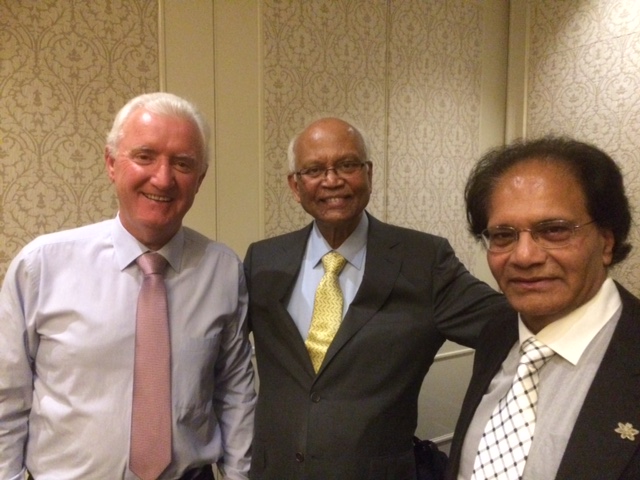
Featured pic – such an honour for me to be with two global innovators – India’s Dr Mashelkar and Australia’s Professor Bhargava (right)

Most students and many universities will not be ready for the fast-changing world of “Industrial Revolution 4.0” which has begun and will be in full swing by the time most graduate.

In Australia the RMIT University Distinguished Professor Suresh Bhargava, Associate Pro Vice-Chancellor (India), Director-Centre for Advanced Materials and Industrial Chemistry (CAMIC) College of Science, Engineering & Health is a pioneer of “The Science for Developing a 21st Century Scientist”.

This program will see students learning the art of global collaboration over a four-year program – one year each at RMIT University, with industry in Australia and India, involved in CSIRO international collaborations and with the Indian Academy of Scientific and Innovative Research.

Now, employers would be keen to talk to such a graduate!

Professor Bhargava says we should “Move towards collaborative innovation”.

Australia’s Chief Scientist, Dr Alan Finkel AO, is enthusiastic: “Very few of us have the opportunity to do something that is first in the world and worthwhile.”

Professor Bhargava has been my mentor on matters India and educational for many years.

I will be speaking at several Indian universities later this year on my own passion piece:

The 7 ways graduates can thrive in Industrial 4.0

  1. Show you can continue to learn

We know employers’ value this very highly – their focus is not on what you know through your degree – but is more on what you can learn in future. Prepare for this by being curious, reading and listening widely, entering discussion groups and being able to summarise what you have learned outside of university or since your degree.

  1. Demonstrate wisdom and common sense

For employers, further than what you know is how you think, and the value of wisdom and common sense. The best way to describe the difference between knowledge and wisdom is through the humble tomato – knowledge tells you a tomato is a fruit (not a vegetable) – but wisdom prevents you adding the tomato to a fruit salad. One fast track to wisdom is via mentors and guides, those who can share experience with students.

  1. Gain good collaboration and friendship skills

Industrial 4.0 will make collaboration easy and instant with anyone, anywhere and anytime – and the change will benefit those who have the skills to reach out, make friends, work across the globe and build collaboration. Future corporations and employers will be looking for people who can build collaboration.

  1. Gain cross-border understanding and skills

Already our lives in one country are intersecting with lives of other countries, and Industrial 4.0 will make the globe an even smaller place. Those who have travelled, who have acquired both knowledge and experience of other cultures will be in high demand, simply because almost every job will have global aspects.

  1. Become an outstanding communicator

Traditional “soft skills” training will not prepare students for the fast future – outstanding communication skills for Industrial 4.0 will include rapid pitching, ability to support points in a way which moves others, skills to relate directly and closely with those above and below you – any student sitting back quietly as a “newbie” will get left behind. Old notions of being silent in front of elders or superiors will not apply. Respectful and strong communication skills will rule.

  1. Be a team-based problem solver

More work will be team-based and some of those who succeed will actually present to future employers as a team. Problem solving as a team while at university should lead students to then approach employers as teams – a good standout in the race to gain attention.

  1. Build self-reliance and resilience

With the demise of “study hard, get the degree which entitles you to a job for life” model, students will need skills in self-reliance and resilience. As jobs come and go, individuals will need to be able to bounce back and start again, maybe many times in their careers. Where no jobs are forthcoming, graduates will need to create their own or join teams that provide solutions.


New era for India-Australia as Ms Petula Thomas becomes Director of Indo-Australia Chamber of Commerce

Exciting news for the India-Australia relationship – Ms Petula Thomas has been appointed the new Director of the Indo-Australian Chamber of Commerce.

Petula worked with the British Deputy High Commission (BDHC), Australian Trade Commission (Austrade) and British Airways in Chennai over the past 15 years and brings a wealth of experience in strategic leadership, international relations, marketing and business development.

Petula is a passionate innovator and supporter of Women in Leadership, so I feel she will make a big positive difference in this role.

PetulaThomas

She is also a strong communicator.

We need strong and effective communication to enhance the India-Australia role and to make it easier for business of both countries to get together.

I hope the IACC can pioneer more exchange of people, more two-way missions, great education, more collaboration, improved cross-cultural understanding and positive steps to ensure that business in both countries know best what works in each country.

By the way – Petula has an amazing track record, winning four global and regional performance awards from the Foreign & Commonwealth Office in London, when she headed Consular Operations for South India, leading on Customer Engagement for the MENASA region (Middle East North Africa and South Asia) and Communications/Digital strategy for India.

Petula has worked with Austrade, Australian Government, where she received commendation from the Deputy CEO Austrade for successfully delivering on multi-city Industry events in India & Australia. During her career with British Airways Plc. she received a Regional CASAMEA award (Central Asia South Asia Middle East & Africa) for Revenue Development/Sales from British Airways Plc.

Petula has a First class Masters Degree in Science and recent qualifications in Project Management and Customer Relationship Management (including Sales, Marketing and E-commerce).

We wish her every success and happiness in the important new role.

6 ways young Indians are taking a different approach to employment

As the fastest growing economy today, India is home to a fifth of the world’s youth. Half of its population of 1.3 billion is below the age of 25, and a quarter is below the age of 14.

The World Economic Forum and the Observer Research Foundation recently collaboratively conducted a survey of more than 5,000 youth in India.

  1. Indian youth are independent, optimistic and open to a changing labour market

The influence of family and peers on the career and educational choices of India’s youth is in decline. Young people are increasingly seeking productive employment opportunities and career paths that reflect their individual aspirations. Moreover, a third of the respondents report being interested in entrepreneurship, and 63% report being highly or moderately interested in supplementing their income with gig work.

  1. Indian youth need more guidance and career counselling

Many youth report facing multiple barriers to finding desirable and suitable job opportunities. Factors like information asymmetries on jobs and skills, and lack of guidance for setting realistic career goals and making professional choices, are holding back young Indians. 51% of respondents report that a lack of information about available job opportunities that match their skill sets is a significant barrier. Around 30% report a lack of access to any kind of counselling or mentoring opportunities. 44% of respondents view this as the most important factor in the demand-supply mismatch.

  1. Young Indians are interested in pursuing higher education and skills development

84% of respondents consider a post-graduate degree as a requirement for their ideal job, while 97% aspire to a degree in higher education. They are also keen on other forms of ongoing education, with 76% of youth reporting that they are very interested in participating in a skills development programme. Increased employment opportunities and higher wages are the main motivators for this goal.

  1. The private sector must do more to bridge the skills gap

The private sector needs to play a more active role in enhancing the capabilities and skills of India’s youth. India is faced with a paradox: there is significant youth unemployment, and yet the private sector bemoans a lack of adequately skilled and market-ready workers. Notwithstanding the government’s role in providing basic education and training, there is a significant need for greater private sector involvement. This will ensure that training initiatives are demand-driven and impart skills that match industry requirements.

  1. India’s socio-cultural norms add further complexity

34% of the surveyed youth report that discriminatory and personal biases related to their marital status, gender, age or family background are a major barrier when looking for a job. 82% of female respondents said their ideal employment would be full-time, disproving the stereotype that women prefer part-time jobs. Similarly, despite the persistent view that household work and unpaid work are suitable and desirable for women, only 1% of surveyed female youth report this as being a desirable option for them.

  1. Social Media and the internet can play a bigger role in effective job-hunting

81% of survey respondents rely on media and internet sources for obtaining information about employment opportunities. The prevalence of social media and internet use among India’s youth presents an opportunity to expand their awareness about education pathways, employment opportunities, skill needs, and available skill development programmes.


6 things young Indians want in employment

As the fastest growing economy today, India is home to a fifth of the world’s youth. Half of its population of 1.3 billion is below the age of 25, and a quarter is below the age of 14.

The World Economic Forum and the Observer Research Foundation recently collaboratively conducted a survey of more than 5,000 youth in India.

  1. Indian youth are independent, optimistic and open to a changing labour market

The influence of family and peers on the career and educational choices of India’s youth is in decline. Young people are increasingly seeking productive employment opportunities and career paths that reflect their individual aspirations. Moreover, a third of the respondents report being interested in entrepreneurship, and 63% report being highly or moderately interested in supplementing their income with gig work.

  1. Indian youth need more guidance and career counselling

Many youth report facing multiple barriers to finding desirable and suitable job opportunities. Factors like information asymmetries on jobs and skills, and lack of guidance for setting realistic career goals and making professional choices, are holding back young Indians. 51% of respondents report that a lack of information about available job opportunities that match their skill sets is a significant barrier. Around 30% report a lack of access to any kind of counselling or mentoring opportunities. 44% of respondents view this as the most important factor in the demand-supply mismatch.

Youth

  1. Young Indians are interested in pursuing higher education and skills development

84% of respondents consider a post-graduate degree as a requirement for their ideal job, while 97% aspire to a degree in higher education. They are also keen on other forms of ongoing education, with 76% of youth reporting that they are very interested in participating in a skills development programme. Increased employment opportunities and higher wages are the main motivators for this goal.

  1. The private sector must do more to bridge the skills gap

The private sector needs to play a more active role in enhancing the capabilities and skills of India’s youth. India is faced with a paradox: there is significant youth unemployment, and yet the private sector bemoans a lack of adequately skilled and market-ready workers. Notwithstanding the government’s role in providing basic education and training, there is a significant need for greater private sector involvement. This will ensure that training initiatives are demand-driven and impart skills that match industry requirements.

YoungIndians 2

  1. India’s socio-cultural norms add further complexity

34% of the surveyed youth report that discriminatory and personal biases related to their marital status, gender, age or family background are a major barrier when looking for a job. 82% of female respondents said their ideal employment would be full-time, disproving the stereotype that women prefer part-time jobs. Similarly, despite the persistent view that household work and unpaid work are suitable and desirable for women, only 1% of surveyed female youth report this as being a desirable option for them.

  1. Social Media and the internet can play a bigger role in effective job-hunting

81% of survey respondents rely on media and internet sources for obtaining information about employment opportunities. The prevalence of social media and internet use among India’s youth presents an opportunity to expand their awareness about education pathways, employment opportunities, skill needs, and available skill development programmes.


Yes Steve SIR!

In the last 10 years I have been to China once and India 7 times. Why? Both are exciting and the new thing. I choose India because it is more than a destination – it is an EXPERIENCE.

Experience Number One – is actually here in Australia, where I work as a volunteer helping Indian university students improve their employability skills. They are so polite. By contrast, Australia has a very informal culture where everyone is regarded as equal – old and young, rich and poor, powerful and not. First names are used everywhere – 10 year olds at my golf club often say “How was your game STEVE?” But Indians have a formal courtesy which is charming and it is the only time in Australia I am called “Sir”. I ask the students – can you adjust to our informal culture here and call me Steve? Their answer – yes we can Steve SIR.

More experiences of India in following blogs…Anna3

Are you ready for the facts on how much India has changed?

(Based on an article by Monika Halan, consulting editor at Mint and writer on household finance, policy and regulation)

Indian elections have just opened – so, how long does it take to find out if your name is on the Indian electoral role? Go to the Election Commission site, it asks you to SMS to check if your name is on the list—thirty seconds later, you will get a confirmation that your name is or is not there. Things move fast in modern India.

As Monika Halan writes – “Most people get their Provident Fund (PF) balance on SMS too. Also, the passport and visa processes are mostly all automated and keeps us well-informed about the progress of the process.”

So, what else works fast and well in India?

The metro network where it exists, in cities like Delhi and Kochi, is superb.

trains2

Getting or renewing a passport used to be a total nightmare a decade back. Enter private sector plus technology and the average time it takes for the passport application process is 30 minutes to under 4 hours. The passport reaches home by courier in a couple of days. At every stage, you get an SMS informing you what will happen next.

What about getting a driving licence? At least in Delhi, the process is mostly painless—online form filling, and 30 minutes to three hours of time in the local office. The licence reaches home in just a few days – according to Monika Halan.

Property registration used to be a nightmare. But Halan says “That again is a breeze. Again, a mix of technology and processes has reduced transaction time and pain hugely.”

Payments is the other huge success story of modern India. Forgetting your wallet at home is no big deal anymore. The money is in the phone. In a wallet, on an app or available through mobile banking. Riding on the backbone built by the National Payments Corp. of India (NPCI), transaction options and ease are both world-class.

payment

So how long does it take you to get a Wi-fi connection? How long does it take you to open a bank account? At least in the big metros, a Wi-fi connection happens within a day. Opening a bank account takes lesser time. The average time for these services in most developed countries is much longer. In most of Europe, for instance, it takes at least a month to get both these services.

Modern India is fast. Click on “buy” at 11pm and hear the doorbell ring at 9am the next morning.

A huge shift has happened in India and even Indians have failed to notice. The mix of technology, competition and cheap labour – plus reformist governments – means modern India has some of the simplest and fastest processes in the world.

All of this in just over a decade.

Time to catch up with what is really happening in modern India?

A “watch out!” for Australian education – the UK and Canada are competing big time

The UK and Canada are innovative and aggressive in their pursuit of international education – reminding Australia that if we regard international education as “just a transaction and revenue opportunity”, we might see decline in future.

First, from the UK:

Ambitions to grow international student numbers by 30% and boost the economic impact of the industry to £35bn annually by 2030 are at the centre of the new UK International Education Strategy. This is huge!

Among the key points of the strategy is an extension of the post-study work visa “to ensure the UK continues to attract and welcome” international students, and plans to improve the visa process and support student employability. Warning Australia – improve the work prospects for international students or expect a backlash.

Other propositions include the appointment of a new International Education Champion to develop global partnerships, tighter collaboration across government department on international education policy and a call for sector groups to bid into the £5m GREAT Challenge Fund to promote the UK internationally.

Current UK numbers are 458,000 international students – increasing to 600,000 under the plan. That’s competition for Australia.

canadaflag

Second, to Canada:

The government proposes to invest CA$147m and $8m per year after that to support work and study opportunities abroad, with the development of an outbound student mobility program, and to promote Canadian education abroad with a focus on its quality. Love this combination!

“In an increasingly global economy and labour market, Canadian youth need to develop a range of skills. These include adaptability, fluency in more than one or two languages and inter-cultural skills—skills that are best fostered through international experiences, such as travelling, studying and working overseas,” the budget text read.

“The investment…will give more students – including those from marginalised backgrounds – the international study and work opportunities so highly sought by Canadian employers,” a Universities Canada spokesperson said.

What should Australia do?

  • Improve employment rights for international students
  • Use international students (paid) to teach us their language and culture
  • Add value by increasing employability skills of international students
  • See students as a long term resource, building a bridge to key economies

What are your thoughts?

children3

Asia Society showing the way on “global competence” for students

We are facing massive and fast change. Industrial 4.0 (the Fourth Industrial Revolution) is beginning to impact – the technology a current student will use in their first job has probably not been invented yet. And where we work is becoming irrelevant – we will all be global.

It is therefore good to see the Asia Society and its Centre for Global Education taking such a lead on the idea of global competence – articulating the knowledge and skills students need in the 21st century.

Our universities need to move fast on this. 

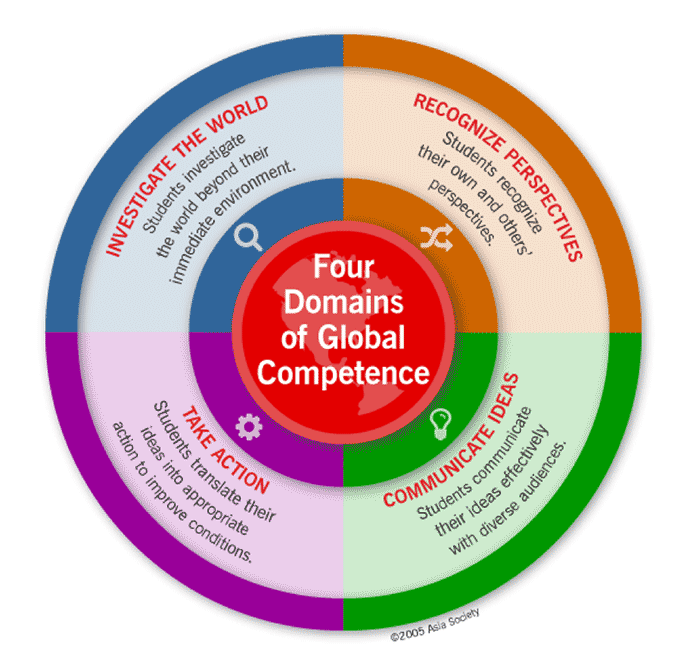
According to the Asia Society, globally competent students have the knowledge and skills to:

Investigate the World

Globally competent students are aware, curious, and interested in learning about the world and how it works. MY COMMENT – curiosity is the basis for cross-cultural success, it embraces difference, is tolerant and generous.

Recognize Perspectives

Globally competent students recognize that they have a particular perspective, and that others may or may not share it. MY COMMENT – we still hear frustrated business leaders asking “why can’t they be more like us”. Recognising perspectives is the basis of acceptance – which is a reality based way to deal with difference.

Communicate Ideas

Globally competent students can effectively communicate, verbally and non-verbally, with diverse audiences. MY COMMENT – there is a huge job to train and motivate students from Asian cultures to speak up and have confidence in their ideas – once they do speak up, we will quickly learn how much value they add.

Take Action

Globally competent students have the skills and knowledge to not just learn about the world, but also to make a difference in the world. MY COMMENT – my guess is that in Industrial 4.0 many of the jobs of the future will be ones we create for ourselves – individually or in teams. This used to be called entrepreneurship but might morph into a new form.

Please share your perspectives…