
More Australian university students going abroad during studies

The 2018 Australian Universities Learning Abroad report, released in November and undertaken by i-Graduate, found more than 52,000 Australian domestic students went abroad during their studies last year, representing 19% of the entire graduating cohort.

By level of study, however, one in four undergraduates went abroad, at just 36,500 students.

Students are also starting to recognise that this is an opportunity that can help differentiate them as a graduate,” explained Jo Byng (pictured), member of the Australian Universities International Directors Forum Executive.

jo bing3

“Many of their peers are engaging in it… and so I think they recognise it’s got a lot of value and it’s becoming a rite of passage for students.”

According to the report, 2018 was the first time ever the number of domestic outbound students surpassed the 50,000 marks, and saw the proportion of students almost doubled from 17% in 2014.

Speaking with The PIE News, Byng, who is also director of international strategy, mobility and operations at Western Sydney International, said substantial government backing had also helped encourage more Australian students to consider mobility programs.

“The Australian government has given an immense amount of support, particularly to promote undergraduate mobility, through New Colombo grants and scholarships,” she said.

“That would be one of the big factors, but then also loans that have been available to students, undergraduates, for over a decade now, that I think are taken up in fairly significant numbers by students.”

“Universities have really started to recognise the benefits to students in undertaking overseas mobility experiences,” she continued, adding benefits were experienced both academically and post-graduation when finding employment.

Of those that went abroad, the majority did so on a short-term program, with 24% going on a study tour, 21% as part of a work-integrated learning experience, internship, or practical placement, and 16% to undertake a class at a partner institution.

RMIT University is one of the institutions that has seen a substantial rise in the number of domestic students participating in some form of international study experience.

“Students are increasingly taking up the unique experiences we offer in person, online, onshore and offshore to help develop global perspectives, so they are ready for the ever-changing world of work,” a spokesperson said.

“More than 3,500 students participated in a global mobility program (traditional exchanges or study abroad programs) through RMIT in 2018, an increase of 21.5% since 2017.”

According to the study, 49% of Australian outbound students studied in the Indo-Pacific, an area of focus for the New Colombo Plan. China, meanwhile, represented the biggest single country with 14% of students.

Byng said the next aim for AUIDF was to ensure demographics underrepresented in the study could take up an outbound experience.

Dalai Lama provides another insight into how India is very different

How is India different?

Last week the Tibetan spiritual leader the Dalai Lama delivering the 24th Dr Sarvepalli Radhakrishnan memorial lecture on “universal ethics” organised by the Indian Institute of Advanced Study, said India’s message of “ahimsa, kindness, love and compassion” spread even during religious conflicts and World Wars.

So, there is one guide to India’s difference – in my own words – despite having some internal conflicts of its own, the Indian starting point is non-violence, kindness, love and compassion. Not saying it always works out that way, but…

How many other cultures can we say this for? Think how strongly the concept of “revenge” has taken hold in the west – someone does wrong by us, we will “track them down”. Just one example of a different mindset.

The Dalai Lama has lived in India since 1959, and he also called for a “revolution” in India’s education system by combining its 3,000-year-old ancient tradition of high moral teachings with the modern education. This would be a good thing everywhere.

“Those mental quality subjects like non-violence, love, kindness and compassion should be included as an academic subject instead of religious teachings,” the 84-year-old said.

What do you think?

hhdl

Indian education market and Australia’s leading universities talking the same language

While I was in India working on the Genesis India Horticultural Collaboration Project 2019, our top universities (The Group of Eight) were in India with Federal Education Minister Hon Dan Tehan.

(Pictured above are, from left, Hon Dan Tehan, Australian Education Minister, Vicki Thomson Go8 Chief Executive and Dr Craig Jeffrey, Director, Australia India Institute).

This is an important mission – if we can get a deep understanding of what India is driving for, we will develop collaboration that will be for the good of both countries.

The concept of just taking in fee paying Indian students without some sense of balance and collaboration could have a short shelf life.

The visit was timely and served to reinforce Go8 commitment to supporting and assisting with India’s ambitious higher education policy priorities which were recently announced.

Go8 represents Australia’s leading research-intensive universities with seven of its eight members ranked in the world’s top 100 universities.

I was impressed with this summary from Vicki Thomson Go8 Chief Executive: “We understand that by working cooperatively we can best assist where we can, developing opportunities for quality students, graduates and researchers, and, critically the future academics who will lead the vital train-the-trainer work India requires.”

“There is potential for research intensive universities like the Go8 to partner with Indian institutions and Indian industry on projects with potential to be nation building on both sides. Success in these areas can capture public imagination and support and encourage further investment and commitment from both the Australian and Indian Government’s,” Ms Thomson said.

Three Go8 universities are already engaged in Indian partnerships at PhD level. Since 2008 the Monash-IITB Research Academy has been providing joint PhD training, the University of Queensland/IIT-Delhi collaboration uses a similar model and more recently the University of Melbourne has entered into a collaboration with three of the prestigious Indian Institutes of Technology to deliver a joint doctoral degree program.

I like the language of the Go8 – “Expanding this collaboration is key to our ongoing partnership with India.”

Now, that is the pathway to the future in education.

Karnataka could lead India into global academic collaborations

India’s state of Karnataka is currently looking at a proposal to establish a “Centre for International Strategic Academic Collaboration” which would actively generate linkages with international universities and students.

The proposal is the brainchild of Mr. Nanjundaiya Ramesh Kumar (pictured below), holder of two Masters’ degrees – Industrial Economics from Brussels University, Brussels, Belgium and in Business Administration from Boston University, Boston, US. He is an experienced international banker and advisor to Governments as well as a tireless promoter of Karnataka as a provider of quality university education – the state has 55 universities.

ramesh

INTO INDIA recently reported on an initiative of RMIT University in Melbourne to create a collaborative post graduate research model with India – universities and research institutes.

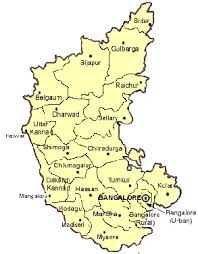
The Karnataka “Centre for International Strategic Academic Collaboration” would involve all 55 Universities (faculty, students and other stakeholders) in Karnataka and the professional community of learners internationally to achieve sharing of best and tested education practices via a mutually beneficial and collaborative international partnership.

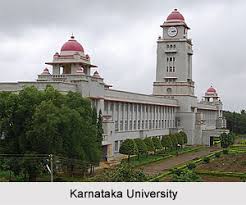
karnatakauni3

The Centre would ensure that arrangements are in place at the University level for the effective management of overseas strategic academic collaborations, including procedures for the maintenance of academic standards and the assurance and enhancement of the student learning experience.

It would reach out to International Deans, College International Leads and College International Business Development Managers and key overseas University Services on the development and management of academic collaborations.

karnatakauni4

The Government of India since 2016 has been encouraging collaboration between Indian and overseas Universities.

Centrally this initiative has the full support of the Ministry of Human Resource Development and all States in India have been advised to look into this on priority basis.

Recommended areas of collaboration include Art and Design, Health, Higher Education, Creative writing & poetry, Literary criticism & English language, Sociology and Social Policy, Aviation, Transport and advanced Communication. Research Collaborations would be sought in Sensing & Imaging, Electrochemistry, graphene and carbon nanotubes, Mechanical Engineering, Biomedical Engineering and Sustainable Ecology and environment protection studies.

Education Hubs

One of the suggestion of the proposed Centre will be to Create ‘Education Hubs‘ or Centres of Excellences (CoEs) strategically in Bengaluru and allow reputable overseas institutions and universities to establish a presence in India, through joint initiatives (with any local university in Karnataka) in curriculum design and delivery, branch campuses, train the trainer initiatives and joint research and scholarly activities that could help build capacity, reduce the imbalance in student mobility and attract significant export earnings.

Karnataka is already strong in higher education – this proposal could see the state become a global higher education powerhouse and magnet.

This is definitely something the Australian Government and Australian universities should be actively looking at as pathways to collaboration in India become more open.


India way behind on the “study in India” goal of attracting foreign students

India’s higher education institutions hosted a total of 47,427 international students from 164 countries in the academic year 2018/19, newly-released figures reveal.

Prime Minister Narendra Modi is determined to increase the quality of university education in India but he has a long way to go.

About 64% of all international enrolments came from 10 countries, and the highest senders were India’s regional neighbours.

Nepal sent 27% of all international students, Afghanistan 10% and Bangladesh 4%. The other countries in the top 10 were Sudan, Bhutan, Nigeria, US, Yemen, Sri Lanka and Iran.

Almost two thirds of the international student cohort were enrolled at undergraduate level, while 16% were pursuing postgraduate qualifications

Last year, the Study in India initiative made headlines as the country announced plans to rebrand as a major study destination and host 1 million international students.

According to Sannam S4  executive director & head of education Lakshmi Iyer, the country is “a long way” from achieving its goal.

“[International students are] merely 0.13% of the total enrolments in higher education in the year 2018-19,” she explained.

“The number of foreign students enrolled in India has increased by 3% year-on-year. So, a long way to go especially considering that foreign students come from 164 different countries across the globe.”

“India has always recognised the importance of education as a soft diplomacy tool, however it is for the first time we have stitched together a credible initiative to really push this agenda forward in the face of China’s well-funded Belt and Road Initiative which is pushing into regions which India considers as her natural allies,” she added.


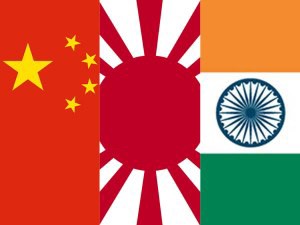
China, Japan and India – the new startup triangle

China is a major provider of funding and control of many Indian startups. In 2015, Alibaba invested in Paytm through its affiliate Ant Financial. In 2017, Tencent took major stakes in Flipkart and Ola.

ola

Japan is also a serious provider of funding in India. Japanese giant Softbank has invested over US$8B in startups in the country, with a goal of $10B by 2024 that now looks surprisingly conservative.

As a result of this “triangle”, India is currently home to 26 startups valued over US$1B.

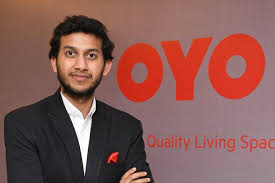
Oyo Hotels and Homes is raising US$1.5 billion from founder Ritesh Agarwal, SoftBank Group Corp., and other investors as it expands into foreign markets such as the U.S. and Europe.

agarwal

Agarwal, 25, will spend $700 million to buy new shares in the company.

Indian edtech startup CollegeDekho, which helps students connect with prospective colleges and keep track of exams, has raised US$8 million in a Series B round.

Last October, Indian e-commerce startup Snapdeal raised US$627 million at a valuation of over $2 billion. In the same month, India’s Uber-style taxi service, Olaraised $210 million, while being valued at over $1 billion in under three years.

snapdeal

India’s largest online retailer and version of Amazon is Flipkart which recently raised another US$700 million at over a $11 billion valuation.

India’s online restaurant guide, Zomato, recently bought US-based Urbanspoon for over $50 million—one of the largest acquisitions by an Indian startup.

zomato

India’s Silicon Valley – Both Koramangala in Bangalore and Hiranandani Powai (pictured below) in Mumbai – are becoming thriving ecosystems to nurture startups in India.

hirandani

Things are changing in modern India – and the “triangle” of India, China and Japan is playing a big role in the change.

 Time to look again?

Horticulture & Hydroponics research mission from Australia to India

From 3 November to 13 November Tony Bundock of Genesis Horticulture Solutions will be leading a research project in India on “POTENTIAL AUSTRALIA-INDIA COLLABORATION ON HYDROPONIC & PROTECTED CROP PRODUCTION AND TRAINING”.

Tony is clear that the mission is not taking a “one size fits all” solution but will genuinely  research potential Australia-India Horticulture Collaboration – understanding the state of play in this sector in India – identifying business and education/skills training opportunities and partnerships. He aims to identify levels of support in both countries for showcasing best practices in controlled cropping/hydroponics and for provision of skills training and train-the-trainer through Australian education/TAFE partners.

PROJECT FIRST STAGE RESEARCH FUNDING

Funding support has been provided for the first research stage by the Australia India Council, Department of Foreign Affairs and Trade, Government of Australia.

I am really pleased to be joining Tony on this mission.

Steve’s 7 tips for exporting to India’s middle class

  1. Find the affluent millennials

India is home to the world’s largest population of millennials—typically defined as those aged 18-35. At 450 million, these millennials are influencing the way Indians eat, shop, commute and buy, much like their global counterparts. They are the first upwardly mobile group in recent history of India – and will have an impact very like the way western baby boomers changed most things.

According to Santosh Desai, managing director of Indian Brand Advisory Group Futurebrands, Indians used to be “born something” but now can “become something”.

2. Drill down to the real middle-class market

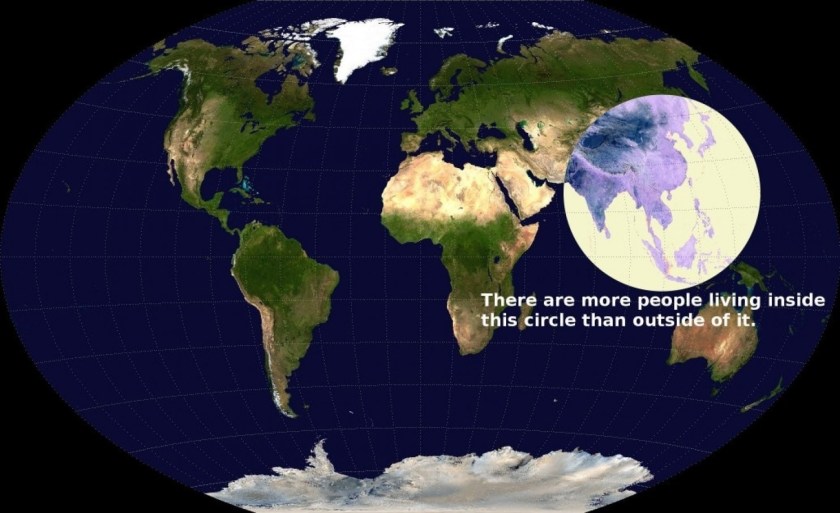
We know India has 1.3 billion people, but if you think too much about this you will get nowhere. Drill down to find your market.

asiamap8circle

For example, some estimate the “middle class” as high as 300 million. For me, this is way too high. Austrade takes a dimmer view – it estimates that there are approximately 30 – 80 million people in our target demographic, many of whom live outside Tier 1 cities. That’s a big range from 30 to 80, which shows that we just do not know. But for me Austrade’s numbers are too low.

Austrade looks for consumers that:

  1. can afford international travel to destinations like Australia;
  2. can afford to send their children for study abroad; and
  3. can afford to eat at high-end restaurants and hotels or eat significant amounts of imported food and wine at home

3. Think of India as many markets

Thinking of India as “one market” will slow down your impact and waste your marketing efforts. First, there is the divide between north, south, east and west. Then there are big metropolises (8-10) and hundreds of tier one cities (around one million plus). Then there are over 26 different languages, multiple food cultures, differing beliefs and interests. It is complex, so build that into your “many markets” strategy.

4. Consumerism is changing in India

India had just 9 Shopping Malls in 2007. There are over 350 Shopping Malls in 2019. Plus 85 new Shopping Malls will be built in the next 5 years = 435 Shopping Malls in 2025.

ambience7

Add to this that online retail is taking off, with Amazon and the local Flipkart leading the way.

Dr Mark Morley Trade Commissioner India Government of Australia makes a key point about opportunities for us: “Australia is well positioned with the Indian consumer. Across India, we have a great reputation for clean, safe and reliable supply. We are well known as a premium supplier of produce, and we have a global reputation for our quality brands.”

5. Thinking local is a good way to start

Especially for those in food, beverages, education and fashion, your beginnings for India can start right here in Australia.

About 650,000 Australians claim Indian ancestry, and we have over 65,000 Indian students here, which means a significant local market spending money. Add to that the growth in Indian tourists – up to over 300,000 per year and growing at around 15%. This gives you a good market testing opportunity.

6. Collaboration is the new relationship

If you just want to “sell” to India, sharpen your pencil and think short term – sooner rather than later, India will find an alternative to you.

To be in India for the long term, seek genuine opportunities to collaborate with Indians – once you and Indian collaborators are working together, your future is more secure. This is how Indians prefer to operate, so drop “transactional” thinking and focus on “collaboration” – it is the new relationship.

7. Give India the time it needs

Cultures based on relationship (collaboration) are slower to move, so give India at least three years. You might “sell” sooner, but for most this is a very short-term market entry approach.

Indian Government plan to allow foreign universities in India is a game changer

The Narendra Modi Government of India has taken steps to allow foreign universities to set up campuses in India – this will be a major game changer.

uni6

The Bill aims to set up a single higher education regulator that will replace the University Grants Commission (UGC) and the All India Council of Technical Education (AICTE).

The Bill carries a clause stating that the new Higher Education Commission can permit “highly-reputed foreign universities” to set up campuses in India.

Skills and education are part of the focus of my mission to India in November – we will report back on this game changer.

The 4 paradoxes of doing business with India

Slow and Fast

We think you need to commit three years to building business in India – but when you first go be ready for anything because demand can be instant. Or not. A careful understanding of the market and assessment of whether it is right for you is essential.

Price and Relationship

We know Indians chase a bargain. But price alone is not enough for longevity in India – you need to build relationships. I would build the relationship first, because anyone can undercut your price.

Status and Money

Status in a hierarchical society such as India is paramount. But now so is money. Making it. Showing it. If your product combines status and money it is a good fit. When there, be careful to fully respect the status of whoever you are dealing with.

“India” and “Many Indias”

India is not one market – it combines many languages and cultures, with people in one part of the country not even being able to understand people in another part. We begin by understanding the regional differences between north, south, east and west – but this is only the beginning of drilling deep to know who you are dealing with and who you are targeting. Beware someone who promises to take you “across India” in one major campaign.

Step one is to get some good market research – the only safe and sound beginning. Add to that some cross-cultural training.

Time, knowledge and patience are the keys.

Steve1

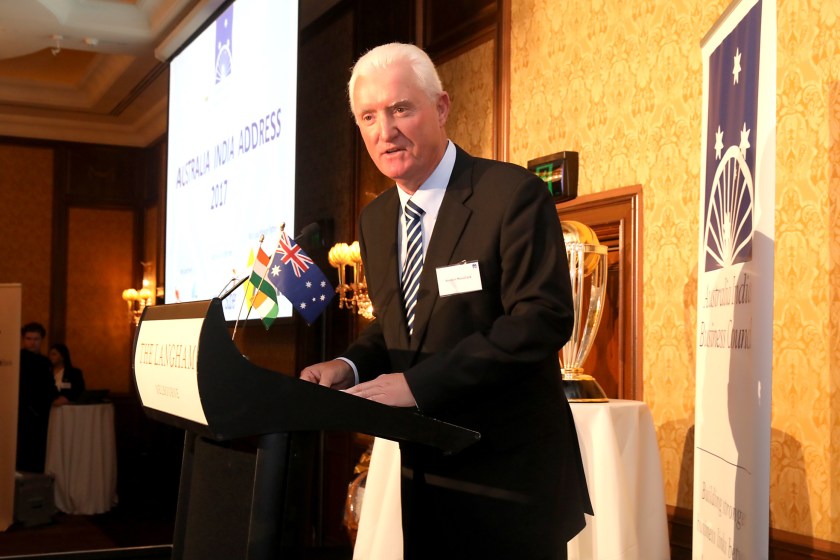
Stephen Manallack speaking at Australia India Business Council function