India offered flexibility on RCEP – the world’s biggest trading bloc

RCEP – the initials that describe potentially the world’s biggest trading bloc.

RCEP needs India back – it walked out during earlier negotiations.

To urge India back to the negotiations for the Regional Comprehensive Economic Partnership (RCEP), its 15 member countries have offered New Delhi the option of deferring commitments related to opening up its market.

Reports on the RCEP move come on the eve of online discussions between Indian PM Modi and Australian PM Morrison. I hope they can advance the talks.

ModiMorrisonSmile2

The move was reported in The Hindu Business Line.

According to some diplomatic sources, the deferral means that India does not need to worry about RCEP’s impact on the broadening of its trade deficit with China and other member countries when it signs the RCEP agreement.

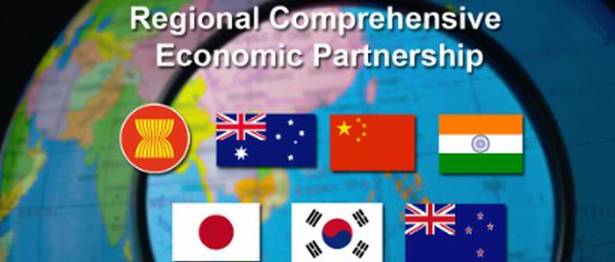
India quit talks with the RCEP — which includes the 10-member ASEAN, China, Japan, Australia, South Korea and New Zealand — in November 2019, as it could not agree on crucial issues including the level of market opening being demanded by the members, especially China.

“If India agrees to the package then it can enjoy the benefits of all other aspects of the RCEP pact such as investments, services and intellectual property rights, without having to worry about the fate of industry and farmers,” the diplomat further said.

The RCEP, once completed, could be the largest trading bloc in the world, accounting for 45 per cent of the world’s population and 40 per cent of world trade.


Stop seeing India through the lens of someone else’s trade war

Things get a bit biased in the west, and right now China is seen by politicians as a negative – even if most western economies rely on China trade.

The mythology from politicians is that their country – including Australia – should look at “diversifying” trade targets away from China.

Thinking of India as an “alternative” to China is a bit disrespectful of India and setting up for failure. Seeing India for what it is – a really good opportunity but on a different scale to China – will lead to better commercial and political decisions.

Let’s not look at India through the lens of someone else’s “trade wars”.

tradewars

When it comes to the world, China is the big game. India and Indonesia are also in the game and worth playing with, but each needs to be respected for what it is.

Take the 2017 Foreign Policy White Paper which reported that growth in demand through to 2030 from China would be greater than that from the US, Japan, India and Indonesia combined. China’s rapidly expanding middle-class market is the big market.

ChinaIndia2

Even the Peter Varghese report on India’s potential showed that by 2035, Australia might export $45 billion of products and services to India. That would be great news! But compare that figure of $45 billion (and it’s 15 years off) with last year when Australia exported more than $160 billion to China.

When we remove the blinkers of politics, we can treat each country with respect and see the actual opportunity they represent.

We can open our eyes to a better view of trade – seeing it as part of the overall relationship of friendship with trading partners.

ModiMorrisonSmile2

Indian PM Modi announces A$400 billion stimulus policy

Indian prime Minister Narendra Modi has announced a A$400 billion stimulus package, one of the biggest in the world’s responses to Covid19.

The package is approximately 10% of India’s GDP.

The stimulus package is called “Atmanirbhar Bharat Abhiyaan” and aims to make India self reliant and to revive the stalled economy.

Details are still coming out but part of the program will be major reforms across areas such as land, labour and liquidity laws to underpin a boost to the “Make in India” campaign.

Other areas will likely include supply chain for agriculture, reforms to national taxation, simplification of some laws, build capable human resources and strengthening the financial system.

It is typical Modi – ambitious, unexpected in magnitude and investors are already reacting with enthusiasm.

Asia Society doing great things to connect Australia with India and beyond

Very good news for my hometown Melbourne and our State of Victoria.

Manoj Kohli, Country Head of SoftBank India, SoftBank Group International, was appointed the second Asia Society-Victoria Distinguished Fellow in May 2020.

Manoj Kohli - profile photo 900 x 600

Asia Society Australia-Victoria Distinguished Fellowship is a partnership between Asia Society Australia and the Victorian Government to bring the best minds and ideas from Asia and Australia to Victoria. It aims to generate new ideas and promote greater economic, strategic and cultural connectivity between Australia and the Asia-Pacific region. The Fellowship will showcase the state of Victoria as Australia’s centre of excellence for Asia insights and capabilities.

The Asia Business Taskforce

On Friday 5 October 2019, the Business Council of Australia and Asia Society Australia announced the formation of an Asia taskforce of senior leaders from the business, education and government sectors to examine how Australian companies and organisations can increase their presence and position in Asia to ensure our continued prosperity and deliver progress for future generations.

The Asia Business Taskforce is chaired by Mark van Dyck, Managing Director (Asia-Pacific), Compass Group, and co-led by Jennifer Westacott, CEO of the Business Council of Australia, Philipp Ivanov, CEO Asia Society Australia, and Andrew Parker, Asia Practice Leader and Partner at PwC.

The taskforce examines how Australia can build and enhance its position with the powerhouse Asian economies in our proximity, diversify our economic partners, and prepare for a more strategically and economically competitive region.

Throughout 2020, the taskforce aims to delivering a series of policy recommendations to government.

These are two brilliant programs of the Asia Society here in Australia.


The 7 ways business and brand can thrive in Industry 4.0

The world is moving quickly into a new era known as Industrial Revolution 4.0 and business brands will have to adapt. This will be our biggest challenge “after coronavirus”.

We have already seen Tata Consulting Services (TCS) shake the world of work by announcing a target of 75% or its 450,000 workers operating from home or remotely by 2025. Others will have to follow.

The fourth industrial revolution sees at least ten major changes, each reinforcing the other so that how we do business and how we work will be totally transformed. The first three industrial revolutions were each about only one change – steam, electricity and computers.

industry4.7

Companies will need to be nimble and honest about the status of their brand – the immediate future can either build or destroy your brand credibility. Here are my 7 tips for thriving as a brand in Industry 4.0:

  1. Show your company can continue to learn

Having a “we want to keep learning” brand is highly desirable for the market, clients and future employees. Audit your brand communication – does it show the organisation is curious, reading and listening widely, entering staff and customers into discussion groups and a genuine “learning organisation”.

  1. SECOND – Demonstrate wisdom and common sense

Your clients look for more than knowledge from you – they want a brand that demonstrates common sense. The best way to describe the difference is through the humble tomato – knowledge tells you a tomato is a fruit (not a vegetable) – but common sense prevents you adding the tomato to a fruit salad. Making sure your senior people have mentors can help their levels of common sense.

  1. THREE – Gain good collaboration and friendship skills

Industrial 4.0 will make collaboration easy and instant with anyone, anywhere and anytime – and the change will benefit those businesses that have the skills to reach out, make friends, work across the globe and build collaboration. It is worthwhile evaluating how much you are seen as a collaborative partner.

  1. FOUR – Build cross-border understanding and skills

Already our lives in one country are intersecting with lives of other countries, and Industrial 4.0 will make the globe an even smaller place. Those who have travelled, who have acquired both knowledge and experience of other cultures will be in high demand, simply because almost every job will have global aspects. Prepare your employees via cross cultural training and global exposure.

  1. FIVE – Make everyone an outstanding communicator

Traditional “soft skills” training will not prepare your team for the fast future – outstanding communication skills for Industrial 4.0 will include rapid pitching, ability to support points in a way which moves others, skills to relate directly and closely with those above and below you. The irony is that as the technology impacts even more, it is the brands that communicate well who will succeed.

  1. SIX – Be known as team-based problem solvers

More work will be team-based, and a powerful brand characteristic is being “team-based problem solvers”. Do your problem-solving teams include members from other companies? Should you offer clients and customers a role?

  1. SEVEN – Build self-reliance and resilience

With the pace of change, your people will need to be more self-reliant and resilient. Life will present challenges almost constantly. Make sure your people can cope, because that reflects in your brand being a steady and trusted delivery sources. When staff lose resilience, your brand is also diminished.

Stephen Manallack is the author of four books, including one published in India (“Soft Skills for a Flat World”, Tata McGraw-Hill India), a speaker on communication and is delivering a series of webinars on Industry 4.0 for Indian and Australian universities. He is a blogger at Into India and regular visitor to India. EMAIL stephen@manallack.com.au

industry4.0hands

How to thrive in Industry 4.0

Industry 4.0 will power ahead after Covid19, bringing massive change – an Oxford study estimates that 47% of the jobs in the US, 69% of the jobs in India and 77% of the jobs in China will not exist in 25 years – such is the pace of change under Industry 4.0.

How will you thrive? Whether mid-career, just beginning or at university, here are some ways to make yourself adaptable for Industry 4.0:

  1. Show you can continue to learn

We know employers’ value this very highly – their focus is not on what you know through your degree – but is more on what you can learn in future. Prepare for this by being curious, reading and listening widely, entering discussion groups and being able to summarise what you have learned outside of university or since your degree.

  1. Demonstrate wisdom and common sense

For employers, further than what you know is how you think, and the value of wisdom and common sense. The best way to describe the difference between knowledge and wisdom is through the humble tomato – knowledge tells you a tomato is a fruit (not a vegetable) – but wisdom prevents you adding the tomato to a fruit salad. One fast track to wisdom is via mentors and guides, those who can share experience with you at whatever level you currently are.

  1. Gain good collaboration and friendship skills

Industrial 4.0 will make collaboration easy and instant with anyone, anywhere and anytime – and the change will benefit those who have the skills to reach out, make friends, work across the globe and build collaboration. Future corporations and employers will be looking for people who can build collaboration.

  1. Gain cross-border understanding and skills

Already our lives in one country are intersecting with lives of other countries, and Industrial 4.0 will make the globe an even smaller place. Those who have travelled, who have acquired both knowledge and experience of other cultures will be in high demand, simply because almost every job will have global aspects.

  1. Become an outstanding communicator

Traditional “soft skills” training will not prepare students for the fast future – outstanding communication skills for Industrial 4.0 will include rapid pitching, ability to support points in a way which moves others, skills to relate directly and closely with those above and below you – any student sitting back quietly as a “newbie” will get left behind. Old notions of being silent in front of elders or superiors will not apply. Respectful and strong communication skills will rule.

  1. Be a team-based problem solver

More work will be team-based and some of those who succeed will actually present to future employers as a team. Problem solving as a team while at university should lead students to then approach employers as teams – a good standout in the race to gain attention.

  1. Build self-reliance and resilience

As jobs come and go, individuals will need to be able to bounce back and start again, maybe many times in their careers. Where no jobs are forthcoming, graduates will need to create their own or join teams that provide solutions.

Work on these skills so you can thrive during Industry 4.0


Think things will go “back to normal” after Covid 19? Think again as Industry 4.0 will flourish

Think things will “go back to normal” after Covid19? Think again – for the moment it is over, what is called Industrial Revolution 4.0 will power ahead and the changes will be dramatic.

An Oxford study estimates that 47% of the jobs in the US, 69% of the jobs in India and 77% of the jobs in China will not exist in 25 years – such is the pace of change under Industry 4.0.

But most employees, students and many universities will not be ready for the fast-changing world of “Industrial Revolution 4.0” which has begun and will be in full swing by the time most graduate.

What kind of world is Industry 4.0?

The Economist Intelligence Unit 2017 report showed younger generations face a significantly different world in their future working and personal lives. Developments such as machine learning and automation promise further disruption, particularly in the workplace, and many established jobs are likely to vanish as a result.

Whole employment sectors are likely to disappear, with others hopefully created. Students, workers and entire economies will compete across global borders for the best education, jobs and growth; all three will need to be nimble, flexible and dynamic, ready to recognise and respond to emerging trends swiftly.

Industry 4.0 will make huge advances in genomics, artificial intelligence, robotics, materials and manufacturing technologies – with convergence bringing massive rates of change.

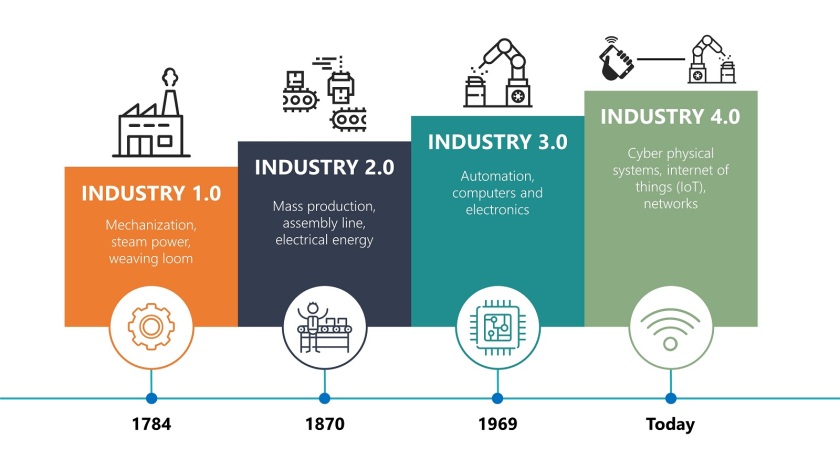
The first three industrial revolutions were steam and water-power driving mechanisation in the late 1700’s, electricity from 1870 creating mass production and the electronics and IT revolution of the 1960’s onward. Each “revolution” was led by one change or one sector. Industrial 4.0 could not be more different with at least 10 major innovations converging to create across the board revolutionary change.
industry4.0

The megashifts of Industrial 4.0 include Digitisation, Mobilisation, Screenification, Disintermediation, Transformation, Intelligisation, Automation, Virtualisation, Anticipation and Robotisation.

The changing world of work

As with previous industrial revolutions, new technologies will create new jobs and simultaneously destroy many old ones. The rise of machines, from robots to smart software, threatens to impact not just low-skilled factory and construction workers, but everyone including managers, software engineers, stock traders and taxi drivers.

This is already happening – China’s factories are adding robots faster than they are hiring people. India’s information technology sector is already witnessing jobless growth and total employment may have peaked.

“Humanity will change more in the next 20 years than in the previous 300 years” – Gerd Leonhard “Technology vs Humanity” (Fast Future Publishing 2016).

Good news – India could shape Industrial 4.0

As the world’s largest democracy and the country with one of the highest number of scientists and engineers, India is a key political, social and economic player that could shape the course of the Fourth Industrial Revolution

It is exciting that the Geneva based World Economic Forum has created a Centre for the Fourth Industrial Revolution in India –  NITI Aayog will coordinate the partnership on behalf of the government and the work of the centre among multiple ministries.

“The Fourth Industrial Revolution will change how we produce, how we consume, how we communicate and even how we live,” WEF Founder and Executive Chairman Klaus Schwab said.

The challenge for universities and students is to enter a world of constant change – where jobs you are being trained for might not be there any more, where you might have to create your own job, or become an entrepreneur while at university, or team up with friends to create an enterprise.

In my next blog – how to thrive in Industry 4.0


Stephen Manallack is the author of four books including “Soft Skills for a Flat World” (Tata McGraw-Hill India 2010). He led a Pilot Study on Improving the Employability of Indian Graduates in his home city of Melbourne, where he has also been President of the Australia India Business Council. A passionate advocate of closer relations with India, his blog is at IntoIndia.blog


India – how Australia’s trade will change and how we should communicate

In the 1990’s, Australia sold India coal and LNG. We also sent over copper, lead and gold, along with unprocessed foods such as chickpeas, lentils, almonds and oils.

According to India veteran Michael Moignard (pictured) of East West Advisers, it was the beginning of our trade relationship with India – so that makes it very recent.

MikeMoignard2

In the 2000’s our trade has shifted – uranium is in there but taking the prize has been education in the form of fee-paying students in Australia. Along with this has been IT and processed foods, with wine and packaged goods finding a market. Finally, Indians discovered Australia as a tourist destination.

So, what will the 2020’s look like?

Michael Moignard was our Senior Trade Commissioner in Delhi for 7 years, so it was good that he gazed into the crystal ball at a recent India seminar at BDO. This is what he saw:

“Sustainability” will become a big theme, covering services and products around water, waste, renewables and smart cities. That’s a big shift.

Education will continue to dominate but with a move to skilling India’s workforce – in India. And IT will blossom into IoT, Ai and more.

Continuing strong will be wine, packaged goods and tourism.

In short – it’s a good picture for Australia. Hope you are ready to participate!

Mike’s advice on how to approach India:

  • Don’t just think about selling your product and services to India (just sales and profits should not be the only motive)
  • Work together to create relationships, trust and mutual value (Indians value trust and personal relationships)
  • Ensure Indian counterparts understand you are there for the long haul…and not just for short-term profits
  • Don’t give the impression that your India strategy is just a diversification from China (and India is definitely not the next China)

Oh, and his final tip, use the phone much more and the emails much less.


Melbourne and Victoria leading the way on India growth story

My home town is leading big time on engagement with India.

Michelle Wade, Commissioner to South Asia, State Government of Victoria, Australia, outlined some of the facts in a recent speech to a BDO event “India – it’s time to diversify”.

Melbourne and Victoria are dominant in Indian student numbers, we have close on 180,000 Victorians who were born in India plus on tourism we lead the way.

According to Michelle Wade, trade and investment opportunities abound for us in India – including advanced technologies, edtech, health and wellness.

One key to doing well is to drill down and find organisations with the right capabilities, according to Wade.

BTW Victoria has business offices in Mumbai and Bengaluru – and have been very helpful to me.

Which Victorians are doing well in India? A few from the big list – Linfox, Deakin University, Rubicon Water, MedSurge, Monash University and Swisse.

Time you engaged with the India growth story?

Canada boosts student numbers and gains in diversification of source countries

Canada welcomed more than 400,000 new international students at all study levels in 2019, with Indian student enrolments accounting for most of the increase in new study permits issued.

More important than the increase – Canada is succeeding in diversification of source countries. This has become a “top priority” for Canada.

These students were for university, colleges and K-12 schools.

Immigration, Refugees and Citizenship Canada statistics show that 404,165 individuals were issued study permits in 2019, an increase of almost 50,000 on the previous year. In 2018, 355,100 new study permits were issued.

Although total figures for the 2019 student population are yet to be released, this new data indicates that the entire international student population in Canada now exceeds 600,000, according to one analyst.

The statistics reveal that 139,740 Indian students were issued study permits in 2019 – up from 107,175 in 2018 – and Indian citizens represent 35% of all 2019 new study permits.

The second biggest cohort came from China with 84,710 permits, marking a decrease on 2018 figures where 85,165 Chinese students were given study permits.

Iran (+39% to 9,795), Nigeria (+16% to 7,585), France (+9% to 14,670) all showed increases of study permits becoming effective in 2019, compared with 2018.

Other countries represented in the top 10 such as South Korea, Brazil, the US and Japan have remained stable, while Vietnam decreased slightly on 2018 figures.

Rounding off the top 15, the Philippines, Mexico, Bangladesh, Colombia and Taiwan all saw increases, with new study permits for the Philippines notably increasing by 56% to a total of 6,365 in 2019.

In 2018, just 40% of active study permits in Canada were for university study – the rest for students at colleges, Quebec’s CEGEPs or at K-12 schools, Universities Canada highlighted.

Although the 2019 breakdown is not yet available, the organisation expects a similar division.

“With the caveat that these new numbers reflect the system as a whole, rather than just university enrolments, Canadian universities are pleased to see continued growth in the number of students choosing Canada as their study destination,” explained assistant director of International Relations at Universities Canada, Cindy McIntyre.

Source: The PIE News