Chennai now a hot spot for startups and entrepreneurs

Chennai has a well educated population, skilled technical talent and is now emerging as a competitor to Bengaluru for startup and entrepreneurial activity.

Who would have thought? “Conservative and slow” was how Chennai was first described to me. Now it has changed.

chennai 3

Active angel investors operating in the region, are boosting the change.

But Chennai is not a city to boast or shout – it will let success do the talking for it.

chennai4

The region’s economy was earlier more dependent on the automobile industry but has shifted towards information technology sector.

Here are some of the startups – Freshdesk, OrangeSpace, Bharatmatrimony, Zoho and CaratLane – all doing exceptionally well.

Why Chennai?

Chennai is a home to many investors with deep pockets willing to invest in startups with innovative ideas. Good governance and integrity further make Chennai the preferred city for business leaders.

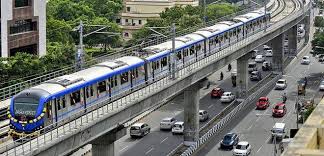
Add to that good roads, ports, railways and airports as positive factors.

chennai5

Chennai is among the top Indian cities with a maximum number of engineering and medical colleges in the region.

Another reality is that the former home of these new ventures – Bengaluru – just cannot accommodate all the new entrepreneurs, so many turn to Chennai.

Growth

Chennai has hosted a number of entrepreneurial events to attract emerging startups and one to watch coming up soon is Pudu Chennai, 2018.


10 reasons every business can find a market in India

To understand what a great long-term opportunity India is, consider these facts:

  1. The numbers are on your side:  564 million below the age of 20
  2. The middle class is growing: 600 million growing middle-class, saving rates have tripled in last 12 years
  3. The mindset is right:  adaptability, competitive, entrepreneurial, believes in “learning, earning and spending”
  4. Challenges lead to opportunity:  mainly in areas such as transport and agricultural infrastructure, medical, power generation & distribution, education, healthcare
  5. Eating and drinking is changing: food & Beverages: food processing, food packaging, food warehouse and transport, health drinks
  6. Homes are stylish: home decor products, kitchenware essentials, bed and bath
  7. Paying for Healthcare: diagnostics and testing, medical equipment, health supplements, clean air and water products
  8. Consultancy Services are flat out: engineering, business development, product development, security analysis, accounting
  9. Infrastructure is big ticket: waste management, solar and wind technologies, temperature-controlled warehouses, air and noise pollution control technologies, towing trucks, and automated parking lot equipment.
  10. “Franchising” is popular: Top sectors with franchising opportunities are Education and Healthcare due to a huge mismatch between supply and demand now and in the coming years

Time to find your niche in India?

indiagate

What is the “India Stack” and why does it matter?

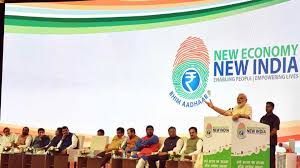
Aadhaar, which means foundation in Hindi, is the foundation of the India Stack and is an identity program for all residents of India. Despite its opt-in nature, about 1.12 billion have Aadhaar identity cards today.

Indian PM Modi launches extension of Aadhaar program.

The intent of the program, which was initiated in 2009, is to eliminate the inefficiencies in the public distribution system as well as to facilitate the disbursement of cash transfers directly from the government to the intended beneficiaries, cutting out middlemen.

The 12-digit card number is linked to an individual’s biometric and basic demographic data including a photograph, iris scans, fingerprints, name, address, date of birth and gender.

The Aadhaar database containing this information is the largest biometric database in the world and was built using internet-scale technology.

Aadhaar is purely an identification tool, so having an Aadhaar card affords no privileges to an individual; unlike a driver’s license for example,which allows one to drive.

The goal, therefore, is to build an identity platform and allow others to build an ecosystem around it, or link services to it – hence, the India Stack. The Aadhaar database can be queried (or pinged) by a bank to verify a person’s identity: Is this person who they say they are? the database returns a binary (yes/no) response to the query.

The other layers in the India Stack interact with the identity (Aadhaar) layer to facilitate digitisation.

Document or credential issuers can send digital documents such as birth certificates, degrees and diplomas, driver’s licenses and digital medical records to the digital locker which can then be used by an individual (using the consent layer) to share documents with those who may demand them such as health insurance providers.

This removes paper from the system as well as fraudulent documents.

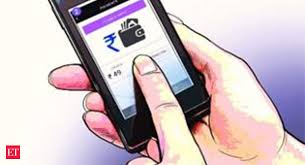
The cashless layer facilitates mobile payments. The Immediate Payment System (IMPS) provides an immediate (and 24×7) interbank funds transfer service through mobile phones using a mobile money identifier linked to a bank account.

The Unified Payment Interface (UPI) is built on IMPS and is an open source platform which uses a single virtual identifier that may be linked to multiple bank accounts as well as mobile wallets.

The India Stack sets up most of the infrastructure required for India’s digital transformation. It provides secure identification to nearly all Indian residents hence eliminating a basic barrier to financial inclusion. It reduces transactions costs as well as fraud and paperwork. However, since it is a platform infrastructure, it’s up to the private sector and the central and state governments to use the open APIs (application programming interfaces) to find use cases and build applications which utilise the platform.

The India Stack is gathering pace – with Telcos and the financial sector leading the charge.

India to create over 1.4 million new IT jobs as digital disruption gains pace

The numbers in India are always big!

India is likely to add over 1.4 million new IT jobs by 2027, primarily driven by emerging technologies like cybersecurity, Internet of things (IoT) and Big Data, a report by Cisco-IDC said.

4th2

“Of the 9.1 million IT positions in India in 2017, 5.9 million job postings from employers were for new-age roles,” it added.

The report said roles like social media administrator, machine learning designer, and IoT designer would be most sought after in the coming years.

digital2

It pointed out that about 22 per cent IT professional respondents said they self-funded their certification courses, while about 50 per cent of them underwent some training in 2017 – a reflection of the growing importance of upskilling in a rapidly changing technological landscape.

About 15 per cent IT professional respondents said took training leading to certification in 2017.

Interestingly, the report stated that seven out of 10 organisations look for IT certifications when hiring or promoting and getting certified put an applicant ahead of 85 per cent of his/her peers.

The top 10 technology trends impacting Indian job scenario include cybersecurity/data security, Big Data, Data analysis visualisation, IoT, Business Intelligence, Artificial Intelligence, Machine Learning, Virtualisation/Software defined infrastructure, Converged Infrastructure and cloud solutions/technologies.

digital3

Why everything you know about Indian tourism is wrong

Two recent major research reports show the high impact Indian tourists are having – with good news for the Asia-Pacific region.

The latest research published by Colliers International, ahead of Arabian Travel Market 2019 (ATM), showed Indians just love travelling west to Dubai and the gulf – the number of Indian visitors travelling to the Gulf Cooperation Council (GCC) nations over the coming five years will create an extra 10.8 million room nights, as Indians are among the world’s highest spenders per visit made abroad, according to new data.

The report predicts around nine million Indians will travel to the GCC states by 2022 37 per cent of India’s total outbound market with business, place of work and leisure underpinning this demand.

tourism6

But it is not just the gulf – numbers are up everywhere. Indian outbound tourists will account for 22.5 million worldwide tourists in 2018, with reports from the UN World Tourism Organisation (UNWTO) estimating this figure will increase by 122 per cent to reach over 50 million by 2022.

Adding to this, Indian tourists are among the world’s highest spenders per visit made abroad, with visitor spend expected to increase from USD 23 billion in 2018 to USD 45 billion by 2022.

tourism 5

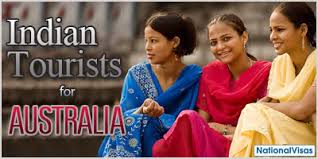
There has been a huge amount of research and attention paid to the growth of outbound tourism for China, but a report issued last week from Tourism Research Australia looks at the current status and potential of the Indian market for tourism in Australia.

India has a population of around 1.3 billion, with consumer spending forecast to reach $3.6 trillion in 2020 – almost four times 2010 levels.

Between 2000 and 2015, outbound tourism grew more than four-fold to 21.8 million departures. The UNWTO predicts that by 2020, there will be around 35 million outbound departures from India – that is an average annual growth rate of 12% between 2015–20.

tourists

Indian tourism to Australia has grown even faster than the overall rise in outbound tourism from India, with a 6-fold increase between 2000 and 2015. Between 2005 and 2016, visitor arrivals from India grew by 299% to reach 262,300 – almost six times faster than the 51% growth in total inbound arrivals to Australia over the same period. Spend growth was even more impressive, increasing 350% to reach A$1.2 billion in 2016.

Using visitor numbers as a measure, Indian visitation to Australia is in about the same position as Chinese visitation was in 2004. India’s per-capita GDP is now at about the same level as China’s in 2005, so if GDP and tourism follow the same upward trajectory in the next decade in India as occurred in China in the last decade, then India has the potential to become a very important market in the future.

tourism7

TRA’s latest forecasts (TRA 2017) predict that arrivals from India to Australia will grow at an average annual rate of 8.7% between 2016–17 and 2026–27 to reach 642,000 visitors.

It is good news, but where you have a high local Indian population, a significant proportion are VFR – visiting friends and relatives. This means their economic impact is constrained. More than 40% of Indian visitors in 2016–17 were here for VFR purposes, relying on their hosts in Australia for accommodation, food and travel costs.

Are you ready for the Fourth Industrial Revolution?

The 4th Industrial Revolution presents some of the most transforming opportunities in human history. Why?

Because disruptive technologies and trends such as the Internet of Things (IoT), robotics, virtual reality (VR) and artificial intelligence (AI) are changing the way we live and work.

4th2

In fact, while previous industrial revolutions were based on one major change, we face ten happening together – robotics, artificial intelligence, nanotechnology, quantum computing, biotechnology, the Internet of Things, the Industrial Internet of Things, wireless technologies (5G), additive manufacturing/3D printing and fully autonomous vehicles.

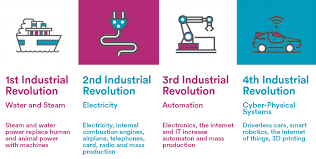
The First Industrial Revolution took place from the 18th to 19th centuries in Europe and America. It was a period when mostly agrarian, rural societies became industrial and urban. The iron and textile industries, along with the development of the steam engine played central roles in the Industrial Revolution.

steam

The Second Industrial Revolution took place between 1870 and 1914. It was a period of growth for pre-existing industries and expansion of new ones, such as steel, oil and electricity, and used electric power to create mass production. Major technological advances during this period included the electric light, telephone phonograph and internal combustion engine.

The Third Industrial Revolution, often called the Digital Revolution, refers to the advancement of technology from analog electronic and mechanical devices to the digital technology available today. The era started during the 1980s and is ongoing. Advancements during the Third Industrial Revolution include the personal computer, internet and ICT.

The Fourth Industrial Revolution describes the exponential changes to the way we live, work and relate to one another due to the adoption of cyber-physical systems, the Internet of Things and the Internet of Systems.

How will it work? One example – as we implement smart technologies in our factories and workplaces, connected machines will interact, visualize the entire production chain and make decisions autonomously. This revolution is expected to impact all disciplines, industries, and economies.
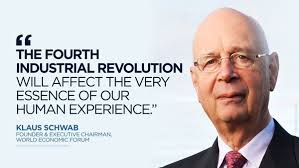
klausschwab

In his book, The Fourth Industrial Revolution, Professor Klaus Schwab, founder and executive chairman of the World Economic Forum, describes the enormous potential for the technologies of the Fourth Industrial Revolution as well as the possible risks. He said, “The changes are so profound that, from the perspective of human history, there has never been a time of greater promise or potential peril.”

Schwab calls for leaders and citizens to “together shape a future that works for all by putting people first, empowering them and constantly reminding ourselves that all of these new technologies are first and foremost tools made by people for people.

Will we put people first?
India – economy is not so much the elephant, more the tiger on a leash

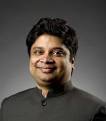
According to Dhiraj Nayyar, Chief Economist, Vedanta Ltd, “Perhaps India’s economy is not a lumbering elephant, but a tiger on leash.

What does he mean? In a major article in the Economic Times, he notes that every time India tries to break free, it hurts – rising economic growth is plagued by side-effects, whether high inflation or rising Current Account Deficit (CAD). With growth crossing 8.2% in the last quarter, India’s recovery may be adding to its external account woes.

modimarkets

I have followed the writings and commentary of Dhiraj Nayyar for some time, including when he was with NITI Aayog. He has just released a book “Modi and Markets”. Always clear and persuasive, he is a passionate advocate of a successful India.

dirrajnayyar

He believes politicians look for the quick fix, rather than curing the problem.

Instead, politicians should “focus on enabling the most important feature of free markets: competition. In the end, that is the principle which delivers the lowest prices, highest quantities, reasonable profits, investment and plenty of jobs.”

economy

Since economic liberalisation, the successful industries have been aviation, telecom, pharma, IT, hospitality and automobiles — those where competition has been intense. Sectors where the government has retained greater control on outcomes through policy, and dominant public enterprises have done less well.

nse

Dhiraj Nayyar argues the government should test every policy on the principle of competition. The goal of policies should be to ensure competition between enterprises operating in India, and to create a fair competition for India-based enterprises vis-à-vis their foreign counterparts.

He goes further: “Domestically, policy should be agnostic about whether an enterprise is foreign, private domestic or public domestic, as long as the policy/regulatory regime creates maximum competition.”

Entry for a new firm should be simple, exit for a dying firm should be orderly.

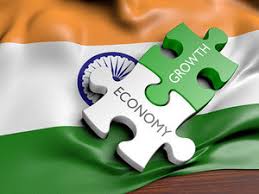
India suffers from mostly self-imposed constraints. A more liberalised and flexible economy will help correct chronic CAD, while containing the pressures of excess demand as growth approaches double digits.

Dhiraj Nayyar concludes: “Less control by government will lead to outcomes that don’t need to be controlled. It will also lead to rapid growth without side-effects.”

As always, he makes a strong case – will politicians act on it?

indiagate

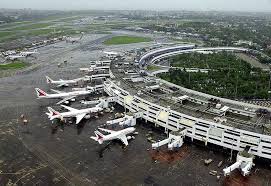
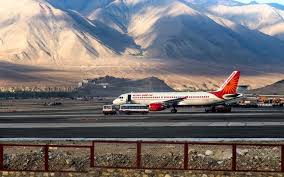
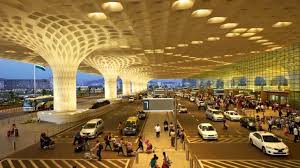
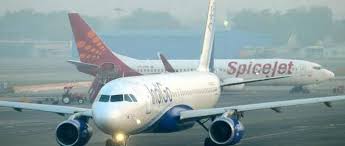
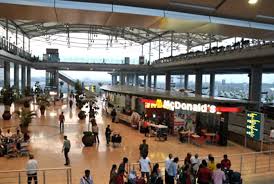
India to become world’s third largest aviation market by 2024

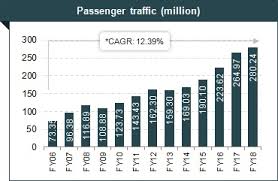
India will become the world’s third largest aviation market around 2024 surpassing the UK, according to the global airlines’ body the International Air Transport Association (IATA). It projected total air passenger numbers to touch 8.2 billion in 2037.

aviation5

The top four markets are predicted to be China, USA, India and Indonesia.

The Asia-Pacific region is projected to drive the biggest growth with more than half the total number of new passengers over the next 20 years coming from these markets.

aviation6

The India growth is being driven by a combination of continued robust economic growth, improvements in household incomes and favourable population and demographic profiles, it noted.

According to the IATA, China would displace the United States as the world’s largest aviation market in the mid-2020s.

aviation4

The aviation market is defined in terms of traffic to, from and within a country, as per the grouping.

By taking 3rd place after China and the US, India passes the UK around 2024. Indonesia is forecast to be a standout performer – climbing from the world’s 10th largest aviation market in 2017 to the 4th largest by 2030.

aviation7

IATA believes a doubling of air passengers in the next 20 years could support 100 million jobs globally.

aviation2

Tourism or business – start your India visit in Maharashtra

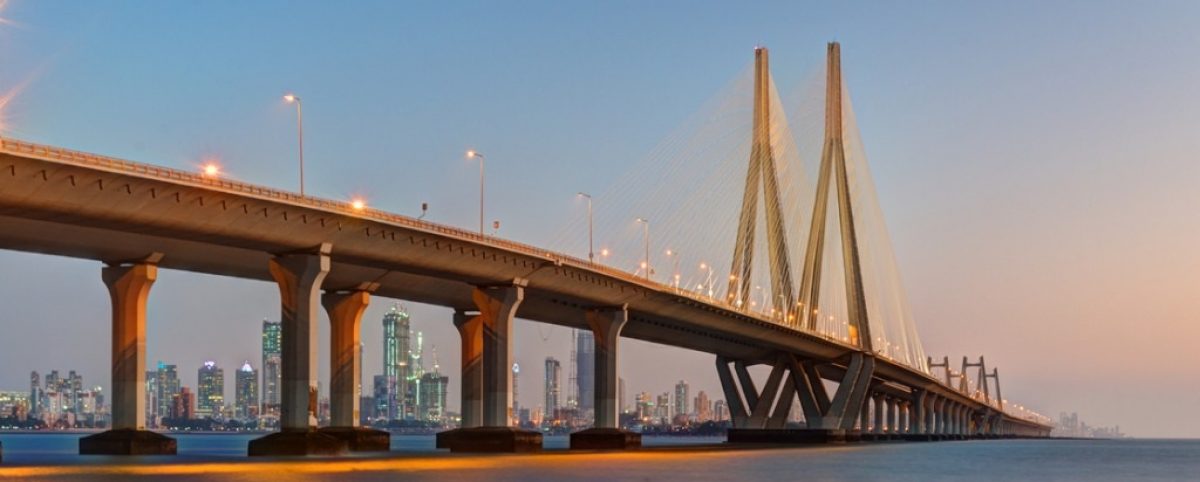
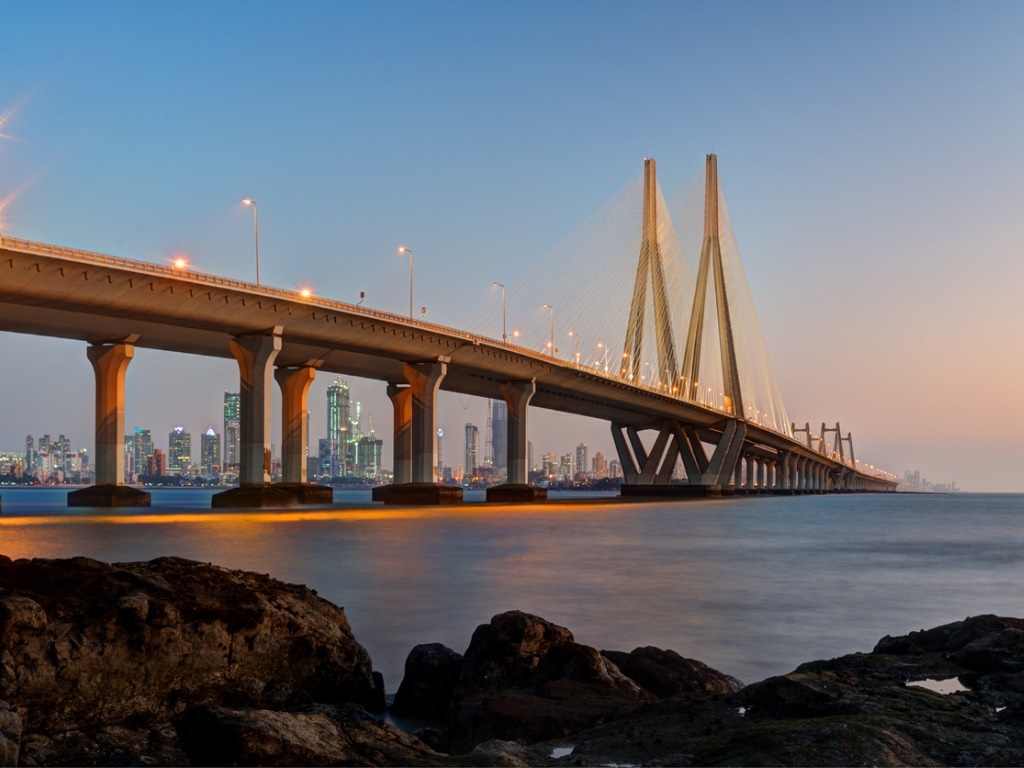
The Indian state of Maharashtra and the capital, Mumbai, is situated in the western region of the country – but really it is central to almost everything.

Maharashtra’s gross state domestic product (GSDP) at current prices accounted for 14.89 per cent of India’s gross domestic product (GDP) in 2017-18, the highest among all states – valued at US$ 387.36 billion. It’s the economic powerhouse of India.

maharashtra

We know and love the state’s capital, Mumbai, as the commercial and financial capital of India – plus with heaps to interest both business and tourism. The city is home to several global banking and financial service firms, plus India’s stock exchanges.

maharashtra2

Pune is a city I really love and recommend not just because it is on the edge of the most beautiful mountain range. It has emerged as the educational hub.

pune

Maharashtra has emerged as a key hub for IT and ITeS, electronics and business outsourcing industries.

BKC1

The state has a well-developed social, physical and industrial infrastructure. Apart from 16 airports, the state has two major and 48 minor ports. It also has a well-developed power supply grid.

gateway3

If you are not convinced, look at these numbers:

  • At current prices, the contribution of the financial sector to the GSDP of the state increased at a CAGR of 10.51 per cent between 2011-12 and 2016-17.
  • From August 1991 to December 2017, a total of 894 projects with an investment of Rs 19,088 crore (US$ 2.96 billion) have been approved for the pharmaceutical industry in the state.
  • The government has launched Wi-Fi services, which will connect 500 hotspots across Mumbai, under the smart city project.
  • The state has produced 6.55 million bales of cotton in 2017-18*. In 2017-18(P), the state has also produced 184 MT of raw silk.
  • Power generation in the state has been steadily increasing. Production figure stood at 124.31 TWH in 2017-18 and 47.19 TWH during April – July 2018.
  • Maharashtra accounts for approximately 35.1 per cent of the country’s output of automobiles by value.
  • The state has launched Unlimited Maharashtra advertising campaign through newspapers and television channels to attract tourists during summer vacations. A half-hour ferry ride across Mumbai harbor takes visitors to view the superbly carved 1,300 years old cave temple on the little island of Elephanta, a favourite picnic spot.
  • In 2017, the state had 119.2 million domestic tourist arrival and 5.08 million foreign tourist arrival.

Mumbai is always on my itinerary for India – and there are many other cities worthy of our attention.

bandra-worli-sea-link-mumbai-picture-id915681526

India’s healthcare sector growing fast

Healthcare has become one of India’s largest sectors both in terms of revenue and employment.

During 2008-22, the market is expected to record a CAGR of 16.28 per cent.

health3

The total industry size is expected to touch US$ 160 billion by 2017 and US$ 372 billion by 2022.

Indian companies are entering into merger and acquisitions with domestic and foreign companies to drive growth and gain new markets.

health1

The hospital industry in India stood at US$ 61.79 billion in 2017 and is expected to increase at a Compound Annual Growth Rate (CAGR) of 16-17 per cent to reach US$ 132.84 billion by 2023.

Engagement through regular visits and providing innovation should prove to be fruitful in this growth economy.

health5