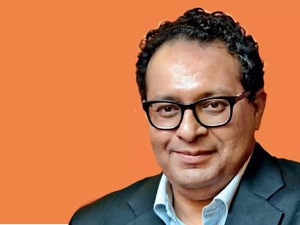
My good friend Mugunthan Siva is the CEO of India Avenue Investment Management – an India and Australia investment company – and he has advised me of great news for the Indian economy and investors.
The International Monetary Fund is now forecasting India to grow GDP at 12.5% in 2021 – the only double digit forecast amongst developed and emerging economies.
Expected global growth of 6% will also play a role in India’s growth given its incrementally increasing role in supply chains, the rise again of the IT outsourcing industry and its strength in pharmaceutical manufacture and export.
In 2022 the IMF forecasts a further 6.9% GDP growth for India – once again the leader of the pack. If India continues to grow like this the US$5tn goal of the Modi’s Government appears within reach in the next 4-5 years.
According to Mugunthan, India’s equity market is evolving nicely given the pivot post COVID. Market breadth has normalised and active managers are dominating the landscape again, as they should in an inefficient equity market like India’s. The next 3 years should see a strong recovery in corporate profit.
Indranil Sen Gupta, BofA Securities, recently expressed the view that India is likely to become the 3rd largest economy over this decade. This will be driven by: – sweetspot for the demographic dividend – significant FX reserves to protect the economy – 9-10% nominal GDP growth over the decade – Low interest rates will lead to the next capex cycle, earnings growth
He said: “We see the economy growing at 9% nominal, that is 6% growth, 5% inflation, and 2% depreciation for the next two years. There are three drivers. The demographic dividend which we have all been talking about for the last 15 to 20 years is actually going to kick in from 2020 and help savings and investments. Secondly, there is financial deepening. Compare it to GDP ratio, which is around 40 to 50 per cent of GDP, should jump almost 100%. And thirdly, there is the emergence of mass markets, which the US probably saw 100 years ago. For example, the price of an entry level car today is 2.5x down from 14x 20 years ago. We think that is close to 1x on export basis.”
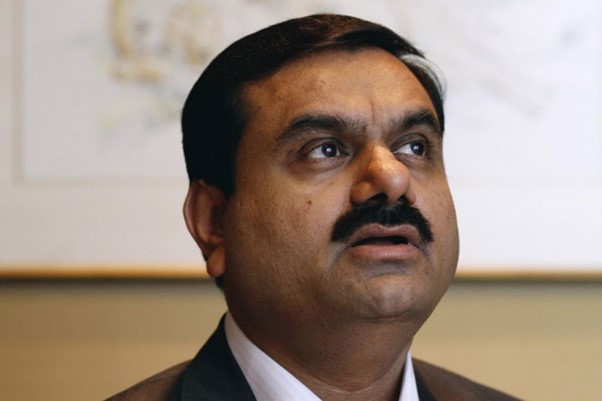
After spending two decades building a business empire centred on coal, Indian billionaire Gautam Adani is now looking at a different future. His ambitious plans are getting a boost from close friend Indian Prime Minister Narendra Modi.
Mr Adani is diversifying into airports, data centres and defence – sectors Mr Modi considers crucial to meeting India’s economic goals. Investors are rewarding the pivot.
In less than two years, Mr Adani has gained control of seven airports and almost a quarter of India’s air traffic.
Adani will boost his renewable energy capacity almost eightfold by 2025.
Last week, he won a contract to co-develop a port terminal in Sri Lanka, a neighbour India is courting to check China’s influence in the region.
Adani Enterprises last month signed a deal with Edge- ConneX to develop and operate data centres across India.
After starting out as a commodities trader in the late 1980s, Mr Adani is now India’s second-wealthiest person, with a net worth of US$56 billion. He has added US$50 billion to his fortune in the past year, about US$5 billion more than Mr Ambani, Asia’s richest man, according to the Bloomberg Billionaires Index.
Despite a tariff as high as 150% plus state taxes, Australia’s Jacob’s Creek is a standout leader in the imported wine market of India. This Aussie winemaker is owned by global giant Pernod Ricard.
Here are some stunning statistics – imported wine accounts for 40% of wines sales in India. 70% of that 40% is Jacob’s Creek. This means Jacob’s Creek accounts for over 20% of the wine market in India.
Another stat – every year 19 million Indians reach legal drinking age.
Wine is mainly an urban success story in India, with three cities dominating the consumption – Mumbai, Delhi and Bengaluru. Apparently women are driving demand for wine – while men stick to whiskey and beer, women have become major consumers of red wine.
Jacob’s Creek has succeeded despite stiff competition from local winemakers, including Sula and Fratelli.
In the context of exporters urgently seeking alternatives to China, Jacob’s Creek is a success story that should be studied by those seeking to succeed in India.
Now – about those tariffs. Australia needs a coordinated campaign to get some relief for wine. This campaign needs to encompass governments, industry and culture/education. My advice – don’t go head-on against the tariff. Subtle approaches are best. Work out what we can offer India and how some reduction in tariff therefore becomes mutually beneficial.
Wow – this is a scene from the South Australian vineyards of Jacob’s Creek
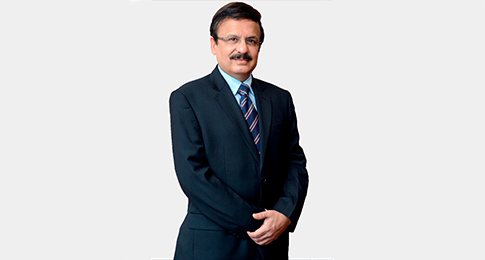
Commenting on the recent Indian Budget, Vishal Kampani, Managing Director, JM Financial Group, said “the Finance Minister has laid the foundation for next-generation growth and deserves a big round of applause.”
The Union Budget 2021-22 presented by Finance Minister Nirmala Sitharaman on Monday has laid out the road map for India to achieve sustainable growth in the years to come by delivering on key expectations. By choosing growth imperatives over fiscal puritanism, the FM has clearly indicated where the government’s focus and priorities rightly lie.
Easy to use and understand analysis of the India Budget by our friends at Nangia Andersen India:
“The Finance Minister delivered a growth oriented reformative budget giving due thrust on capital investment. Amidst the high expectations of a pandemic-struck India, FM treaded the tightrope successfully, maintaining a balance between revenue gap and government’s commitment to the pained sectors of the economy, viz. infrastructure, healthcare, public transport system, auto, textiles, digital India. While the budget maintained the status quo on tax rates, incentives were accorded to units of IFSC and start-ups. Additionally, steps have been taken to improve the efficiency of tax administration system, rationalization of MAT, equalization levy, etc”
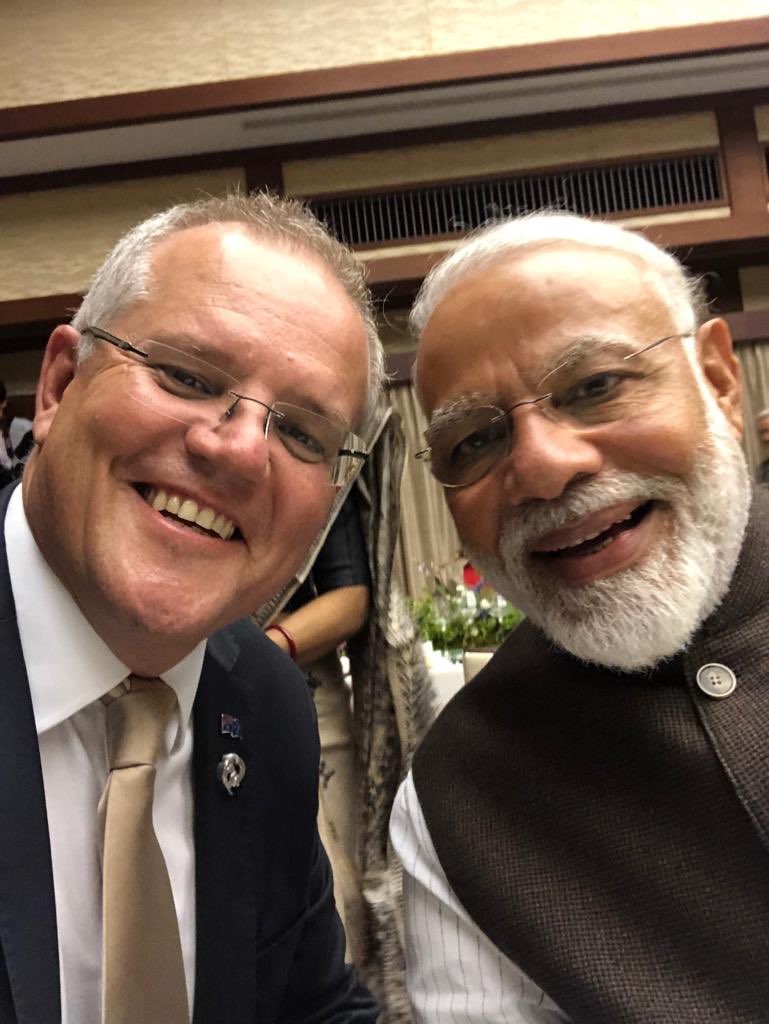
Yesterday was both Indian Republic Day and Australia Day – and in these times the closeness of the two countries makes us more aware of what we have in common.
Australia’s Prime Minister Morrison wrote yesterday that: “While, for now, our people are separated, the truth is that Australia and India are closer than we have ever been. Our progress is unchecked. We’ve taken huge strides in the last year, and, despite its enormous hardship and loss, 2020 will be remembered as a pivotal moment in our friendship.”
Business and investment can become the next step in the “huge strides” in the friendship of the two great democracies.
India’s growth and demand right now means that every sector of Australian business should have an “India strategy” and become part of this amazing growth story – and the future closeness of the two countries.
The launch by India on 18 December of its Australia Economic Strategy (AES) – the first of its kind for India – could be an exciting step along the way to increased trade. As KPMG has expressed it: “It demonstrates India’s intent to fast-track the relationship with Australia in a post-pandemic world.” Exciting.
My view is that as Australia and India move closer together, opportunities will emerge for the two to create and lead an “Indian Ocean Countries Group” – a pathway to peace and prosperity in our region.
India and Australia could lead a prosperous and peaceful Indian Ocean Region
The AES adds to the Comprehensive Strategic Partnership (CSP) announced by Prime Ministers Morrison and Modi in June 2020 – and both are real evidence that India and Australia are moving closer together.
Three pillars of India’s strategy
The AES is based on three pillars: resources; technology & services; and research & innovations.
Five key sectors
According to KPMG there are five key sectors:
The first is Indian investment in Australia’s mining and resources sector, especially lithium, cobalt and nickel, important for a rapidly growing e-vehicle market.
Second is Indian investment in renewable energy both in the establishment & operation of solar farms as well as the supply of EPC services with Sterling Wilson Solar Limited being a case in point.
Third is health and pharmaceuticals. Collaboration in clinical trials, cancer research, medical & health-tech and training, knowledge transfer and sharing of Australian best practices in hospital administration and patient care.
Fourth is investment in Australia’s agribusiness sector including farmlands and Australian food processing capabilities. There is also significant potential for knowledge sharing and collaboration in best practices for dairy processing.
The fifth is software & information technology. India’s tech giants already have sizeable operations in Australia with further organic and inorganic growth on the cards and an opportunity to extend their business portfolio into government accounts. Further, as Australia looks to build up internal capability and capacity, there is opportunity for the tech giants to set-up centres of excellence or innovation hubs in strategically important areas such as cyber security, cloud and digital, for Australia and the wider ASPAC region.
Make in India program
The new AES, and IES and the wider strategic partnership, all serve to complement India’s flagship Make in India program, which makes India a credible alternative for lower cost manufacturing for Australian companies as they look to diversify business and supply chain risk in a post pandemic world.
Conclusion
Close relations have historically been built on a combination of defence/strategic alliances, mutual investment and trade.
For Australia and India, the future is looking bright in all three areas.
Tech pioneer Bill Gates praised India’s policies for financial innovation and inclusion, saying his philanthropic foundation is working with other countries to roll out open-source technologies modeled on the country’s implementation.
“If people are going to study one country right now, other than China, I’d say they should look at India,” Gates said at the Singapore Fintech Festival on Tuesday. “Things are really exploding there and innovation around that system is phenomenal.”
India has built ambitious platforms for universal identification and digital payments, including the world’s largest biometric database and a system for sending rupees between any bank or smartphone app. Gates said those policies have drastically reduced the cost and friction of distributing aid to the poor, especially during the pandemic.







 Into India