Australia’s sister-city relationships with India and the diaspora here – asleep but huge potential

The growing Indian diaspora in Australia could add real energy to our relations with India – and the sister-city program could be an ideal vehicle.

My desk research suggests that only Brisbane and Ipswich have formal sister-city relations, both with Hyderabad. I also believe Perth has begun searching for an Indian sister-city.

This is pathetically small when compared to our large numbers with Japan, USA, Canada and China. It is time to catch up with India.

Global sister-city relationships, also known as city twinning, started after World War 2 with the ideal of fostering international cooperation, cultural exchange, economic development and disaster preparedness.

Worldwide sister-city relationships right now have almost stalled, yet offer immense potential.

There is a growing need for comprehensive research to assess the effectiveness of existing collaborations, identify challenges, and formulate evidence-based policies that can enhance the outcomes of these bonds.

We should reinvent sister-city relations with India and focus on helping with challenges such as climate change and pandemics, along with development and economic links. The Indian diaspora in Australia is well placed to lead this.

Modern technology makes sister-cities highly attractive via the improved and cheap communication channels. Knowledge exchange is now easier than ever. Economic collaboration and trade between twin cities can go through the roof if the local diaspora is heavily involved.

People to people connection is the sleeping giant of Australia-India relations and it can wake up and energise via the Australian Indian diaspora.

How can we apply digital platforms, data analytics and smart city technologies to create highly effective sister cities with India? We need answers in order for sister cities to be a wise investment of time and money.

Successful sister-city relationships must be characterised by a commitment to mutual understanding, effective communication, and a focus on shared goals.

Anusha Kesarkar Gavankar, a Senior Fellow at the Observer Research Foundation, recently wrote: “Policymakers could focus on enhancing communication channels between sister cities by utilising modern technology, establishing regular forums, and promoting language exchange programmes. Developing dedicated online platforms and mobile applications can facilitate real-time communication, allowing cities to share experiences, best practices, and innovative solutions to shared challenges.

“Furthermore, establishing annual forums or conferences where representatives from sister cities can meet and discuss collaborative opportunities can strengthen ties and foster a sense of community.”

In addition to the economic potential, I would love to see sister-city scholarships for Indian students to study in Australia, as well as cultural events that showcase the rich diversity and indigenous knowledge of each city can strengthen the bond between communities.

Many of our universities now have formal links and presence in Indian cities, so it would make sense for sister city deals to focus on this groundwork.

I would also like our sister city deals with India to include “great challenges” so the two come together for problem solving and common goals. This adds real energy to the relationship.

The Indian diaspora in Australia can provide the real energy to make this work. We already know External Affairs Minister Dr S Jaishankar is a big fan.

Read more from Observer Research Foundation here:

https://www.orfonline.org/expert-speak/the-twin-connection-revitalising-sister-city-relationships

Jasmine Batra and AICC outlining a thoughtful way to enter the India market

Two organisations that advocate a “more thoughtful” way to enter the Indian market came together last week in a wonderful seminar providing some super advice.

First was the Australia India Chamber of Commerce (AICC) which hosted the event and their Chair, Chris Mooney, put the case for the chamber’s National Industry Groups doing well researched and sequenced steps to engage with India. Each group does research for a white paper, builds a community and knowledge group around it and leads to well prepared India missions.

Second was the keynote speaker, Jasmine Batra from Arrow Digital, who have a program called “The Big Leap” taking clients through a 12 month program of understanding and entering India. INTO INDIA has long advocated that slower market entry produces superior long term results – a strong alternative to the traditional Aussie hasty transactional approach. We love “The Big Leap” concept.

There are three major factors that make India today a very special market – first, the young population with an average age of 28; second, the rise of the tier 2 and 3 cities, including their specialisation, three, India’s global leadership in rolling out digital infrastructure that is transforming business and society.

Jasmine talked about importance of Food, Festivals and Family when thinking about India. “Family” includes what she called “the crazy rich” such as Tata, Ambani and many more. But it also goes right down to small community business families. Your journey will interact at all levels at some time.

Reducing risk is vital. There are three steps you can take. First, understand the cultural context. Second, do market research and find local partners. Third, network community and do due diligence.

In conclusion Jasmine Batra said you should get over there, get around and get partners. By research and regular visits, your more thoughtful engagement with India will produce results.

La Trobe University very kindly provided the venue.

CONTACT AICC

Contact Jasmine Batra

About Us

9 Rules for Thriving in India

Rules compiled from my personal experience – and with some reference to “Rules for Living” by the School of Life…

1. ACCEPTING IMPERFECTION

You will never be happy in India if you seek perfection. Hang on…maybe seeking perfection anywhere is a flawed idea. Is it possible we humans are inherently flawed and broken? Is perfection beyond us? Even the west with its “belief” in science has not stamped out stupidity and pain. Life will always include suffering – this is a big Indian idea. Accepting this makes everything so much better.

2. VULNERABILITY & COMPASSION MAKE LIFE SHINE

This follows from “Accepting Imperfection”. We are all in the same boat, and recognising that we all share weaknesses, fears and mistakes can make us feel generous towards others who are also imperfect – and feel compassion for ourselves.  I learnt in India that sharing your vulnerability, talking about it to people you have just met, can lead to amazing connections.

3. ALWAYS BE KIND

To be kind to others is a choice. Being kind is a form of respect in action. In India many people accept that what happen to us is mostly out of our control, so stop struggling and find a way to live. It also acknowledges that terrible things can happen anywhere, anytime to anyone – so we can be scared or even resentful, or we can just be kind instead. It feels good.

4. HAVE A GOOD LAUGH

I seem to smile and laugh more when in India. There is a kind of blanket acceptance that life is weird, and humans are pretty funny, so have a good laugh. Accepting all of this with good grace goes a long way to easing our frustrations at our own stupidity. Back home we often see acceptance as just doing nothing – but in India acceptance becomes the first step to boldly trying your best, knowing that any outcomes will not be perfect. Why would you expect a planet of 7.8 billion people just as foolish as you to run smoothly, why expect it to be better, why look for “it SHOULD be better”? Just have a chuckle.

5. WE ARE GOOD ENOUGH – AND NOT

I dropped my obsession with “perfection” on my first arrival in India. Sure, the luggage system looked a bit messy, but they never seemed to lose my luggage. I found that the alternative to perfection is not failure, This small thing (luggage) can lead to a greater idea – rough and flawed as we all are, we can make our peace with the idea that we are, each of us, ‘good enough’. We in the west are way too quick to call out “failure”, especially in ourselves. But being ordinary or not measuring up to someone’s standards is not failure – it is just how things are.

6. FINDING WHY ROMANTICISM IS A WASTE OF SPACE

I have learnt a lot from young Indians here in Melbourne and in India. In India there is much to learn about the gradual growth of friendship into love, as a more stable approach than “falling head over heels in love”. But even that is not perfect.  I learn that love grows out of friendship, and that compatibility grows out of love – while in the west we see it as a prerequisite for love. But I also learned that having said all of this, no one is ever wholly ‘right’ nor wholly wrong. We are just learners, or as Gandhi said, seekers.

7. ACCEPTANCE IS BETTER THAN CONSTANT STRUGGLE

When the great Indian philosopher Krishnamurti was on his death bed, he was asked how he maintained such a composted and happy mind. His reply was a teaching for me. He said: “I don’t mind what happens”. It made me realise that almost all of the time, with whatever is happening, my mind made up stories or created ideas – most of which were not helpful because they led to struggle or resistance to what was happening. Things might be bad, but we can still be cheerful. Don’t mind what happens.

8. CLEARLY SEE WHAT IS HAPPENING

Despite our seeming importance, we are not at the centre of the universe – probably not at the centre of anything. Seeing ourselves at the centre means we do not really see as it is, we see as we are. Back to the baggage at the first airport I visited in India – I did not see what was happening, I saw it as I was – impatient, not trusting, agitated and emotional. Putting myself at the centre, when I meet people, I meet them where I am at. With wisdom from India (“I am not the centre”) – I can meet people where they are at. It is a clearer vision.

9, YOU WILL FORGET ALL THIS

I can forget anything – and probably you can too. Our minds might be amazing but they also just – forget stuff. So, any big ideas need to be revisited, again and again, almost so they become a habit. Even if only one of these ideas works for you, go over it and keep it for your next visit to India.

What’s in a name? Is it “India” or “Bharat”?

What’s in a name? India or Bharat?

Many commentators believe Indian PM Modi will bring on a change of India’s name to Bharat. INTO INDIA thinks this most unlikely.

Modi will win either way, vote or no.

PM Modi will, in a very Indian way, continue to use the two names side by side.

You see, things do not have to be resolved in India – and both sides can have their day. Ambiguity and paradox are part of Indian culture.

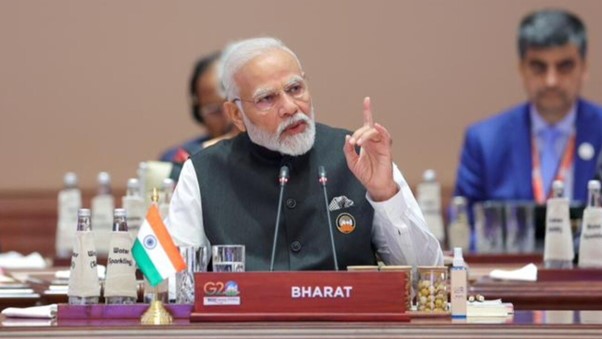
“Bharat” is the Hindu name for the country, so PM Modi appeals to Hindus every time he uses it – such as on menus and nameplates at the recent G20 meeting he hosted in New Delhi last September.

Many attendees thought this a signal that a name change was on the cards for India. Wrong. Just by using both, he continues to create distance between the nation and its colonial past.

Bharat is already a name recognised in India’s constitution.

With India voting in a general election in March and April, we will no doubt see more banners displaying Bharat.

PM Modi knows that getting a name change done is a tough call, requiring a constitutional amendment with a two-thirds majority in both houses of parliament.

So, when it comes to a name, two is better than one. India and Bharat.

Australia risking major reputational damage over education visas mess

Something weird is happening in denying visas for education study in Australia.

Students from India, Pakistan and Nepal are most impacted by the visa denials.

“The unequivocal message this sends… is both unfair and unbecoming”

The Independent Tertiary Education Council Australia (ITECA) is a membership-based peak body bringing together independent providers in the higher education, vocational education and training sectors. It has made some comments which are sensible and powerful.

“This situation not only undermines the aspirations of Indian nationals with the genuine intention to pursue educational opportunities in Australia, but also casts a shadow over the nation’s reputation as a welcoming and inclusive study destination,” ITECA chief executive, Troy R Williams, said.

“The unequivocal message this sends — that Indian students are somehow less desirable or unwelcome in the eyes of the Australian government — is both unfair and unbecoming of Australia’s long-standing values of diversity and inclusivity.”

ITECA – which has previously voiced concern about the migration strategy – also said that the government’s actions “seem to be at odds with broader governmental efforts to strengthen economic and security relationships with India”.

Read more here:

India’s “Look East” turning into railway and highway linkages

India first adopted “Look East” as a foreign policy in 1991 – but in true PM Narendra Modi form, he changed the name to “Act East” – and action there is. Two main projects show how change is coming.

As 2023 draws to a close, a decade-old Memorandum of Understanding (MoU) between India and Bangladesh, to set up the first Indo-Bangla international railway connectivity in India’s Northeast, has found fruition in the recently launched Akhaura-Agartala cross-border rail link.

Inaugurated digitally by Indian Prime Minister Narendra Modi and Bangladesh Prime Minister Sheikh Hasina, this railway connects, Agartala—the capital city of India’s Northeastern state, Tripura—with the Akhaura upazila in Bangladesh’s Bahmanbaria district. The connectivity through Bangladesh helps bypass the long, narrow, and congested Siliguri Corridor, also known as the ‘Chicken’s Neck’ which connects the Northeast to India’s mainland. In effect, this reduces the traveling distance from India’s Northeastern states such as Mizoram, and southern parts of Assam to Kolkata. For Tripura particularly, the distance to Kolkata by rail is reduced from 1,600 km to 500 km and the duration is reduced from 31 hours to 10 hours, approximately.

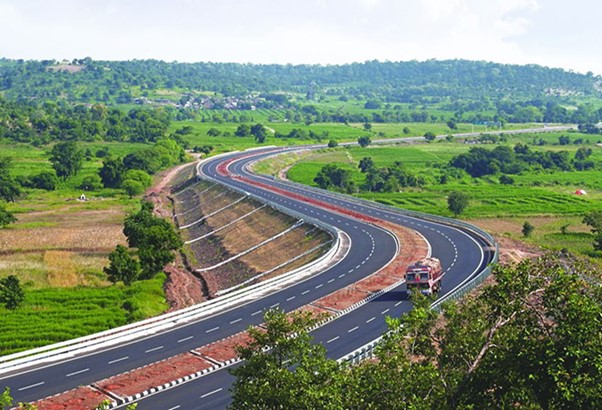
In another major “Act East” development, on the side-lines of the recently concluded 12th Mekong Ganga Cooperation (MGC) meeting in Bangkok on 16 July, Indian External Affairs Minister Dr. S. Jaishankar met with his Myanmar counterpart U Than Swe to discuss regional connectivity initiatives, with particular emphasis on expediting the India-Myanmar-Thailand Trilateral Highway (IMT-TH) project.

The IMT-TH project follows a proposed plan that starts from Bangkok and passes through cities like Sukhothai and Mae Sot in Thailand, and Yangon, Mandalay, Kalewa, and Tamu in Myanmar before reaching India. In India, it is likely to pass through Moreh, Kohima, Guwahati, Srirampur, Siliguri, and Kolkata, spanning over 2,800 km. The longest stretch of the highway will be in India, while the most minor road section will be in Thailand. Thailand’s Vice Minister of Foreign Affairs, Vijavat Isarabhakdi, stated in a recent interview that most of the project’s work in Thailand is over. The Indian counterpart also mentioned that around 70 percent of the work is complete. Upon being approached, Aung Naing Oo, Myanmar’s Trade Minister, revealed that most of the highway was constructed, spanning 1,512 km. The contractors will complete the remaining sections within three years.

“Act East” looks like building new connectivity between Southeast Asia and South Asia – and that strengthens the region.

How to Create an Effective Cross-Cultural Training Program

As Australia builds closer relations in Asia while India strides into the western world, it becomes more important than ever that employees have cross cultural knowledge.

My reading on cross cultural training programs is that the best focus on the assimilation of workers from a variety of cultures into a common corporate culture (sometimes called “cultural congruence”). The best also teach “cultural differentiation” – how to maintain your own culture while recognizing the value of others. That has been my mantra – stay true to your culture while adapting where you can.

This messaging has to start from the CEO and flow down, improving internal and external cross-cultural communications.

But beware – many existing programs are basically just etiquette training—such as whether you should bow or shake hands—and do not deal with the bigger issues.

Also beware of just training people in the basics such as Americans do this, Indian do that, Aussies do something else. Interesting and useful – but does not prepare your ream for behaving in cross culturally different situations. This takes many employees outside of their comfort zone.

Boeing: A Mixed Approach

At Boeing, the world’s largest aerospace company with 330,000 employees in 28 countries, leaders use a mix of approaches and tools—from online modules to afternoon seminars to one-on-one training—to help staff become more culturally aware. All employees are trained using GlobeSmart, an online resource developed by Portland-based Aperian Global. Workers and their families embarking on overseas assignments are given one-on-one sensitivity training and cultural orientation sessions.

The goal is to make sure employees are “not just landing in a country and getting introduced for the first time,” says Lisa-Marie Gustafson, SPHR, a talent manager for Boeing’s supplier management group.

Boeing also arranges “lunch and learn” cultural talks, employee rotation programs to allow overseas staff to work for nine to 18 months in the U.S., and diversity summits twice a year in U.S. locations.

Good training programs address subtle differences between people of different cultures. How is trust built differently in this culture? What is the most constructive way to provide criticism?

SAP: One Size Doesn’t Fit All

SAP is a software giant based in Walldorf, Germany, with locations in 130 countries. It has an elaborate diversity program, which includes cultural sensitivity training.  

Employees embarking on overseas business trips can access online cultural briefings. All SAP employees can take classroom-based training and receive interactive instruction. The company uses a mix of internal and external trainers and customizes its training depending on the location destination and employees’ needs.

Professor Andy Molinsky and “Global Dexterity”

I am a big fan and user of programs from Professor Andy Molinsky from Brandeis University – he claims the best training programs should also teach employees how to act in cultural situations that make them uncomfortable. That is, training would ideally teach employees “global dexterity”—which is also the title of Molinsky’s book.

In his programs, a student from Asia who may be culturally programmed to remain quiet unless she’s asked to speak, would practice speaking out at meetings without being prompted. Or an American who’s uncomfortable giving blunt feedback could practice that skill. Molinsky says the idea is for students to be put in realistic situations and to benefit from feedback and analysis in a supportive environment.

Making a start

Of course, for most corporations the first steps in building effective cross cultural training come from knowing your employees and assessing current attitudes.

You can choose to start with a simple program – creating a workplace committed to treating every employee, customer and client with respect. Of course, the program should define what that means—such as using no racial terms, jokes or language, even if such conduct is legally permissible in a particular country.

5 reasons to join a trade mission to India

Many people report having “gone it alone” to India, had wonderful experiences, came home with bundles of signed MOU’s – and then nothing happened. Wrong people? Wrong profile? Missed the market?

There are 5 main reasons a trade mission will work better for you:

With pre-mission briefings, backgrounders and just exchanging experience with others on the mission, you will know better than to sign up with the first person who says “yes” (did you know in India it is rare to say “no”?)

On a mission the Indian audience notices you – you will be connected with the government and business community (did you know that government and business are incredibly closely integrated in India?)

You will be able to work positively with others, leverage skills and knowledge of the way the market works in India – including expertise of Austrade and State Government Business Offices (did you know India is a “collective” culture and you need the right point of entry?)

Each day of a trade mission is learning – you will learn first hand from others and exchange your ideas with them (did you know most products and services need some form of adaptation to succeed in India?)

You will gain some valuable insights into the culture and history of this proud nation, so rather than filling your day with endless meetings you will be able to spend some time exploring India (did you know what a huge impact you can have simply by showing interest in the history and culture of India?)

As they say – If you can make it in India, you are ready for anywhere.

Take a look at this forthcoming mission from some experts:

https://www.linkedin.com/feed/update/urn:li:activity:7123800940507267072

Women, the Global South and inclusive development clear winners of India leading the G20

In the sense that the G20 is mainly about global conversations and agendas, India succeeded in directing those conversations and setting out an agenda which will be picked up by the next G20 presidency country – Brazil.

India’s G20 presidency was focused on sustainable and inclusive growth, including women-led development initiatives.

India also shifted the G20 somewhat from a fundamental economic platform, to addressing the challenges of climate change, disasters, growing water and energy insecurity, democratic backsliding and gender inequality.

India was also successful in building consensus – something which has been a challenge over the years. It welcomed the African Union as the newest member and signalled the need for great inclusion of countries, including the Global South.

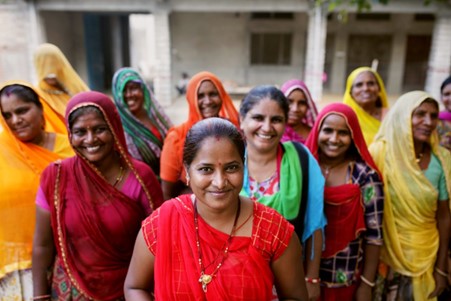
Drawing women-led development into the mainstream was a priority of India’s presidency, resulting in the G20 announcing the creation of a new Working Group on Empowerment of Women to support the G20 Women’s Ministerial that will start during Brazil’s term.

Indians embraced and celebrated the G20 – and India as president clearly made a positive difference.

Can kinder communication restore respect and civility?

Something has changed in how we communicate with each other. Like the pandemic, it has infected Australia and might have spread to India.

Just for ease, some commentators call this change “Trumpification” of our public conversations. Of course, it is not just Trump, it is also an outcome of spiteful and hateful social media. We have forgotten how to be respectful and kind.

It is too easy to blame America for our own problems, but we have seen over there that trading in hate and fear – combined with deliberate misinformation – creates divisions that might be hard to heal.

Social media has encouraged and built extremism, has destroyed much of our civility and is weakening respect, integrity, trust and social cohesion.

It is a stretch to blame Trump for all of this – much as he has deliberately practised anger and misinformation – and we must acknowledge that what we are seeing publicly now is what has laid dormant in our cultures probably for all time. Extremism and hatred are now empowered and public.

Long term, it will be difficult to turn around the negativity unleashed mainly by social media. It is hard to stop the toxic infection of how we treat each other. But it is worth having a go.

Mallika Bajaj and her company, Little Yellow Beetle, based in New Delhi, is helping clients create kinder content. It is one step in the right direction and might just restore respect, thoughtfulness and caring to our public discourse. I hope so.

https://www.littleyellowbeetle.com/

Here is an earlier discussion I had with Mallika Bajaj.