PM Modi an achiever for India – whether he wins or loses this week

Prime Minister Narendra Modi swept into power in 2014 with the first single-party majority government in over three decades – thus holding out the promise that “things would happen”. With results to come in this week for Indian elections, it is time to ask: Have things happened?

PM Modi has been an achiever for India and his legacy will continue whether he wins or loses this week – with higher expectations from governments, more revenue for governments, increasing digitisation and anti-corruption – and an expectation that India is a global player and needs global political leaders like Modi.

Modi

There are four achievements of Modi that have changed and are changing India forever – and for the better.

The first was to show he was serious about ending corruption – his Demonetisation move shocked many, hurt the economy short term but sent a clear signal. Indians had been used to governments paying lip service on corruption – Modi took action. Increasing digitisation of government means less opportunity for corruption.

Second, the world’s biggest tax reform was his Goods and Services Tax (GST), long talked about in Indian politics but it took the skills of Modi to make it happen. Modi was outstanding in gaining state government support, essential to the process. Government revenue is now getting to where it should be. As a result, governments in India are awash with money and can now do things.

Third, Modi knew that the key to improving India’s attractiveness to global investors and businesses was reform of the Bankruptcy law. Since Modi, business leaders who had run their businesses into the ground would be called to order and stripped of control. He was also a global sales person for India – vital in the global economy.

Fourth, Modi has also activated the 29 state governments by financing and introducing competition. Indices, which rank states on the ease of doing business, health, education and water, already creating energy and activity in every state capital.

I am not saying each of these were done flawlessly but given the history of India it is amazing that they were done at all. Yes, there is a lot to be done. But against the odds and expectations, Modi has made significant change to India that will last for decades or more. Win or lose, he has earned his place in history.

IndependenceDay


“We need to build skills, not walls.” – Telstra Boss

The need for Australian companies to source ICT talent from overseas is stronger than ever, with the local pipeline continuing to fall short.

That was the message from Telstra CEO Andy Penn, who delivered a strongly-worded address at the Committee for Economic Development Australia in Melbourne on Wednesday.

andy penn

“We need to build new skills and capabilities in new areas,” he said.

“We need these capabilities now, but the fact is we cannot find in Australia enough of the skills that we need on the scale that we need them, such as software engineers.

“Why? There simply are not enough of them. The pipeline is too small.”

In anticipation of the impending local ICT talent shortfall – which Penn said he expects to be 60,000 skilled workers short in the next five years – Telstra will this year open a new ‘Innovation and Capability Centre’ in Bangalore, India.

Labelling Bangalore as “India’s ‘Silicon Valley’”, Penn said the move would consolidate Telstra’s presence in India, where it has been operating since 2011.

Immigration negativity

Penn also called for a cease to the “negative commentary around immigration”.

“We need to build skills, not walls.”

He pointed to the associated benefits that come with “a well-targeted skilled migration policy”, arguing this would create – not take away – jobs.

“Skilled migrants also add to Australia’s wealth,” he explained.

“Research by the International Monetary Fund estimated Australia’s migration program would add up to 1% to annual average GDP growth from 2020 to 2050 because it focused on skilled migrants of working age and would limit the economic impact of Australia’s ageing population.”

PM Modi leads India to 6th largest economy in the world with high growth

Things are happening fast under the leadership of the Prime Minister,  Shri Narendra Modi – India is having its best phase of macro-economic stability, becoming the sixth largest economy in the world from being the 11th in the World in 2013-14.

Presenting the Interim Budget for the year 2019-20 in Parliament this week, the Union Minister for Finance, Corporate Affairs, Railways & Coal, Shri  Piyush Goyal said “India is the fastest growing major economy in the world” with an average GDP growth  of 7.3% per annum, the highest ever achieved by any Government since economic reforms began in 1991.

Shri Goyal said  under the leadership of Prime Minister, Shri Narendra Modi, a clean, decisive and stable Government reversed the policy paralysis, laid the foundation for sustainable growth  and restored the image of the country.

New India by 2022

Shri Goyal said that a New India would celebrate its 75th Independence year in 2022 when every family would have a house with access to water, electricity and toilets; farmers income would have doubled; and the country would be free from terrorism, communalism, corruption and nepotism.

This is clearly an ambitious government, and the track record so far proves that Modi does get things done.

blackstone

Can you name India’s biggest hotel chain?

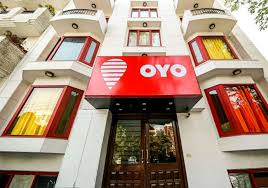
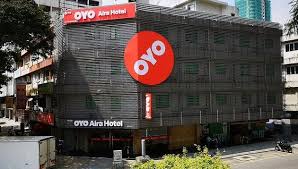
This chain started in India, expanded to China and has now invested heavily in Indonesia. It is called OYO (On Your Own) and was started in 2011 by then 18-year old Ritesh Agarwal. It is like the “Uber” of hotels – acquiring and setting standards for previously struggling hotels.

oyo

The group now has more hotel rooms in India than Taj Hotels – of course, Taj is at the top end while OYO has been a big provider of budget rooms.

Within three months of its foray into Indonesia, the company has launched the first phase of expansion in 16 cities and witnessed a 5x growth. It aims to expand to 100 cities by the end of the year.

oyo4

The company is adding on an average 70 hotels in Indonesia every month.

OYO created a uniquely Chinese identity for its local Chinese business and is localising in Indonesia.

oyo1

OYO is in over 280 cities in China, with about 5,000 hotels, and over 260,000 rooms.

The company has already started operations in Malaysia and will enter Philippines soon.

oyo3

It plans to have a pan-southeast Asian presence by the end of the year, before it starts making a move towards Europe.

Happy Republic Day for all in India, land of the “freedom fighters”

Today is Republic Day in India, celebrating 26 January, 1950, when the Indian Constitution came into effect.

India’s other major national event is Independence Day, a celebration of 15 August, 1947, when India became independent of the United Kingdom.

republic

The two days that created the “world’s largest democracy” really came about because of hundreds of years of “freedom fighters”. I am going to list some names – and apologies for all the great names I have not been able to include.

Most of us would think of Mahatma Gandhi (Mohandas Karamchand Gandhi 1869-1948) who became an inspiration to many around the world – including Martin Luther King, Nelson Mandela and The Dalai Lama.

att00036_

But other greats include Pandit Jawaharlal Nehru (India’s first Prime Minister), Subhas Chandra Bose and Sardar Vallabhbhai Patel.

republic7

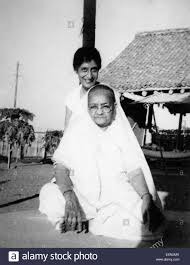
Picture above – Rajkumar Amrit Kaur

Indian women played a strong and vital role for freedom, including Sarojini Naidu, Rajkumar Amrit Kaur and Kasturba Gandhi.

republic8

Above – Kasturba Gandhi

Inspirational for many of these was the example of courage and self sacrifice shown by the young Bhagat Singh who lost his life in the cause.

republic 5

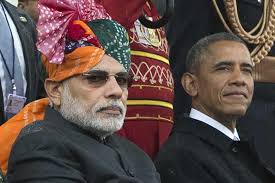
Above – Indian Prime Minister Modi hosts USA President Obama in 2018 at Republic Day celebrations in New Delhi

India – you have earned the right to celebrate! Have a great day.

Indian economy to pass the UK in 2019 to become 5th in the world – PwC

India is likely to pass the United Kingdom in the world’s largest economy rankings in 2019, becoming number 5, according to a report by global consultancy firm PwC.

The report said: “While the UK and France have regularly switched places owing to similar levels of development and roughly equal populations, India’s climb up the rankings is likely to be permanent.”

PwC’s report projects real GDP growth of 1.6 per cent for the UK, 1.7 per cent for France and 7.6 per cent for India in 2019.

PwC’s Global Economy Watch is a short publication that looks at the trends and issues affecting the global economy and details its latest projections for the world’s leading economies.

Really engaging with India becomes a smart step for anyone in business, politics or education – but start with the right strategy.

blackstone

Can Australia make Asia a top priority?

A new study shows that three of the world’s top five economies by 2033 will be Asian, with China number one, India third and Japan fifth. The US will be second and Germany fifth.

This suggests Australia’s trade and investment focus for the next 15 years needs to swing more sharply to Asia.

The study is the World Economic League Table, published annually by the Centre for Economics and Business Research, or CEBR, in London.

It would be timely for Australia to radically change its approach to diplomatic appointments – our “plum” diplomatic postings remain Washington and London, but should now shift to Beijing, New Delhi and Tokyo.

We need to boost our presence in other Asian economies too – South Korea is set to become the 10th-largest, Indonesia (12th), Thailand (21st), the Philippines (22nd), Bangladesh (24th) and Malaysia (25th), all making the top 25.

On top of this, one of the world’s greatest transformational projects is on our doorstep – China’s Belt and Road Initiative might be controversial but is a growth driver. Infrastructure spending is set to increase from US$11.5 billion, or 13.5 percent of global GDP last year, to US$27.4 billion, or 15.5 percent, by 2032, largely due to this initiative.

While China is high profile, quietly building a supersized economy is India which in 2018 remained ahead of China to retain the world’s fastest growing large economy status.

Yet Australia has largely put India on the backburner, unable to complete the kind of trade agreements that we have with China and other Asian countries. This low focus on India needs to shift over the next 15 years of growth there.

David Morris, and Australian who chairs the United Nations Asia Pacific Business Forum, agrees that Asia is now vitally important to the global economy. His consistent message is: “We are in the midst of the biggest global economic shift in memory, with East Asia now driving growth in the world economy”.

The Australian specialist India advisory firm India Avenue Investment Management points out that Indian equity markets performed quite well relative to their emerging market and developed market peers – yet our focus has been on three regions which fared particularly poorly in 2018 – China, Australia and Emerging Markets (which China dominates).

Granted, Australia has shifted focus to Asia, as shown by the 2016 opening of our largest and most expensive embassy in Jakarta, Indonesia at a cost of A$415 million and hosting 500 staff.

Despite this, one of Australia’s major research houses, the Lowy Institute, has long claimed that our Department of Foreign Affairs and Trade is “under-resourced over a period of several decades”.

The symbolism at the very top suggests we are struggling against the shift to Asia – former Ministers and Prime Ministers almost salivate at the chance to take the top post in London or Washington.

It is time to shift this focus to New Delhi, Beijing and other parts of Asia – while these are the epicentres of our future, it is unlikely ex politicians will pursue them as vigorously as they chase the old world.

Perhaps appointing Julie Bishop as our Ambassador in a major Asian country would send better signals?

Symbolism is important, especially for investment and trade, so sending top ranking former politicians into Asian posts could have a powerful effect – so long as we give them the resources to do the job.

Knowledge of Australia remains dangerously low across the whole of Asia, including Commonwealth partners such as India and Malaysia. We are variously seen as a “kangaroo nation” or a giant mine and even a “white enclave” (admittedly said more in private these days), showing ignorance of our major multicultural achievements. This ignorance is dangerous for diplomatic and defence relationships and is restricting our trade.

Education and tourism are the two sectors that can really turn this around, giving Asians a first-hand experience of what a great country Australia is. We are boosting efforts in both, but do we really grasp the vast potential size of the market?

Only by shifting our diplomatic resources more and more to Asia will we gain a true understanding of these markets and how we can build a positive future together.

India the place for investors in 2019

According to India Avenue Investment Management, India is the growth market for investors this year – with a young population and strong economy. The company is based in Sydney and has an office in Mumbai.

India Avenue are very keen on the Indian banking sector and consumption providers.

Here are their thoughts:

“We expect companies in the Banking, Consumption and Industrial companies to outperform in the first half of 2019. Provisioning in Banks have bottomed out and we expect earnings to improve significantly from here, particularly given credit growth.

icici bank

“Our top picks here are ICICI Bank, HDFC Bank, Kotak Bank, State Bank of India, IndusInd Bank and Axis Bank.

“Consumption will also remain a dominant theme as interest rate cuts are delivered, retail credit growth increases and the benefit of handouts to rural India (Government initiatives, populist measures and farm loan waivers) lead to a pick-up in spending.

britannia 2

“Our top picks here are Mahindra and Mahindra (autos/tractors), Dabur (consumer health products), Britannia Industries (biscuits, milk and basic foods), Crompton Greaves (consumer products) and Sun TV (media/television).”

More information:

https://indiaavenueinvest.com/

Cricket shows business and politics how Australia and India should get closer

Can Australian business wake up to new realities – for example, if you do not have an India engagement strategy then you are missing out on the growth centre of the world.

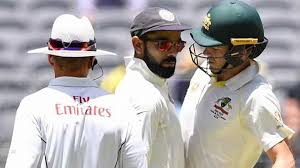
Cricket had to wake up too – India is now the epicentre of cricket and the biggest contest in town is Australia and India.

The cricket battle between Australia and India has provided special moments and lots of insights into how our two countries should relate.

First, enjoy the difference – both teams clearly enjoyed their interaction and cultural differences.

Second, go beyond the basic commitment – the Tweet and pic of the series was Indian wicketkeeper Rishabh Pant and Bonnie Paine when he was babysitting the Paine children.

cricket5

Third, adapt to each other – Australia toned down the sledging and India toned it up, thereby meeting in the middle.

Fourth, sometimes we can all be direct – Indians are known as “indirect” communicators but Captain Kohli and his bat conveyed a direct message when he made a century – “my bat is talking!”

cricket2

Fifth, conflict can be followed by harmony – both teams crossed the line but quickly resumed the contest as normal, tough but not over the top.

cricket9

Sixth, crowds can tell you a lot about a country – Australia is an increasingly successful multicultural community and enjoying it.

cricket8

Now the cricket is done – how about Aussie business and politics – can they learn too, and engage more closely with India?

Climate Change – India turns away from coal as Australia and Adani still dream of selling them more coal

More evidence that the Australian and Adani dream of selling coal to India is just a fantasy.

indiaeneregy

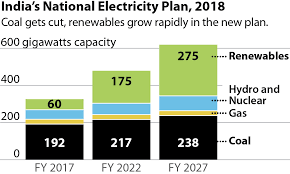
India is increasingly shifting towards green energy

Simon Mundy of the Financial Times reports that Indian power companies spent much of the past decade rushing to build coal-fired power plants in anticipation of surging electricity demand as economic growth took off.

You can see the article at https://on.ft.com/2GShz3Q

Now, many of those projects are mired in deep financial distress and private investment in coal power has ground to a near halt – making the Australian and Adani dream of selling more coal to India look deluded.

Mundy writes that the biggest driver of long-term uncertainty for the industry is one that few anticipated 10 years ago: an explosive take-off in the renewable power sector, as India joins the global push to tackle climate change by shifting towards green energy.

Soon after taking power in 2014, Prime Minister Narendra Modi’s government set a target of increasing India’s renewable energy capacity by 2022 to 175 gigawatts, equivalent to 40 per cent of the country’s total power capacity at the time of the announcement.

indiasolar

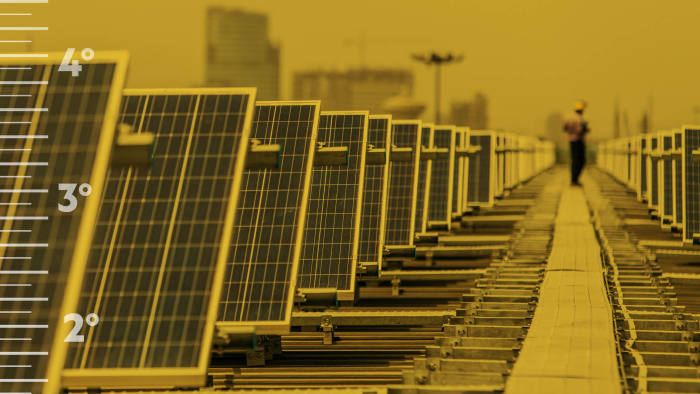
Indian coal power producers are considering renewable projects when they build new capacity © Getty

Mr Modi’s ambitions were stoked by a dramatic fall in the price of solar panels after a huge expansion of production in China, which is seeking to capitalise on the international drive to cut emissions. This was steadily making the cost of electricity from solar plants — once far more expensive than coal power — more competitive with plants running on the dirtiest fossil fuel.

Making a mockery of Australia’s long hopes of selling more coal to India, in the 2017 financial year, newly added renewable energy capacity overtook new coal-fired capacity for the first time. The renewable push attracted major investors such as Japan’s SoftBank, whose consortium last year sealed a deal that stunned the industry.

Mundy goes further on coal – this shift in the industry’s economics means that coal power — once one of the hottest prospects for Indian industrialists — is now a space where most fear to tread.

“You’d have to be quite courageous to invest in coal at this point,” said Navroz Dubash of New Delhi’s Centre for Policy Research.

Does Australia realise that India has plentiful supplies of coal in its eastern region?

This year, state-run NTPC — by far the biggest thermal power producer in India — has cancelled several plans for large coal projects, including one for a giant 4GW plant in southern Andhra Pradesh state.

Increasingly, large private-sector coal power producers are looking at renewable projects when they build new capacity.

adanisolar

Even Adani, which is in big strife with plans to mine and export coal from Australia, has invested more than $600m in a solar plant in Tamil Nadu — a southern state with abundant sunshine.

There is no longer an economic case for the highest-cost coal plants in inland areas of the country’s south and west, which are forced to rely on coal expensively transported over long distances from the northeastern coalfields, said Tim Buckley at the Institute for Energy Economics and Financial Analysis.

Credit Suisse estimates that more than half the debt owed by power companies is now stressed — with interest payments exceeding profits — amounting to a total of more than Rs2.5tn ($35bn).

Several coal-focused power groups are being dealt with under India’s new bankruptcy code, which will force them into liquidation if a swift sale is not agreed. Indian authorities have an incentive to minimise the distress in the coal power sector. State-controlled banks, reeling from a surge in non-performing corporate loans, are heavily exposed to this industry.

But the Modi Government is clear in favouring renewables, leading to long-term self-sufficiency, lower costs, more competitive industry and better climate outcomes. Even though major corporates like Tata and Essar are struggling with the economics of coal power plants, the Government remains unwilling to shift from renewables.

Which makes the Australian/Adani dream of creating our biggest coal mine and shipping it all to India look like a case of sticking to an old fantasy while the target market has moved on. Can Australia move on too?

Because Australia is expected to commit about A$1 billion towards the scaled down A$5 billion mine project, the Australian Prime Minister and the Queensland Premier need to have some serious discussions with Adani Group – and possibly Indian Prime Minister Modi – to get answers to some disturbing questions:

  • If Adani is simply planning to supply coal to its own power stations in India, what tiny fraction of the Carmichael coal reserve does this represent?
  • Does Australia face the worst of all worlds with no royalties and vastly fewer jobs than expected?
  • Exactly how many jobs will Adani Group commit to long term?
  • What would be the environmental degradation costs of the project?

With these answers both governments can assess the risk of being left holding a distressed or potentially stranded asset of no value to anyone.

Right now our politicians seem to want to resist the future, rather than embrace it.
wind2