Indian education market and Australia’s leading universities talking the same language

While I was in India working on the Genesis India Horticultural Collaboration Project 2019, our top universities (The Group of Eight) were in India with Federal Education Minister Hon Dan Tehan.

(Pictured above are, from left, Hon Dan Tehan, Australian Education Minister, Vicki Thomson Go8 Chief Executive and Dr Craig Jeffrey, Director, Australia India Institute).

This is an important mission – if we can get a deep understanding of what India is driving for, we will develop collaboration that will be for the good of both countries.

The concept of just taking in fee paying Indian students without some sense of balance and collaboration could have a short shelf life.

The visit was timely and served to reinforce Go8 commitment to supporting and assisting with India’s ambitious higher education policy priorities which were recently announced.

Go8 represents Australia’s leading research-intensive universities with seven of its eight members ranked in the world’s top 100 universities.

I was impressed with this summary from Vicki Thomson Go8 Chief Executive: “We understand that by working cooperatively we can best assist where we can, developing opportunities for quality students, graduates and researchers, and, critically the future academics who will lead the vital train-the-trainer work India requires.”

“There is potential for research intensive universities like the Go8 to partner with Indian institutions and Indian industry on projects with potential to be nation building on both sides. Success in these areas can capture public imagination and support and encourage further investment and commitment from both the Australian and Indian Government’s,” Ms Thomson said.

Three Go8 universities are already engaged in Indian partnerships at PhD level. Since 2008 the Monash-IITB Research Academy has been providing joint PhD training, the University of Queensland/IIT-Delhi collaboration uses a similar model and more recently the University of Melbourne has entered into a collaboration with three of the prestigious Indian Institutes of Technology to deliver a joint doctoral degree program.

I like the language of the Go8 – “Expanding this collaboration is key to our ongoing partnership with India.”

Now, that is the pathway to the future in education.
India has many remarkable achievements and hosting the Tibetans is one of them

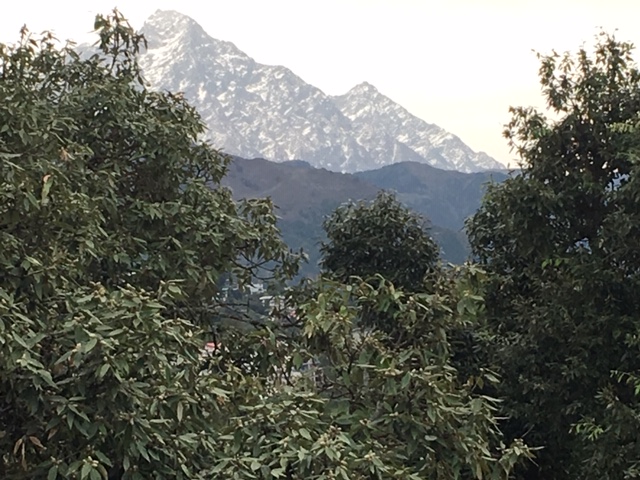
Today I am in Dharamshala, a town on the western end of the Himalayas. This picture is taken from my hotel.

In this area in the 1950’s something remarkable happened.

The Tibetans, fleeing their own country, came here in thousands along with their young leader, His Holiness the Dalai Lama.

I do not know the history too well, but I understand that India opened its arms and gave land and refuge here and in other parts of India for the Tibetans.

hhdl

Today the Dalai Lama is older and looking a little frail, but his contribution to the western knowledge of Buddhism and putting “kindness” ahead of any belief system is just amazing – thanks in part to the country that hosted him.

Just another side of this country which at the time was struggling itself.

Remarkable India.

India way behind on the “study in India” goal of attracting foreign students

India’s higher education institutions hosted a total of 47,427 international students from 164 countries in the academic year 2018/19, newly-released figures reveal.

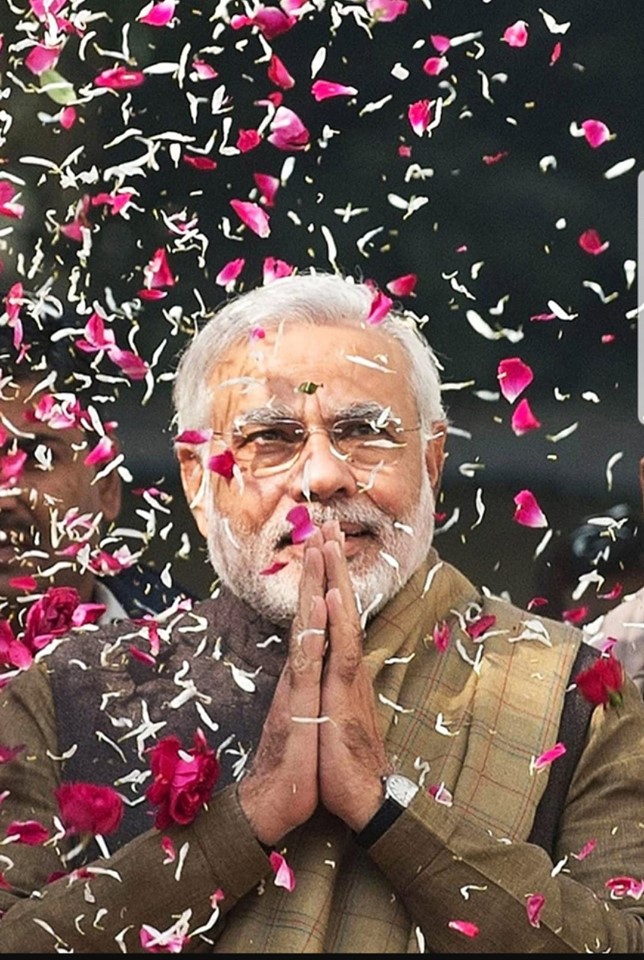
Prime Minister Narendra Modi is determined to increase the quality of university education in India but he has a long way to go.

About 64% of all international enrolments came from 10 countries, and the highest senders were India’s regional neighbours.

Nepal sent 27% of all international students, Afghanistan 10% and Bangladesh 4%. The other countries in the top 10 were Sudan, Bhutan, Nigeria, US, Yemen, Sri Lanka and Iran.

Almost two thirds of the international student cohort were enrolled at undergraduate level, while 16% were pursuing postgraduate qualifications

Last year, the Study in India initiative made headlines as the country announced plans to rebrand as a major study destination and host 1 million international students.

According to Sannam S4  executive director & head of education Lakshmi Iyer, the country is “a long way” from achieving its goal.

“[International students are] merely 0.13% of the total enrolments in higher education in the year 2018-19,” she explained.

“The number of foreign students enrolled in India has increased by 3% year-on-year. So, a long way to go especially considering that foreign students come from 164 different countries across the globe.”

“India has always recognised the importance of education as a soft diplomacy tool, however it is for the first time we have stitched together a credible initiative to really push this agenda forward in the face of China’s well-funded Belt and Road Initiative which is pushing into regions which India considers as her natural allies,” she added.


Indian PM Modi picks up rubbish on the beach – how many PM’s and Presidents would do that?

Into India has always said Indian Prime Minister Narendra Modi is different – in a very good way! News this week gives another example.

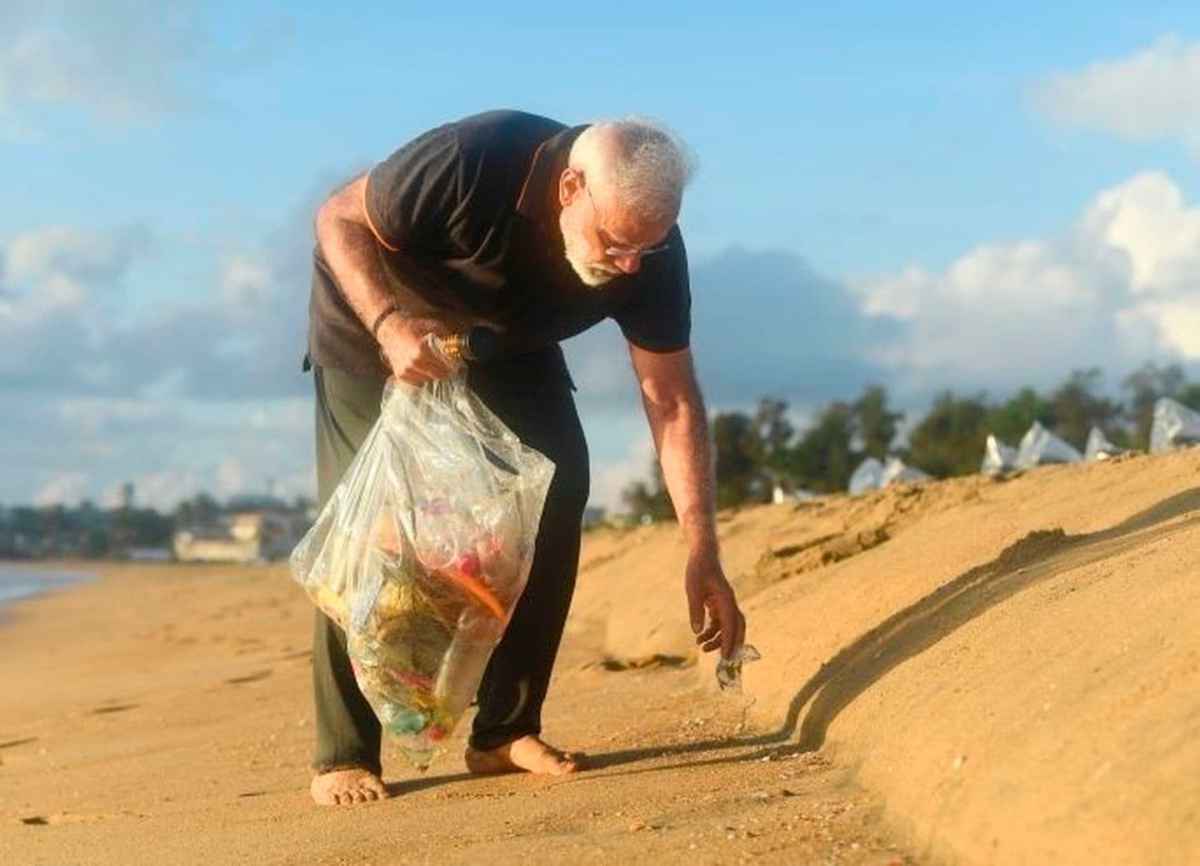
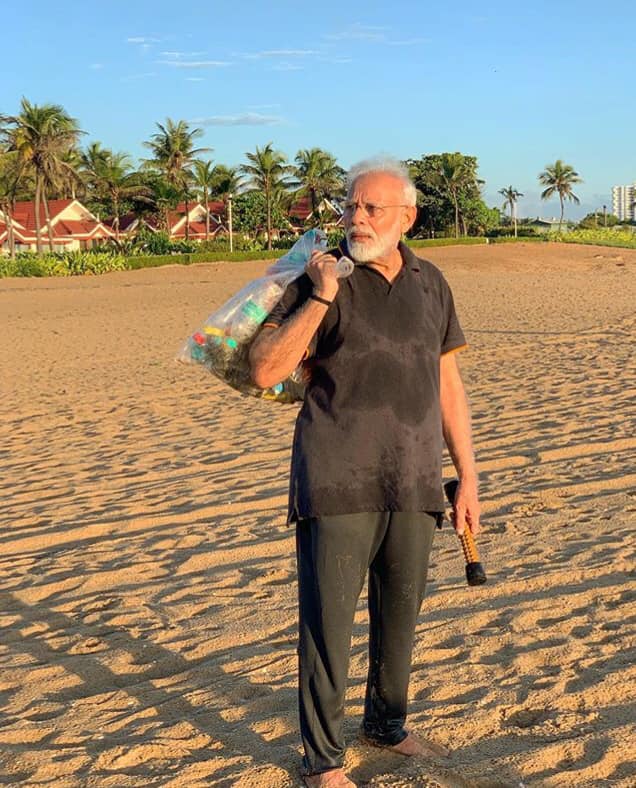
As part of his cleanliness drive, PM Modi picked up trash Saturday (pictured above) from a beach in the southern temple town where he hosted Chinese President Xi Jinping.

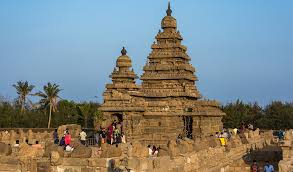
Modi released a short video on Twitter showing him walking barefoot in the sand, collecting the trash in a bag on Saturday morning in Mamallapuram in Tamil Nadu state (pictured below).

mamallapuram

He tweeted, “Let us ensure our public places are clean and tidy.”

Modi launched a “Clean India” campaign after he became prime minister in 2014.

In a radio talk last month, Modi lauded the efforts of an Indian “plogger,” Ripudaman Belvi, who launched a campaign to pick up litter while jogging.

Modi said that “plogging” is popular in foreign countries, and praised Belvi for promoting it in India.

We told you he was different! Let’s have more like him.

Modi rubbish

I hope Australian PM Morrison will speak in January at India’s Raisina Dialogue

Good news – Australian Prime Minister Scott Morrison is to visit India next year.

There is a hint that the timing is January.

I hope he chooses to become a keynote speaker at the Raisina Dialogue – January 14-16.

Raisina Dialogue is a multilateral conference committed to addressing the most challenging issues facing the global community. Every year, global leaders in policy, business, media and civil society are hosted in New Delhi to discuss cooperation on a wide range of pertinent international policy matters.

The Dialogue is structured as a multi-stakeholder, cross-sectoral discussion, involving heads of state, cabinet ministers and local government officials, as well as major private sector executives, members of the media and academics.

The conference is hosted by the Observer Research Foundation in collaboration with the Government of India, Ministry of External Affairs.

The visit is also a great opportunity to further develop the positive relationship PM Morrison has with Indian Prime Minister Narendra Modi.

Modi20192

“Small talk” – essential skill if you want to be in global trade

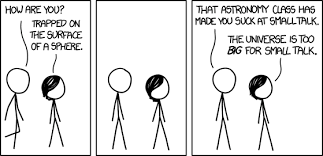
Many people are uncomfortable with “small talk”, the so-called relaxed chat that happens when we meet and prior to the real discussion. But it is an essential business tool for global trade. See where you fit:

1. Does small talk feel a bit strange and personal?

You might rather sit in the corner and keep quiet – but walking around the room and chatting is a vital negotiation step – it begins the relationship building. MY TIP – prior to any major trade meetings, take an hour to visit some major memorial, new centre, historic building or tourism stand out. There’s your topic of small talk!

smalltalk3

2. But small talk is superficial

Yes, you are right, it is superficial. But the paradox is it is also important. it is about connecting, about seeing how the other person operates, and finally it is about trying to make others feel comfortable. MY TIP – think less about yourself and more about the other person. They might be nervous about small talk too.

3. How do you know what to talk about?

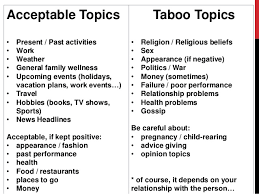
It’s not as hard as you might think – the weather, the last week at work, some family happening, the wonderful meal you had yesterday, what is coming up next week. MY TIP – an easy way to participate in small talk is to ask questions – how has your week been?

4. Small talk is a waste of time

Small talk feels like a waste of time but it is one step towards building relationship. If you make the other person feel relaxed, engaged and interested, they will feel grateful. MY TIP – don’t be too serious, laugh as you say things, keep it lighthearted.

5. Can small talk be risky?

If you keep it light, smile, make eye contact, offer some friendly insight into your world, there is no risk. But if the small talk suddenly shifts to the major topic of the day (before the real discussions have started) then be cautious. MY TIP sometimes you just have to back away. It is not the time for serious stuff.

6. But how do you end the small talk?

Everyone in a crowded room knows that you cannot and should not spend the whole evening with them, so once there has been enough small talk, you should move on and start again with someone else. It’s called “working the room”. MY TIP with a big smile and friendly face just say “really good talking to you and I hope we catch up later on”. Easy.

Thanks to Dr Andy Molinsky for some of the above.

smalltalk6

Australia will relate better to Asia by removing the “bamboo ceiling”

Former Labor Government Minister and current Chancellor of the Australian National University – Gareth Evans – has raised an important challenge for Australia that is too often swept under the carpet.

Australia’s “bamboo ceiling” keeps Asian Australians out of top positions.

Here is the view of Gareth Evans:

“The “bamboo ceiling” in Australia is real. Asian-Australians now comprise up 12 per cent of our total population but hold only around 3 per cent of senior leadership positions in our public institutions and ASX 200 companies. They have been an under-appreciated and under-utilised national resource for far too long.”

tourists3

Gareth Evans sums it up so well:

“The bamboo ceiling is an issue on which we have ducked and weaved and dithered for too many years. The Asian century is off and running and we have in our midst a fantastic community resource with which to take maximum advantage of all the opportunities it offers.”

Well said.

And my view?

fairgo

Removing the “bamboo ceiling” would reduce Australia’s anxiety and uncertainty over Asia – it would allow Australia to play a big role in the “Asian Century”.

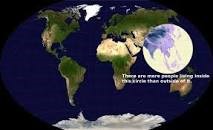
One third of the world’s population lives on our doorstep – and they are on the rise as economies and powers.

By getting our own house in order – removing the “bamboo ceiling” – we can live positively and well in the world’s most exciting region.

China and India are our biggest source of migrants – let’s give them every opportunity.

Fair go, Australia!

What is the great legacy of the west?

For over 200 years the west has dominated. Economically strong, trading nations, global defence forces. It is a good time to ask – what is the great legacy of the west?

The Age of Enlightenment, time of reasoning, power of science, all were revived by the west. This is the view that together we can solve problems.

Enlighten2

Free market economics – has shown how to lift people out of poverty and share the wealth – not perfect, but probably the best model.

Psychology of the positive – anything is possible. Contrast this with “fatalism”. Love this “can do”.

Good Government – the west leads in healthcare, infrastructure and education – and in the west people receive lots of government sponsored information and practical ways to live better. Of course, not perfect.

This is a legacy that will impact on those emerging leaders such as India and China.

Why is the west being so jittery about the rise of Asia?

Trade war on China. Military action here and there.

The west is jittery. Yet all we have is the return to the normal state of affairs – until exactly 200 years ago China and India were major global economies. Now they are again.

So, why is the west so jittery about the rise of Asia?

First, the west “won” the cold war against Russia without firing a single shot. Great victory – but the pride of that has become hubris and shows in a belief that only western liberal democratic countries can succeed. And here comes China. Not western, not liberal and not democratic. Jittery.

russia2

Second, 9/11 was a shocking event that dominated the mind of the west then – and now.

Wile we focused on 9/11, two things happened – rising China joined the World Trade Organisation and the lowest earners in the USA were hit by a 50% decline in income.

Hence – Trump. And hence, lots of jittery decisions being made throughout the west.

Can the west get back to rational, calm and innovative leadership? I hope so.

Thanks to Kishore Mahbubani for inspiring some of the above.


What is the “fourth industrial revolution” and why is India important?

The First Industrial Revolution introduced the use of steam power to mechanize production.

The Second Industrial Revolution saw a number of groundbreaking inventions in transport, telecommunications and manufacturing, including the use of electric power to generate mass production.

The Third Industrial Revolution brought the internet and other technological innovations, which have ushered society into the digital era.

Today, society is challenged by a Fourth Industrial Revolution, an age in which scientific and technological breakthroughs are disrupting industries, blurring geographical boundaries, challenging existing regulatory frameworks, and even redefining what it means to be human.

Emerging technologies such as artificial intelligence (AI), blockchain, drones and precision medicine are swiftly changing lives and transforming businesses and societies, inevitably posing new risks and raising ethical concerns. How can society ensure that its policies, norms and standards are able to keep up with these rapidly evolving technologies?

The World Economic Forum has chosen India as the base for its Centre for the Fourth Industrial Revolution – India is the world’s largest democracy having the second highest number of scientists and engineers – shaping the future.

Modi oath