Trump to open Indian cricket stadium bigger than the MCG – not “fake news” – it will happen next week

Trump and Modi are good at surprises.

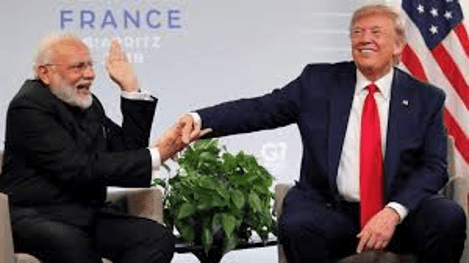
How about this? US President Trump will make his first visit to India next week and will open a new cricket stadium set to “dislodge the Melbourne Cricket Ground” as the world’s biggest cricket stadium. The Motera Stadium in Gujarat can take 110,000 spectators.

Interesting combination – look forward to seeing the Indians explaining the game of cricket to President Trump.

But sometimes these two are also predictable.

Australia knows very well the difficulty of getting a free trade deal with India – and so do the Americans (although their “America first” attitude makes negotiation difficult).

Nisha Biswal, president of the U.S.-India Business Council, said hopes were fading for the two sides to quickly bridge gaps in their efforts to restore some U.S. trade preferences for India and improve access for selected U.S. agriculture products and medical devices to India’s 1.3 billion consumers.

Still, PM Modi is good at using charm and relationship as a part of diplomacy so you can expect him to pull out all the stops for the visit of President Trump.

Melbourne seminar on India has best expert panel

BDO has assembled Melbourne’s best India panel to speak on Tuesday 3 March – book now – free event. Email michaelm@eastwestadvisers.net

They have a great line-up of speakers:
Michelle Wade, Victorian Trade Commissioner for India, Bengaluru
Susan Coles, Deputy State Director, Victoria, Department of Foreign Affairs and Trade
Bill Cole, Partner International, BDO
Sandeep Khurana, Director, EastWest Advisers
Michael Moignard, Director, EastWest Advisers

I am proud to be the MC of this one.

Venue: BDO, 727 Collins Street Melbourne
Date: Tuesday 3 March 2020
Time: 12 noon start (lunch will be provided)
Email michaelm@eastwestadvisers.net

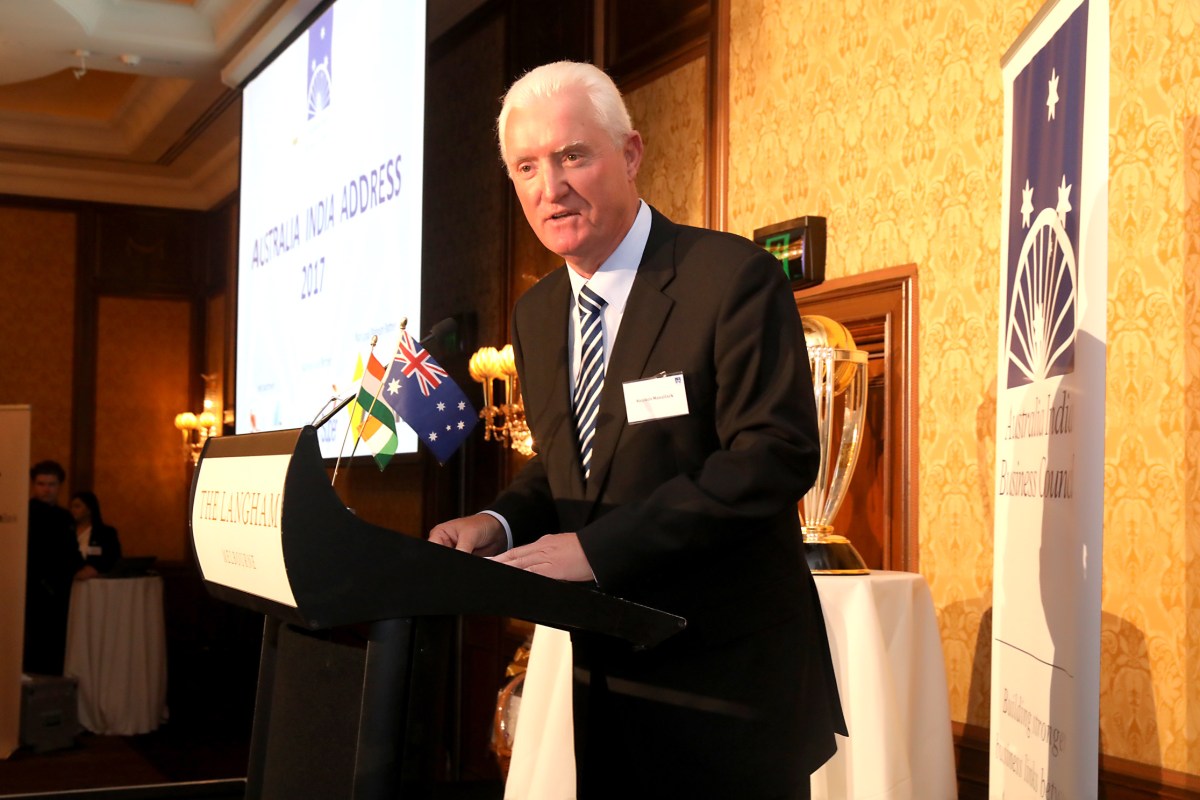
Pictured below: Bill Cole, Partner International, BDO

billcole2

How Indian use of English can show cultural differences among English speaking nations

A recent headline in the Economic Times read: “India budget – what all has the Government promised”.

For western English speakers, the “what all” demonstrates a slight difference in how English is used in India. I am not saying anyone is right or wrong here, but language can remind us that although we might speak English, we think first as a westerner or an Indian or other part of Asia. Western media would say “what has the government…”

At the least it is entertaining – at most it provides cultural insights.

At functions in India you will see two signs “Veg and non-veg”. This shows how important food choices are over there.

veg

Pictured is the vegetarian Jumbo King Food outlet in Mumbai

Young Indians will often refer to non-relative individuals as “Auntie” or “Uncle” as a sign of affection.

“Timepass’ is a terrific Indian-English creation – used to describe a Bollywood movie or TV show that was just OK. How was the movie – Oh you know, timepass.

When an Indian talks about “mugging” it is generally not about thugs or criminals – it describes rote learning, memorising, cramming.

In a crowded country, “kindly adjust” is a common phrase which means “sorry about any inconvenience but there is not much I can do about it now”. Especially useful on trains.

railwaystationahmedabad

Pictured is Ahmedabad station where “kindly adjust’ comes in handy

Conversations can often include “rest is fine” which comes after a short description of what is happening in your life and “rest is fine” is an all purpose summary of the rest.

“What is your good name” is one I love – such a respectful way to ask a person’s name.

Brian Johnston recently wrote in this topic in Traveller.

He said a simple sign in a Delhi temple said “Ill manner of all kinds is intolerable”. Admonishment or observation? Intolerable, but is it tolerated?

Indians, he says, have a Shakespearean knack for new variations of words – upgradation, pin-drop silence, and “Mention not!” when you offer praise.

More – she is pulling your legs. Pay attention on. Discuss about. She’ll be knowing the answer.

How about “Don’t prepone it – do the needful!” By the way, “Prepone” is much shorter than “”Do you want to bring our meeting forward a day?” Prepone is now in the Oxford English dictionary.

Words such as hullabaloo, hoary, gallivanting, thrice and scurrilous continue to thrive in India.

Johnston says: “Indian English conforms to its own proper rules of grammar and vocabulary”.

He makes the point that English is no longer controlled by the small number who originally spoke it. Native speakers of English (450 million) are way outnumbered by non-native speakers (at least 1 billion).

In India you can order “hot hot coffee”. A travel guide might refer to the wonderful India Gate in Delhi as “big and enormous” – that is huge!

indiagate4

(I am pictured in November in front of the “big and enormous” India Gate in Delhi)

China of course has its own English, often dispensing with subjects (can or can not!) or verbs (this chilly crab delicious).

India and China both use “is it” in questions – “you are leaving now, is it?”

On the road in India is entertaining – “Horn please!” is the instruction on mountain bends and on the back of trucks. “Faster will see disaster” it a beautiful use of English as is “Always alert, accident avert”. Also – “Road is hilly, don’t be silly”

hornplease

Pictured above – colourful back end of a truck in India

My favourite is the sign off used in emails and letters – “We will revert with the necessary”. Says it all.

(Thanks in part to Brian Johnston and Traveller 1 February 2020)

January 26 – Australia Day and India Republic Day – best wishes to both!

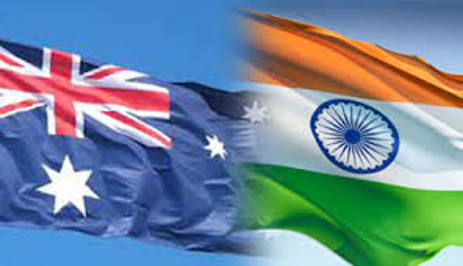
Australia and India have much in common – British heritage, democracy and love of the game of cricket.

But we also share a day of national celebration.

January 26 is Australia Day and India Republic Day.

Hope both countries fully enjoy their celebration and best wishes for 2020.

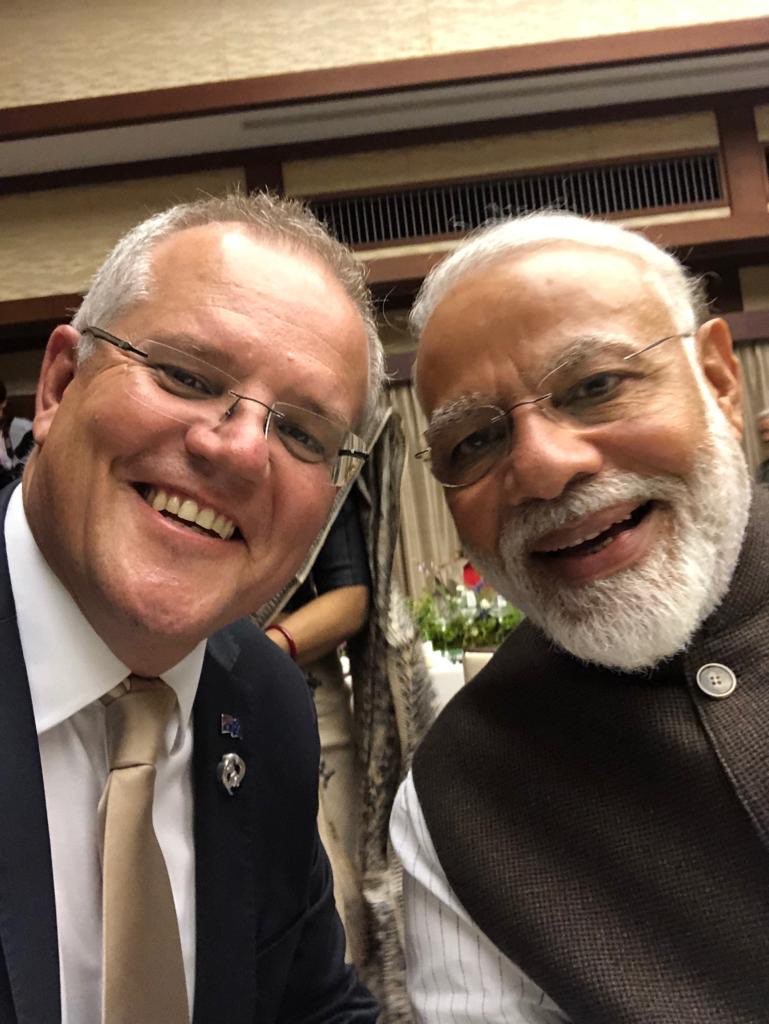
ModiMorrisonSmile2

The Belt and Road Initiative and the Geopolitics of the Indo-Pacific Region

David Morris is a former Australian diplomat and current expert/advisor on regional issues, risk and international relations. He recently wrote on “The Belt and Road Initiative and the Geopolitics of the Pacific Region” published in Research on Pacific Island Countries, Social Sciences Academic Press (China), 2019.

The Belt and Road Initiative has become associated with a geopolitical “China threat” discourse in the South Pacific, he writes.

Are China and Australia, the dominant regional player in the South Pacific, driven by geopolitical imperatives to compete for power? Or do their different geopolitical needs provide opportunity for cooperation that is mutually beneficial and manages risks in the region?

As a commentator on India and the Indian Ocean, I can see much of what David Morris writes could be applied to the Indian Ocean rim countries.

Morris analyses supposed Chinese “threats” as well as risks to China, including fears of a military base in Vanuatu, Chinese debt-funded projects in Tonga and closer economic cooperation with Papua New Guinea.

He concludes that it is feasible for Australia to meet its geopolitical imperatives if its regional security leadership can be maintained.

A geopolitical analysis of China in the South Pacific concludes that China is unlikely to seek regional security leadership if it can ensure access to trade routes and markets.

If Australia could move beyond geopolitical rhetoric, it should therefore be possible for Australia to partner with China to support sustainable development, mitigate risks and ensure broader stability of the South Pacific region, he writes.

With large doses of common sense, Morris writes that Australian activity could be complementary to China’s BRI, and that while there are political risks, the two countries could cooperate to reduce risk and ensure projects are sustainable.

This would be great – but my view is a big barrier to anything Australia does in our region is always its world view of “goodies and baddies” with the USA as the major “goody” and China the current “baddy”.

It would be great if influential countries like India, Australia and China could create a new collaborative model that brings real development to those poor communities in our region.

Is this possible?

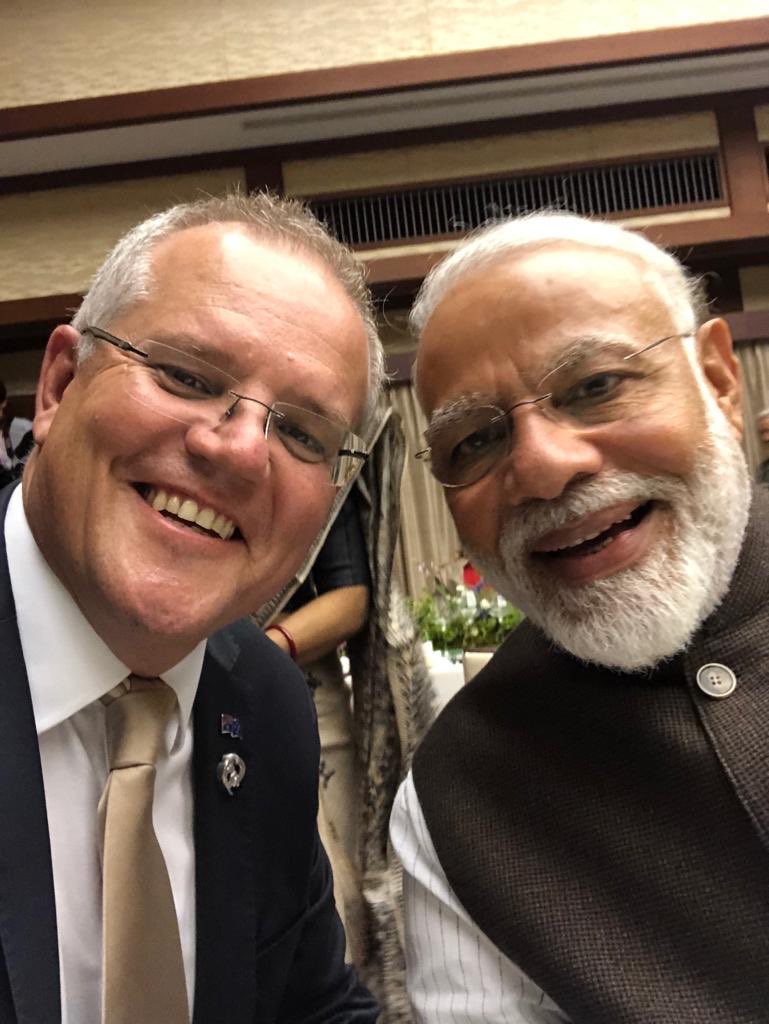
ModiMorrisonSmile2

How should you start a speech?

I have just had three wonderful weeks in India. I made some speeches. I listened to a lot of speeches.

I was asked: “What is the best way to start a speech?”

We all know the bad ways. For example, someone just reads from their powerpoint. Or someone is checking the microphone.

But from Conor Neill from Ireland I have long applied these three ways to start a speech:

Ask a QUESTION

My recent topic has been How to Communicate and Survive during Industrial Revolution 4.0. So some times I start with “How will you keep your job when robots take over?” The question should be about a problem your audience faces.

State a FACT

Find some amazing fact that leads to your topic. One of Conor’s favourites is “There are more people alive today than have ever died”. If the fact shocks, even better. With my topic I use “over 65% of the kids in school right now will find jobs that have not even yet been invented.”

Begin a STORY

“I was in India recently and I met a person who said something which changed how I think about communication and leadership”. The audience is keen to hear what that “something” was. It should connect to your topic.

So, that’s the beginning.

Then, I suggest you have a long pause every 5 minutes or so (shorter if you like) and use another beginning and bring the audience along again using one of these three starters.

Good luck! (equals good preparation).

The harsh truth about how Australia has made a mess of relations with India

Scott Morrison has a huge challenge ahead as he travels to India. As leading Asia commentator, Greg Sheridan, has written in The Australian, Morrison “needs to fundamentally reset the relationship.”

In my almost two decades now of connection with India, I have seen first-hand how badly Australia has dealt with India – and this goes for government, education and business. You could possibly put in the arts and culture too.

As Sheridan says: “There is no relationship of such importance that Australia, historically, has managed so badly.”

ModiMorrisonSmile2

Check out how Sheridan describes India – “By 2035 India will have more people than China. All forecasts are fallible, but it is widely thought that by 2030 India will be the world’s third largest economy. India commands ­immense soft power and cultural richness. In any bookshop there are novels written by Indians from India, and Indians in the diaspora. A chunk of the British and Canadian cabinets are of Indian origin. The US has had two ethnic Indian state governors, Bobby Jindal and Nikki Haley. Both became nat­ional figures. The best Australian film this year was Hotel Mumbai.”

One big hurdle for Aussies is that since independence India has been very close to Russia (and still is) and has the capacity to maintain close relations with countries we do not like.

Australia has a “goodies and baddies” approach to the world – whereas India does not make the same judgements. We need to work with this.

Sheridan provides the first accurate statement of how bad things have been – “…over many decades, Canberra comprehensively messed up the Indian relationship and achieved radically sub-par outcomes in our own interests. The three great non-Chinese Asian powers are India, Japan and Indonesia. They are critical to geo-strategic and economic balance in the Indo-Pacific. We have a deep relationship with Japan. We pay a lot of attention to Indonesia. But the work with India is almost all ahead.”

Are we up for this challenge? I am not sure. Canberra is so Washington focused, and China preoccupied, that India does not rate enough.

Sheridan wants Australia to try again for a free trade agreement with India. I love the idea, but I have little confidence we can achieve it. In my time with India, Australian diplomats have blamed India for every delay and the fact that we did not get a deal. I have talked to the Indians and am not so sure the blame was so one sided. The question is – can Australia adapt and become more flexible with India? If we can, we might just snare an FTA.

Well done Greg Sheridan for such insights in Australia’s relations with India.

Anil Wadhwa could be reviving Australia-India trade relations – Lowy Institute – but health, agri and sport could be the key

So good to read on the Lowy Institute daily publication “The Interpreter” that India is doing something unusual in response to Australia’s Peter Varghese report – it is responding with an Australian Economic Strategy (AES). By the way, well done Lowy Institute for powering this and other national discussions.

The AES is led by former Ambassador and Secretary (East) in the Ministry of External Affairs in India, Anil Wadhwa (pictured).

Let’s not get bogged down on the failed Free Trade Agreement with India – let’s not wait forever, and, by the way, trade is progressing without it. We would prefer to have one, but we can make mutual gains without it.

The key is that the AES from India means for the first time we will have a blueprint for economic engagement with another nation – this is the view of Mukund Narayanamurthy and Danielle Rajendram writing for Lowy Institute. Well done to you both!

They point out that unlike India’s engagement with the US, Canada, UK, and Japan, our relative size means that it is highly unlikely that Australia will have a similar scale of engagement with India. So, they say the crux of the relationship, certainly from a materiality perspective for both sides, will lie in mining, energy, infrastructure, education, and tourism.

This where I differ. They see healthcare, agribusiness, and sport having relevance but “may not be as material in absolute dollar terms” – my view is that these could be the areas that unlock the “India code” and get Australia into the big game with India.

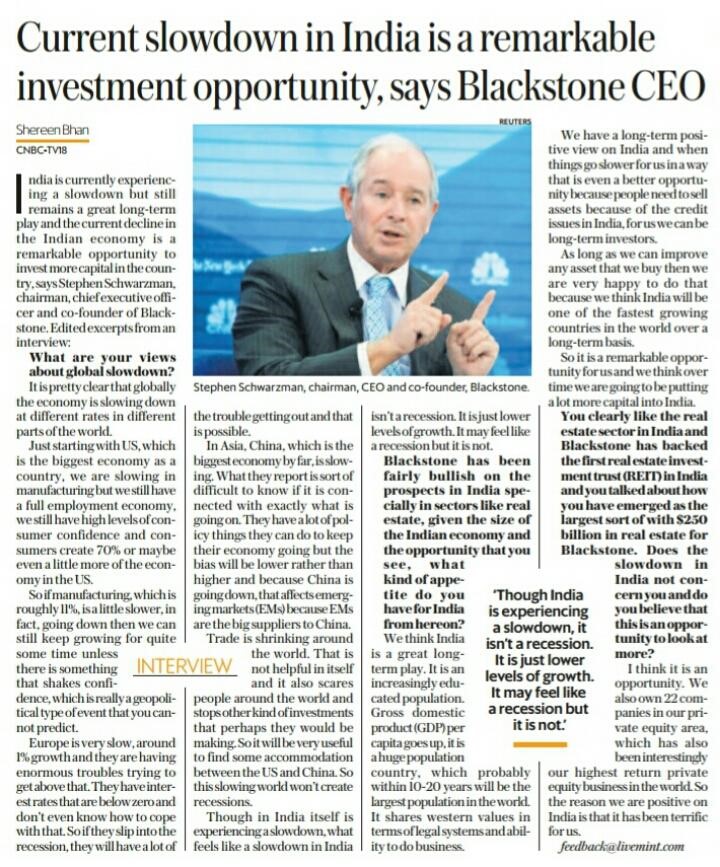
The “India growth story” is a long-term one for investors and business

India remains a compelling long-term investment and business story – despite a lot of negative talk about the Indian economy (mostly politically motivated but also buoyed by a slow down in growth).

blackstone5

Most commentators expect the slowing to be temporary.

Take a look at the MSCI India index which has comfortably outperformed the MSCI Emerging Markets index (697.7 per cent vs. 485.1 per cent). Not too bad.

Favourable demographics is another driver with India having the world’s largest population of millennials – those aged between 21 and 38 – India has 450 million and these people will transform India. What it eats, drinks, how and where it travels, fashion, what it watches and listens to – life will change fundamentally.

More than 50 per cent of the population is under 25 years of age – a total of 600 million – with 1 million new people entering the workforce each month. Contrast this with China, which is ageing faster than any other country, with the over 60’s expected to account for 35 per cent of the population by 2050. Europe, the US and Japan face similar demographic challenges.

Urbanisation is another driver of growth – a third (34 per cent) of India’s population is urban, but it’s rising fast. Compare this to China (58 per cent) and Japan (92 per cent) – you can see the long-term growth story of India.

Then there is structural and economic change, with pro-business Prime Minister Narendra Modi – let’s steer clear of short-term politics but acknowledge that change has happened, and more is to come.

Visitors to India notice rapid improvement in infrastructure – road construction, plus 27 km of railway built per day, while India’s metro system is growing again, new airports and more.

Investors and businesses should be finding a way to participate in and benefit from the long-term India growth story.

Dalai Lama provides another insight into how India is very different

How is India different?

Last week the Tibetan spiritual leader the Dalai Lama delivering the 24th Dr Sarvepalli Radhakrishnan memorial lecture on “universal ethics” organised by the Indian Institute of Advanced Study, said India’s message of “ahimsa, kindness, love and compassion” spread even during religious conflicts and World Wars.

So, there is one guide to India’s difference – in my own words – despite having some internal conflicts of its own, the Indian starting point is non-violence, kindness, love and compassion. Not saying it always works out that way, but…

How many other cultures can we say this for? Think how strongly the concept of “revenge” has taken hold in the west – someone does wrong by us, we will “track them down”. Just one example of a different mindset.

The Dalai Lama has lived in India since 1959, and he also called for a “revolution” in India’s education system by combining its 3,000-year-old ancient tradition of high moral teachings with the modern education. This would be a good thing everywhere.

“Those mental quality subjects like non-violence, love, kindness and compassion should be included as an academic subject instead of religious teachings,” the 84-year-old said.

What do you think?

hhdl