We are now a few weeks into 2022 so this is a good time to revisit your “new year resolutions” and perhaps take a different view.
This is from a friend and colleague Debashish Chatterjee who is a Director of Indian Institute of Management in Kozhikode, India:
3 Unusual Insights for 2022
#1. We begin the year with resolutions. They are often a laundry list of personal desires. A desire is an energy formation. When your desires are woven around a web personal pleasures, the energy they receive comes from your ego. This energy is limited. When your desires are for the greater good, the whole universe supports your desires. Enhance the circumference of your desires, you are bound to succeed.
#2. You do not have a busy life. You only have a busy mind. The world out there is nothing but a projection of the mind. Slow down the mind. Your world will transform around you. You will begin to see things that you had overlooked earlier. You will fumble less and create more.
#3. That which has a beginning also has an end. This was Buddha’s insight into the impermanence of life. Begin with the end in mind. Ask where are my actions and thoughts eventually leading me?
A significant majority of people in wealthy countries now believe that having people of different ethnic, religious, and racial backgrounds improves society.
In the US, Canada, UK, Australia, New Zealand and Taiwan, 8 out of 10 people believe greater diversity is a benefit, and even in relatively culturally homogenous countries like Japan and Greece, the share has increased by double digits in the last four years.
INTO INDIA wishes you all a peaceful, prosperous, safe and healthy new year for 2022. This is our last post for this year.
The question for next year is how will we all get on better than we did in 2021?
I hope we will see “smart diplomacy” dominate next year – this is the kind of diplomacy that works with cultural and cross border differences. It is not insulting and does not force the other country into an aggressive response. It takes into account major global shared challenges such as climate change, Industry 4 and the continuing pandemic.
It is “smart” to talk to other countries in a way which allows them to make their own positive contribution to the debate – does not corner them into hostility.
Australia has done some “smart” diplomacy things this year – such as using former Prime Minister Abbott as a special envoy, a move well received in Asia.
Hoping countries will all be a lot smarter in 2022.
At last night’s meeting in Melbourne of the Australian Institute of International Affairs, Trade Minister Dan Tehan MP made reference to how the QUAD could be useful for future trade agreements.
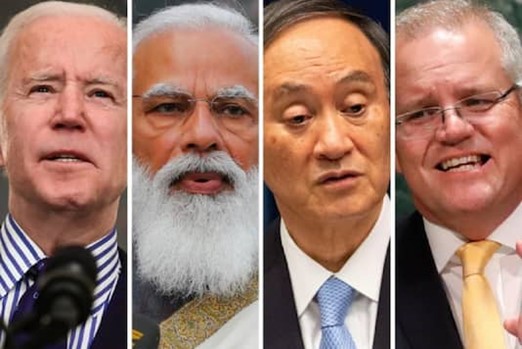
The QUAD includes Australia, India, Japan and the USA. It focuses on supply chains and “independent and free region” – that is, a buffer to China.
But it might be a big help on trade.
India wants to use the QUAD as it steps up global trade relations.
And Australia already has FTA deals with the other two QUAD parties – Japan and USA.
The Quad is a diplomatic network of four countries committed to supporting an open, inclusive and resilient region. It complements our other bilateral, regional and multilateral cooperation, including with ASEAN.
The Quad aims to respond to the defining challenges of our time, including COVID-19 vaccines, critical and emerging technology, cyber security, climate change, infrastructure, maritime security, countering disinformation, counter-terrorism, and humanitarian assistance and disaster relief.
With great clarity and logic, John McCarthy AO, former Australian diplomat, has outlined the three choices for Australian diplomacy – hard, soft or smart power.
McCarthy is concerned that Australia in recent times has used “hard” power and this can bring reputational damage.
He describes how “soft” power is often mistakenly seen as just culture or cricket.
And he concludes by describing the “smart power” option.
Brilliant article.
I am sure most of our diplomats and think tanks would agree – but can the politicians wake up to the harm they are doing to Australia’s international reputation?
The Indian diaspora is now Australia’s largest migrant group – and this is showing up in leadership and change. More achievements will be ahead – but INTO INDIA now honours our “top 10”:
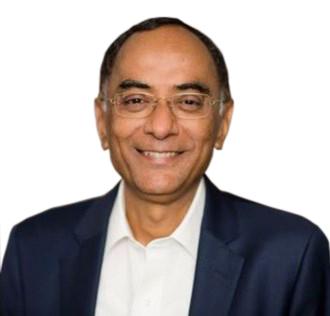
TARUN GUPTA, Managing Director and CEO, Stockland
Tarun Gupta, CEO, Stockland
In June 2021, Tarun Gupta joined Australia-based Stockland as the Managing Director and Chief Executive Officer.
Founded in 1952, Stockland is one of the most diversified property groups in Australia. Today, Stockland owns, develops and manages a comprehensive portfolio of residential communities, retirement living villages, workplace and logistics assets, as well as retain town centres.
Tarun Gupta has held a wide range of senior roles in the past. Previously, Gupta was the Chief Financial Officer with Lendlease.
In 1994, Tarun Gupta had come to Australia (after graduating from University of Delhi) as an international student to gain an MBA at Uni of Newcastle
Mitu Bhowmick Lange, Director of Mind Blowing Films
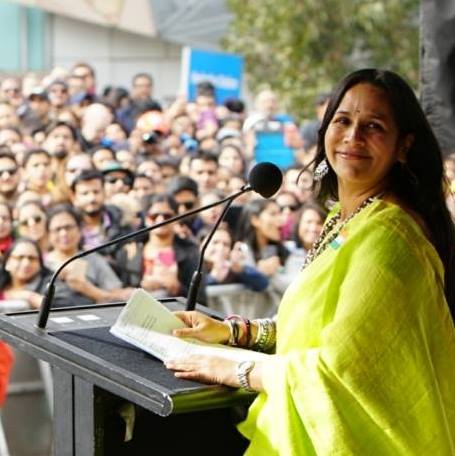
Mitu Bhowmick Lange
Mitu is Festival Director of the Indian Film Festival of Melbourne (IFFM) which was established in 2010 and has become one of the biggest and most successful Indian film festivals held outside of India.
Mitu is the Director of Mind Blowing Films, a film production and distribution company that specialises in the distribution of Indian films in Australia, New Zealand and Fiji. It also provides local production support to Indian films shot in Australia and New Zealand. She has also produced Spice Girls of India, which was screened at the London Feminist Film Festival.
Mitu also worked in Bombay for six years directing several TV shows including entertainment, news and fashion magazine programs and a daily breakfast show for most of the leading channels including BBC World, Star Plus, Zee TV and Sony TV. Since living in Australia, Mitu has introduced and produced several Indian productions in the country, including producing 13 episodes shot in Australia of India’s number one daily television serial Kahani Ghar Ghar Kii, Bollywood film Koi Aap Saa and blockbusters like Salaam Namaste, Chak De India and Bachna Aye Haseeno as well as several leading television commercials made for the Indian market.
In 2017, Mitu received the Jill Robb Award from Film Victoria recognising her achievements, leadership and mentorship of other women from the sector.
Mitu is a Board Member, Film Victoria, Board member, Natalie Miller Fellowship, and was educated at Hindu College, University of Delhi and gained a master’s degree at St Xavier’s College.
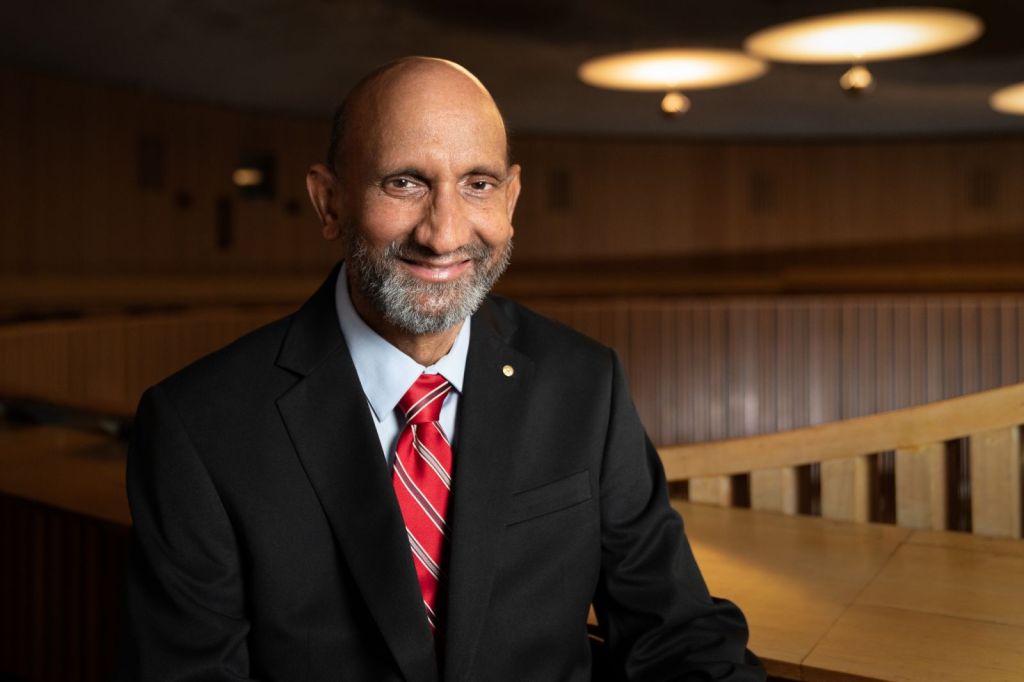
Distinguished Professor Chennupati Jagadish AC, incoming President, Australian Academy of Science
Nanotechnology pioneer Distinguished Professor Chennupati Jagadish AC FAA FTSE is the next President of Australia’s premier science organisation, the Australian Academy of Science. He is the first Australian of Indian heritage to take on the role.
The Academy plays an important role providing independent, authoritative and influential scientific advice to the Australian Parliament.
He is an Indian-Australian physicist and academic, a Distinguished Professor of Physics at the Australian National University Research School of Physics and Engineering. He is head of the Semiconductor Optoelectronics and Nanotechnology Group which he established in 1990.
He plays a leading role in helping Australia transition from a resource-based economy to a knowledge and technology-based economy.
Throughout his career Professor Jagadish has supervised 65 PhD students, is currently supervising a further 12 PhD students and has mentored 50 post-doctoral and other fellows, with many of them now in leading research institutions across the world.
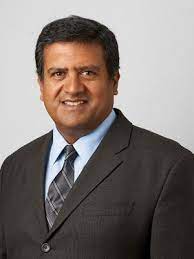
Sanjeev Gandhi, Managing Director and CEO of Orica Limited
Sanjeev Gandhi was previously Orica’s Group Executive and President of Australia Pacific Asia, and was appointed as the Managing Director and CEO of Orica Limited in February 2021.
Mr Gandhi joined Orica in July 2020 after spending 26 years with German chemical company BASF SE, the global leader in the chemical industry. During his tenure with BASF, he held senior marketing, commercial, business leadership and director roles, in India, Germany, Japan, Singapore and Hong Kong.
Most recently, Mr Gandhi was an Executive Director of BASF SE and Head of Asia Pacific as well as Head of Global Chemicals Segment (Intermediates & Petrochemicals) based out of Hong Kong. Leading a workforce of more than 18,500 people across 19 countries, 125 production sites and 140 sales offices, Sanjeev and his team were accountable for the delivery of €13.3 billion in revenue, and €1 billion in EBIT in 2019.
Mr Gandhi leads a global team of more than 13,000 colleagues.
Orica is the world’s largest provider of commercial explosives and innovative blasting systems to the mining, quarrying, oil and gas and construction industries. They are also a leading supplier of sodium cyanide for gold extraction, and a specialist provider of ground support services in mining and tunnelling.
Mr Gandhi gained an MBA at the Institute of Management and Entrepreneurial Development, Pune
Kaushaliya Vaghela, Member of Legislative Council, Parliament of Victoria
Kaushaliya Vaghela is the first India-born elected Member of Victorian state parliament, representing the Australian Labor Party in Victoria’s upper house.
Before being elected as an MP, Kaushaliya was working as a Risk and Compliance Manager and prior to that as a scientist in research and diagnostic laboratory.
She came to Australia as an international student to study a Master of Applied Science at RMIT in 1998.
Indians form a large community in Victoria, and she as elected an MLC for Western Metropolitan region in 2018.
Vivek Bhatia CEO Link Group
As CEO of Link Group, Vivek Bhatia leads 6000 employees in a company that administers financial ownership data and drives user engagement, analysis and insight through technology. Link provides complete solutions for companies, large asset owners and trustees across the globe.
Vivek is an experienced chief executive, having led a number of complex businesses throughout his career. Vivek joined Link Group from QBE Insurance Group where from 2018 he was Chief Executive Officer of the ASX-listed general insurance and reinsurance company’s Australia Pacific division.
Vivek joined QBE from icare where he held the position of inaugural Chief Executive Officer and Managing Director. Prior to this, he co-led the Asia-Pacific Restructuring and Transformation practice at McKinsey & Company and also previously held senior executive roles at Wesfarmers Insurance, including responsibility for leading the Australian underwriting businesses of Lumley, WFI and Coles Insurance.
Vivek holds an undergraduate degree in engineering, a post-graduate in business administration and is a Chartered Financial Analyst (ICFAI).
Sanjay Dayal CEO Pact
Sanjay Dayal became Group Chief Executive Officer, Managing Director, Executive Director of Pact in April 3, 2019. Sanjay joined Pact most recently from BlueScope Steel where he held the position of Chief Executive, Building Products, Corporate Strategy and Innovation.
Sanjay had a very successful career with Orica and ICI, including Regional General Manager for Manufacturing and Supply Chain and General Manager for the DynoNobel Integration, based out of London.
Sanjay holds a Bachelor of Technology (Chemical Engineering) from Indian Institute of Technology – Delhi.
Pact is a packaging, re-use and recycling manufacturing firm. Which recently received $20 million in funding from the Federal Government’s Modern Manufacturing Initiative for Recycling and Clean Energy Manufacturing projects to support its investments in world-leading technology which will increase the amount of recycled materials in locally made plastic packaging.
The group employs around 2400 people, operates in Australia, New Zealand, Asia, the United Kingdom and the United States,
The Company designs and manufactures bottles, containers, trays, tubes, closure systems, and other customized packaging solutions.
Ravneet Pawha, Deputy Vice President, Deakin University
Ravneet Pawha is Deakin University Deputy Vice President (Global Engagement) and CEO (South Asia). She is also President of Australia India Business Council (AIBC), Victoria.
Ravneet gained a master’s degree at Panjab University and was a gold medallist in her postgraduate studies. In 2018 she won the prestigious Business Leader of the Year at the India Australia Business and Community Awards.
With over 27 years of experience in the international education sector, Ravneet has been instrumental in establishing global collaborations and strategic partnerships. She has developed Australian Education collaborations specifically for Deakin University in India/South Asia and has contributed to the immense success globally. She is an inspirational leader and a passionate entrepreneur.
Sandeep Biswas, CEO, Newcrest Ltd
Mr Biswas was appointed Managing Director and Chief Executive Officer of Newcrest on 4 July 2014. He joined Newcrest in January of that year, as Executive Director and Chief Operating Officer.
Mr Biswas was previously Chief Executive Officer of Pacific Aluminium, a wholly owned subsidiary within the Rio Tinto group, which incorporated the bauxite, alumina, refining and smelting operations in Australia and New Zealand.
He began his career with Mount Isa Mines, working in both Australia and Europe. Mr Biswas has also worked for Western Mining in Australia and Rio Tinto in Canada and Australia.
He is Vice Chairman of the Minerals Council of Australia, Vice Chairman of the World Gold Council and Member of the ICMM Council.
He gained a BEng (Chem) (Hons) at the University of Queensland.
Newcrest is the largest gold producer listed on the Australian Securities Exchange and one of the world’s largest gold mining companies.
Dr Astha Singh, Senior Marketing Manager, Servers Australia
Dr Astha Singh is a Science and Technology Marketing professional with over 14 years of experience specialising in STEM (Science Technology Engineering and Mathematics) and has shared her innovative idea at TEDx Sydney. She currently works as a Senior Marketing Manager at a Cloud Hosting Technology company called Servers Australia.
Astha has initiated and implemented several STEM focussed multicultural marketing campaigns in her career with programs and organisations such as FameLab, Soapbox Science, Sydney Science Festival, Spark Festival (Australia’s largest festival for entrepreneurship) and at iAccelerate (Australia’s largest University business incubator).
Astha led a nation-wide campaign in 2019 to raise awareness for Diversity in STEM with over 30 top scientists around Australia featured on the Australia’s Science Channel. With her particular interest in diversity & equity, Astha has served as the advisory board member at Multicultural NSW, Australian Football League, NSW. Continuing her passion for highlighting South-Asian talent in STEM, Astha was the STEM ambassador for the Australia India Business and Community Awards 2020-21.
Currently Astha serves as a mentor for commercial research at the CSIRO’s ON Accelerator and DStart programs.
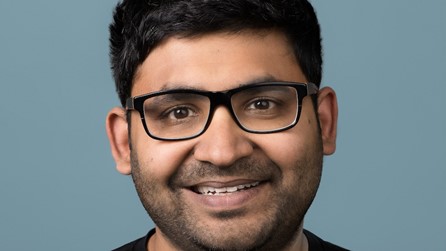
Twitter has got a new boss and he is an India-born American – Parag Agrawal. Tesla boss Elon Musk summed it up nicely when the billionaire and SpaceX founder said: “USA benefits greatly from Indian talent!” So does Australia.
Mr Agrawal, who joined Twitter in 2011 and rose through the ranks to become the firm’s chief technology officer, was on Tuesday announced as CEO after Jack Dorsey announced he was stepping down from the role.
According to Bloomberg, at 37 years of age, Mr Agrawal is the youngest person to run a company in the S&P 500.
Indian-American tech giant CEOs
Twitter — $35.1b — Parag Agrawal
Google (Alphabet) — $1.89t — Sundar Pichai
Microsoft — $2.48b — Satya Nadella
Adobe — $318.7b — Shantanu Narayen
IBM — $105b — Arvind Krishna
Palo Alto Networks — $54b — Nikesh Arora
Mr Agrawal earned a bachelor’s degree in computer science and engineering from the Indian Institute of Technology and a PhD in computer science from Stanford University.
Australia has diverse CEOs – but could do better
Some examples include Macquarie Group chief executive Shemara Wikramanayake, Stockland’s managing director and CEO Tarun Gupta, Orica’s managing director and CEO Sanjeev Gandhi, Link Group CEO Vivek Bhatia, Pact’s managing director and CEO Sanjay Dayal, Newcrest’s managing director and CEO Sandeep Biswas, and Cleanaway, which until January had Vik Bansal as its CEO.
Melbourne’s Federation Square is the focus of the annual Diwali celebrations
Born here, I naturally love Melbourne.
But in my lifetime the city has been transformed via migration and especially by the increase in local Indians and students. It is now an exciting place – for example, in normal non-covid times, the city centre and Federation Square is taken over by Diwali celebrations.
India accounted for around 178,000 visitors to Victoria every year.
More than 67,000 international students were here before the COVID-19 outbreak in Australia – and now we can welcome them back!
We have the largest Indian population in Australia, with more than 209,000 Victorians reporting Indian heritage at the 2016 census. Since 2001 the number of Indian-born migrants in Melbourne has more than tripled.
Indians living in Melbourne love:
living in Melbourne’s suburbs with safe, accessible transport
local supermarkets, Indian grocery stores and restaurants
Melbourne’s festivals, museums and cultural events (including Diwali, Holi and more)
Victoria’s world-class education system
dining out in Melbourne’s renowned restaurants.
If you’re thinking about migrating to Australia from India, Melbourne could be the perfect home for you.
Melbourne has the 10th largest immigrant population among world metropolitan areas. In Greater Melbourne at the 2016 census, 37% of residents were born outside of Australia.
Qantas’ Melbourne-Delhi service starts will start on December 22 and operate four times a week year-round.
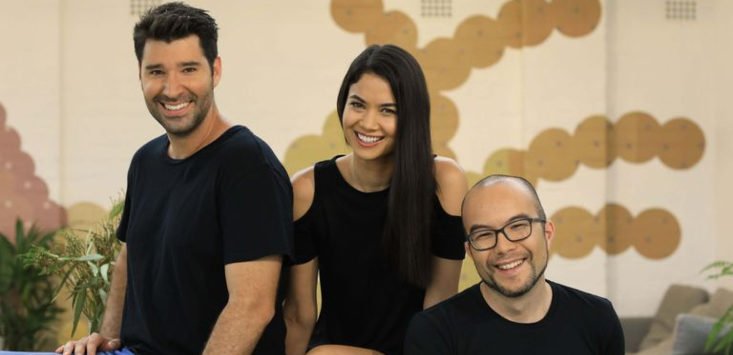
The team that have taken Australian startup CANVA global – India is a market for almost every startup
Launching your startup into India – 5 key tips
Here’s a big generalisation – almost every startup can find an eager market in India.
I say that with confidence, because the Indian economic growth story means demand for everything cannot be met – demand is huge, so that means opportunity for your startup.
But how to approach India?
First – think longer term than you normally do, but keep in mind modern India can be either fast or slow and there is no way of predicting.
Second – leave your ego behind. Pretty much every western company that has succeeded in India has done so on the support of a strong local Indian team across all levels. To do this, they have effectively left their ego behind.
Third – India wants your startup, NOT your culture. Those who struggle typically want to transfer their “culture” to India, so they put their expat team in charge of the local team.
Being preoccupied with transferring “the way we do things in our company” to India makes them blind to “the way Indians do things there” which is the most important insight for future success.
Fourth – use your expat team wisely. Expats can come and go as needed – but your business needs longevity in India and that is what an Indian management team can provide.
Fifth – Smart companies that go into Asia also ensure they hire Asians into the Head Office team, so you have Asians running your enterprise on the ground in Asia and Asians at the right level in HO guiding and advising the HO team.
The future of startups and innovation is looking good for India.
Pictured is Indian comedian Vir Das who recently publicly criticised India
I love India. I do not think it is perfect – just like every other country, it of course is not perfect.
India is many cultures, many languages and with powerful regional differences.
It is experiencing massive generational change with Millennials and Gen Z changing the landscape from “born something” to “become something”.
This change is happening at a rapid rate – even with an “old” leader, PM Narendra Modi. Funny you chose to be critical of septuagenarian leaders in India when you were in a country with a 78 year old President who replaced a 75 year old. By contrast, Modi is a “youthful” 71.
Having said all that, I would not criticise India in any global forum or in any other country. Why not? I just don’t like negativity and especially not on the international stage. Since you are an Indian you might feel that you can make these criticisms.
So my message to Vir Das is simple – I am sorry you chose to focus on the negative, especially on the international stage. Of course, I believe you have a right to your view. But consider building your comedy with respect and care. India is not perfect – but it is changing fast.












 Into India