7 strategies for India market entry 2020

  1. Find the affluent millennials

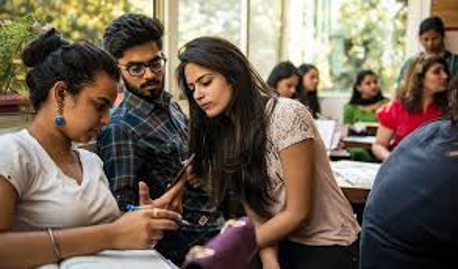
India is home to the world’s largest population of millennials—typically defined as those aged 18-35. At 450 million, these millennials are influencing the way Indians eat, shop, commute and buy, much like their global counterparts. They are the first upwardly mobile group in recent history of India – and will have an impact very like the way western baby boomers changed most things.

YoungIndians4

According to Santosh Desai, managing director of Indian Brand Advisory Group Futurebrands, Indians used to be “born something” but now can “become something”.

  1. Drill down to the real middle-class market

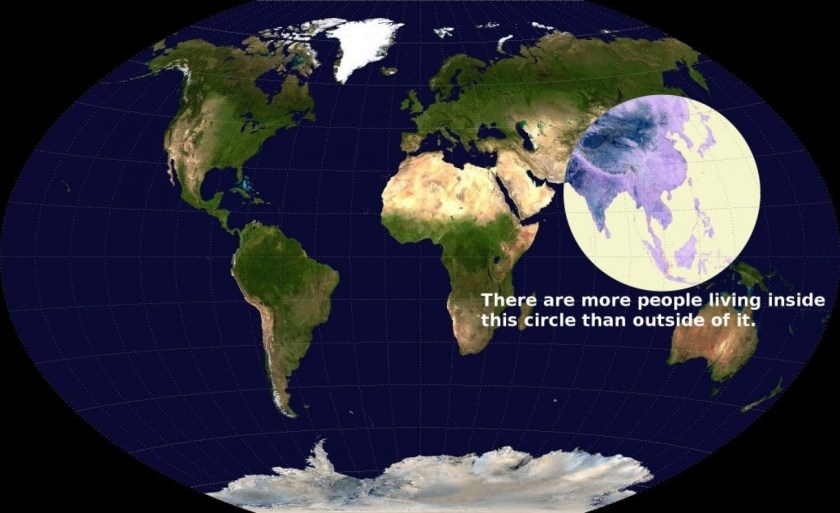
We know India has 1.3 billion people, but if you think too much about this you will get nowhere. Drill down to find your market.
asiamap8circle

For example, some estimate the “middle class” as high as 300 million. For me, this is way too high. Austrade takes a dimmer view – it estimates that there are approximately 30 – 80 million people in our target demographic, many of whom live outside Tier 1 cities. That’s a big range from 30 to 80, which shows that we just do not know. But for me Austrade’s numbers are too low.

Austrade looks for consumers that:

  1. can afford international travel to destinations, like Australia;
  2. can afford to send their children for study abroad; and
  3. can afford to eat at high-end restaurants and hotels or eat significant amounts of imported food and wine at home
  1. Think of India as many markets

Thinking of India as “one market” will slow down your impact and waste your marketing efforts. First, there is the divide between north, south, east and west. Then there are big metropolises (8-10) and hundreds of tier two cities (around one million plus). Then there are over 26 different languages, multiple food cultures, differing beliefs and interests. It is complex, so build that into your “many markets” strategy.

  1. Consumerism is changing in India

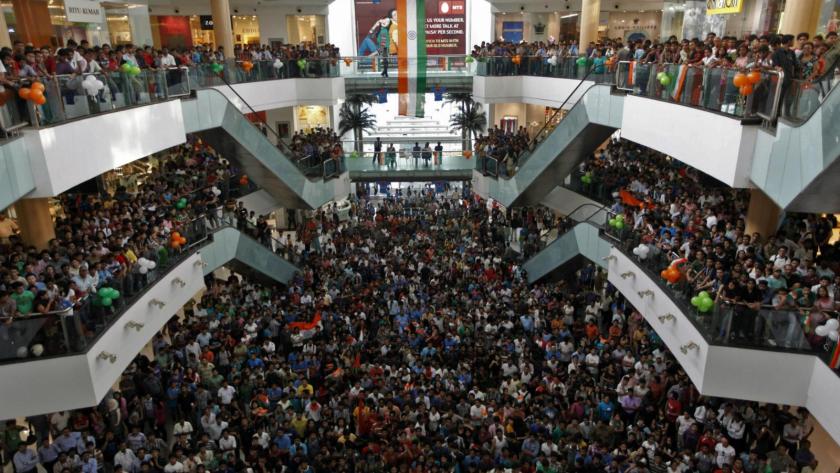
India had just 9 Shopping Malls in 2007. There are over 350 Shopping Malls in 2019. Plus 85 new Shopping Malls will be built in the next 5 years = 435 Shopping Malls in 2025.
malls

Add to this that online retail is taking off, with Amazon and the local Flipkart leading the way – Indian consumers use cell phones for online access.

Dr Mark Morley Trade Commissioner India Government of Australia makes a key point about opportunities for us: “Australia is well positioned with the Indian consumer. Across India, we have a great reputation for clean, safe and reliable supply. We are well known as a premium supplier of produce, and we have a global reputation for our quality brands.”

  1. Thinking local is a good way to start

Especially for those in food, beverages, education and fashion, your beginnings for India can start right here in Australia.

About 650,000 Australians claim Indian ancestry, and we have over 65,000 Indian students here, which means a significant local market spending money. Add to that the growth in Indian tourists – up to over 300,000 per year and growing at around 15%. This gives you a good market testing opportunity.

  1. Collaboration is the new relationship

If you just want to “sell” to India, sharpen your pencil and think short term – sooner rather than later, India will find an alternative to you.

To be in India for the long term, seek genuine opportunities to collaborate with Indians – once you and Indian collaborators are working together, your future is more secure. This is how Indians prefer to operate, so drop “transactional” thinking and focus on “collaboration” – it is the new relationship.

  1. Give India the time it needs

Cultures based on relationship (collaboration) are slower to move, so give India at least three years. You might “sell” sooner, but for most this is a very short-term market entry approach.
 

How Indian use of English can show cultural differences among English speaking nations

A recent headline in the Economic Times read: “India budget – what all has the Government promised”.

For western English speakers, the “what all” demonstrates a slight difference in how English is used in India. I am not saying anyone is right or wrong here, but language can remind us that although we might speak English, we think first as a westerner or an Indian or other part of Asia. Western media would say “what has the government…”

At the least it is entertaining – at most it provides cultural insights.

At functions in India you will see two signs “Veg and non-veg”. This shows how important food choices are over there.

veg

Pictured is the vegetarian Jumbo King Food outlet in Mumbai

Young Indians will often refer to non-relative individuals as “Auntie” or “Uncle” as a sign of affection.

“Timepass’ is a terrific Indian-English creation – used to describe a Bollywood movie or TV show that was just OK. How was the movie – Oh you know, timepass.

When an Indian talks about “mugging” it is generally not about thugs or criminals – it describes rote learning, memorising, cramming.

In a crowded country, “kindly adjust” is a common phrase which means “sorry about any inconvenience but there is not much I can do about it now”. Especially useful on trains.

railwaystationahmedabad

Pictured is Ahmedabad station where “kindly adjust’ comes in handy

Conversations can often include “rest is fine” which comes after a short description of what is happening in your life and “rest is fine” is an all purpose summary of the rest.

“What is your good name” is one I love – such a respectful way to ask a person’s name.

Brian Johnston recently wrote in this topic in Traveller.

He said a simple sign in a Delhi temple said “Ill manner of all kinds is intolerable”. Admonishment or observation? Intolerable, but is it tolerated?

Indians, he says, have a Shakespearean knack for new variations of words – upgradation, pin-drop silence, and “Mention not!” when you offer praise.

More – she is pulling your legs. Pay attention on. Discuss about. She’ll be knowing the answer.

How about “Don’t prepone it – do the needful!” By the way, “Prepone” is much shorter than “”Do you want to bring our meeting forward a day?” Prepone is now in the Oxford English dictionary.

Words such as hullabaloo, hoary, gallivanting, thrice and scurrilous continue to thrive in India.

Johnston says: “Indian English conforms to its own proper rules of grammar and vocabulary”.

He makes the point that English is no longer controlled by the small number who originally spoke it. Native speakers of English (450 million) are way outnumbered by non-native speakers (at least 1 billion).

In India you can order “hot hot coffee”. A travel guide might refer to the wonderful India Gate in Delhi as “big and enormous” – that is huge!

indiagate4

(I am pictured in November in front of the “big and enormous” India Gate in Delhi)

China of course has its own English, often dispensing with subjects (can or can not!) or verbs (this chilly crab delicious).

India and China both use “is it” in questions – “you are leaving now, is it?”

On the road in India is entertaining – “Horn please!” is the instruction on mountain bends and on the back of trucks. “Faster will see disaster” it a beautiful use of English as is “Always alert, accident avert”. Also – “Road is hilly, don’t be silly”

hornplease

Pictured above – colourful back end of a truck in India

My favourite is the sign off used in emails and letters – “We will revert with the necessary”. Says it all.

(Thanks in part to Brian Johnston and Traveller 1 February 2020)

Why Australian schools have missed out in India and 7 steps to succeeding there

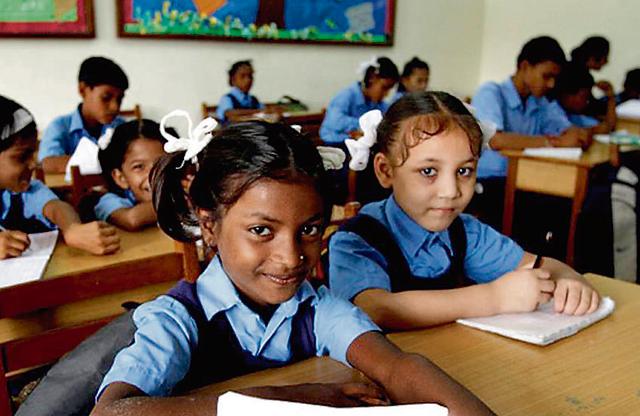
Demand for education in private international English-medium schools in India is soaring.

Despite this, few if any Australian private schools and school product providers have made inroads into India.

One of the barriers is what I call the “agency thinking” of education – just appoint lots of agents and the business will flow. Maybe – but India is a relationship country and you only become a big player through relationships, not through agency.

Indian nationals in the more expensive private international schools with fees above USD$10,000 make up 43 per cent of students. That’s high. As India’s middle class expands, this figure will also rise.

It is a great opportunity for Australian school education – our whole education system is well regarded in India.

The main international curricula offered in India are the International Baccalaureate (IB) curriculum and the Cambridge International Examinations.

Here is the bad news – no Indian schools are offering the Australian curriculum. Why not?

schools 3

I have long advocated a “partnership model” for market entry into India. I recently conducted research on “partnership and collaboration” opportunities in the horticulture sector and this is looking much more positive than simple going to India for a quick sale.

This strategy has also been endorsed in the Final Report International Opportunities for Australian School Curriculum, Assessment and Regulatory Products; Australian International Education: Enabling Growth and Innovation – NSW Education Standards Authority and Nous Group January 2019 – “Given the size and complexity of operating in India, a partnership approach could assist Australian agencies and providers in developing market opportunities.”

Australia is much more “transactional” than we like to think. That is why we have not done well in Indian schooling.

Keep in mind there are many barriers to market entry.

How do you create a “partnership model”?

  1. Of course, do your homework, which means pay for expertise to deliver real on the ground opportunities in India, which might include exchanges, curriculum, technology or some form of JV with an existing school or group
  2. Build relationships – which also means take your time, budget for the long road
  3. Look in the developing sectors, such as Smart Cities, new cities, redevelopments and the property landscape
  4. Create relationships across all areas of the education sector – governments (central and state), schools, advisors, curriculum, technology providers and more
  5. Leverage existing Australian university relationships in India
  6. Always, where you can, build a local Indian presence, because this above all else signals that you want to be a genuine long-term partner
  7. And always, where you can, build your presence through a Joint Venture with a respected Indian brand in your sector

India’s FMCG market to grow 9-10% this year

Are you an FMCG exporter? Is India part of your plan?

According to market researcher Nielsen, India’s fast-moving consumer goods (FMCG) market is expected to grow 9-10 per cent in the January-December period, matching the expansion rate in 2019.

fmcg33

There are two shifts in the Indian FMCG market – one is to branded products and the other is to online e-commerce.

A shift towards branded products has been driven by the GST.

“Following the implementation of GST (Goods and Services Tax), a lot of unorganised players have exited the market across different FMCG categories,” said Mr B Sumant, ITC executive director of FMCG. “As a result, there has been a clear shift in consumption trend from unbranded to branded products.”

fmcg66

Pictured above – the top Indian FMCG stocks

FMCGs can be divided into several different categories including:

Processed foods: Cheese products, cereals, and boxed pasta

Prepared meals: Ready-to-eat meals

Beverages: Bottled water, energy drinks, and juices

Baked goods: Cookies, croissants, and bagels

Fresh, frozen foods, and dry goods: Fruits, vegetables, frozen peas and carrots, and raisins and nuts

Medicines: Aspirin, pain relievers, and other medication that can be purchased without a prescription

Cleaning products: Baking soda, oven cleaner, and window and glass cleaner

Cosmetics and toiletries: Hair care products, concealers, toothpaste, and soap

Office supplies: Pens, pencils, and markers

Shoppers in India are leaping from buying unbranded at “mum and dad” stores to online purchasing.  

The most popular e-commerce categories, not surprisingly, are non-consumable goods—durables and entertainment-related products. The online market for buying groceries and other consumable products is growing, as companies redefine the efficiency of delivery logistics which shorten delivery times. While non-consumable categories may continue to lead consumable products in sheer volume, gains in logistics efficiency have increased the use of e-commerce channels for acquiring FMCGs.

Amazon is backing India to the hilt

Pictured recently in India – Amazon CEO Jeff Bezos with Amit Agarwal, senior VP & country head, Amazon India, during the Amazon Smbhav event at the Jawahar Lal Nehru stadium in New Delhi

Amazon.com Inc Founder and Chief Executive Officer Jeff Bezos said on Wednesday that his company would invest an additional $1 billion to help bring small businesses online in India, and also committed to using the retail giant’s “size, scope and scale” to export $10 billion of made-in-India goods by 2025.

amazon4

Bezos has faced some problems in India, but he is bullish and active.

Seeking to reach out to critics, Bezos, donning traditional Indian attire, said his company was committed to be a long-term partner of India.

Bezos was into India so much – “I want to make a prediction for you. I predict that the 21st century is going to be the Indian century.”

Why? “The dynamism, the energy… everywhere I go here, I meet people who are working in self-improvement and growth. This country has something special, democracy,” he said.

Bezos contradicted my recent blog (India and Russia the closest relationship on earth) – “I make one more prediction for you: In this 21st century, the most important alliance is going to be the alliance between India and the US,” Bezos added.

millennialsphones

The firm aims to digitise 10 million MSMEs with the proposed investment. In addition to providing training and enrolling MSMEs into its programmes, Amazon will help them work on cloud technology through specialised Amazon Web Services offerings at low costs. It will also establish 100 “digital haats’ in cities and villages throughout India.

Amazon has invested $5 billion in India in the past five years. The e-commerce platform also announced plans to support local neighbourhood shops and kiranas. It will expand its Amazon Easy programme.

In many ways, India retail is leapfrogging from the corner store to fully online.

For those in the FMCG sector this is a pretty exciting opportunity. Time to get your India strategy right!

millennialshopping

The Belt and Road Initiative and the Geopolitics of the Indo-Pacific Region

David Morris is a former Australian diplomat and current expert/advisor on regional issues, risk and international relations. He recently wrote on “The Belt and Road Initiative and the Geopolitics of the Pacific Region” published in Research on Pacific Island Countries, Social Sciences Academic Press (China), 2019.

The Belt and Road Initiative has become associated with a geopolitical “China threat” discourse in the South Pacific, he writes.

Are China and Australia, the dominant regional player in the South Pacific, driven by geopolitical imperatives to compete for power? Or do their different geopolitical needs provide opportunity for cooperation that is mutually beneficial and manages risks in the region?

As a commentator on India and the Indian Ocean, I can see much of what David Morris writes could be applied to the Indian Ocean rim countries.

Morris analyses supposed Chinese “threats” as well as risks to China, including fears of a military base in Vanuatu, Chinese debt-funded projects in Tonga and closer economic cooperation with Papua New Guinea.

He concludes that it is feasible for Australia to meet its geopolitical imperatives if its regional security leadership can be maintained.

A geopolitical analysis of China in the South Pacific concludes that China is unlikely to seek regional security leadership if it can ensure access to trade routes and markets.

If Australia could move beyond geopolitical rhetoric, it should therefore be possible for Australia to partner with China to support sustainable development, mitigate risks and ensure broader stability of the South Pacific region, he writes.

With large doses of common sense, Morris writes that Australian activity could be complementary to China’s BRI, and that while there are political risks, the two countries could cooperate to reduce risk and ensure projects are sustainable.

This would be great – but my view is a big barrier to anything Australia does in our region is always its world view of “goodies and baddies” with the USA as the major “goody” and China the current “baddy”.

It would be great if influential countries like India, Australia and China could create a new collaborative model that brings real development to those poor communities in our region.

Is this possible?

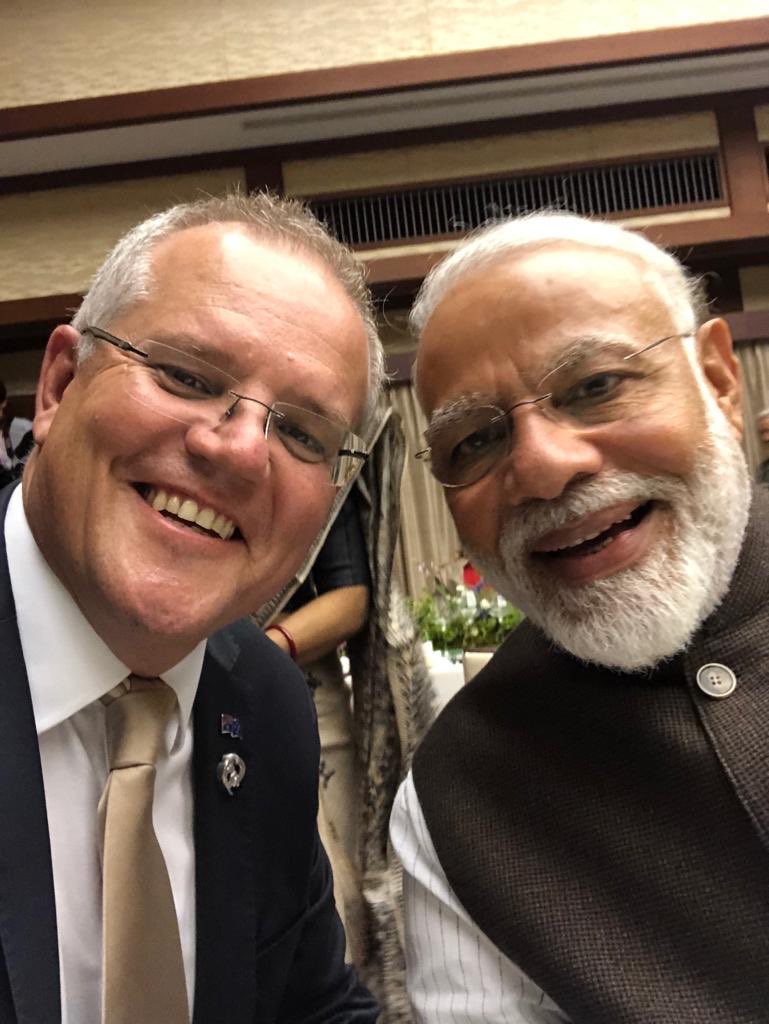
ModiMorrisonSmile2

Reflections for the New Year – from Ram Dass

From his beginnings as Harvard Professor Richard Alpert, he became Ram Dass in India and is now at the age of eighty-eight. Here, for the New Year, are some of his quotes.

“Everybody is playing with their stories; who they think they are. It’s more fun to just witness it all. To be in the environment in which it’s all happening.”

“Treat everyone you meet like God in drag.”

“You walk down the street and you’re somebody; you dress like somebody; your face looks like somebody. Everybody is reinforcing their structure of the universe over and over again and you meet [each other] like two huge things meeting. We enter into these conspiracies. You say, I’ll make believe you are who you think you are if you make believe I am who I think I am.

“How do we know who we are? We might be one breath away from enlightenment or death or who knows? The uncertainty is great. It keeps it wide open.”

“Give up the anger. Working it through is making it something. Just give it up.”

“When you go out into the woods, and you look at trees, you see all these different trees. And some of them are bent, and some of them are straight, and some of them are evergreens, and some of them are whatever. And you look at the tree and you allow it. You see why it is the way it is. You sort of understand that it didn’t get enough light, and so it turned that way. And you don’t get all emotional about it. You just allow it. You appreciate the tree. The minute you get near humans, you lose all that. And you are constantly saying ‘You are too this, or I’m too this.’ That judgement mind comes in. And so I practice turning people into trees. Which means appreciating them just the way they are.”

“The game is to be where you are. Be it honestly and as consciously as you know how.”

And from me – wishing you a happy and healthy New Year.


How should you start a speech?

I have just had three wonderful weeks in India. I made some speeches. I listened to a lot of speeches.

I was asked: “What is the best way to start a speech?”

We all know the bad ways. For example, someone just reads from their powerpoint. Or someone is checking the microphone.

But from Conor Neill from Ireland I have long applied these three ways to start a speech:

Ask a QUESTION

My recent topic has been How to Communicate and Survive during Industrial Revolution 4.0. So some times I start with “How will you keep your job when robots take over?” The question should be about a problem your audience faces.

State a FACT

Find some amazing fact that leads to your topic. One of Conor’s favourites is “There are more people alive today than have ever died”. If the fact shocks, even better. With my topic I use “over 65% of the kids in school right now will find jobs that have not even yet been invented.”

Begin a STORY

“I was in India recently and I met a person who said something which changed how I think about communication and leadership”. The audience is keen to hear what that “something” was. It should connect to your topic.

So, that’s the beginning.

Then, I suggest you have a long pause every 5 minutes or so (shorter if you like) and use another beginning and bring the audience along again using one of these three starters.

Good luck! (equals good preparation).

The harsh truth about how Australia has made a mess of relations with India

Scott Morrison has a huge challenge ahead as he travels to India. As leading Asia commentator, Greg Sheridan, has written in The Australian, Morrison “needs to fundamentally reset the relationship.”

In my almost two decades now of connection with India, I have seen first-hand how badly Australia has dealt with India – and this goes for government, education and business. You could possibly put in the arts and culture too.

As Sheridan says: “There is no relationship of such importance that Australia, historically, has managed so badly.”

ModiMorrisonSmile2

Check out how Sheridan describes India – “By 2035 India will have more people than China. All forecasts are fallible, but it is widely thought that by 2030 India will be the world’s third largest economy. India commands ­immense soft power and cultural richness. In any bookshop there are novels written by Indians from India, and Indians in the diaspora. A chunk of the British and Canadian cabinets are of Indian origin. The US has had two ethnic Indian state governors, Bobby Jindal and Nikki Haley. Both became nat­ional figures. The best Australian film this year was Hotel Mumbai.”

One big hurdle for Aussies is that since independence India has been very close to Russia (and still is) and has the capacity to maintain close relations with countries we do not like.

Australia has a “goodies and baddies” approach to the world – whereas India does not make the same judgements. We need to work with this.

Sheridan provides the first accurate statement of how bad things have been – “…over many decades, Canberra comprehensively messed up the Indian relationship and achieved radically sub-par outcomes in our own interests. The three great non-Chinese Asian powers are India, Japan and Indonesia. They are critical to geo-strategic and economic balance in the Indo-Pacific. We have a deep relationship with Japan. We pay a lot of attention to Indonesia. But the work with India is almost all ahead.”

Are we up for this challenge? I am not sure. Canberra is so Washington focused, and China preoccupied, that India does not rate enough.

Sheridan wants Australia to try again for a free trade agreement with India. I love the idea, but I have little confidence we can achieve it. In my time with India, Australian diplomats have blamed India for every delay and the fact that we did not get a deal. I have talked to the Indians and am not so sure the blame was so one sided. The question is – can Australia adapt and become more flexible with India? If we can, we might just snare an FTA.

Well done Greg Sheridan for such insights in Australia’s relations with India.

Anil Wadhwa could be reviving Australia-India trade relations – Lowy Institute – but health, agri and sport could be the key

So good to read on the Lowy Institute daily publication “The Interpreter” that India is doing something unusual in response to Australia’s Peter Varghese report – it is responding with an Australian Economic Strategy (AES). By the way, well done Lowy Institute for powering this and other national discussions.

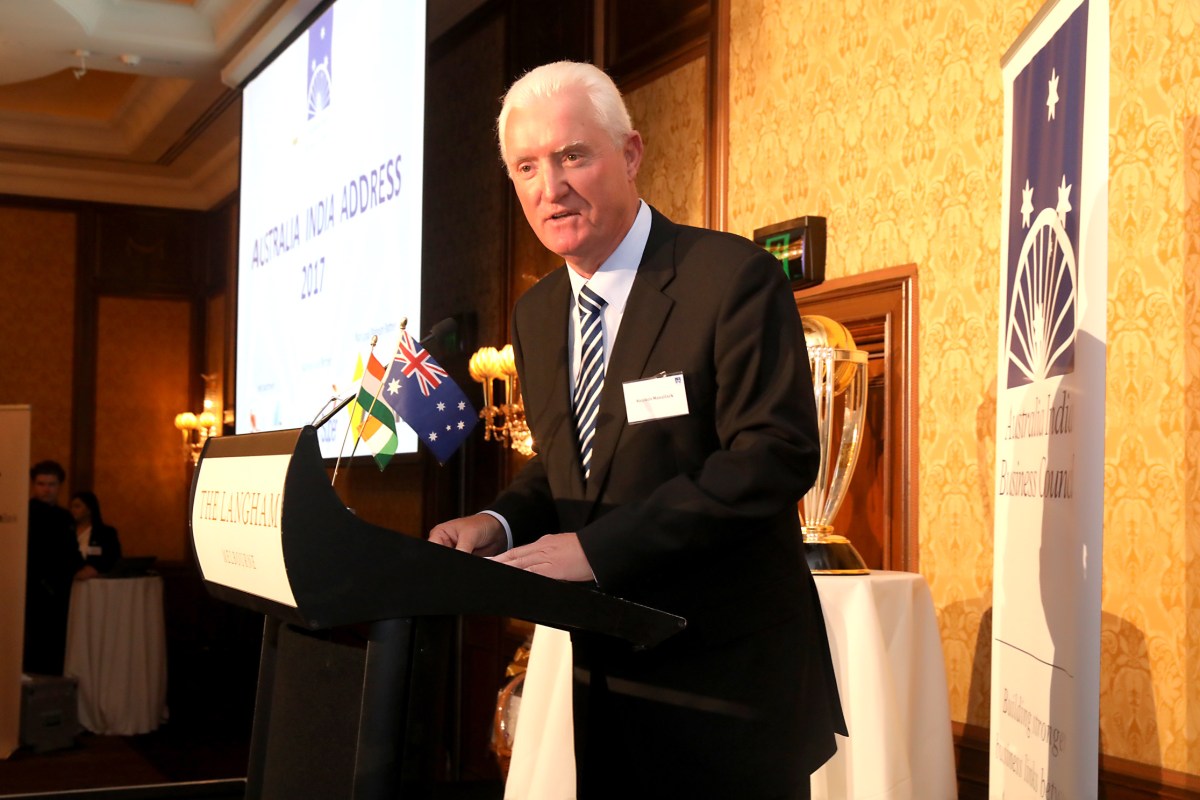
The AES is led by former Ambassador and Secretary (East) in the Ministry of External Affairs in India, Anil Wadhwa (pictured).

Let’s not get bogged down on the failed Free Trade Agreement with India – let’s not wait forever, and, by the way, trade is progressing without it. We would prefer to have one, but we can make mutual gains without it.

The key is that the AES from India means for the first time we will have a blueprint for economic engagement with another nation – this is the view of Mukund Narayanamurthy and Danielle Rajendram writing for Lowy Institute. Well done to you both!

They point out that unlike India’s engagement with the US, Canada, UK, and Japan, our relative size means that it is highly unlikely that Australia will have a similar scale of engagement with India. So, they say the crux of the relationship, certainly from a materiality perspective for both sides, will lie in mining, energy, infrastructure, education, and tourism.

This where I differ. They see healthcare, agribusiness, and sport having relevance but “may not be as material in absolute dollar terms” – my view is that these could be the areas that unlock the “India code” and get Australia into the big game with India.