10 tips for creating trusting cross-cultural teams

No trust, no team.

When trust is absent, you do not have a working team.

Creating teams across cultures is not easy – and even once you have trust, you can accidentally break it in one meeting.

Why?

Communication styles differ across cultures. Some (like Australia) are blunt and direct. Others (like India) are very polite and indirect.

Some cultures (USA and others) like a lot of social talk before getting down to business. Others prefer business first.

Add to this differences over how to give feedback and disagreements in public and you have a potential minefield that will destroy trust in an instant.

We know that diversity has an upside and succeeding across borders is a business imperative.

So, how do you avoid destroying trust? My 10 tips:

First, learn about cultural differences. Ignorance is your own personal enemy. Too many global business leaders have little or no awareness of differing cultures. It is time to change by learning about these cultures.

Second, creating a strong starting point is essential – which means having a clear direction and an optimistic and compelling goal.

Third, ensure that at least some of the team members have been trained in cultural difference and can operate successfully across cultures.

Fourth, encouraging your team to be curious, adaptable, caring and friendly – leaders can do this by showing these characteristics themselves.

Fifth, be specifically aware of the potential explosive points of the different cultures represented in the team. This makes team leaders aware of what can go wrong, what can be misunderstood and how to involve and encourage team members who are from cultures that are reserved and indirect. If conflict does arise, address it straight away in a calm and friendly way.

Sixth, help the team understand the differences between cultures in terms of giving feedback – Australians on the team will generally be very direct, while Indians on the team will be more cautious and indirect with feedback. Talking these differences through can help both sides.

Seventh, based on the trust created by the above, team leaders can establish team standards and norms that everyone commits to sticking to. This will mean for several team members that they have to adapt from their cultural norm. If it is seen that the whole team is adapting, it becomes a shared and positive experience. If I am the only one in the team adapting, it is just no fun and will not last.

Eighth, watch out for cultural differences over starting times – this will cause simmering divisions in the team. Westerners will generally be on time and expect everyone else to be on time too. Other cultures will arrive late and be surprised that others are already there. Create an agreed standard for the starting time and everything else has a better chance of success.

Ninth, have a predictable and mutually agreed timetable for information sharing, such as zoom meetings, email information, one-on-one sessions and physical meetings. Some cultures do not respond well to variations and unpredictability – so try for stability but also allow for those urgent meetings that just need to occur.

Tenth, work hard on creating personal connections with every member of the team. This can take time and seems like a distraction to many leaders, but it is your strongest tool in reducing conflict in cross-cultural teams. Know what their non-work interests are and you will be surprised how well you connect.  

India great agritech market but an insider advises “find local partners”

Agritech booming in India but be careful about market entry

A recent story in EVOKE, an agritech site, really caught my eye with a piece of sound advice.

It was so good to read the Managing Partner of Omnivore, Mark Kahn, with his greatest piece of advice to those not already there: do not to move to India immediately. Omnivore is the largest and oldest player in the Indian agritech venture scene

“I’ve never seen a foreign startup succeed in India that was selling directly. Sometimes we have very well-meaning people that relocate their lives here and think they’re going to be able to build an organisation from the ground up and the reality is it’s just very difficult.

“The best thing you could do is get some Indian members on your team, co-create solutions that bridge the gap between whatever you’ve developed earlier and whatever our local farmers actually need and find local partners.

“You should be manufacturing in Australia or maybe India, but you don’t want to build a distribution system yourself and even if you try, you’re not very likely to succeed.”

He pointed to agritech related to water and drought resistance as two high priority opportunity areas.

The agritech opportunities are huge, but INTO INDIA has been advising for a long time that you need partners and a collaborative mindset to really succeed in India.

Deakin University again leads the way with India

When organisations ask how to engage with India, the answer can be found in how Deakin University has built the India relationship.

Deakin has demonstrated patience, long term commitment, adaptability and real community engagement with India.

Their latest announcement takes it to another level:

“Deakin University’s relationship with India has been a key part of who we are for more than 27 years. Our Indian students and staff are an integral part of the Deakin community and we have been shocked and saddened seeing the COVID-19 crisis unfold. 

“After careful consideration about what we can do to help make a difference to the Indian community, we’ve decided to join forces with our long-time partners, Tata Trusts, through their initiative ‘One Against COVID-19’ to lend financial support and encourage our community and partners to do the same.

“Funds will go to the areas most in need, specifically to aid with:

  • Repairing/upgrading facilities
  • Staff training, and
  • Expert project management to improve the efficacy and efficiency of the health response

“These funds would be in addition to the existing Student Emergency Assistance Fund which supports Deakin students experiencing financial distress and would go directly to the individuals and public services in need in India.”

To Vice Chancellor Iain Martin and Ravneet Pawha, Deputy Vice President Global – well done for shining a light in the relationship with India.

India could be world’s third largest economy as soon as 2030

Two facts demonstrate India’s amazing economic growth:

First, today India is the world’s 6th largest economy.

Second, as soon as 2030, it is likely to be the 3rd largest.

Mugunthan Siva, CEO of India Avenue Investment Management (Sydney and Mumbai) makes a compelling case for India focused, actively managed high conviction funds and the investment themes he likes include technology, manufacturing, construction, rural, real estate, B2B and market share leaders.

You can read more here:

https://www.livewiremarkets.com/wires/why-india-could-be-third-placed-by-2030

India Avenue website:

Swami Vivekananda can teach us about cultural differences between India and the west

My Swami Vivekananda blog continues to gain reactions – he shows us how rich, diverse and deep is Indian culture and thought. He was the multitalented, multifaceted teacher, Hindu monk and spiritual guru, born in 1863. With his extremely popular and respected speeches of all times starting with “Brothers and sisters of America”, he introduced Hinduism at the parliament of world religions in Chicago way back in 1893.

Through study of his quotes, we can gain special insight into the cultural (thinking) differences between India and the west.

This learning comes with no judgement, no sense of one culture being better than another – it is offered in the spirit of understanding.

SV – “Truth can be stated in a thousand different ways, yet each one can be true.” 

This goes to the heart of cultural difference – the west treats truth as an “absolute”, meaning there is no room for difference or “relative” truth as stated in India.

This can show up in business activity, where the westerner sees the plan as fixed and set in concret(absolute), while the Indian sees it as just a plan, capable of change (relative).

SV – “All knowledge that the world has ever received comes from the mind; the infinite library of the universe is in our own mind.”

Here the west takes a materialist and scientific view of knowledge, seeing the role of the mind to gain knowledge from the external world.

SV – “Bless people when they revile you. Think how much good they are doing by helping to stamp out the false ego.” 

In the individualistic culture of the west, from a young age we are trained to “stand up for ourselves” so the likely response from a westerner when reviled is to defend or even to attack. “The best form of defence is attack” is a common western phrase.

SV – “Things do not grow better; they remain as they are. It is we who grow better, by the changes we make in ourselves.” 

This internal view is very different from the west, where growing better is generally reflected in possessions, honours and achievements – in external things.

SV – “The world is the great gymnasium where we come to make ourselves strong.” 

The big picture view of the world from the west is that it was put here for our benefit – so use it. At its worst, this has led to pollution and climate change. At its best, it is the basis of many innovations that benefit us all.

SV – “Do one thing at a Time, and while doing it put your whole soul into it to the exclusion of all else.” 

Multi-tasking has been highly fashionable in the west for decades and technology is the great enabler of it. But when you see a person totally focused on one task, you see how effective we humans can be.

SV – “All differences in this world are of degree, and not of kind, because oneness is the secret of everything.”

The concept of “oneness” is very foreign and strange to many westerners. They see differences as being of kind, and view the world through the lens of the individual, which is the opposite of “oneness”.

SV – “We are what our thoughts have made us. So, take care about what you think. Words are secondary, thoughts live and travel far.”

Thoughts are seen in the west as a totally private thing and secondary to what we do and say. Without words, a westerner could view thoughts as a waste of time.

SV –“Neither seek nor avoid, take what comes.”

This is a remarkably different view of life from how the west sees it. A westerner will strongly seek to either possess the attractive that comes or repel the negative that comes. In other words, far from “acceptance”, westerners take an activist approach to whatever life presents. It’s like a constant struggle.

SV – “In a conflict between the heart and the brain, follow your heart.”

“Think it through” is a much repeated piece of western advice, where the brain is given vast superiority over the heart.

SV – “The great secret of true success, of true happiness, is this: the man or woman who asks for no return, the perfectly unselfish person, is the most successful.”

For many westerners this is a strange concept. Happiness is seen as something the individual must find and keep for themselves. Many would see virtue in sharing and being unselfish, but they would see it as folly to be “perfectly unselfish”.

The above are just my interpretations – offered in the hope that they give useful understanding of cultural differences. We can learn from each other. What do you think?

In 25 years Indian Australians are front and centre in our community – but still not heard

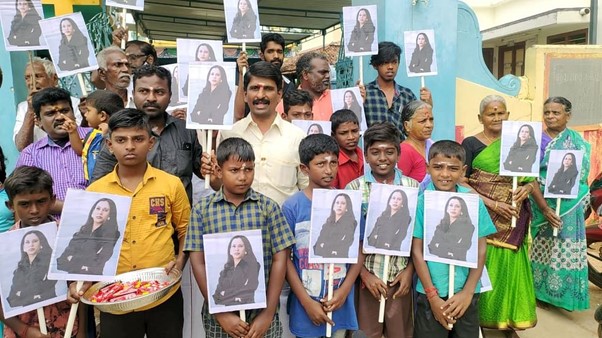
USA Vice President Kamala Harris shows how Indian migrant communities can be front and centre.

The statistics on Australian migrant communities tell a story of change – as Indian Australians take a leading role.

In 1996 here were the leading migrant communities:

England 956,000

New Zealand 312,000

Italy 250,000

Vietnam 158,000

(India was in 12th spot with just 80,000)

In 2020 Indian Australians claimed a leading place:

England 980,000

India 721,000

China 650,000

New Zealand 564,000

It is time for this community-minded group of Indian Australians to be fully represented in our political and other leading dialogues. US Vice President Kamala Harris has shown what can be done.

Right now, Indian Australians are not being heard.

Indian startups – the real story

For decades Ashith Kampani has been in the Mumbai financial markets, giving him a front and centre seat to the Indian start-up environment. Here is his review – the real story.

Globally start-up names have become common in our lives – twenty years ago, today’s top names such as Apple, Google, Microsoft, Amazon, Facebook, Alibaba, WeChat, Baidu, Uber, Ola, Instagram, Slack, PayPal, Tesla, SpaceX, Flipkart etc. did not exist or barely made a mark in the mind of consumers. These brands have made it to the top of the valuation charts over the last two decades.

Each firm named above has been funded by the elite global VC and Private Equity firms. This trend continues.

India is still in the catch-upstage of having an organised and monitored ecosystem for its indigenous start-ups. In the Indian start-up ecosystem local ideas and local capital pools locally are mismatched.

Although Indian Angel and Seed investors have been on the rise, risk appetite has not increased.

What is needed to encourage investment? Local investors need a curator who will qualify founders, whet business models and create capacity building. This will allow deep tech to grow locally.

The areas that Indian needs to develop more efficiency in are BFSI (Banking, financial services and insurance), CPG(Consumer Packaged Goods), Smart Infrastructure, Health Care, Real Estate, Defence & Aerospace.

BFSI and Health Care have many start-up names where optimisation and efficiency levels have shown some improvement but many existing large players in Banking and Health Care are dependent on legacy systems which will require a large capex to upgrade.

In CPG & Smart Infrastructure there are fragmented players. Real Estate has many platforms, but they are part of a broken ecosystem as they are mainly matching and advertising platforms. Defence and Aerospace are a restricted sector due to government controls. However, India needs local start-ups to provide the “make & made in India” technology. This is urgently needed.

India based or born start-ups include PayTm, FlipKart, Ola, Oyo, Baiju, Swiggy, Zometo, Grofers, Nyakaa etc. They are all 10-12 years old. None of them have a dominant market share and are burning funds to acquire customers.

With a few exceptions, founders’ stakes are diluted below 15% ownership. I am OK with equity dilution as founders may have faced challenges initially to raise capital. However, if these early-stage capital pools were raised within India and in INR (Indian rupee) that would be preferable to an infusion of USD denominated funds.

Today hardly any start-ups are indigenously funded onshore in India. This is changing. Select names such as Lets Venture, angel groups which are city centric and micro-VC firms have started to commit between $100K to $1 Million in pre-seed or seed rounds.

India needs few hundred start-up names to work along with platforms like Lets Venture and a few more to provide risk capital.

Accelerators are scarce and should be encouraged to scale rapidly as well.

India also needs a centralised monitoring system on how start-ups are faring and what kind of ecosystem support is needed. These platforms can keep an eye on the progress of start-ups and create visibility and business opportunities for start­ups by bringing synergistic players on.

For example, start-ups can raise initial capital and receive visibility on the platform. They are then discovered by larger enterprises that need their services. Such platforms can be initially funded by enterprises (mid to Large) who shall have first access to the innovations of the nurtured start-ups.

Sector Analysis for India

CPG and Retail

There are four big players: Amazon, Flipkart, BigBasket, Reliance. The first three are attacking the market from an e-commerce angle with an internet front end paired with a warehouse back end. They negotiate hard with CPG players and offer attractive lower prices to consumers to as well as home delivery. The fourth, Reliance Retail has tied up with Kirana stores for last mile delivery and storage. However, Kirana may lose its business to Reliance Retail in the distant future.

Both the models pose challenges to existing small stores. Today 85% of FMCG & CPG sales are in single or small stores while Ecom and organised retail have a combined market share around 15% (other names like Delhivery, ShopX, Udaan, RingRing are still growing while some have given up).

BFSI

This is the most active and largest sector where digital offerings have taken the front row. Frontend players like Digital Lending / Neo Banks/ Payments/ Foreign Exchange offer services which compete with large banks and lenders. There are many players who digitise middle and back-ops for fintechs, lenders and banks.

Competition is fierce and it is a dog-eat-dog market where service levels and delivery are key as pricing is dictated via negotiated deals. Barriers to entry are also high. Large entrants such as Amazon Pay, Google Pay, Phone Pe Bharat Pe have been more visible than silent players like Razor Pay, Pine Labs, Pay U etc. New Neo Banks have been creating a buzz as well (Epify, Jupiter, Niyo, Ocare etc). I have not factored in Jio, but they have big plans in BFSI.

Smart Infrastructure

One of the biggest markets with select international players in this market as local start-ups do not have enough funding yet. Personally, I would watch this segment carefully as new Indian players enter.

Health Care

This is now a most vibrant sector thanks to the recent pandemic Covid19. Vaccine creation to efficient delivery is a large and needed segment. Connecting the health of each individual (with assessment) into a seamless hospital, insurance and finance model will make a positive impact on many lives. Today we have cashless health insurance, but it is a fragmented system. Start-ups are better positioned to offer a solution to repair such an awkward process.

Real Estate

Real Estate is also a broken system in India. Renting or purchasing needs to be repaired as the experience is not seamless. Only some parts are digitised, and none offers an end-to-end service. This is a totally broken experience and must be repaired end to end.

Conclusion

The Indian market of 1.4 Billion people needs many start-ups to create products and services which suits the needs of Indian people. The road ahead in India and South Asia is extremely optimistic as start-ups can simplify, digitise and link together transactions.

The market opportunity is vast but initial funding needs to be localised and customised to the India based entrepreneur. More platforms that can offer funding, visibility, sales and exit needs to be encouraged.

About the Author

Ashith Kampani has spent 38 years in capital market. Journey began with family stock broking firm on Dalal Street open outcry system to all digital online trading systems. During this journey he spent time with retail, wealth management, institutional equities, private equities, Investment Banking M&A and now in Venture Capital and early-stage Investment and advisory. Worked with JV partner Morgan Stanley and before stepping down he was MD at JM Financial. Currently Chairman at CosmicMandala15 Group & Member of Managing Committee Bombay Chamber.


You can learn so much from India – including Krishnamurti’s secret

Krishnamurti was a human of great peace, an Indian philosopher with compassion, friendship, and serenity.

Towards the end of his life, he said to his followers: “Do you want to know my secret?”

He went on to explain his secret: “I don’t mind what happens”.

Pat Cummins role model for how all of us can help India

Many of us in business relations with India are wondering what is the right thing to do in the midst of India suffering so much from the pandemic.

Pat Cummins has showed us what to do.

He is staying because IPL creates some joy for lockdown people – and he has made a big donation.

For business and trade the message is striking – keep in touch, build business relations and where you can, donate to support India.

Cummins has starred for the Kolkata Knight Riders so far this season.

The Australian superstar wrote on Twitter on Monday night to announce a donation in the fight against the virus, and to urge fellow cricketers to donate.

I am reproducing his entire Tweet because it is moving and inspirational:

“India is a country I’ve come to love dearly over the years and the people here are some of the warmest and kindest I’ve ever met.

“To know so many are suffering so much at this time saddens me greatly.

“There has been quite a bit of discussion over here as to whether it is appropriate for the IPL to continue while Covid-19 infection rates remain high. I’m advised that the Indian government is of the view that playing the IPL while the population is in lockdown provides a few hours of joy and respite each day at an otherwise difficult time for the country.

“As players, we are privileged to have a platform that allows us to reach millions of people that we can use for good. With that in mind, I have made a contribution to the “PM Cares Fund”, specifically to purchase oxygen supplies for India’s hospitals.

“I encourage my fellow IPL players – and anyone around else the world who has been touched by India’s passion and generosity – to contribute. I will kick it off with $50,000.

“At times like this it is easy to feel helpless. I’ve certainly felt that of late. But I hope by making this public appeal we can all channel our emotions into action that will bring light into people’s lives.

“I know my donation isn’t much in the grand scheme of things, but I hope it will make a difference to someone.”

Winning in India – less about sales and more about culture and relationships

When a company sends a salesperson into the Indian market, the goal is to fill the order book as quickly as possible – there is no time for that person to build ongoing relationships.

The result at best is a quick transaction based on price. It rarely lasts.

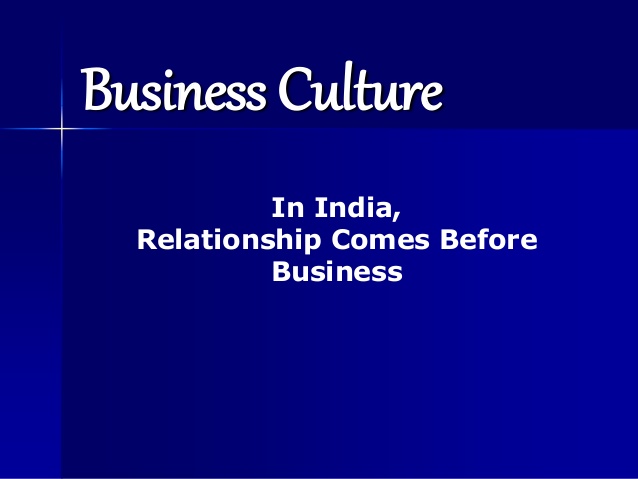
India is a country where relationships drive and impact all aspects of business. That is “how they do things there” and expect us to be the same.

Some tips for relationship building in these tough times:

  • You can build good relationships during Covid by hosting a zoom or similar catchup to see how things are going – no big agenda, just share experiences and listen.
  • You can join groups and chambers and be seen as a player.
  • You can accept the intangibility of relationships and give your key executives time and resources to build them.
  • You can look up Indian culture, architecture and history so you can have informal conversations about things close to their heart.
  • You will need strong curiosity and listening skills.

Really, decisions about future business with India need to be C-Suite and Boardroom driven, based around a minimum three-year strategy. And giving your people the right to spend time on the intangible of relationships is the best first step.