India should be a vital part of the world’s biggest trade deal – RCEP

The countries involved in the world’s biggest trade deal hope to welcome India back into the group – this was announced after their remote meeting last week.

The 16-country Regional Comprehensive Economic Partnership – known as the RCEP – would be the world’s largest when operational, spanning India to New Zealand, including 30% of global GDP and half of the world’s people.

rcep3

But resistance from India – concerned about a flood of cheap mass-produced Chinese goods hurting small businesses in its economy – came to a head last year when India walked out of the deal. I hope it comes back to RCEP.

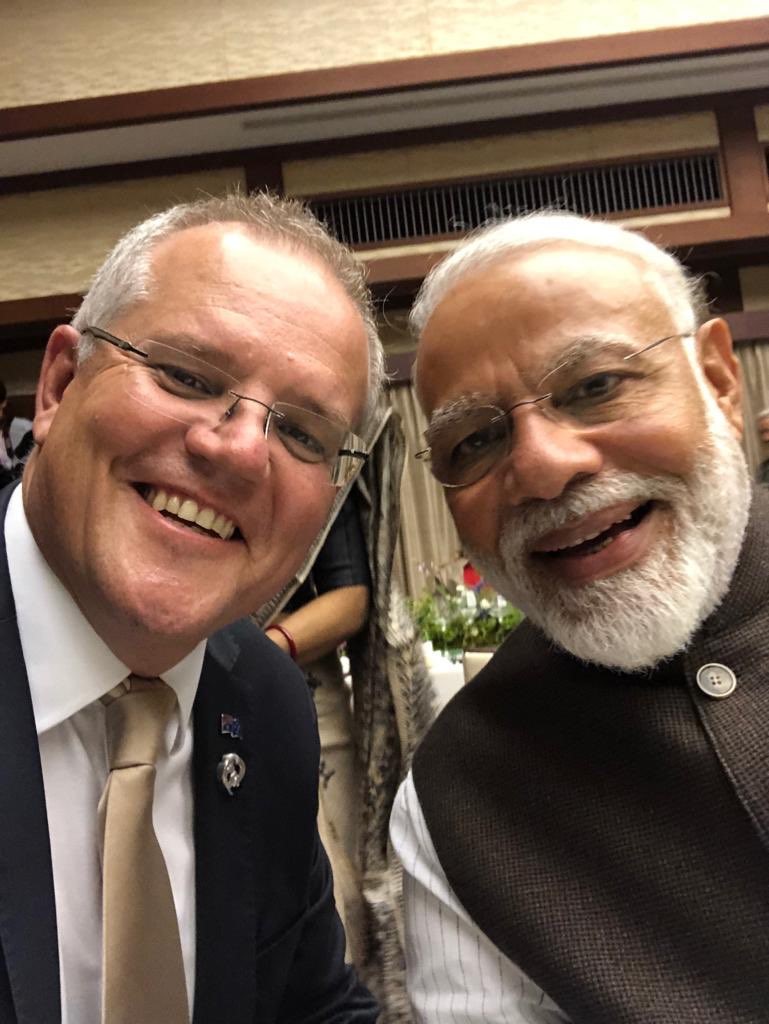
India had legitimate concerns and hopefully RCEP will deliver on these. Australian Prime Minister Morrison and Indian Prime Minister Modi have a good relationship and could work together on the way forward.

ModiMorrisonSmile2

The meeting, while reaching out to India, also made it clear that one way or another the RCEP deal will be finalised and signed in 2020. 

RCEP includes the ASEAN nations plus China, Japan, Korea, Australia and New Zealand.

India’s TCS to move 75% of employees to work from home – permanently!

Remember this man – his name is Rajesh Gopinathan, Chairman of TCS, and he is about to turn the way we work upside down – permanently!

India’s biggest IT firm, TCS, is set to shake up the global IT industry employment practices – and maybe start a global revolution in how we work.

work

Post-coronavirus, TCS has announced it will not go back to the old way, launching instead a new model called 25/25 using what is called Secure Borderless Work Spaces (SBWS).

Running up to 2025, TCS will ask a vast majority of 75% of its 450,000 employees globally to work from home, up from the industry average of 20% today.

tcs

TCS will discard its 20-year-old operating model and leapfrog into a new mode of work.

Others will have to follow. For a start, how will they compete for the best recruits? And how else will they achieve productivity gains?

The new model called 25/25 will require far less office space than occupied today. “We don’t believe that we need more than 25% of our workforce at our facilities in order to be 100% productive,” says TCS’s chief operating officer NG Subramaniam (pictured below).

tcs subramanian

TCS is something of a bellwether among India’s IT services firms, so Wipro, Infosys and others will likely follow.

Experts say before the lockdown no more than 15-20% of employees ever worked from home among the Indian services firms.

I have been on some of the Indian IT “campuses” – huge sites usually on the edge of the city in a park-like area with multiple buildings, lifestyle facilities and essentially a “living away from home” model for thousands of employees.

All this will change – and fast.

tcs campus

RIL’s Jio moves to shake up India’s retail market in partnership with kirana stores

INTO INDIA wrote recently about Facebook investing in Jio, the Reliance Industries (RIL) internet and  telecoms arm.

Now they have announced a move which could long term shake up the retail space in India.

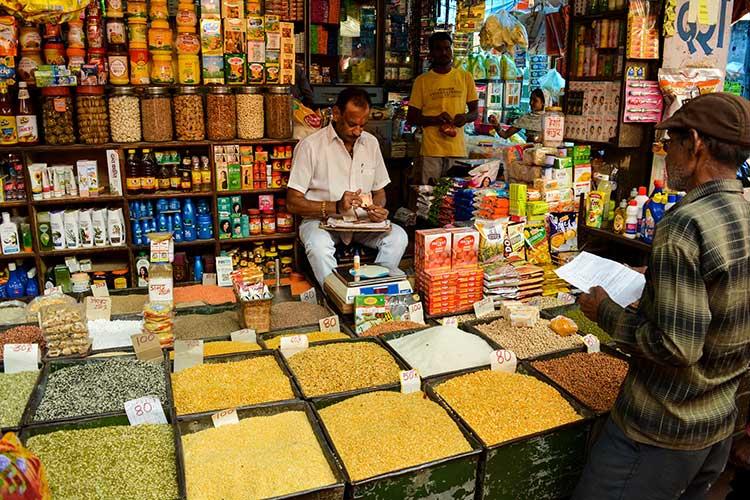
It seems that forever retail in India has been dominated by “mom and pop” local stores which are known as “kirana stores”. Most retail changes so far have been in competition with these stores.

kirana2

But kirana stores have a firm grip on the Indian shopping psyche.

So now comes news that RIL has started home delivery of essentials in partnership with local kirana stores in Navi Mumbai, Thane and Kalyan. These services are available under JioMart, an e-commerce venture of Reliance Retail, an RIL subsidiary.

kirana3

This innovation uses WhatsApp (owned by Facebook), which has more than 400 million users in India. If it goes well, the scheme will be extended to other Indian cities.

jiomart

Bank of America reports that RIL could digitise 5 million stores by 2023. Kirana stores are keen to go digital, driven in a big way by GST compliance.

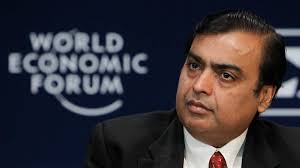
Mukesh Ambani, Chairman of RIL, is moving fast to change from a petrochemical giant to a mixed business including strong telecom and retail capacity.

mukeshambani2

How to thrive in Industry 4.0

Industry 4.0 will power ahead after Covid19, bringing massive change – an Oxford study estimates that 47% of the jobs in the US, 69% of the jobs in India and 77% of the jobs in China will not exist in 25 years – such is the pace of change under Industry 4.0.

How will you thrive? Whether mid-career, just beginning or at university, here are some ways to make yourself adaptable for Industry 4.0:

  1. Show you can continue to learn

We know employers’ value this very highly – their focus is not on what you know through your degree – but is more on what you can learn in future. Prepare for this by being curious, reading and listening widely, entering discussion groups and being able to summarise what you have learned outside of university or since your degree.

  1. Demonstrate wisdom and common sense

For employers, further than what you know is how you think, and the value of wisdom and common sense. The best way to describe the difference between knowledge and wisdom is through the humble tomato – knowledge tells you a tomato is a fruit (not a vegetable) – but wisdom prevents you adding the tomato to a fruit salad. One fast track to wisdom is via mentors and guides, those who can share experience with you at whatever level you currently are.

  1. Gain good collaboration and friendship skills

Industrial 4.0 will make collaboration easy and instant with anyone, anywhere and anytime – and the change will benefit those who have the skills to reach out, make friends, work across the globe and build collaboration. Future corporations and employers will be looking for people who can build collaboration.

  1. Gain cross-border understanding and skills

Already our lives in one country are intersecting with lives of other countries, and Industrial 4.0 will make the globe an even smaller place. Those who have travelled, who have acquired both knowledge and experience of other cultures will be in high demand, simply because almost every job will have global aspects.

  1. Become an outstanding communicator

Traditional “soft skills” training will not prepare students for the fast future – outstanding communication skills for Industrial 4.0 will include rapid pitching, ability to support points in a way which moves others, skills to relate directly and closely with those above and below you – any student sitting back quietly as a “newbie” will get left behind. Old notions of being silent in front of elders or superiors will not apply. Respectful and strong communication skills will rule.

  1. Be a team-based problem solver

More work will be team-based and some of those who succeed will actually present to future employers as a team. Problem solving as a team while at university should lead students to then approach employers as teams – a good standout in the race to gain attention.

  1. Build self-reliance and resilience

As jobs come and go, individuals will need to be able to bounce back and start again, maybe many times in their careers. Where no jobs are forthcoming, graduates will need to create their own or join teams that provide solutions.

Work on these skills so you can thrive during Industry 4.0


Think things will go “back to normal” after Covid 19? Think again as Industry 4.0 will flourish

Think things will “go back to normal” after Covid19? Think again – for the moment it is over, what is called Industrial Revolution 4.0 will power ahead and the changes will be dramatic.

An Oxford study estimates that 47% of the jobs in the US, 69% of the jobs in India and 77% of the jobs in China will not exist in 25 years – such is the pace of change under Industry 4.0.

But most employees, students and many universities will not be ready for the fast-changing world of “Industrial Revolution 4.0” which has begun and will be in full swing by the time most graduate.

What kind of world is Industry 4.0?

The Economist Intelligence Unit 2017 report showed younger generations face a significantly different world in their future working and personal lives. Developments such as machine learning and automation promise further disruption, particularly in the workplace, and many established jobs are likely to vanish as a result.

Whole employment sectors are likely to disappear, with others hopefully created. Students, workers and entire economies will compete across global borders for the best education, jobs and growth; all three will need to be nimble, flexible and dynamic, ready to recognise and respond to emerging trends swiftly.

Industry 4.0 will make huge advances in genomics, artificial intelligence, robotics, materials and manufacturing technologies – with convergence bringing massive rates of change.

The first three industrial revolutions were steam and water-power driving mechanisation in the late 1700’s, electricity from 1870 creating mass production and the electronics and IT revolution of the 1960’s onward. Each “revolution” was led by one change or one sector. Industrial 4.0 could not be more different with at least 10 major innovations converging to create across the board revolutionary change.
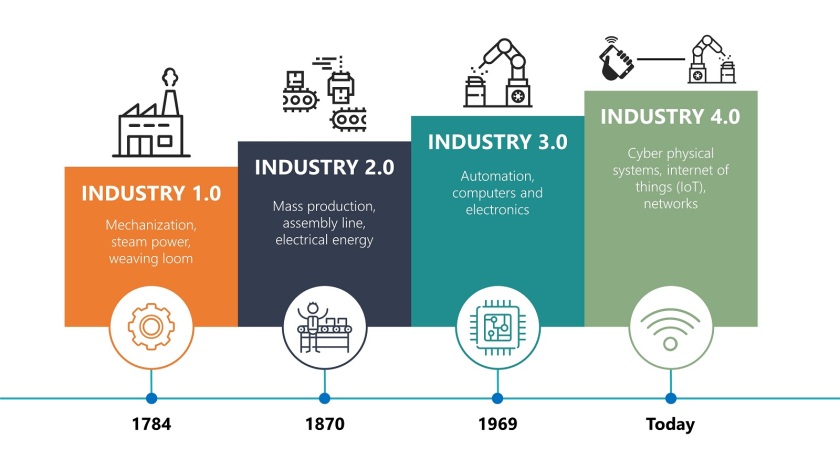
industry4.0

The megashifts of Industrial 4.0 include Digitisation, Mobilisation, Screenification, Disintermediation, Transformation, Intelligisation, Automation, Virtualisation, Anticipation and Robotisation.

The changing world of work

As with previous industrial revolutions, new technologies will create new jobs and simultaneously destroy many old ones. The rise of machines, from robots to smart software, threatens to impact not just low-skilled factory and construction workers, but everyone including managers, software engineers, stock traders and taxi drivers.

This is already happening – China’s factories are adding robots faster than they are hiring people. India’s information technology sector is already witnessing jobless growth and total employment may have peaked.

“Humanity will change more in the next 20 years than in the previous 300 years” – Gerd Leonhard “Technology vs Humanity” (Fast Future Publishing 2016).

Good news – India could shape Industrial 4.0

As the world’s largest democracy and the country with one of the highest number of scientists and engineers, India is a key political, social and economic player that could shape the course of the Fourth Industrial Revolution

It is exciting that the Geneva based World Economic Forum has created a Centre for the Fourth Industrial Revolution in India –  NITI Aayog will coordinate the partnership on behalf of the government and the work of the centre among multiple ministries.

“The Fourth Industrial Revolution will change how we produce, how we consume, how we communicate and even how we live,” WEF Founder and Executive Chairman Klaus Schwab said.

The challenge for universities and students is to enter a world of constant change – where jobs you are being trained for might not be there any more, where you might have to create your own job, or become an entrepreneur while at university, or team up with friends to create an enterprise.

In my next blog – how to thrive in Industry 4.0


Stephen Manallack is the author of four books including “Soft Skills for a Flat World” (Tata McGraw-Hill India 2010). He led a Pilot Study on Improving the Employability of Indian Graduates in his home city of Melbourne, where he has also been President of the Australia India Business Council. A passionate advocate of closer relations with India, his blog is at IntoIndia.blog

Mahatma Gandhi can inspire business and leaders in the post Covid19 world

When Mahatma Gandhi said “Be the change you want to see in the world” he proclaimed one of the great calls to action of all time. You want change? Be that change – start with yourself.

After Covid19 we will all have changed in some way. We need to.

So, today:

Mahatma Gandhi can inspire the post Covid19 world

In 1882 the British rulers of India imposed a Salt Act which banned Indians from collecting or selling salt – as a result, Indians had to buy salt from their British rulers.

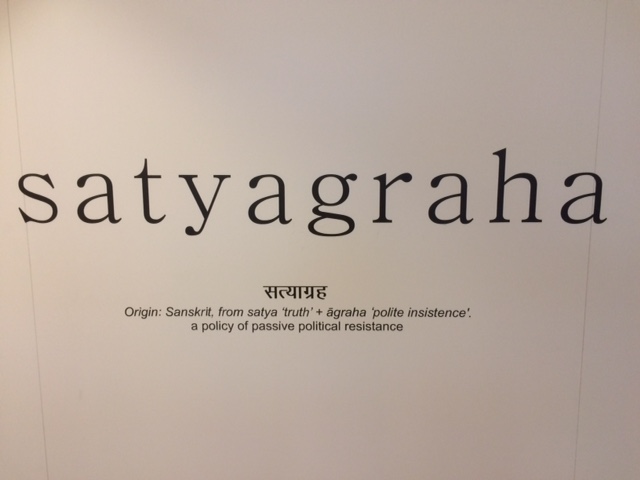
In 1930, Mahatma Gandhi developed his concept of SATYAGRAHA – nonviolent resistance. He walked 240 miles to the coast to peacefully break this law.

saltmarch2

What was the outcome? India had a pathway to independence – nonviolent resistance. Mahatma Gandhi was now centre stage in the march to Indian independence – the nation had a voice and he became a global figure.

How should this inspire us for post Covid19? Especially those of us who are in business or are budding entrepreneurs?

Instead of complaining how things “should be”, take action

Become a visual symbol of what you want – pictures of Gandhi collecting salt went global

Stick to core principles (for Gandhi, Satyagraha)

Be agile, innovate and create simple, local things the market can do – thousands picked up salt and defied the British

Think of ways to break out of the norm, defy conventions and thereby gain market presence

gandhisatyagraha

For Indian friends – what makes Australians so different?

My Indian friends and colleagues often talk about our Aussie cricketers – skills so good but sledging so bad, very blunt yet charming as well. Some go on to talk about how casual we Aussies are, even when meeting the elite.

I think we Australians remain something of a mystery to most Indians.

So, here is my take on what is in our hearts (or what are our values) – yes, we have time to reflect in this era of Covid-19.

I like to outline four characteristics of Australians:

  1. Give everyone a “fair go”
  2. All should be treated equally, and have equal opportunity
  3. Be casual and friendly and say “G’day mate” to complete strangers
  4. Be confident that “we’ll be right” – we have always found a way to bounce back

These four – the casual friendliness, the fair go, egalitarianism and resilience – have defined what it is to become Australians, and in these concepts is the heart of what has attracted so many to our shores.

Of course, we do not always stick by these values.

Look how the arrival of a few desperate families in leaking boats led many to abandon the fair go, as if it never existed.

In the face of wars, bushfires, floods, droughts, financial depressions and more, we have unpacked our casual bravado (she’ll be right mate) and found a way through.

You might not know Australia was founded by the British to house their convicts. Not a great start – but out of this has come a free and open society with sophisticated cities, world leading agribusinesses and services the envy of many.

Out of the humble beginning of convicts came a society that strives to be all inclusive – whether you are thousands of miles from anyone, you should still have a phone, an education and so on.

As the convicts would have understood, freedom is more than the right to vote. These values have made Australia a genuinely free society – for they underpin that greatest of freedoms, to be whoever you are and whoever you want to be.

Now, if only we could bring ourselves to truly understand the minds of Indians.

Will Australia’s vision swing to the Indian Ocean rim after Covid-19?

Australia is torn between two worlds – it has an unchanging alliance with the USA, but it is placed in the middle of a massively changing region, the Indian Ocean. The two can make life uncomfortable.

We are all expecting life to be somehow different after Covid-19. Perhaps one of the differences will be Australia looking more to the west – to the Indian Ocean.

If so, there will be a lot of diplomatic wriggling to be done, with China and the USA looking on.

Why does the Indian Ocean matter so much?

One third of the world’s population (2.5 billion) live around the Indian ocean rim. Their average age is below 30, making it the youngest region on earth.

This ocean is critical to global trade and food and energy security.

There are a dizzying array of global strategic and regional military and security interests.

It is at the crossroads of how the world works. Global trade and economic growth flow in and through it.

But it is also a region where instability and conflict can quickly arise – badly drawn borders create disputes, internal conflicts are rife and competing national interests make for a volatile region.

Why is the Indian Ocean so important for Australia?

First, it’s our neighbourhood.

Second, we are starting from way behind for we have long ignored this region and only recently have been building solid bridges.

Third, one-third of Australia’s coastline borders the Indian Ocean.

Fourth, our future depends on security of lines of trade and the development of both on-shore and off-shore assets – these hold the key to our economy and development.

Fifth, when you look at this Wikipedia map of the “western world” you might wonder why we have not looked to the Indian Ocean before.

westernworld2

Best of both worlds?

Looking west to the Indian Ocean does not mean we have to ignore our powerful friends – China to the north and USA to the east.

Changing our view while keeping our old friends will take diplomatic skill.

And probably it also takes time.


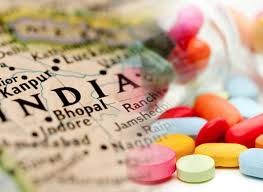
India’s pharmaceutical industry shows how we are all connected today

India plans to set up a US$ 1.3 billion fund to boost the manufacture of pharmaceutical ingredients domestically.

How so, since India is already a big pharma player? For example, India supplies about 20% of the world’s generic drugs and is the world’s largest exporter.

pharma4

Well, in pharma as in everything else in life, all things are connected.

You see, India’s supply chain was disrupted due to the coronavirus pandemic – exposing the country’s dependence on China.

Here’s where “we are all connected” comes in – India is indeed a global leader in pharma but it imports almost 70 per cent of its active pharmaceutical ingredients, the chemicals that make a finished drug work, from China.

Which part of China provides the ingredients? Hubei province, the epicenter of the coronavirus outbreak has been major source of these ingredients.

The new program consists of spending on infrastructure for drug manufacturing centers and financial incentives of up to 20 per cent of incremental sales value over the next eight years, according to a government statement.


India’s airlines are really hurting during this Coronavirus pandemic

SpiceJet’s chairman Ajay Singh is spending a lot of time in Delhi in front of civil aviation secretary Pradeep Singh Kharola.

The coronavirus has rattled India’s airlines, a big change from their New Year optimism. Many of them do not have deep pockets so are vulnerable.

In January, the industry was happy with fare discipline, controlled capacity addition, the absence of rival Jet Airways, and a slow but gradual demand recovery.

On Wednesday, IndiGo told the stock market that its earnings would be materially impacted because of the disruption, and domestic bookings had fallen 15%-20%.

The airlines’ anxiety comes from their weak balance sheets.

Those in the know say Singh is lobbying with the government to bring jet fuel under GST – such a reform could bring a windfall in reduced taxation of jet fuel.

Perhaps also on the cards is flexibility in payments to oil companies.

IndiGo has a fleet of 255 planes and money in the bank. The Tata Group backs Vistara and AirAsia India, while the Wadia Group owns Britannia and Bombay Dyeing, runs GoAir.

Government help or not, Indian airline execs are preparing for the worst – and some without money in the bank or big owners. Changes ahead?