If India’s tier 1, 2 and 3 cities attract Mercedes, maybe they should attract you?

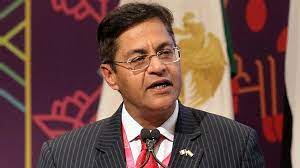
India’s High Commissioner to Australia, HE Mr Manpreet Vohra, spoke at a recent Australia India Chamber of Commerce function

Really interesting comments made recently by the outstanding Indian High Commissioner in Canberra – His Excellency Mr Manpreet Vohra:

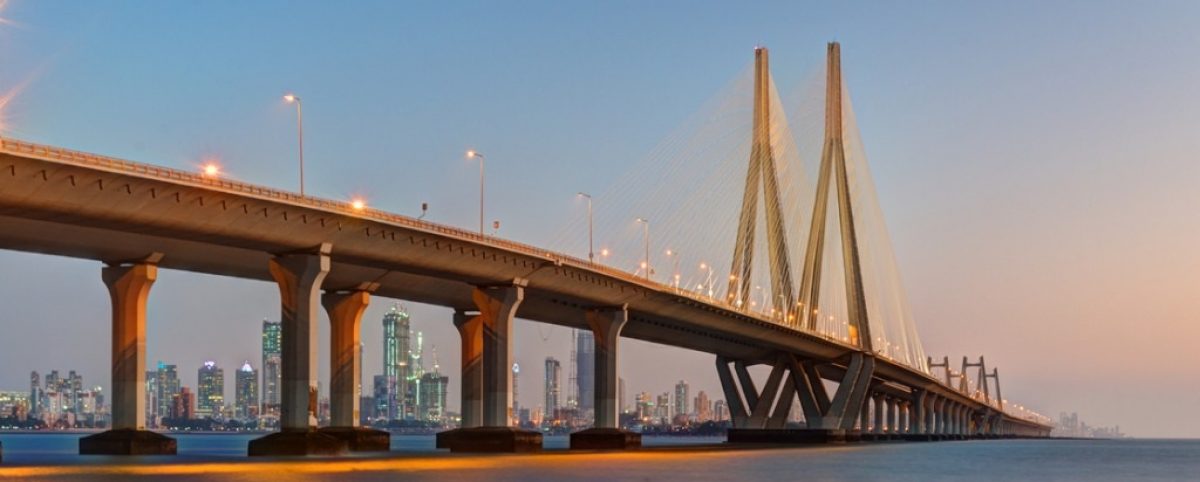
We all know the mega cities of India such as Mumbai, and everyone wants to be there, but what about the tier 1, 2 and 3 cities which account for:

50% of all Mercedes Benz sales in India

60% of Amazon sales

50% of the entire digital economy

You can see why India is set to be the world’s fastest growing large economy in the years 2021 and 2022.

Well done to the Australia India Chamber of Commerce for this event.

Tech innovation is not just about tech – it needs a basis of deep understanding of your business

Sundaram Business Services has a deep understanding of Australian business.

Indian firms like Sundaram Business Services in Chennai and Australia should be on your radar for tech innovation – in addition to their tech innovation capabilities, SBS has been active in Australian business for many years and knows the business environment very well.

A KPMG survey ranks India third among countries that show the most promise for tech innovation.

Tech innovation is most successful when the supplier has a deep understanding of your business. This is like a mantra for the SBS group – building innovation on the sound basis of business understanding.

There has to be cross cultural understanding and good communication.

Whether it is Artificial Intelligence, Machine Learning or other innovation, success is gained when the supplier has the capacity to how your business works and what your needs are in the market.

More than 800 industry leaders were surveyed for the report which said 39 per cent believe global ‘hub’ cities such as London, Singapore, and Tel Aviv will continue to play a vital role, enabling talent to coalesce and collaborate in communities with a solid digital infrastructure.

There are so many great Indian startup stories – and much more to come

Mr. Girish Mathrubootham started Freshworks without any special help, nor did he come from wealth.

There are so many startup and unicorn stories in India today – and we know there will be more tomorrow.

Consider Freshworks which began eleven years ago and is now a huge firm with more than 3,800 team members and offices all over the world.

Mr. Girish Mathrubootham started Freshworks without any special help, nor did he come from wealth.

“We were only a six-person company operating out of a tiny garage in Chennai over eleven years ago. I didn’t have a gilded CV or come from a wealthy household, but that didn’t stop me from dreaming big.”

“I recognise that not every creator is as lucky, which is why as an angel investor, I have funded more than sixty startups,” he continued.

Now Girish Mathrubootham of Freshworks, Mr. Manav Garg of Eka Software, Mr. Shubham Gupta ex-Matrix, and Mr. Avinash Raghava ex-Accel have teamed together to establish a founders-first company called Together Fund in an effort to boost entrepreneurial enthusiasm in India.

The fund, which has a US$ 85 million initial capital, aims to assist India’s finest SaaS entrepreneurs in building, scaling, and winning together, therefore creating India as a true product country. Together Fund is India’s first and only venture capital fund run by founders. They operate some of India’s most well-known SaaS businesses in addition to being founding partners of Together.

The future of startups and innovation is looking good for India.

India ranks high for tech innovation as “the internet and digital become the superhighways of global trade”

Pictured – Sundaram Business Services Chennai has a long relationship with Australia.

Indian firms like Sundaram Business Services in Chennai and Australia should be on your radar for tech innovation – A KPMG survey ranks India third among countries that show the most promise for tech innovation. India Global Business has reported on the results:

The Indian tech industry has always stood as a byword for resilience, agility and innovation – and a latest survey from KPMG has just confirmed that, ranking the country third among jurisdictions that show the most promise for developing disruptive global technologies.

In its annual Global Technology Industry Innovation Survey, KPMG ranked Bengaluru at eighth position among the top 10 cities.

More than 800 industry leaders were surveyed for the report which said 39 per cent believe global ‘hub’ cities such as London, Singapore, and Tel Aviv will continue to play a vital role, enabling talent to coalesce and collaborate in communities with a solid digital infrastructure.

Federica Saliola, joint director of the World Development Report, said: “The internet and digital technology are the new superhighways of trade. India, where most workers are employed in the informal sector and the participation of women in the labour force is low, has an opportunity to seize the opportunities that digital technology provides,” said. “Innovation is also a friend to entrepreneurs and India’s entrepreneurial spirit makes it an ideal incubator for start-ups to thrive,” he said.

India speeding up solar power across Africa

Indian PM Narendra Modi meets with African leaders during the International Solar Alliance meeting – an initiative created by India.

India is taking a leading role in supporting the spread of solar power across Africa – where nearly 600 million Africans still do not have access to modern sources of electricity.

India created and leads the International Solar Alliance, which has 86 member countries including Australia – and is now attracting strong participation from Africa.

With drastically falling technology costs, renewable energy has become a cost-effective option of generating clean power all over the world.

The International Solar Alliance (ISA) was conceived as a coalition of solar-resource-rich countries (which lie either completely or partly between the Tropic of Cancer and the Tropic of Capricorn) to address their special energy needs.

The ISA will provide a dedicated platform for cooperation among solar-resource-rich countries, through which the global community, including governments, bilateral and multilateral organizations, corporates, industry, and other stakeholders, can contribute to help achieve the common goal of increasing the use and quality of solar energy in meeting energy needs of prospective ISA member countries in a safe, convenient, affordable, equitable and sustainable manner.

ISA has been conceived as be an action-oriented, member-driven, collaborative platform for increased deployment of solar energy technologies to enhance energy security and sustainable development, and to improve access to energy in developing member countries. The ISA has 122 sun-belt countries that lie between the two tropics as its prospective member countries and currently boasts a membership of 86 countries globally.

Doing Business in India – Finding the Right Local Partner


 One of the most frequent questions for INTO INDIA is how do we find the right business partner in India? Most case studies of Australian businesses succeeding in India reveal one key element – finding the right local partner.

What is the right local partner?

It is much more than someone who says “yes”. Too many have been frustrated in Indian market entry because they forged alliances with any and everyone who said “yes” – which means everyone they meet. India is a culture that cannot say no, so be wary of the yes answer.

The right partner is already active and successful in your field. They can show you their track record.

Your right partner will have connections among suppliers and customers, and will be keen to introduce you to them so you can form your own judgement.

In the collective culture of India, your right partner will be well connected in the various business chambers and will have good connections in government – central and state. This right partner will demonstrate these connections by organising meetings for you, rather than just saying “yes” we are connected.

Your right partner will be someone you double check with Austrade and with other reliable connections you have in India or Australia.

Your right partner could ultimately become an agent, a joint venture or more. They might just be a trusted individual who willingly offers to make connects for you – this freely opening doors does occur in India.

Your right partner might be a talented individual who you hire into your business. Or it might be a combination of external and internal. Patience will be your best friend as you make these choices.

Finally, your right partner will develop relationships for you – because in Indian culture relationships matter. Relationships first, business second is the path to long term business in India. Quick deals are just that – one transaction that might not lead to anything.

So, how are you going finding the right partner in India?
 

Despite a shift towards USA and Japan, India maintains close friendship with Russia and a “multipolar” world view

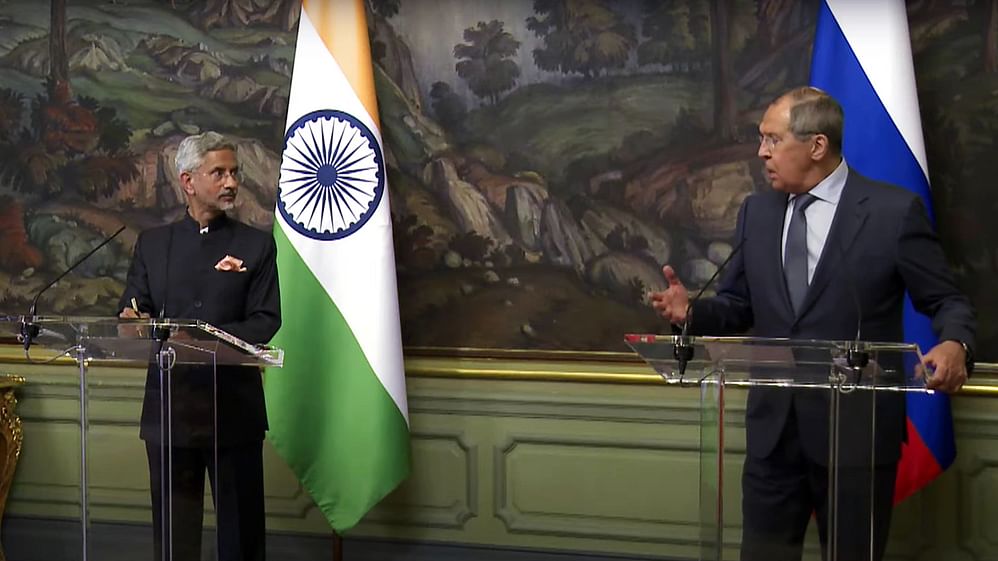
External Affairs Minister S Jaishankar along with Russian Foreign Minister Sergey Lavrov address a joint press conference, in Moscow. The visit was aimed more at reiterating the importance both nations accord each other.

India has long been able to see both sides of an argument in international affairs – and today is a champion of a multipolar global order.

This frustrates countries like the USA and Australia, which clearly see the world in terms of goodies and baddies – for them, the world order is either run by “us or them”.

India’s independent approach was seen in the recent reinforcement of its long held close friendship with Russia. At a time when the rise of China has pushed India into closer relations with the US and Japan, the Indian External Affairs Minister, Dr S Jaishankar held a three day visit to Russia, to reassure an old friend.

Russia could be described as India’s oldest and strongest allies since independence.

“I think what makes our working together so natural and comfortable is our belief in a multipolar global order,” Jaishankar said.

In the complexity of our pandemic world, “multipolar” could be something that takes us forward in peace.

Can India teach the west and China about co-existence?

With India’s role as a rising power, plus its long record of peaceful co-existence with multiple countries, can it help the west and China live together?

Here is the situation as outlined by Michael Spence, a Nobel laureate in economics, Professor of Economics Emeritus and a former dean of the Graduate School of Business at Stanford University:

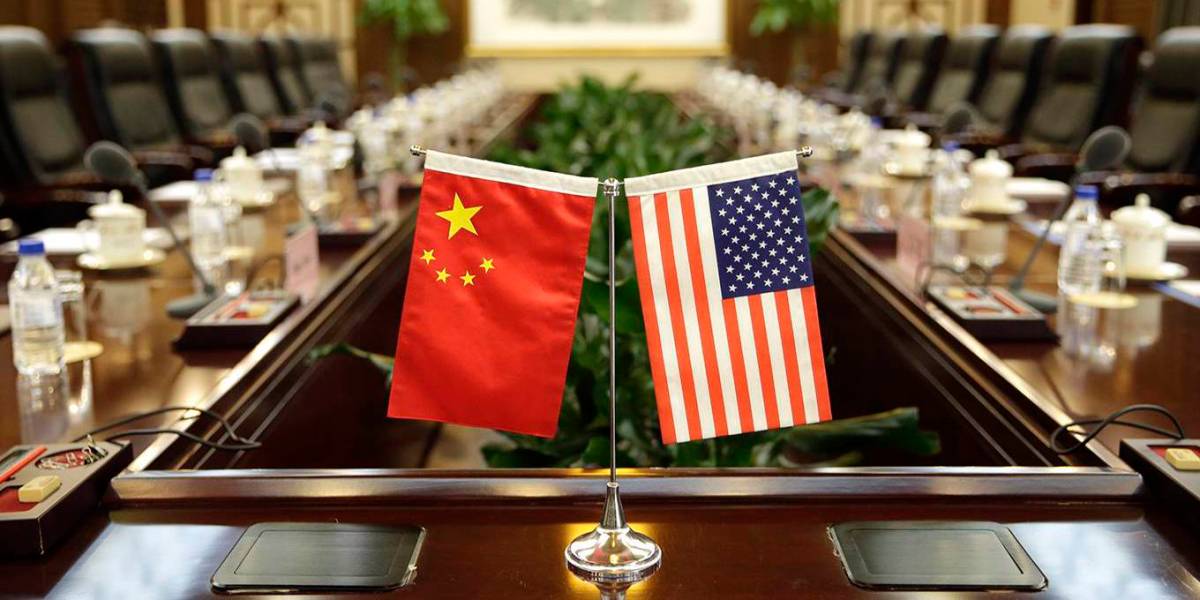
“At the recent G7 and NATO gatherings, China was singled out as a strategic competitor, a calculating trading partner, a technological and national-security threat, a human-rights violator, and a champion of authoritarianism globally.”

Not a great recipe for co-existence.

Spence continues: “China denounced these characterizations, which its embassy in the United Kingdom called “lies, rumors, and baseless accusations.” The risks that such rhetoric poses should not be underestimated.”

Also not a recipe for co-existence.

He concludes: ” The real danger, however, is that officials on both sides seem to have embraced a zero-sum framework, according to which the two sides cannot simply co-exist; one side must “win.”

But India has long experience of getting along with all sorts of regimes and managing to see both sides of the argument.

As India plays a bigger role in global groupings, can it influence both the west and China to drop “zero sum” thinking and work to co-exist?

10 tips for creating trusting cross-cultural teams

No trust, no team.

When trust is absent, you do not have a working team.

Creating teams across cultures is not easy – and even once you have trust, you can accidentally break it in one meeting.

Why?

Communication styles differ across cultures. Some (like Australia) are blunt and direct. Others (like India) are very polite and indirect.

Some cultures (USA and others) like a lot of social talk before getting down to business. Others prefer business first.

Add to this differences over how to give feedback and disagreements in public and you have a potential minefield that will destroy trust in an instant.

We know that diversity has an upside and succeeding across borders is a business imperative.

So, how do you avoid destroying trust? My 10 tips:

First, learn about cultural differences. Ignorance is your own personal enemy. Too many global business leaders have little or no awareness of differing cultures. It is time to change by learning about these cultures.

Second, creating a strong starting point is essential – which means having a clear direction and an optimistic and compelling goal.

Third, ensure that at least some of the team members have been trained in cultural difference and can operate successfully across cultures.

Fourth, encouraging your team to be curious, adaptable, caring and friendly – leaders can do this by showing these characteristics themselves.

Fifth, be specifically aware of the potential explosive points of the different cultures represented in the team. This makes team leaders aware of what can go wrong, what can be misunderstood and how to involve and encourage team members who are from cultures that are reserved and indirect. If conflict does arise, address it straight away in a calm and friendly way.

Sixth, help the team understand the differences between cultures in terms of giving feedback – Australians on the team will generally be very direct, while Indians on the team will be more cautious and indirect with feedback. Talking these differences through can help both sides.

Seventh, based on the trust created by the above, team leaders can establish team standards and norms that everyone commits to sticking to. This will mean for several team members that they have to adapt from their cultural norm. If it is seen that the whole team is adapting, it becomes a shared and positive experience. If I am the only one in the team adapting, it is just no fun and will not last.

Eighth, watch out for cultural differences over starting times – this will cause simmering divisions in the team. Westerners will generally be on time and expect everyone else to be on time too. Other cultures will arrive late and be surprised that others are already there. Create an agreed standard for the starting time and everything else has a better chance of success.

Ninth, have a predictable and mutually agreed timetable for information sharing, such as zoom meetings, email information, one-on-one sessions and physical meetings. Some cultures do not respond well to variations and unpredictability – so try for stability but also allow for those urgent meetings that just need to occur.

Tenth, work hard on creating personal connections with every member of the team. This can take time and seems like a distraction to many leaders, but it is your strongest tool in reducing conflict in cross-cultural teams. Know what their non-work interests are and you will be surprised how well you connect.  

India growth 2021 12.6% – the only world economy to be over 10%

Prime Ministers Modi and Morrison are close – and should talk more about trade.

Rapid recovery in 2021

Austrade’s Ashley Brosnan points to India’s post-coved economic recovery based on fast rollout of the vaccine, falling caseloads, economic stimulus and Foreign Direct Investment – it has every angle covered:

The OECD projects that India’s economy will grow 12.6% in 2021. This will make India the only major country to achieve double digit growth in 2021.

It should be acknowledged that the Indian economy is among the worst affected by the pandemic, which has resulted in strict, multi-month lockdown restrictions. GDP fell 10.3% in 2020 damaging household income and business confidence.

But rapid economic growth in 2021 will be driven by an expansive vaccine rollout, falling COVID-19 caseloads, and extensive economic stimulus.

Not forgetting that India is now a top 10 destination for Foreign Direct Investment.