Australia sets impressive trade records which newsrooms refuse to report

Australians are not good at celebrating good news – and some of the good news they don’t even get to see on major media.

Trade performance is a good example.

Australia has an outstanding national trade body – Austrade – with talented people around the world promoting our products and services.

In many countries – including India – most of our states also have Government offices working hard to build trade and investment.

They have been incredibly successful.

Of the 35 advanced countries in the Organisation for Economic Cooperation and Development (OECD) who reported last year’s exports to the World Bank, only three increased exports relative to gross domestic product (GDP) over 2022.

Of these, Australia’s expansion was the strongest.

The World Bank also affirms Australia’s ascendancy.

The World Bank’s development indicators show export and import outcomes for 138 economies from 1974 to 2023.

The World Bank measured Australia’s 2023 exports at a record 26.7% of GDP.

The success story continues…

Of the 35 advanced OECD member economies for which the World Bank has recorded last year’s export volumes, 17 experienced a decline. These include normally robust economies Ireland, Germany, the United Kingdom, Netherlands and Belgium.

Only 18 increased their exports over the previous year. Just four managed an improvement of more than 5%. Australia ranked third with 6.5% behind Denmark and Costa Rica.

Well done all those Australian providers of quality export goods and services.

Well done, Aussie!

Australia India two-way trade now over A$50 billion

Great news from Austrade – two-way trade between Australia and India has reached around AUD 50 billion!

INTO INDIA has been active in this space over 20 years, and for most of this time our trade remained stagnant.

This recent growth is a tribute to the folks at Austrade, as well as State Government offices and all the organisations promoting the relationship. And of course highest praise goes to the brave companies that are finding a way in the Indian growth market.

Healthcare is a good example of the opportunities ahead.

The recent Indian budget 2024 signals the Indian government’s resounding commitment to provide equitable healthcare services across socio-economic spectrum with special coverage of “missing” middle class.

The Indian government is scaling up their focus on digitalisation of the public healthcare system, tariff reductions on some critical pharmaceutical drugs and MedTech devices.

Good news across the board – the budget also involves notable reductions in corporate taxes for foreign companies.

As India continues to grow as a preferred commercial destination, connect with organisations such as the Australia India Chamber of Commerce, with Austrade and with State Government offices – they can all help with the pathway to India.

CSIRO brilliant programs of collaboration and innovation with India

The CSIRO is showing the way into India – and INTO INDIA congratulates them.

Under the updated India Economic Strategy (IES) released in 2022, CSIRO and India have made a commitment to draw on complementary capabilities and resource to solve shared global challenges.

They have three partnerships:

  • India-Australia Rapid Innovation and Startup Expansion Accelerator.
  • India-Australia Critical Minerals Research Partnership.
  • India-Australia Green Steel Partnership.

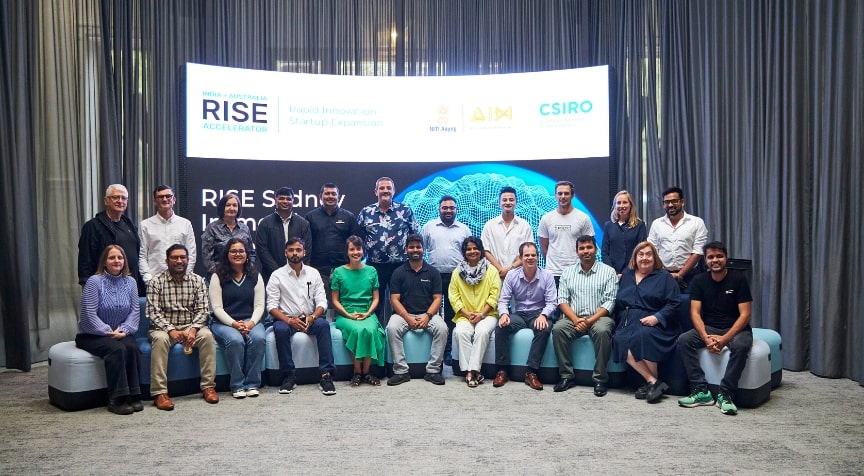
The inaugural cohort of the India Australia Rapid Innovation and Startup Expansion (RISE) Accelerator has been announced, with 15 Australian and Indian startups and small- to medium-sized enterprises (SMEs) selected to participate in Round 1 of the Program. 

India-Australia Rapid Innovation and Startup Expansion Accelerator

India-Australia Rapid Innovation and Startup Expansion Accelerator (RISE) is an exciting and unique bilateral innovation program that will support Indian and Australian entrepreneurs and SMEs on their commercialisation pathways to launch innovative technology solutions to market that tackle our shared national challenges and priorities – such as the circular economy, the energy transition and food system resilience.

A partnership between CSIRO and Atal Innovation Mission (AIM), and supported by the Australian and Indian Governments.

India-Australia Critical Minerals Research Partnership

The India-Australia Critical Minerals Research Partnership (IACMRP) will work with Indian and Australian researchers, industry and government to deliver a range of projects over a 3.5-year period that aims to unlock commercial benefits of commencing, improving and integrating Indian and Australian critical minerals value chains.

India-Australia Green Steel Partnership

The India-Australia Green Steel Partnership (IAGSP) will deliver a range of research, technology and commercialisation projects over a 3.5-year period that aim to accelerate the decarbonisation of the iron-steel value chain in India and Australia.

These Partnerships have gained momentum and the India-Australia Minerals Scholars Network has been identified as a specific initiative that sits under both the IACMRP and IAGSP partnerships.

India-Australia Minerals Scholars Network

The India-Australia Minerals Scholars Network (the Scholars Network) will focus on enhancing Green Steel and Critical Minerals capabilities and connections. It is intended to be a 3.5-year initiative co-funded by the India-Australia Green Steel Partnership (IAGSP) and the India-Australia Critical Minerals Research Partnership (IACMRP).

INTO INDIA can only say – keep up the great work CSIRO.

Jasmine Batra and AICC outlining a thoughtful way to enter the India market

Two organisations that advocate a “more thoughtful” way to enter the Indian market came together last week in a wonderful seminar providing some super advice.

First was the Australia India Chamber of Commerce (AICC) which hosted the event and their Chair, Chris Mooney, put the case for the chamber’s National Industry Groups doing well researched and sequenced steps to engage with India. Each group does research for a white paper, builds a community and knowledge group around it and leads to well prepared India missions.

Second was the keynote speaker, Jasmine Batra from Arrow Digital, who have a program called “The Big Leap” taking clients through a 12 month program of understanding and entering India. INTO INDIA has long advocated that slower market entry produces superior long term results – a strong alternative to the traditional Aussie hasty transactional approach. We love “The Big Leap” concept.

There are three major factors that make India today a very special market – first, the young population with an average age of 28; second, the rise of the tier 2 and 3 cities, including their specialisation, three, India’s global leadership in rolling out digital infrastructure that is transforming business and society.

Jasmine talked about importance of Food, Festivals and Family when thinking about India. “Family” includes what she called “the crazy rich” such as Tata, Ambani and many more. But it also goes right down to small community business families. Your journey will interact at all levels at some time.

Reducing risk is vital. There are three steps you can take. First, understand the cultural context. Second, do market research and find local partners. Third, network community and do due diligence.

In conclusion Jasmine Batra said you should get over there, get around and get partners. By research and regular visits, your more thoughtful engagement with India will produce results.

La Trobe University very kindly provided the venue.

CONTACT AICC

Contact Jasmine Batra

About Us

5 reasons to join a trade mission to India

Many people report having “gone it alone” to India, had wonderful experiences, came home with bundles of signed MOU’s – and then nothing happened. Wrong people? Wrong profile? Missed the market?

There are 5 main reasons a trade mission will work better for you:

With pre-mission briefings, backgrounders and just exchanging experience with others on the mission, you will know better than to sign up with the first person who says “yes” (did you know in India it is rare to say “no”?)

On a mission the Indian audience notices you – you will be connected with the government and business community (did you know that government and business are incredibly closely integrated in India?)

You will be able to work positively with others, leverage skills and knowledge of the way the market works in India – including expertise of Austrade and State Government Business Offices (did you know India is a “collective” culture and you need the right point of entry?)

Each day of a trade mission is learning – you will learn first hand from others and exchange your ideas with them (did you know most products and services need some form of adaptation to succeed in India?)

You will gain some valuable insights into the culture and history of this proud nation, so rather than filling your day with endless meetings you will be able to spend some time exploring India (did you know what a huge impact you can have simply by showing interest in the history and culture of India?)

As they say – If you can make it in India, you are ready for anywhere.

Take a look at this forthcoming mission from some experts:

https://www.linkedin.com/feed/update/urn:li:activity:7123800940507267072

Good news you probably didn’t hear about – poverty reduction in India is the “most under-reported story of our time”

From our good friends at FUTURE CRUNCH who are determined to tell us stuff the media overlooks.

The decline of poverty in India is the most underreported story of our time.

Two weeks ago, the country’s biggest public policy think tank released a new report, and the numbers are mind-blowing. 135 million people were lifted out of multi-dimensional poverty between 2015-16 and 2019-2021, easily putting the world’s most populous nation (and fastest growing major economy) on course to achieve its SDG targets.

6 big changes in India – and 5 reasons growth will boom

Only 8% of Indian households own a car – so big growth is ahead

INTO INDIA has consistently said India is the growth story of this century.

Now Anish Mathew, CEO and CIO of the very successful Sundaram Asset Management Singapore Pte Ltd, has found a unique way to describe why India is indeed THE growth story.

6 big changes in India

  • The number of income tax filers has increased by 57.5% between FY15 and FY21.  This is obviously the impact of the growing use of Aadhar (biometric unique identity card) as the preferred KYC document and the implementation of GST, both of which is pushing up the tax compliance in the country.  
  • Indirect (GST) tax base stood at 14mn in November 2022, a 2.3x increase from mid 2017.   
  • Number of PAN cards (unique tax identity number issued by the Income Tax Department) allotted has increased by 2.5x in the last 7 years.
  • 80% of the railway tracks were electrified as of end FY22 as compared to 31% in FY11.
  • Road infrastructure measured in number of kilometres has increased by 36.6% in the last 11 years.
  • Major port capacity has nearly doubled in the last 8 years.

5 reasons growth will boom

  • Only 8% of the households owned a car, 24% an air conditioner and 38% a refrigerator.
  • Only 1% of Indians account for 45% of all flights.
  • Only 3% of Indians make up all unique card holders.
  • Only 2.6% of Indians invest in mutual funds.
  • The Indian diaspora remitted USD 100bn into the country in 2022, eclipsing the gross FDI flow during the same period. 

Mathew advises that the three big growth drivers for the next decade are consumption (driven by the Demographic Dividend and rising incomes); manufacturing, and; digitisation (which is the formalisation of the Indian economy)

He makes a powerful case for investment and trade with India.

Vital connectivity for India depends on progress in the “north east states” region

India’s “north east region” has long been neglected and is little known among western leaders – but it has a crucial future because of the role it can play in India’s strategic and commercial connectivity in the surrounding region.

The role of China in the Indo-Pacific increases the focus on this sensitive region.

India is now giving the NER priority – there are around 30 major road and highway links under construction, a complex process when border crossings are involved. There are also around 10 major railway construction projects including bridges and new lines.

This has been so well described by Sreeparna Banerjee and Ambar Kumar Ghosh, “India’s Northeast: Gateway to Connectivity with Eastern Neighbours,” ORF Occasional Paper No. 395, March 2023, Observer Research Foundation.

India’s northeast consists of eight states—Arunachal Pradesh, Assam, Manipur, Tripura, Sikkim, Mizoram, Meghalaya, and Nagaland. It shares 5,812 km of international boundaries with the neighbouring countries of Myanmar, China, Bangladesh, Nepal, and Bhutan. It is landlocked; seven of the eight states are linked to the rest of India only through the Siliguri Corridor in North Bengal—a narrow strip of land (22-km wide) that is also called the ‘Chicken’s Neck’. The corridor is flanked by Nepal in the north and Bangladesh in the south.

This region can serve as a pivotal connecting space between India and its neighbours to the east in South Asia, as well as to East and Southeast Asia and beyond, enhancing the country’s diplomatic, infrastructural, and commercial engagements.

India’s foreign policy priorities, reflected in its ‘Act East’ and ‘Neighbourhood First’ policies, also bring the northeast into focus as a connectivity gateway to the wider Indo-Pacific.

Japan, with its long-standing expertise in the infrastructure sector, continues to play a significant role in developing physical connectivity projects within and across the northeast.

Australia shares many of the strategic goals of India, and now through the QUAD (India, Australia, Japan and USA) the countries are closer together through their commitment to democracy, open and free cultures and more.

The focus on this region will continue – India is crucially positioned within South Asia and in the broader Bay of Bengal region. It needs to play a more vibrant role in the region, and to do so, must engage more strongly with its East and Southeast Asian neighbours.

Watch this space…

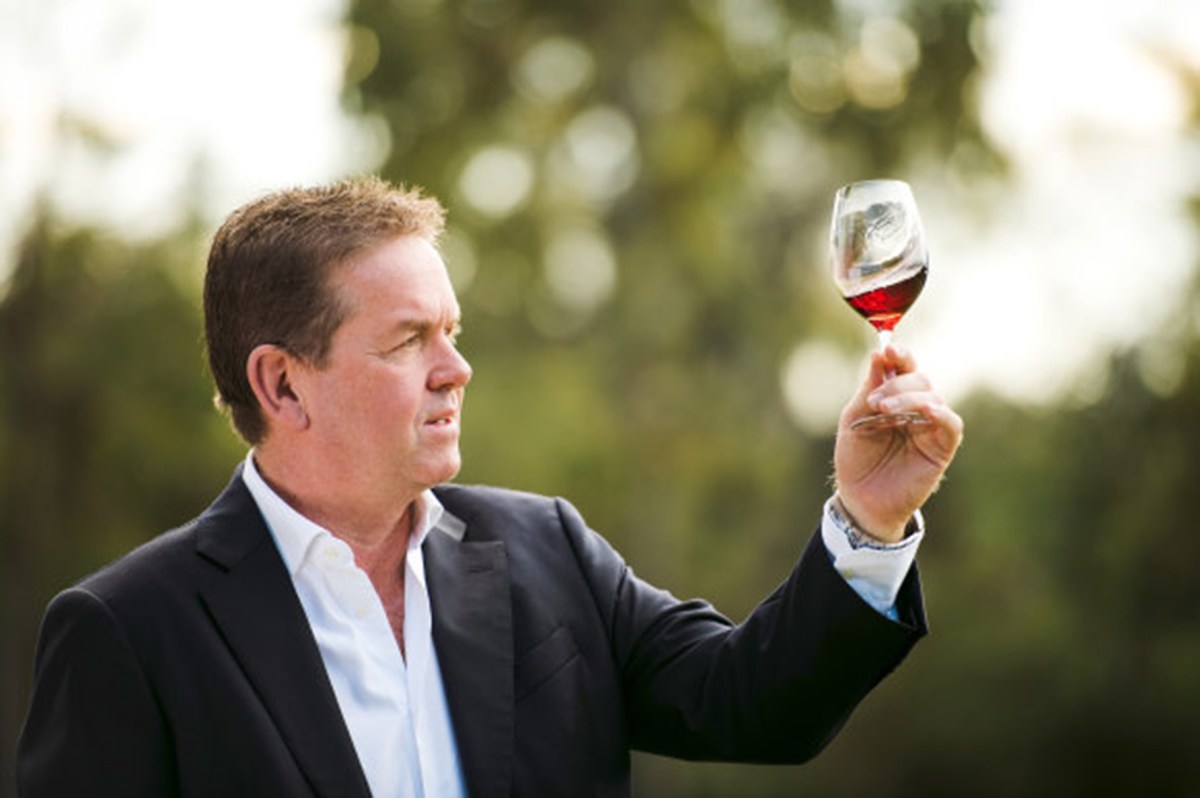
Australian Vintage Ltd needs to rethink India strategy – it is not “just like China”

Craig Garvin, CEO, Australian Vintage, is right to enter the India market but needs to find the right way

The company behind McGuigan, Tempus Two and Nepenethe wines has set its sights set on affluent Indian consumers – but it might need to take a second look.

Australian Vintage Limited chief executive Craig Garvin believes the world’s second-most populous country, is “just like China”.

Yes, he is right that there are a million millionaires in Delhi and Mumbai – but does that equate to your market? These are the established wealthy, mainly male, and many are set in their ways.

Is a better market for Australian wines the young emerging wealthy of the future?

India is not “like China” – the Chinese population is much older and India has the youngest population on earth. Millennials and Gen Z are said to amount to around 750 million of India’s population. Known in India as the “demographic dividend”, this young population is the key to market entry for products like wine.

Already we know that sales of red wine are up in major urban centres, driven by demand from young women, educated and in the ranks of professionals and executives.

What distinguishes India for “premium” consumer products is that the market is young, it is emerging, it is a generation that instead of being “born someone” want to “become someone” and females are leading much of the consumer preferences of this young group. That is, it is ripe for change.

There is probably no other market like it in the world.

Other than its four main wine brands McGuigan, Tempus Two, Nepenethe and Barossa Valley Wine Company, Australian Vintage Limited also produces ready-made cocktail mixes under its Mr Stubbs brand, a range of gins under its Tempus Two brand, and a juice concentrate called Austflavour.

Australian Vintage is a strong company with some fabulous brands which will be just right for India – so long as the thinking and strategy is right.

INTO INDIA wishes them every success.

What a year! ECTA the radical change in relations between India and Australia

As this year comes to a close, INTO INDIA reflects on the game changer – the Economic Cooperation and Trade Agreement.

It surprised us all. Many did not expect it to be signed. Nobody expected it to be so vast in potential impact.

ECTA will save Australian exporters around $2 billion a year in tariffs, while consumers and business will save around $500 million in tariffs on imports of finished goods, and inputs to our manufacturing sector.

The tariff commitments provided by India in the agreement will open up access for Australia’s exporters of products including critical minerals, pharmaceuticals, cosmetics, lentils, seafood, sheepmeat, horticulture and wine.  

Australian service suppliers will benefit from full or partial access across more than 85 Indian services sectors and subsectors. Australian suppliers across 31 sectors and subsectors will be guaranteed the highest standard of treatment that India grants to any future free trade agreement partner. 

Australian services sectors to benefit include higher education and adult education, as well as business services such as tax, architecture and urban planning.

ECTA will support tourism and workforce needs in regional Australia by making 1000 Work and Holiday Program places available to young adventurous Indians. It maintains opportunities for Indian students graduating in Australia to undertake post-study work, with a bonus year of stay for high-performing STEM graduates.

Really looking forward to 2023!

Reade more here…