More good news! Consider Bangladesh – which for many symbolises everything wrong with the world – take another look

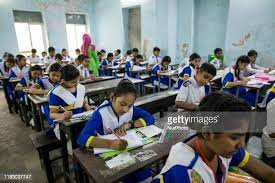
Literacy in Bangladesh jumped from 35% to 74%

Bangladesh, home to 160 million people, for many people in the west is a symbol of everything wrong with the unequal world.

But take another look.

It celebrated a ‘development miracle’ in 2021, its 50th year of independence. In the last three decades, GDP per capita has increased seven fold, 24 million people have been lifted out of poverty, life expectancy has risen to 73 years, infant and maternal mortality rates have fallen by a factor of five, the literacy rate has increased from 35% to 74%, and more than 97% of the population now has access to electricity, up from 62% in 2014.

Worth going over that again – it is genuine good news.

India economy has weathered the pandemic and set for growth – ASK Capital Management report

ASK Capital Management is a Singapore based entity with a focus on managing and advising India centric investments for institutional and family office clients. Their latest report shows how the Indian economy has weathered the pandemic and is set for growth:

This report relates to ASK India Opportunities Fund – Fund 1

The rapid rise in COVID cases due to the new Omicron variant, hawkish tone by major Central Banks around the world and persistent inflation contributed to a volatile December for the global equity markets. Despite this the markets ended on a positive note with most markets registering positive returns in the month. India was amongst the better performing markets with benchmark BSE500 ending up 3.2% in USD terms while the Fund was up 2.7%, net of fees in December. For the year 2021, the Fund returned 29.7%, net of fees compared to 27.6% for BSE500.

After another year spent in the shadow of the COVID, we begin 2022 with a new variant of the virus disrupting resumption of normal life. This, along with inflationary pressures and a move away from high liquidity and accommodative stance of Central Banks are the biggest risks to global economy for the year. While the new variant of the virus appears less fatal, the disruption means global supply chain issues will take longer to resolve. Tighter liquidity and end of cheap money means investors will have to temper expectations of returns in the new year and bottom-up stock picking will become crucial differentiator.

The Indian economy has weathered the pandemic induced slowdown well due to the proactive and effective steps taken by the RBI and the Government. The economy is above pre-COIVD levels in size and expected to grow around 9% in FY22 and 7.5%-7.9% in FY2023 by various estimates, one of the highest growing major economies in the world. As described in the past, lower debt on corporate balance sheets, controlled NPAs in banking sector and Government policies such as “Make In India” and Production Linked Incentives (PLIs) for various sectors should revive a domestic capex cycle.

While the recovery in India has been strong, it has also been uneven with the rural segment affected more from the Delta variant in Q1FY22. This should normalise over the course of the year and aid in demand recovery. Similarly, hiring activity continues to remain strong which should support demand.

As commodity prices and inflation stabilise, companies should report increase in margins over the coming quarters as prices increases are passed on to consumers. Thus, companies with higher pricing power and better cost controls should be able to deliver superior earnings growth with likely increase in market share. This has historically been the case for our portfolio companies, and we see no reason that this cannot be the case again. Our expectation is for the portfolio to deliver an average earnings CAGR of 26% over the next 3 years.

During the month we exited from Pidilite Industries and added Avenue SuperMart to the portfolio. We believe Avenue SuperMart is a well-oiled business model in a large opportunity landscape with a strong focus on low procurement and operating costs. Its store ownership model, right store size and low supply chain cost with auto replenishments help it to maintain low operating cost to achieve the key pillar of its success – everyday low cost and everyday low price. In a predominantly food and grocery business (52% revenue contribution) with wafer-thin margins (15% gross margin), the company is able to offer everyday low pricing, unlike peers that offer discounts on select days in a week or month, creating a competitive edge.

Contact:

Nikhil Iyer, CFA, Head of Institutional Business, APAC

ASK Capital Management Pte Ltd

m: +65 83800064 EMAIL nikhil.iyer@ask-capital.com

https://www.askfinancials.com/

Yes, it’s already time to revisit your “new year resolutions”!

We are now a few weeks into 2022 so this is a good time to revisit your “new year resolutions” and perhaps take a different view.

This is from a friend and colleague Debashish Chatterjee who is a Director of Indian Institute of Management in Kozhikode, India:

3 Unusual Insights for 2022

#1. We begin the year with resolutions. They are often a laundry list of personal desires. A desire is an energy formation. When your desires are woven around a web personal pleasures, the energy they receive comes from your ego. This energy is limited. When your desires are for the greater good, the whole universe supports your desires. Enhance the circumference of your desires, you are bound to succeed.

#2. You do not have a busy life. You only have a busy mind. The world out there is nothing but a projection of the mind. Slow down the mind. Your world will transform around you. You will begin to see things that you had overlooked earlier. You will fumble less and create more.

#3. That which has a beginning also has an end. This was Buddha’s insight into the impermanence of life. Begin with the end in mind. Ask where are my actions and thoughts eventually leading me?

From INTO INDIA and Debashish, have a great 2022!

Happy New Year and a tolerant, multicultural future

A significant majority of people in wealthy countries now believe that having people of different ethnic, religious, and racial backgrounds improves society.

In the US, Canada, UK, Australia, New Zealand and Taiwan, 8 out of 10 people believe greater diversity is a benefit, and even in relatively culturally homogenous countries like Japan and Greece, the share has increased by double digits in the last four years.

Source – Future Crunch

Will 2022 see continued “hard diplomacy” or can we embrace “smart” and “soft” diplomacy?

INTO INDIA wishes you all a peaceful, prosperous, safe and healthy new year for 2022. This is our last post for this year.

The question for next year is how will we all get on better than we did in 2021?

I hope we will see “smart diplomacy” dominate next year – this is the kind of diplomacy that works with cultural and cross border differences. It is not insulting and does not force the other country into an aggressive response. It takes into account major global shared challenges such as climate change, Industry 4 and the continuing pandemic.

It is “smart” to talk to other countries in a way which allows them to make their own positive contribution to the debate – does not corner them into hostility.

Australia has done some “smart” diplomacy things this year – such as using former Prime Minister Abbott as a special envoy, a move well received in Asia.

Hoping countries will all be a lot smarter in 2022.

It would make it a good year for all of us.

How the QUAD can help Australia in trade talks with India

At last night’s meeting in Melbourne of the Australian Institute of International Affairs, Trade Minister Dan Tehan MP made reference to how the QUAD could be useful for future trade agreements.

The QUAD includes Australia, India, Japan and the USA. It focuses on supply chains and “independent and free region” – that is, a buffer to China.

But it might be a big help on trade.

India wants to use the QUAD as it steps up global trade relations.

And Australia already has FTA deals with the other two QUAD parties – Japan and USA.

The Quad is a diplomatic network of four countries committed to supporting an open, inclusive and resilient region. It complements our other bilateral, regional and multilateral cooperation, including with ASEAN.

The Quad aims to respond to the defining challenges of our time, including COVID-19 vaccines, critical and emerging technology, cyber security, climate change, infrastructure, maritime security, countering disinformation, counter-terrorism, and humanitarian assistance and disaster relief.

Indian Finance Minister in Forbes “top 100 powerful women”

Ms. Nirmala Sitharaman, Union Finance Minister of India, features in the Forbes’ annual list of 100 most powerful women. The finance minister ranked 37 on the list and was featured for the third consecutive time. In 2020, Ms Sitharaman occupied the 41st spot and 34th spot in 2019.

Other Indians to feature in this list include Ms. Roshni Nadar Malhotra, CEO of HCL Corporation, Ms. Kiran Mazumdar Shaw, Biocon’s Executive Chairperson and Ms. Falguni Nayar, Nykaa Founder.

Forbes releases a list of the 100 most powerful women every year.

Featuring The top ten of ‘The World’s 100 Most Powerful Women’:

Mackenzie Scott, Philanthropist

Kamala Harris, US Vice-President

Christine Lagarde, European Central Bank President

Mary Barra, CEO of General Motors

Melinda French Gates, Philanthropist

Abigail Johnson, Fidelity Investments CEO

Ana Patricia Botí, Santander Executive Chairman

Ursula von der Leyen, President of European Commission

Tsai Ing-wen, Taiwan President

Julie Sweet, Accenture CEO

Melbourne now medical research and pharma capital of Australia

Moderna to use Melbourne manufacturing base

Melbourne will become the first place outside of Europe and the United States to manufacture mRNA vaccines following a deal between the Victorian and federal governments and biotech giant Moderna.

Health Minister Greg Hunt said the facility would be key to the country’s medical manufacturing future and help meet the country’s COVID-19 vaccine needs.

Minister for Medical Research Jaala Pulford told ABC’s RN Breakfast Victoria’s heavy investment into medical research and pharmaceutical manufacturing over the past two decades had ultimately favoured Melbourne over Sydney for the bid.

Victoria’s medical research sector supports about 30,000 jobs and contributes an estimated $21 billion to the state’s economy, according to government figures.

“Melbourne is home to around 60 per cent of medical research that occurs in Australia and around 90 per cent of pharmaceutical manufacturing,” she said.

The facility will produce 25 million doses a year from 2024 and have the capacity to scale production up to 100 million doses per year to tackle future pandemics.

It will also produce other treatments for cancer, rare diseases, cellular engineering, and protein-replacement therapy.

https://www.theage.com.au/national/victoria/victoria-unveils-moderna-vaccine-deal-as-state-records-1189-covid-cases-20211214-p59ha1.html

Use “smart power” advises leading Australian diplomat

With great clarity and logic, John McCarthy AO, former Australian diplomat, has outlined the three choices for Australian diplomacy – hard, soft or smart power.

McCarthy is concerned that Australia in recent times has used “hard” power and this can bring reputational damage.

https://asialink.unimelb.edu.au/insights/its-time-for-australia-to-be-a-smart-power-country

He describes how “soft” power is often mistakenly seen as just culture or cricket.

And he concludes by describing the “smart power” option.

Brilliant article.

I am sure most of our diplomats and think tanks would agree – but can the politicians wake up to the harm they are doing to Australia’s international reputation?

Will India and Australia achieve “early harvest” trade deals and lay groundwork for a CECA?

Former PM Tony Abbott was instrumental in getting trade talks going again

INTO INDIA believes the two big issues facing Australia are allowing greater people movement from India to Australia, and directing more of our massive A$ 2.3 trillion pension fund sector that could be a regular source of investments in the Indian infrastructure and disinvestment story.

The key for Australia is to see India as more than a “quick sale” – Indian negotiators will be looking to push the two countries to become partners, adopting policies that streamline physical movement, including, on-arrival visas, multiple entry long term business visas, etc.

From India’s perspective, it will want to ensure that trade deficits in the post agreement period do not widen. And two, non-tariff barriers and differences in standards or recognition of qualifications do not offset higher access through the trade deal. As an Indian report recently wrote: “This is the crux of the matter.”

In the larger CECA agreement, investments from Australia will play a big role in the growth of bilateral trade between the two countries, because the growth trajectory of India will create new opportunities for Australian companies, including in areas like water management and up in future, for which Australia can be a long term reliable supplier.

In the early harvest agreement, Australia wants services included with goods – an area where India has not performed well in earlier trade deals such as with ASEAN.

Australia however just needs to accept the sensitivity of the agribusiness sector in India – the deal will fall over if Australia demands substantially lower tariffs across the board for fruits, dairy, agriculture and processed food items.

INTO INDIA RECOMMENDS Australia narrow its ambitions down to selected niche items in the agriculture sector. Finding ways that Australian expertise, technology innovation and scale can actually transform Indian agriculture sector towards value addition would give Australia a big advantage.

Finally, you can expect India could show flexibility in tariff lines related to commodities and minerals, which are needed for its growing economy and the e-mobility program. In turn, Australia could be accommodative in tariff lines related to refined petroleum, medicaments, railway vehicles, gems and jewellery, auto components and made up textile items, which it imports in any case from countries around the world, in addition to India.

Thanks to Confederation of Indian Industry (CII), in collaboration with KPMG and led by Amb Anil Wadhwa, who is Former Secretary (East), Ministry of External Affairs, Government of India.