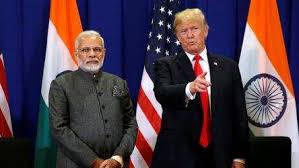
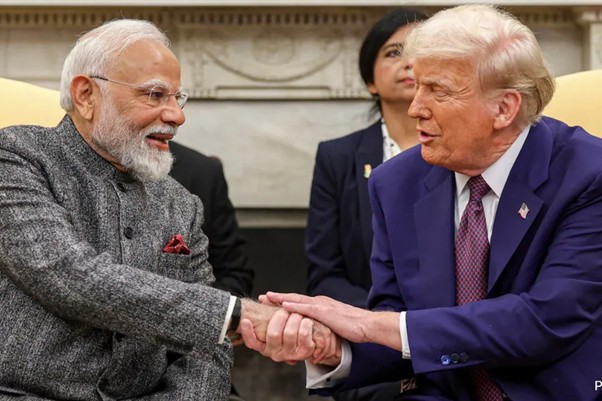
Can the India-USA relationship survive President Trump?

We have just had 25 years of India and the USA gradually getting closer together.

But claims from US commentators that the two countries have “shared values” and “shared interests” have shown that they miss the point about India.

In the last 25 years India has been engaging with “the world” and has seen the USA as just one among many – it is today, for example, much closer than ever to countries like China, Japan and Russia.

When India joined the “Quad” (USA, Japan, India and Australia) it was celebrated in the USA (and to some extent Australia) as if India had “changed sides”. It had done no such thing.

In fact, within one week of attending a recent Quad meeting, Indian PM Narendra Modi was also high profile at the Shanghai Cooperative Organisation – the world’s largest regional organisation in terms of geographic scope and population, covering approximately 24% of the world’s total area and 42% of the world population.

At heart, this misunderstanding arises from the dramatic differences in world view of the USA and India. The USA and many of its partners see you as being on their side or against them. India, by contrast, takes a more universal view and sees many polarities, many arrangements and alternatives.

In addition, India is not generally evangelical on “democracy” and certainly does not see its mission as imposing democracy on others. It tends to accept others as they are.

Today India faces a 50% tariff from the USA, imposed, it is said, because India continues to buy oil from Russia, which is at war with Ukraine.

On this and other issues with the USA, India takes a quiet non-confronting line – understanding that anger is unlikely to work where reason has failed.

India’s favored policy of “Mult alignment”—seeking friends everywhere while refusing to forge clear single country alliances – is aggravating and confusing to Washington but is an obvious outcome of the Indian world view.

INTO INDIA predicts that the Indian response to Trump’s tariffs and rough tactics will lead to India seeking more diverse trade relationships and to be even more active in building multi alignments.

It’s just a matter of how you see the world.

What do you think?
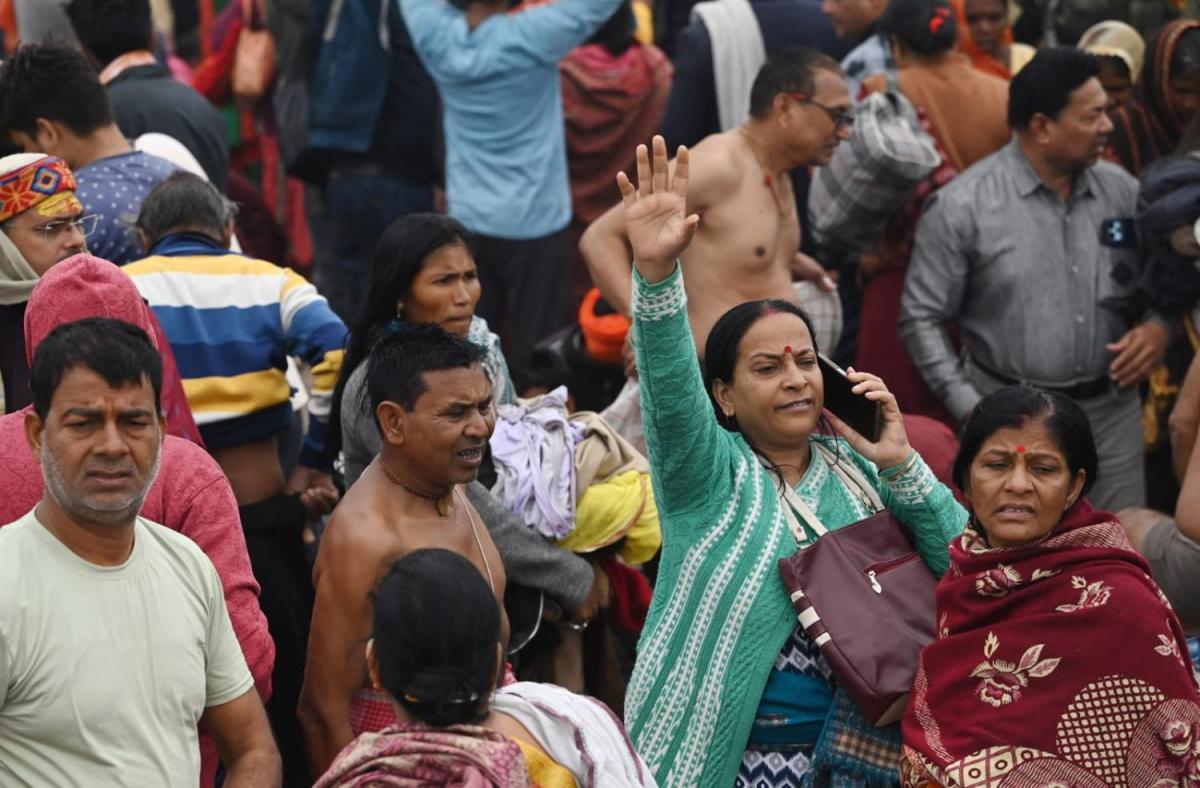
The population paradox in India

Wonderful article by Sunaina Kumar in THE INTERPRETER for the Lowy Institute.

https://www.lowyinstitute.org/the-interpreter/population-paradox-india#msdynttrid=JLdBTs_-HnNZRPTGkUBRWQGZleYD6CL9EmGS-LibtvE

India is growing in some states, declining in others – but rapidly ageing all over. Here are some elements of the “population paradox”:

1. In April 2023 when India reached 1,425,775,850 people, it surpassed China’s population to become the most populous country in the world.

2. India’s population is expected to grow for several decades and could peak at 1.7 billion by the 2060s, while China’s population is already in decline, according to UN estimates.

3. The total fertility rate in India has declined from 3.4 children per woman in 1992-93 to 2.0 children per woman in 2019-21.

4. Population in India will however continue to grow, concentrated mostly in the northern states of the country on the basis of demographic momentum, a phenomenon that results from a large number of young adults in childbearing years.

5. A north-south divide – population is growing in the north and declining in the south.

6. Compared to the north, the five southern states of India are economically more advanced and have been highly successful in slowing population growth by focusing on development and women’s empowerment.

7. India has one of the youngest populations in the world: 65 per cent of the country is under the age of 35.

8. By 2030 one out of every five working-age people in the world is projected to be Indian.

9. To reap the demographic dividend, India will need to add 7.85 million jobs every year until 2030.

10. Alongside this phenomenon, India like China is rapidly ageing, which is linked with declining fertility, falling mortality risks and higher life expectancy in both countries.

The speed and scale of ageing is a global concern but in a country like India, it is a race against time, as the country will need to get richer before it gets older.

Sorting out priorities given the many levels of this “paradox” is a task for Governments and policymakers.

Trump’s “transactional and mercantilist” approach to trade will test India in 2025

India at risk as Trump’s trade policies do not distinguish between friend and foe.

One certainty of 2025 – the terms of trade are set to change.

For India, this presents a major economic risk.

Trump has made trade a big focus of his second term as President of the USA – he is expected to upend the $24 trillion world goods trade and possibly the $7.5 trillion services trade.

This puts at risk India’s largest export market – the US.

The US has also been an important supplier of capital.

The US consumes as much as a fifth of India’s exports —  led by two shiny new growth spots in phone manufacture and global capability centers — and is also among the biggest sources of fund flows, reports Bloomberg’s India Edition, written by Menaka Doshi.

Australia well knows that Trump’s trade strategies do not distinguish between friends and foes – as one of the USA’s closest defence allies, Australia was a major victim of Trump’s anti-China moves.

India could be hard hit this time around as he continues a “transactional and mercantilist” approach to trade.

India and Australia should be making the final negotiations on a trade deal a top priority.

Australia India two-way trade now over A$50 billion

Great news from Austrade – two-way trade between Australia and India has reached around AUD 50 billion!

INTO INDIA has been active in this space over 20 years, and for most of this time our trade remained stagnant.

This recent growth is a tribute to the folks at Austrade, as well as State Government offices and all the organisations promoting the relationship. And of course highest praise goes to the brave companies that are finding a way in the Indian growth market.

Healthcare is a good example of the opportunities ahead.

The recent Indian budget 2024 signals the Indian government’s resounding commitment to provide equitable healthcare services across socio-economic spectrum with special coverage of “missing” middle class.

The Indian government is scaling up their focus on digitalisation of the public healthcare system, tariff reductions on some critical pharmaceutical drugs and MedTech devices.

Good news across the board – the budget also involves notable reductions in corporate taxes for foreign companies.

As India continues to grow as a preferred commercial destination, connect with organisations such as the Australia India Chamber of Commerce, with Austrade and with State Government offices – they can all help with the pathway to India.

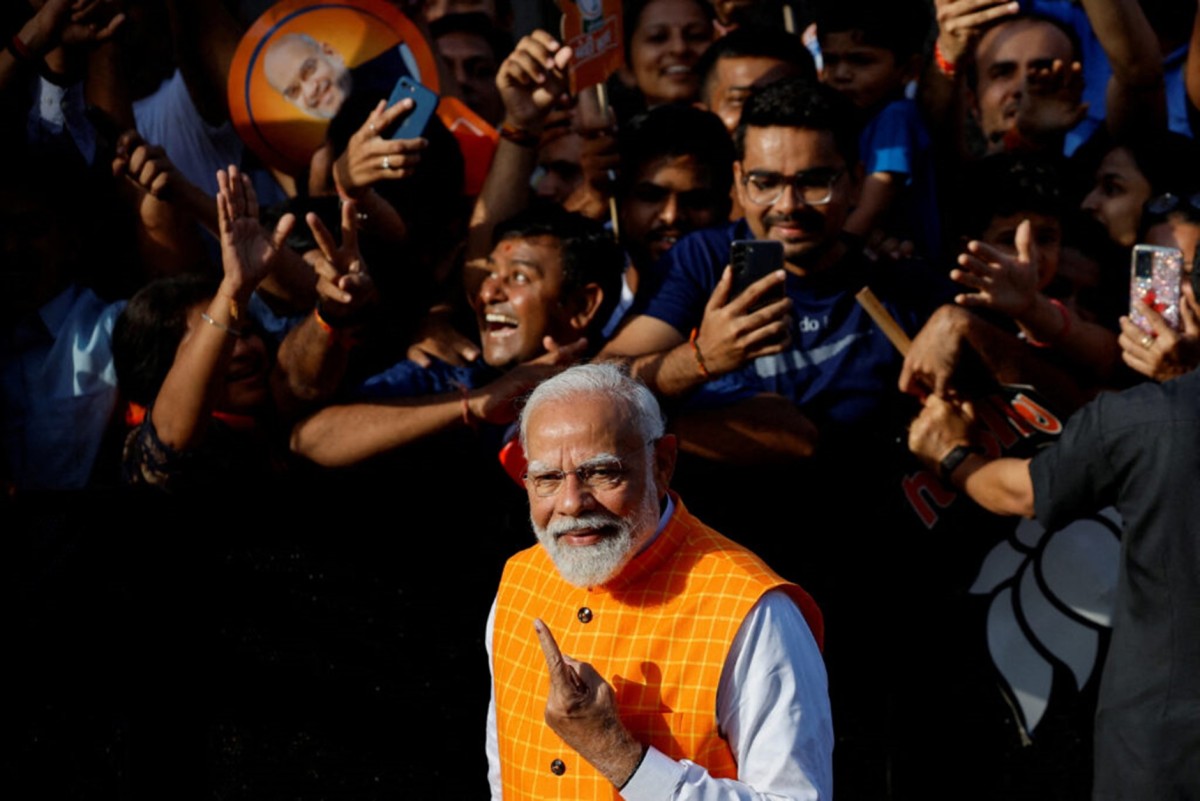
What will a third term for Indian PM Narendra Modi mean for India and the world?

 INTO INDIA had three big reactions to the Indian elections:

1) Democracy is alive and well in India; 650 million votes cast over a 6 week election process – truly a remarkably strong democracy!

2) Indians want jobs, jobs, and jobs; this is why manufacturing has become so central to India’s economy – the swing away from the ruling BJP suggests PM Modi has to do more on jobs.

3) the Indian voter will expect the government to keep growing the economy – and show why that is a benefit for all Indians.

The only other Indian Prime Minister to win three five-year terms was the first – PM Nehru.

This has been a much closer election than predicted – and probably has given the ruling BJP and PM Modi much to think about. Of course, INTO INDIA notes that long term office holders generally face an anti-incumbency mood.

Congrats to Indian PM Narendra Modi – we have always called him ACTION MAN and in his third term he will need to maintain the action.

We expect a big focus this term on manufacturing, physical infrastructure, digital infrastructure and energy transition.