What will a third term for Indian PM Narendra Modi mean for India and the world?

 INTO INDIA had three big reactions to the Indian elections:

1) Democracy is alive and well in India; 650 million votes cast over a 6 week election process – truly a remarkably strong democracy!

2) Indians want jobs, jobs, and jobs; this is why manufacturing has become so central to India’s economy – the swing away from the ruling BJP suggests PM Modi has to do more on jobs.

3) the Indian voter will expect the government to keep growing the economy – and show why that is a benefit for all Indians.

The only other Indian Prime Minister to win three five-year terms was the first – PM Nehru.

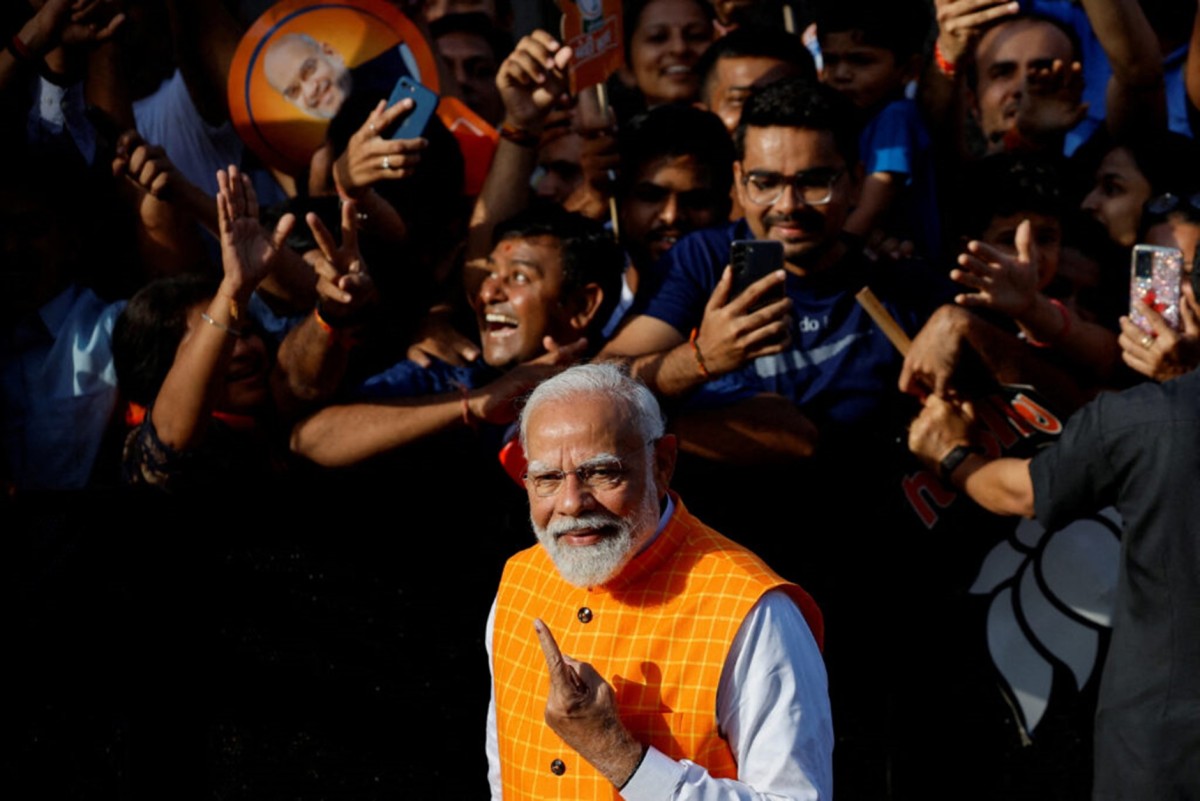
This has been a much closer election than predicted – and probably has given the ruling BJP and PM Modi much to think about. Of course, INTO INDIA notes that long term office holders generally face an anti-incumbency mood.

Congrats to Indian PM Narendra Modi – we have always called him ACTION MAN and in his third term he will need to maintain the action.

We expect a big focus this term on manufacturing, physical infrastructure, digital infrastructure and energy transition.
Why India is such a rare and attractive investment market

There is something about investing in India that most investors are not aware of. INTO INDIA is pleased to bring this important statistic to you.

India is a rare market that has delivered double digit annualised returns in USD terms consistently over a 5, 10, 15 and 20 year time frame.  Even the US has not done that, falling just short over the 20 year time horizon.

Why is this happening?

This startling fact was drawn to the attention of INTO INDIA by Anish Mathew, Chief Executive Officer & Chief Investment Officer, Sundaram Asset Management Singapore Pte Ltd.

Anish explains – “There are a couple of key reasons for this in my view.  India is a capital scarce country and hence cost of capital has always been high in India. 

“This has resulted in corporates being generally disciplined about their capital allocation decisions which in turn has benefited their shareholders over the longer term. 

“Secondly, the correlation between economic growth and corporate profits is the highest amongst its EM peers.  Studies have shown that over a 20 year period, it is around 0.62. 

“As the Indian economy has grown at an average of 6% since 1980, corporate profits have benefited, thereby underpinning the performance of the Indian market over the long term,” he said.

For those who love the stats:

The MSCI INDIA Net Total Return USD Index:

5 years – 11.92%

10 years – 10.06%

15 years – 10.42%

20 years – 11.04%

Makes INTO INDIA wonder – are we missing the India investment opportunity?

Australian banker says “this is India’s century”

This is the best, strongest vote of confidence in India from one of Australia’s leading corporations.

Mark Whelan, Group Executive at ANZ: “The time is very much appropriate to grow here. If you look at the basics of the Indian economy and where its place is in the world, this is India’s century”.

Rufus Pinto, Country Head, India, Australia and New Zealand Banking Group, outlined the rapid recent growth of ANZ in India: “ANZ India started our Institutional Banking operations in 2011. 13 years of existence across three branches today with over 80 bankers supporting the top Financial Institutions; Local Large Corporates and MNC’s working together with our home markets of Australia and New Zealand, and ~30 markets in our global network providing our clients a seamless agile offering.

“ANZ in India today house almost 20% of our global workforce, with our Global Capability Centre in Bengaluru,” he said.

This is change on a grand scale for a leading Aussie company.

Yes, this is India’s century.

Time to get on board?

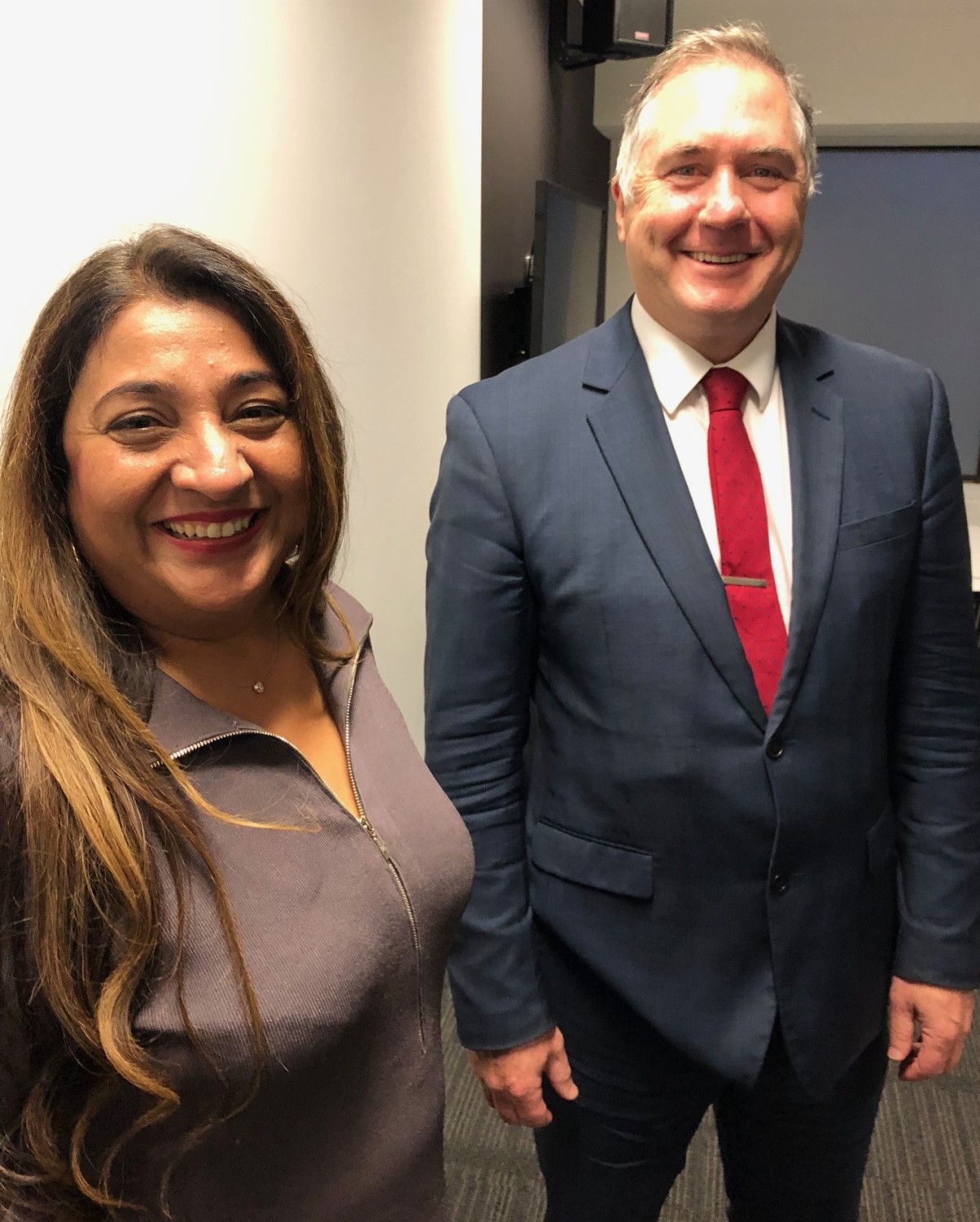
Jasmine Batra and AICC outlining a thoughtful way to enter the India market

Two organisations that advocate a “more thoughtful” way to enter the Indian market came together last week in a wonderful seminar providing some super advice.

First was the Australia India Chamber of Commerce (AICC) which hosted the event and their Chair, Chris Mooney, put the case for the chamber’s National Industry Groups doing well researched and sequenced steps to engage with India. Each group does research for a white paper, builds a community and knowledge group around it and leads to well prepared India missions.

Second was the keynote speaker, Jasmine Batra from Arrow Digital, who have a program called “The Big Leap” taking clients through a 12 month program of understanding and entering India. INTO INDIA has long advocated that slower market entry produces superior long term results – a strong alternative to the traditional Aussie hasty transactional approach. We love “The Big Leap” concept.

There are three major factors that make India today a very special market – first, the young population with an average age of 28; second, the rise of the tier 2 and 3 cities, including their specialisation, three, India’s global leadership in rolling out digital infrastructure that is transforming business and society.

Jasmine talked about importance of Food, Festivals and Family when thinking about India. “Family” includes what she called “the crazy rich” such as Tata, Ambani and many more. But it also goes right down to small community business families. Your journey will interact at all levels at some time.

Reducing risk is vital. There are three steps you can take. First, understand the cultural context. Second, do market research and find local partners. Third, network community and do due diligence.

In conclusion Jasmine Batra said you should get over there, get around and get partners. By research and regular visits, your more thoughtful engagement with India will produce results.

La Trobe University very kindly provided the venue.

CONTACT AICC

Contact Jasmine Batra

About Us

What’s in a name? Is it “India” or “Bharat”?

What’s in a name? India or Bharat?

Many commentators believe Indian PM Modi will bring on a change of India’s name to Bharat. INTO INDIA thinks this most unlikely.

Modi will win either way, vote or no.

PM Modi will, in a very Indian way, continue to use the two names side by side.

You see, things do not have to be resolved in India – and both sides can have their day. Ambiguity and paradox are part of Indian culture.

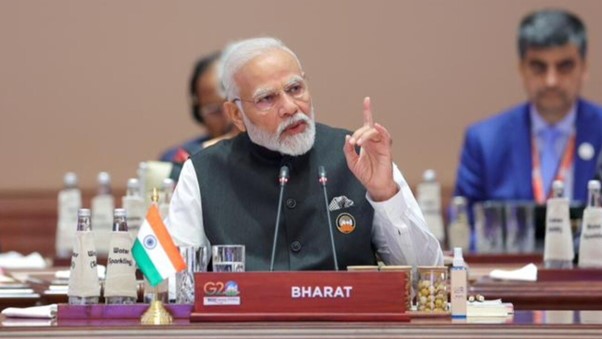
“Bharat” is the Hindu name for the country, so PM Modi appeals to Hindus every time he uses it – such as on menus and nameplates at the recent G20 meeting he hosted in New Delhi last September.

Many attendees thought this a signal that a name change was on the cards for India. Wrong. Just by using both, he continues to create distance between the nation and its colonial past.

Bharat is already a name recognised in India’s constitution.

With India voting in a general election in March and April, we will no doubt see more banners displaying Bharat.

PM Modi knows that getting a name change done is a tough call, requiring a constitutional amendment with a two-thirds majority in both houses of parliament.

So, when it comes to a name, two is better than one. India and Bharat.