
To succeed in Asia, you have to trade the “I” for the “Us” – a David Thomas cross cultural insight

INTO INDIA has consistently called for greater cross-cultural preparation for Aussie firms going into India (and Asia). Here is an absolute gem on this topic.

Read on from DAVID THOMAS…

From an early age, I was taught that the squeaky door is the one that gets the oil. This is typical western thinking. We’re raised to be soloists – standing out, grabbing the spotlight, speaking with confidence and getting the deal done in record time (preferably before lunchtime!).

But as soon as you step into Asia, you realise that the squeaky door doesn’t get greased – it gets replaced. The “We” reigns supreme. It’s a collective world where harmony and trusted relationships are the engine of commerce.

While a Westerner is busy trying to be the “disruptor,” the local players are busy building consensus. If you push too hard or make someone “lose face” just to prove a point, you haven’t won a negotiation – you’ve closed a door forever. I’ve seen this happen myself and it often comes as a surprise (until you’ve thought really hard about what happened).

In an individualistic culture, the contract is the start of the relationship. Here in Asia, the relationship IS the contract.

It’s the same principle as that left-hand turn in local traffic; it only works because everyone is subconsciously looking out for the group as a whole. If everyone drove with a “Me first” attitude, the whole city would grind to a halt.

To succeed in Asia, you have to trade the “I” for the “Us”. You have to learn that fitting into the rhythm is far more powerful than trying to beat the drum yourself. And just like navigating those chaotic streets, you certainly won’t feel that pulse from a distance!

REACH OUT TO DAVID – davidthomas@thinkglobal.com.au

READ MORE: https://www.davidthomas.asia/
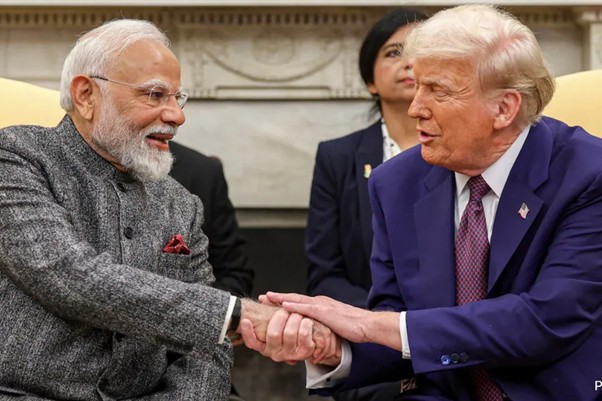
Can the India-USA relationship survive President Trump?

We have just had 25 years of India and the USA gradually getting closer together.

But claims from US commentators that the two countries have “shared values” and “shared interests” have shown that they miss the point about India.

In the last 25 years India has been engaging with “the world” and has seen the USA as just one among many – it is today, for example, much closer than ever to countries like China, Japan and Russia.

When India joined the “Quad” (USA, Japan, India and Australia) it was celebrated in the USA (and to some extent Australia) as if India had “changed sides”. It had done no such thing.

In fact, within one week of attending a recent Quad meeting, Indian PM Narendra Modi was also high profile at the Shanghai Cooperative Organisation – the world’s largest regional organisation in terms of geographic scope and population, covering approximately 24% of the world’s total area and 42% of the world population.

At heart, this misunderstanding arises from the dramatic differences in world view of the USA and India. The USA and many of its partners see you as being on their side or against them. India, by contrast, takes a more universal view and sees many polarities, many arrangements and alternatives.

In addition, India is not generally evangelical on “democracy” and certainly does not see its mission as imposing democracy on others. It tends to accept others as they are.

Today India faces a 50% tariff from the USA, imposed, it is said, because India continues to buy oil from Russia, which is at war with Ukraine.

On this and other issues with the USA, India takes a quiet non-confronting line – understanding that anger is unlikely to work where reason has failed.

India’s favored policy of “Mult alignment”—seeking friends everywhere while refusing to forge clear single country alliances – is aggravating and confusing to Washington but is an obvious outcome of the Indian world view.

INTO INDIA predicts that the Indian response to Trump’s tariffs and rough tactics will lead to India seeking more diverse trade relationships and to be even more active in building multi alignments.

It’s just a matter of how you see the world.

What do you think?

Australia India two-way trade now over A$50 billion

Great news from Austrade – two-way trade between Australia and India has reached around AUD 50 billion!

INTO INDIA has been active in this space over 20 years, and for most of this time our trade remained stagnant.

This recent growth is a tribute to the folks at Austrade, as well as State Government offices and all the organisations promoting the relationship. And of course highest praise goes to the brave companies that are finding a way in the Indian growth market.

Healthcare is a good example of the opportunities ahead.

The recent Indian budget 2024 signals the Indian government’s resounding commitment to provide equitable healthcare services across socio-economic spectrum with special coverage of “missing” middle class.

The Indian government is scaling up their focus on digitalisation of the public healthcare system, tariff reductions on some critical pharmaceutical drugs and MedTech devices.

Good news across the board – the budget also involves notable reductions in corporate taxes for foreign companies.

As India continues to grow as a preferred commercial destination, connect with organisations such as the Australia India Chamber of Commerce, with Austrade and with State Government offices – they can all help with the pathway to India.