The 7 Modi changes that set India to become a global economic power

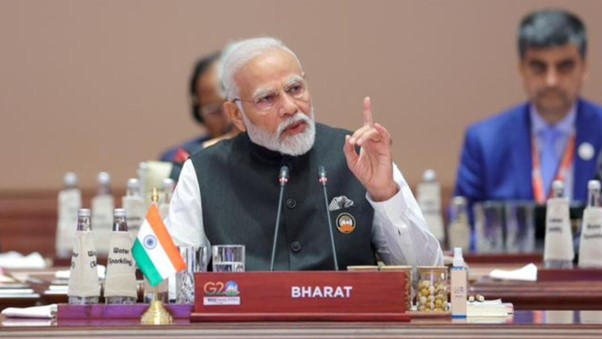
Narendra Modi became Indian Prime Minister in 2014 – and while there are many “for” and “against” views, few would argue against the speed and level of change under his government.

With an economic growth rate estimated close to 7% this year, here is the INTO INDIA list of the big changes Modi brought in:

1. The GST

Nobody expected this even though the need for a GST had been discussed for over a decade. Modi drove it through and it has changed the revenue levels of the Central and all State Governments – it is one change that leads to more change. The GST changed a landscape known for secret stashes of cash and tax evasion on a grand scale.

2. The “India Stack”

Modi has used technology to transform how citizens deal with all levels of government and how they pay for things – for example, the United Payments Interface works everywhere including the smallest villages. The “stack” underpins the radical change as India embraces digital payments – benefitting both government and business. The Stack delivers low-cost transactions to 1.3 billion Indians.

India’s tech-enabled governance is now admired the world over.

3. Direct Benefits Transfer

Direct payments to the masses have delivered welfare benefits to all who need it = they get it all – instead of a small percentage of it under the old cash benefits deal. This is radical social change.

4. The Insolvency and Bankruptcy Code

Complex – but bad businesses were protected by massive delays in legal processes. This has been streamlined, which means boards are more accountable and action is taken much quicker. Dramatic improvement in investor confidence in corporate governance.

5. Make in India

This is PM Modi’s personal dream of transforming the Indian economy which was heavily dependent on services. This scheme now has traction – for example, Apple has set up major manufacturing in India. Of course, the need to diversify from dependence on China helped this scheme – India is now a respected manufacturing hub.

6, National Logistics

This is Modi’s next big thing. When I first started going to India on business in the early 2000’s, the biggest complaint was logistics. It failed at every turn. Logistics cost 13% of Indian GDP compared to 8% in developed economies.

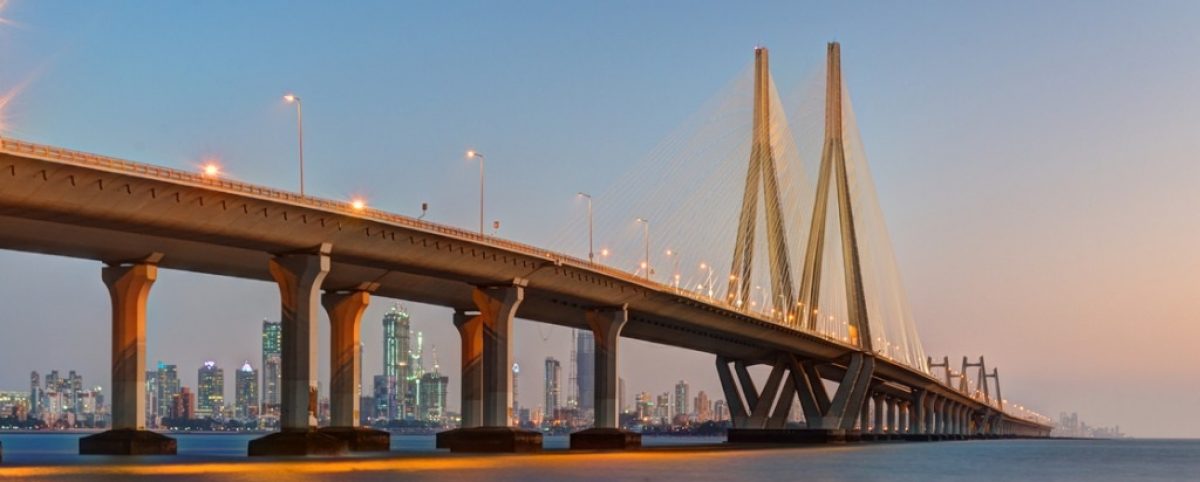
Logistics also fits in with Modi’s big infrastructure drive of the last decade which continues – ports, airports, roads, bridges, trains and railway lines.

7. Lifting 300 million out of poverty

This is one of the big achievements in modern history by India – but we tend to overlook it or take it for grants. The World Bank reports that in the first decade of the Modi Government, 300 million Indians were lifted out of poverty.

Conclusion

This list could be a lot bigger; there has been so much change. Education, agribusiness, solar and wind power, cleaner rivers, global capability centres, space and smart cities to name just a few more.

Go take a look at modern India. Then consider what India was like before Modi.

Make your own judgements. From a business perspective, India is now right at the top for investors, corporates and innovative entrepreneurs.

A personal letter to young Indian Australians

Welcome – we need you.

Stand tall, confident and celebrate your “Indianness” and now also your “Aussie-ness”.

Open your heart to this new world, even if sometimes it might seem strange and perhaps harsh.

People are just people, we all want to be happy, and we all gain happiness through our connection with others – like you. It’s just that many of us don’t know this.

Did you know that 68 per cent of Indian-born migrants hold a bachelor’s degree or higher, almost double the 36 per cent of Australian-born residents?  Nearly a third hold postgraduate degree.

And Indian-born migrants have the highest proportion of top income earners of any group at 18.2 per cent, compared to 15.9 per cent of Australian-born residents, and the lowest share in the bottom income bracket.

You are more than paying your way, you are adding to Australia.

Now Indian migration is our number one source – replacing England. You are top of the tree and making us stronger.

Stay surrounded by your family and Indian friends, while you build relationships with non-Indian Australians like me – it is not one or the other, you can have it all and will be stronger for it.

Become the light of Diwali, the colour of Holi.

Keep your values – beliefs, religion, cultural background as your anchor. It is a big part of what makes you you, and what makes you important to us

Never lose the ability to accept success or failure as just “things” that come and go – this is what I have learned from India.

“Assimilate” is a misused term that often means “become more like us”.  You will lose your superpower if you do. Make the most of your superpower as an Indian Australian and find your way forward with it – don’t lose something to gain something. Instead add something to gain something. Assimilation does not understand this.

Never forget one of the great Indian wisdoms – setbacks are inevitable, but in every setback, there are two things – the setback itself and your attitude to the setback. It is this second one that can keep you strong.

I hope you never confront hatred, but if you do, just remember that hatred cannot be solved by hatred, but by love alone. I learned this from India.

We are one. And we are many. Thank you for being in Australia.

Stephen Manallack

Blogger at Into India

Former President, Australia India Business Council (Vic)

Author “Soft Skills for a Flat World” published in India by Tata McGraw=Hill India

To succeed in Asia, you have to trade the “I” for the “Us” – a David Thomas cross cultural insight

INTO INDIA has consistently called for greater cross-cultural preparation for Aussie firms going into India (and Asia). Here is an absolute gem on this topic.

Read on from DAVID THOMAS…

From an early age, I was taught that the squeaky door is the one that gets the oil. This is typical western thinking. We’re raised to be soloists – standing out, grabbing the spotlight, speaking with confidence and getting the deal done in record time (preferably before lunchtime!).

But as soon as you step into Asia, you realise that the squeaky door doesn’t get greased – it gets replaced. The “We” reigns supreme. It’s a collective world where harmony and trusted relationships are the engine of commerce.

While a Westerner is busy trying to be the “disruptor,” the local players are busy building consensus. If you push too hard or make someone “lose face” just to prove a point, you haven’t won a negotiation – you’ve closed a door forever. I’ve seen this happen myself and it often comes as a surprise (until you’ve thought really hard about what happened).

In an individualistic culture, the contract is the start of the relationship. Here in Asia, the relationship IS the contract.

It’s the same principle as that left-hand turn in local traffic; it only works because everyone is subconsciously looking out for the group as a whole. If everyone drove with a “Me first” attitude, the whole city would grind to a halt.

To succeed in Asia, you have to trade the “I” for the “Us”. You have to learn that fitting into the rhythm is far more powerful than trying to beat the drum yourself. And just like navigating those chaotic streets, you certainly won’t feel that pulse from a distance!

REACH OUT TO DAVID – davidthomas@thinkglobal.com.au

READ MORE: https://www.davidthomas.asia/