Learning a lot about networking within different countries

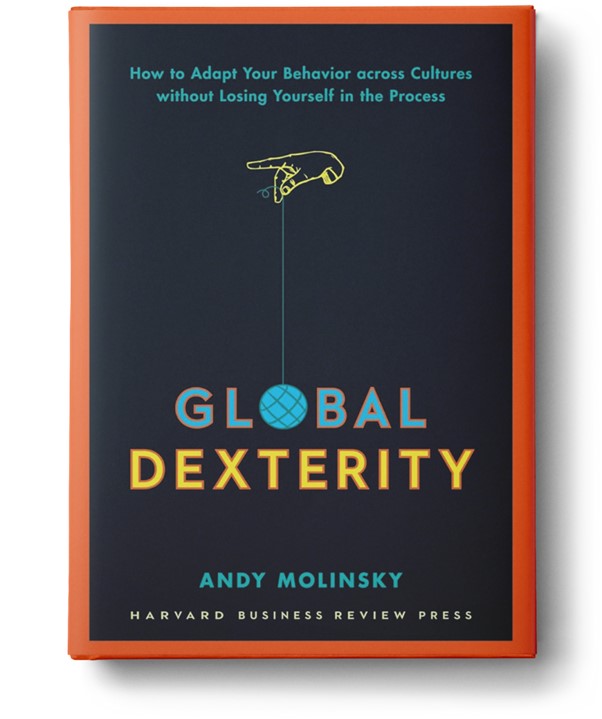
Andy Molinsky is a professor of organizational behaviour at Brandeis University’s International Business School. He regularly writes for the Harvard Business Review, and his work has been featured in the Economist, Fast Company, Fortune, the Financial Times, the Boston Globe, NPR, and the Voice of America. 

He recently did some simple research which put a spotlight on how networking varies across cultures.

– Kanya is an MBA student in the United States who grew up in Thailand. She works in the construction industry and is 26 years old.

– Sandeep is an IT professional from India with an MBA degree from the United States. He is 28 years old.

– Mohamed is a security professional from Egypt pursuing an MBA degree in the United States. He is 24 years old.

Here are their answers:

1. Is networking common in your culture?

Kanya (Thailand): “No – it’s not common at all in Thailand. I have never been to networking events in my country before, other than a specific career fair. We don’t have any organizations that set up networking events.”

Sandeep (India): “Yes, it’s somewhat common, but only in certain situations. Indian culture is opening up to the idea of socializing and partaking in networking activities. As there is an influence of the western culture and the emergence of multinational companies is becoming evident, more and more Indian students and employees are making themselves available for networking events.”

Mohamed (Egypt): “The Arab culture is one that is more personal. You typically do business with those you know personally or have at least met. This makes networking vital in the Arab world. Networking is done in both business and non-business settings much like the West.”

2. Where does networking happen in your culture?

Kanya (Thailand): “Only career fairs provide us with the chance to meet with employers.”

Sandeep (India): “It can happen in many different places – career fairs, conferences, and even at unexpected places like parties or other informal get-together. Social parties, charities, functions are hot spots for youngsters and experienced employees alike to mingle with representatives from companies. I saw it happening in my workplace!”

Mohamed (Egypt): “There are both formal and informal settings to network. I have personally found that connections made through informal networking are more beneficial than those made in a career fair. This could be at a social outing or the informal portion of a conference.”

3. In your culture, what matters most: your resume and skills, the way you present yourself during a networking conversation, or both?

Kanya (Thailand): “When we meet employers at a career fair, they are not usually interested in our resumes. They want to talk with us about our experiences.”

Sandeep (India): “A lot of companies pay special interest to the resume of an individual, encompassing all the skills and expertise he or she has in his or her previous assignments. But at the same time, a lot of companies also look at how an individual carries himself or herself. Confidence is a big positive sign for many employers who are looking forward to hiring someone who can meet expectations without breaking a sweat; a fast learner perhaps.”

Mohamed (Egypt): “Both are crucial, but I believe the way you present yourself is more important. The personal presentation isn’t just a foot in the door; it’s a first interview. Your resume and skills are the second round interviews.”

4. If you are talking with a potential employer at a networking situation in your culture, how appropriate is it to talk about yourself and your background?

Kanya (Thailand): “It is not wrong to talk about yourself at career fair because that is why you are there. But it’s different than in the United States. In the US, you promote yourself and talk about your positive qualities. In Thailand, we’re not used to that. We don’t promote ourselves like in the United States. Instead, we just share our experiences and provide additional details if the employer asks about it.”

Sandeep (India): “You can mention something about your background, even if the employer doesn’t ask, as long as you do not sound too conceited. In the contemporary work environment in India, employees are becoming smart and impromptu in their demeanor. They like to boast, if I can say, a bit about their past jobs, their skills sets. But some overconfident employees and students blow it!”

Mohamed (Egypt): “This depends on the context. Given the right employer, job, and situation you can talk about yourself. I think it is more common for those coworkers to discuss personal matters amongst one another than with your supervisor.”

INTO INDIA comment – Networking varies across cultures – everything about communicating and doing business varies across cultures. It pays to be ready!

https://www.andymolinsky.com/

Why India is such a rare and attractive investment market

There is something about investing in India that most investors are not aware of. INTO INDIA is pleased to bring this important statistic to you.

India is a rare market that has delivered double digit annualised returns in USD terms consistently over a 5, 10, 15 and 20 year time frame.  Even the US has not done that, falling just short over the 20 year time horizon.

Why is this happening?

This startling fact was drawn to the attention of INTO INDIA by Anish Mathew, Chief Executive Officer & Chief Investment Officer, Sundaram Asset Management Singapore Pte Ltd.

Anish explains – “There are a couple of key reasons for this in my view.  India is a capital scarce country and hence cost of capital has always been high in India. 

“This has resulted in corporates being generally disciplined about their capital allocation decisions which in turn has benefited their shareholders over the longer term. 

“Secondly, the correlation between economic growth and corporate profits is the highest amongst its EM peers.  Studies have shown that over a 20 year period, it is around 0.62. 

“As the Indian economy has grown at an average of 6% since 1980, corporate profits have benefited, thereby underpinning the performance of the Indian market over the long term,” he said.

For those who love the stats:

The MSCI INDIA Net Total Return USD Index:

5 years – 11.92%

10 years – 10.06%

15 years – 10.42%

20 years – 11.04%

Makes INTO INDIA wonder – are we missing the India investment opportunity?

CSIRO brilliant programs of collaboration and innovation with India

The CSIRO is showing the way into India – and INTO INDIA congratulates them.

Under the updated India Economic Strategy (IES) released in 2022, CSIRO and India have made a commitment to draw on complementary capabilities and resource to solve shared global challenges.

They have three partnerships:

  • India-Australia Rapid Innovation and Startup Expansion Accelerator.
  • India-Australia Critical Minerals Research Partnership.
  • India-Australia Green Steel Partnership.

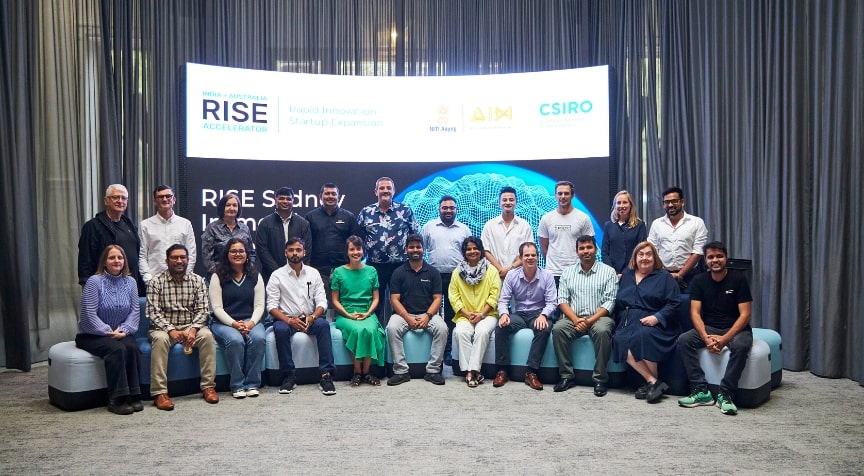
The inaugural cohort of the India Australia Rapid Innovation and Startup Expansion (RISE) Accelerator has been announced, with 15 Australian and Indian startups and small- to medium-sized enterprises (SMEs) selected to participate in Round 1 of the Program. 

India-Australia Rapid Innovation and Startup Expansion Accelerator

India-Australia Rapid Innovation and Startup Expansion Accelerator (RISE) is an exciting and unique bilateral innovation program that will support Indian and Australian entrepreneurs and SMEs on their commercialisation pathways to launch innovative technology solutions to market that tackle our shared national challenges and priorities – such as the circular economy, the energy transition and food system resilience.

A partnership between CSIRO and Atal Innovation Mission (AIM), and supported by the Australian and Indian Governments.

India-Australia Critical Minerals Research Partnership

The India-Australia Critical Minerals Research Partnership (IACMRP) will work with Indian and Australian researchers, industry and government to deliver a range of projects over a 3.5-year period that aims to unlock commercial benefits of commencing, improving and integrating Indian and Australian critical minerals value chains.

India-Australia Green Steel Partnership

The India-Australia Green Steel Partnership (IAGSP) will deliver a range of research, technology and commercialisation projects over a 3.5-year period that aim to accelerate the decarbonisation of the iron-steel value chain in India and Australia.

These Partnerships have gained momentum and the India-Australia Minerals Scholars Network has been identified as a specific initiative that sits under both the IACMRP and IAGSP partnerships.

India-Australia Minerals Scholars Network

The India-Australia Minerals Scholars Network (the Scholars Network) will focus on enhancing Green Steel and Critical Minerals capabilities and connections. It is intended to be a 3.5-year initiative co-funded by the India-Australia Green Steel Partnership (IAGSP) and the India-Australia Critical Minerals Research Partnership (IACMRP).

INTO INDIA can only say – keep up the great work CSIRO.

Australian banker says “this is India’s century”

This is the best, strongest vote of confidence in India from one of Australia’s leading corporations.

Mark Whelan, Group Executive at ANZ: “The time is very much appropriate to grow here. If you look at the basics of the Indian economy and where its place is in the world, this is India’s century”.

Rufus Pinto, Country Head, India, Australia and New Zealand Banking Group, outlined the rapid recent growth of ANZ in India: “ANZ India started our Institutional Banking operations in 2011. 13 years of existence across three branches today with over 80 bankers supporting the top Financial Institutions; Local Large Corporates and MNC’s working together with our home markets of Australia and New Zealand, and ~30 markets in our global network providing our clients a seamless agile offering.

“ANZ in India today house almost 20% of our global workforce, with our Global Capability Centre in Bengaluru,” he said.

This is change on a grand scale for a leading Aussie company.

Yes, this is India’s century.

Time to get on board?

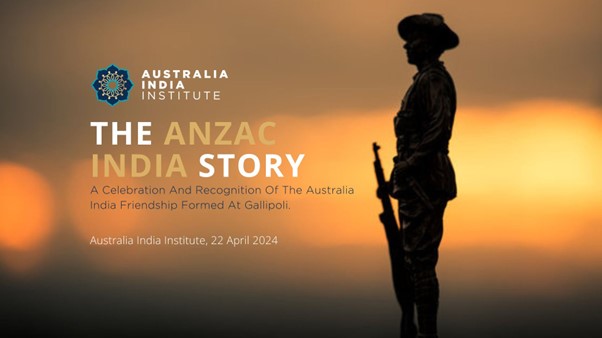
Did you know Gallipoli played a huge role in Australia-India friendship?

Congratulations to the Australia India Institute for this celebration.

The Australia India Institute has celebrated the untold history of the ANZAC-India relationship formed at Gallipoli in 1915. 

Serving alongside the ANZACs for their entire campaign were troops of Britain’s Indian Army – gunners and drivers of two Indian mountain batteries. An Indian infantry brigade and a large Supply and Transport force soon joined them, with over 16,000 Indians serving on Gallipoli. 

The Institute hosted the untold story of the Anzac-India friendship, with one of Australia’s most distinguished military social historians Professor Peter Stanley.

He shared the role Indian troops played and the remarkable positive relationship that grew at Gallipoli between Anzacs and Indians.

Assistant Foreign Minister Tim Watts and Indian Consul General Melbourne Dr. Sushil Kumar, were part of this significant event. Indian Veterans who attended.

As part of this celebration of this unrecognised history, Mark Trayling presented the Bahadur painting to the Institute. The Bahadur painting was painted-by-mouth by Mr Ghosh, a resident of the Paraplegic Centre for Armed Forces in Pune, India. 

Can renewable energy vastly improve incomes and jobs for Australia’s First Nations people?

Can renewable energy vastly improve incomes and jobs for Australia’s First Nations people?

It seems the two might be about to come together.

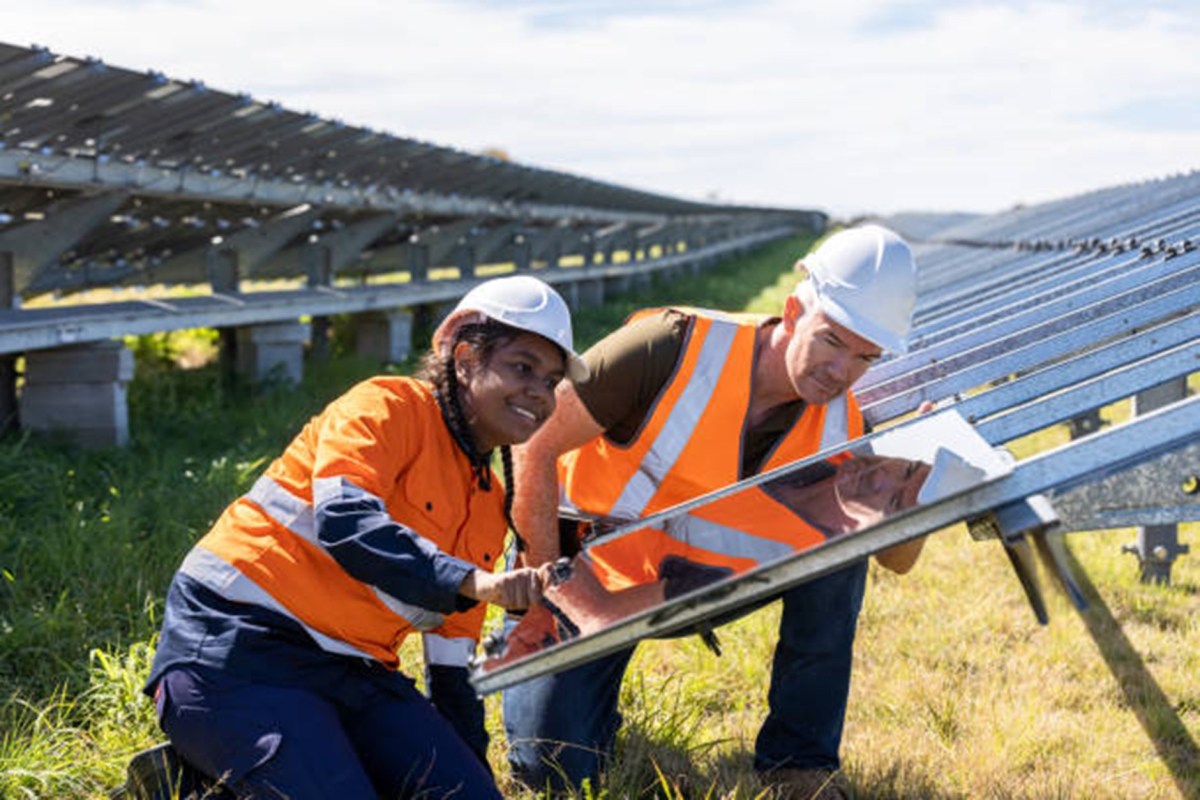
Australia’s plentiful solar and wind resources and proximity to Asia means it can become a renewable energy superpower. As the renewable energy rollout continues, Aboriginal and Torres Strait Islander people could benefit.

Renewables projects can provide income and jobs to Aboriginal landowners. Access to clean energy can also help First Nations people protect their culture and heritage, and remain on Country.

It seems Canada and the United States are already on this path.

The Australian government is developing a First Nations Clean Energy Strategy and has sought comment on a consultation paper. Submissions have closed, but If, like me, you feel strongly about the issue, have your say to Government and to MP’s.

This could be a gamechanger for Australia.

As an “energy superpower”, selling power to India and Asian neighbours, we make a difference for them, gain new export markets and create a big shift in how Australia is perceived in the region.

By speaking up, you can help our government do what is so obviously the right thing.