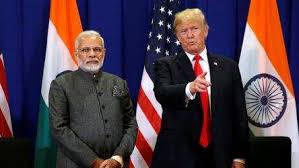
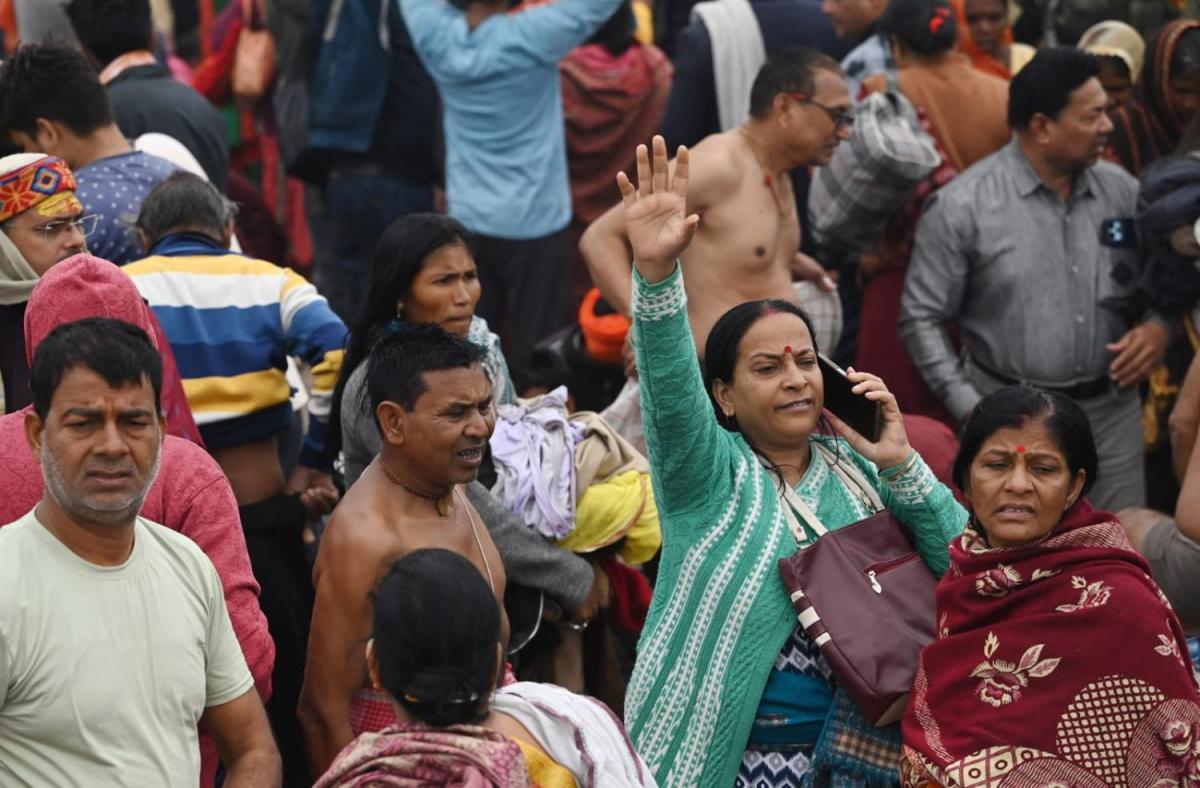
Trump’s “transactional and mercantilist” approach to trade will test India in 2025

India at risk as Trump’s trade policies do not distinguish between friend and foe.

One certainty of 2025 – the terms of trade are set to change.

For India, this presents a major economic risk.

Trump has made trade a big focus of his second term as President of the USA – he is expected to upend the $24 trillion world goods trade and possibly the $7.5 trillion services trade.

This puts at risk India’s largest export market – the US.

The US has also been an important supplier of capital.

The US consumes as much as a fifth of India’s exports —  led by two shiny new growth spots in phone manufacture and global capability centers — and is also among the biggest sources of fund flows, reports Bloomberg’s India Edition, written by Menaka Doshi.

Australia well knows that Trump’s trade strategies do not distinguish between friends and foes – as one of the USA’s closest defence allies, Australia was a major victim of Trump’s anti-China moves.

India could be hard hit this time around as he continues a “transactional and mercantilist” approach to trade.

India and Australia should be making the final negotiations on a trade deal a top priority.

Is India the new China?

The stunning economic rise of India is causing a re- think – in 2023, India’s GDP was US$14.54 trillion, the world’s fourth largest economy, behind the United States, China and the European Union.

But what is prompting a rethink by many countries is India’s annual GDP growth of 7.6% – now outstripping all those other countries. India could match China’s 2023 GDP of $34.64 trillion in 14 years. On top of the growth rate advantage, India’s population overtook China’s in 2023, and the “demographic dividend” is kicking in.

This growth comes with an interesting twist, no doubt occupying minds in Washington and Beijing.

India’s military expenditure is now third behind the US and China.

When it comes to regional security in the Indo-Pacific region, India now counts as a major player. In addition to defence spending, location of this large landmass (the world’s seventh largest) means India is pivotal to trade routes crossing the Indian Ocean, as well as being close to China, the preeminent trading nation at the heart of the Indo-Pacific region.

Someone who is well aware of the growing power of India is of course Prime Minister Narendra Modi, a strong leader who stands as an equal with Chinese President Xi Jinping and soon-to-be President of the USA, Donald Trump.

The big question for countries like Australia and New Zealand is where do we fit in with this new scenario, who is listening to us, what does emerging “multi-lateralism” (championed by India) mean for us and how can future trade be assured?

Our diplomats and trade people are well placed and respected in New Delhi – but as the position of India becomes stronger, the diplomatic skills of both Australia and New Zealand will be needed to define our place in what is a new order.

Thanks to Chris Ogden, Associate Professor in Global Studies, University of Auckland, Waipapa Taumata Rau, for some of the above data.

Australia sets impressive trade records which newsrooms refuse to report

Australians are not good at celebrating good news – and some of the good news they don’t even get to see on major media.

Trade performance is a good example.

Australia has an outstanding national trade body – Austrade – with talented people around the world promoting our products and services.

In many countries – including India – most of our states also have Government offices working hard to build trade and investment.

They have been incredibly successful.

Of the 35 advanced countries in the Organisation for Economic Cooperation and Development (OECD) who reported last year’s exports to the World Bank, only three increased exports relative to gross domestic product (GDP) over 2022.

Of these, Australia’s expansion was the strongest.

The World Bank also affirms Australia’s ascendancy.

The World Bank’s development indicators show export and import outcomes for 138 economies from 1974 to 2023.

The World Bank measured Australia’s 2023 exports at a record 26.7% of GDP.

The success story continues…

Of the 35 advanced OECD member economies for which the World Bank has recorded last year’s export volumes, 17 experienced a decline. These include normally robust economies Ireland, Germany, the United Kingdom, Netherlands and Belgium.

Only 18 increased their exports over the previous year. Just four managed an improvement of more than 5%. Australia ranked third with 6.5% behind Denmark and Costa Rica.

Well done all those Australian providers of quality export goods and services.

Well done, Aussie!

Might change your life – or you might just have fun. Gurudev coming to Australia in October

“An Evening with Gurudev Sri Sri Ravi Shankar” is coming to Melbourne, Sydney and Perth in October.

I love this Art of Living program.

If you can get tickets – go! For Melbourne:

For me, it involves breathing techniques that lead to such a relaxed state of bliss. And attendees are fun people to be around.

At second level of what I like, Gurudev does not ever complicate things – he provides simple wisdom.

A Life Changed – think about this quote:

In my 20s, I was consumed by depression and everything felt hopeless. One day, my sister told me about a nearby event featuring a talk and meditation session with Sri Sri Ravi Shankar. As soon as I walked in, I felt something shift inside me. His words seemed to answer the questions in my mind, and I was filled with peace I had never known before.

After the session, meeting Gurudev in person was an experience beyond words. It was as if a heavy burden had been lifted off my shoulders. The bliss and boundless energy I experienced stayed with me for months. When this initially faded, I began addressing my depression, but this time with a much calmer and more peaceful approach. Because I learnt the SKY breathing practice with the Art of Living, it has changed my life for the better. I have accomplished things I once thought impossible and have found inner peace.

https://www.artofliving.org/au-en

How India can become the “next China”

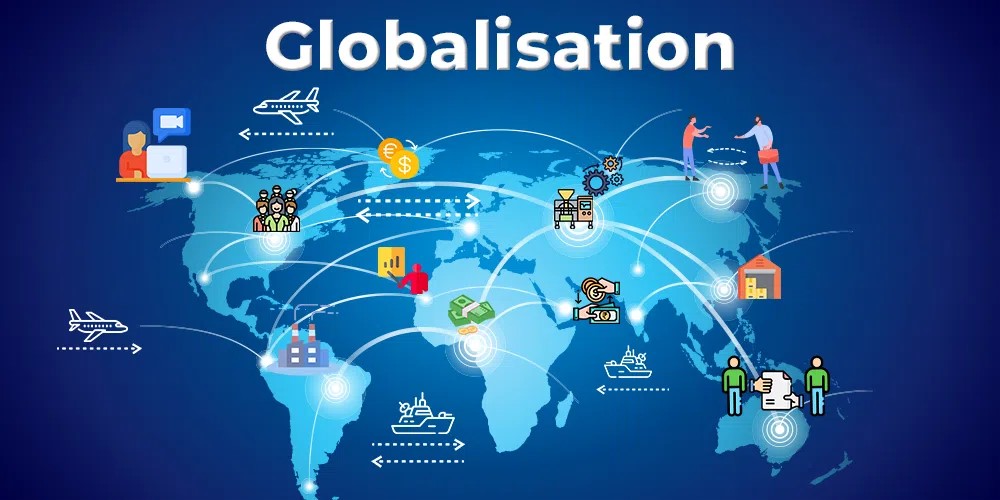
Globalization worked so well for China, but is stressed today

It’s complicated.

Mainly because of the rise of protectionism worldwide.

The Chinese miracle rode on the wave of globalization that began around 1980 and lasted until the 2008 global financial market crisis.

Globalization has come under severe stress lately, according to Amit Kumar, a research analyst with the Takshashila Institution’s Indo-Pacific studies program.

Weaponizing trade has left nations increasingly wary of economic coercion.

Self-sufficiency in some form or other is back in fashion. PM Modi is super keen on self-sufficiency for India.

If globalisation is too restricted, India’s ambitions might be thwarted. India could well have shot itself in the foot here, with it’s own anti-globalism and scepticism on international trade deals.

Gains for India will however be derived from the ongoing de-risking and “China plus one” strategies.  

India – unlike China during its growth – faces tough competition from Vietnam, Thailand and Malaysia. India attracted 15% of European investment diversifying away from China, but it fell behind ASEAN, which attracted 21% of the rerouted investments.

India is also lagging on ease of doing business. INTO INDIA has praised India’s progress, but must admit that it is now too slow. Ease of doing business has to leap ahead.

India currently contributes 16% of the global economic growth, as opposed to China’s 34%. The IMF predicts India’s share to rise to 18% in the next five years.

As China witnesses a decline in its share owing to its economic slowdown, we are led to conclude that India should emerge as the leading engine of growth.

With one reservation – “Ease of doing business’ could be the key.

Perhaps India CAN become the ‘next China’ and drive global growth

India’s consumer base is rapidly growing – pic from a Delhi mall

Since INTO INDIA has been involved with India, the mantra from economists and diplomats has been that “India is not the next China “. Is that about to change?

It could be, according to Amit Kumar, a research analyst with the Takshashila Institution’s Indo-Pacific studies program.

China has been top of mind for good reason – contributing more than a quarter to global gross domestic product expansion between 1990 and 2020. In the period from 2013 to 2021, China contributed almost 39% of global GDP growth — 13% more than the G7 countries combined.

How could India become the next China?

India would need to sustain a near double-digit growth rate for nearly three decades.

It would need to integrate with the global manufacturing supply chain, transition into an export powerhouse and attract enormous foreign investment.

But 40 years ago, we would have said the same things about China.

China’s rise from the 1970’s was boosted because of the deepening U.S.-Soviet rivalry and the Sino-Soviet split, prompted the US and the West to open up to China in 1971.

This is happening now with India.

Due to the deepening strategic competition with China, Beijing’s expanding diplomatic and economic clout, its belligerent foreign policy and economic coercion, has sparked concerns of overdependence and strategic vulnerability in the West.

India is emerging (has emerged?) as the preferred partner for the West.

We should not forget that China’s growth was also driven by global businesses looking for cheaper manufacturing.

This is now happening with India. Global firms now see India as an alternative to China.

The Indian Government has already supported high-profile projects involving the manufacturing of iPhones and the assembly of semiconductors – sending an “invitation” to others.

China also had a rapidly growing consumer base. No other Asian country had such a base – until India.

India has the second-largest consumer base – defined as people spending above $12 a day – of over 500 million, second only to China’s 900 million. Estimates show that by 2030, India’s consumer base will expand to 773 million, trailing only China’s 1.062 billion.

The gap between China and India will only shrink from here on.

NEXT BLOG – What India has to do to become the next China.

Just quietly, the “gig economy” is changing how we work and India is a good example

India’s gig economy is rapidly expanding, with predictions that the workforce will grow from 7 million in 2021 to 23.5 million by 2030.

This growth is stunning and signals a major shift in how we work.

INTO INDIA sees the gig economy as offering flexibility for both sides, remote working and other opportunities.

But the reality of being self employed is that you can also be “self unemployed”.

You can see why employers are so keen on this – providing access to a diverse talent pool while cutting costs. As companies embrace gig work, sectors like pharmaceuticals and technology are increasingly relying on freelance experts to meet their needs.

The gig workforce is growing – but it is still a tiny percentage of the total workforce – in India expecting to go from 1.5% in 2021-22 to 4.1% by the 2029-2030 financial year.

The pandemic is responsible for most recent changes in everything – and this is no exception.

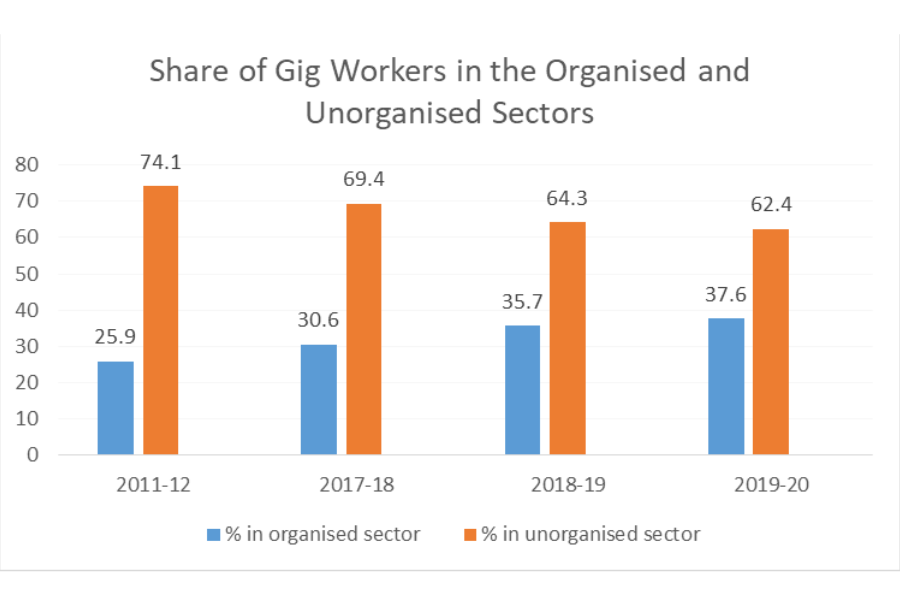
Globally, the gig economy is expected to reach a gross volume of $455 billion by 2023, up from $368 billion in 2021. In India, there is a noticeable increase in organized sector gig work compared to a decline in the unorganized sector, reflecting a growing trend towards investing in gig workers.

Source: NITI Aayog Report

INTO INDIA notes that trust between gig workers and employers is improving, with longer project durations becoming more common. Kapil Joshi, Deputy CEO of Ques Corp, observes that the average tenure for freelance projects has increased from 9 months to over a year since the pandemic, indicating growing trust in freelance coders for larger projects.

Historically, “flexibility” has meant flexibility for employers at the expense of employees. But this one might be different, because employees (some) are demanding gig work in preference to full time jobs.

We’ll see how this one goes over time.

Xentrix Studios Australia Animated Cricket Series ‘Snick and Willow’ to add real spin to our India relations

Xentrix Studios Australia has created a brilliant animated cricket series which will score big runs in both India and Australia – bringing us closer together on our favourite topic, cricket.

Don’t read what I say – watch this and be impressed…

The whole project is championed by famous cricketer Lord Ian Botham and was developed in collaboration with parent company, Xentrix Studios India.

Ken Cantrill, Head of Creative of Xentrix Studios Australia and Co-Creator of Snick and Willow. “The series is destined to be a massive success.”

Lord Ian Botham
Lord Ian Botham

This series is more than cricket, bridging cultures and inspiring young audiences worldwide. That is why INTO INDIA is so excited.

It educates about teamwork, courage, and the spirit of sportsmanship.

Can’t wait for it to come out – rumour is it will be launched during the Australia vs India Boxing Day Test this summer in Melbourne.

Want to know more about Xentrix?

https://www.xentrixstudios.com/

Australia India two-way trade now over A$50 billion

Great news from Austrade – two-way trade between Australia and India has reached around AUD 50 billion!

INTO INDIA has been active in this space over 20 years, and for most of this time our trade remained stagnant.

This recent growth is a tribute to the folks at Austrade, as well as State Government offices and all the organisations promoting the relationship. And of course highest praise goes to the brave companies that are finding a way in the Indian growth market.

Healthcare is a good example of the opportunities ahead.

The recent Indian budget 2024 signals the Indian government’s resounding commitment to provide equitable healthcare services across socio-economic spectrum with special coverage of “missing” middle class.

The Indian government is scaling up their focus on digitalisation of the public healthcare system, tariff reductions on some critical pharmaceutical drugs and MedTech devices.

Good news across the board – the budget also involves notable reductions in corporate taxes for foreign companies.

As India continues to grow as a preferred commercial destination, connect with organisations such as the Australia India Chamber of Commerce, with Austrade and with State Government offices – they can all help with the pathway to India.

Melbourne ranked 5th best global city for international students

My home town – Melbourne – is number 5 on the list of best global cities for international students. It’s quite and achievement! At the same time, international students make our city even better.

The ranking was according to the QS Best Student Cities 2025, and is a testament to its vibrant cultural scene, exceptional academic institutions, and inclusive atmosphere.

University of Melbourne Deputy Vice-Chancellor (Global, Culture and Engagement) Michael Wesley has become a real champion of the vital role international students play in the life of our cities.

He noted, ‘Melbourne being ranked as the 5th best student city globally is a remarkable endorsement of our vibrant, inclusive, and culturally rich environment. It reflects the University of Melbourne’s commitment to providing world-class education that is deeply integrated with diverse global perspectives. This ranking affirms our commitment to fostering a diverse and dynamic community that prepares students to thrive in a globalised world’.

Ranked among the best

At the core of this thriving educational landscape is the University of Melbourne, which continues to set the benchmark for excellence and global engagement.

The University has a great appeal – it is the highest-ranked Australian university across three major global rankings. Currently, it is ranked number 13 in the world according to the Quacquarelli Symonds (QS) World University Rankings, 37 in the Times Higher Education World University Rankings, and 35 in the Academic Ranking of World Universities. The University’s efforts to tackle the world’s greatest environmental and social issues saw it jump 42 places to be ranked ninth best in the world in the 2023 QS Sustainability Rankings.

International student community

A significant factor contributing to Melbourne’s high ranking as a student city is its vibrant international student community. At the University of Melbourne, international students constitute 45% of the total student population, representing over 150 nationalities. The largest cohorts hail from China, Indonesia, India, and Malaysia, reflecting the University’s appeal to top-tier students from the Asia and Pacific region.

We all benefit from having international students!

These international students enrich the cultural fabric our campuses and enhance the educational experience for all students. Domestic students benefit from the diverse perspectives and global networks that their international peers bring, preparing all students for success in a global economy.

READ MORE:

https://about.unimelb.edu.au/news-resources/awards-and-achievements/announcements/melbourne-top-5-global-destination-for-studying-abroad/_recache