Bengaluru is India’s “must visit” city for all kinds of tech

New research based on data by Dealroom.co data and analysis by London & Partners – the Mayor of London’s international trade and investment agency – found Bengaluru as the world’s fastest growing tech ecosytem.

Bengaluru, often dubbed the Silicon Valley of India, has firmly cemented its tech credentials. The second Indian city was Mumbai, which made it into the top 10 fast-growing ranking at sixth place.

While Bengaluru, the capital city of the southern Indian state of Karnataka, grew 5.4 times from $1.3 billion in 2016 to $7.2 billion in 2020, the Maharashtra capital of Mumbai grew 1.7 times from $0.7 billion to $1.2 billion in the same period.

Bengaluru is also ranked sixth for the world’s tech venture capitalist (VC) investments, on a global list topped by Beijing and San Francisco, New York, Shanghai and London making up the top five. Mumbai comes in at No. 21 in the worldwide ranking, with Boston and Singapore among the other high-ranking cities.

Bengaluru is dynamic and global in feel, with sleek offices and countless quality bars and restaurants.

It used to be India’s “garden city” but has become a global “tech city”.

For EdTech, MedTech, AgriTech and in fact “any Tech”, Bengaluru is your India starting point.

It is also home to the dynamic Victorian Government Business Office led by Michelle Wade – essential to talk with them about your India entry plans.

India a prime target for Aussie exports and investment – Austrade

Austrade’s Ashley Brosnan puts the case for Australian businesses to quickly get into India:

Australian businesses continue to see opportunities across a range of sectors including education, mining and resources, infrastructure, agri-food, and digital services. Thanks to the steady success of some great Australian brands, Australia is already a trusted supplier and investor.

However, India remains a challenging place do business. Expansion requires a high degree of market literacy and on-the-ground experience. Local partners help exporters and investors to navigate markets and regulation – and these partners can prove invaluable.

Despite this, the Government of India has signalled that India is ‘open for business’. It is emphasising investment and competitiveness as factors that will support the economy and encourage a return to growth.

The effects can be observed already in global rankings. India has moved up 63 places in the World Bank ‘ease of doing business’ rankings in recent years.

Austrade is helping Australian companies to explore India

The Australian Government is investing heavily in developing commercial links between Australia and India. The Australia-India Comprehensive Strategic Partnership agreed by Prime Ministers in June 2020 creates further opportunities for Australian business.

The Partnership seeks to build supply chain resilience between the two countries. It strengthens and diversifies trade and investment links with a focus on education, critical minerals and technology cooperation.

Today, Austrade posts across India are working intensively with Australian businesses to understand market, identify opportunities, make connections and help companies negotiate contracts.

India consumer spending skyrockets

India’s consumer spending a “revolution”

Austrade’s Ashley Brosnan on India’s consumer spending “revolution”:

The biggest revolution taking place is the rapid rise of a huge, diverse and wealthy consumer market. Despite the impacts of the pandemic, domestic demand is likely to be a major driver of recovery and growth over the next decade, making up 60% of the overall economy.

E-commerce is taking off as smartphone usage multiplies. India already has over 1 billion internet users and the digital economy’s contribution to GDP is projected to grow 15–20% by 2024.

Incomes are also rising strongly. India’s median income per household is expected to reach A$13,867 by 2025. The World Economic Forum considers that consumer expenditure in India will grow by a factor of four up to 2030.

This means over 80% of Indian households will be middle-income in 2030 – an increase of 140 million. Another 20 million will be considered high income.

India’s emerging and aspirational middle class is seeking premium food and beverage, healthy lifestyle products, technical infrastructure, quality healthcare and education, entertainment and consumer goods.

Trends in consumer demand are encouraged by a substantial, highly-skilled Indian diaspora in Australia, which is set to number 1.4 million in 2031.

India growth 2021 12.6% – the only world economy to be over 10%

Prime Ministers Modi and Morrison are close – and should talk more about trade.

Rapid recovery in 2021

Austrade’s Ashley Brosnan points to India’s post-coved economic recovery based on fast rollout of the vaccine, falling caseloads, economic stimulus and Foreign Direct Investment – it has every angle covered:

The OECD projects that India’s economy will grow 12.6% in 2021. This will make India the only major country to achieve double digit growth in 2021.

It should be acknowledged that the Indian economy is among the worst affected by the pandemic, which has resulted in strict, multi-month lockdown restrictions. GDP fell 10.3% in 2020 damaging household income and business confidence.

But rapid economic growth in 2021 will be driven by an expansive vaccine rollout, falling COVID-19 caseloads, and extensive economic stimulus.

Not forgetting that India is now a top 10 destination for Foreign Direct Investment.

Deakin University again leads the way with India

When organisations ask how to engage with India, the answer can be found in how Deakin University has built the India relationship.

Deakin has demonstrated patience, long term commitment, adaptability and real community engagement with India.

Their latest announcement takes it to another level:

“Deakin University’s relationship with India has been a key part of who we are for more than 27 years. Our Indian students and staff are an integral part of the Deakin community and we have been shocked and saddened seeing the COVID-19 crisis unfold. 

“After careful consideration about what we can do to help make a difference to the Indian community, we’ve decided to join forces with our long-time partners, Tata Trusts, through their initiative ‘One Against COVID-19’ to lend financial support and encourage our community and partners to do the same.

“Funds will go to the areas most in need, specifically to aid with:

  • Repairing/upgrading facilities
  • Staff training, and
  • Expert project management to improve the efficacy and efficiency of the health response

“These funds would be in addition to the existing Student Emergency Assistance Fund which supports Deakin students experiencing financial distress and would go directly to the individuals and public services in need in India.”

To Vice Chancellor Iain Martin and Ravneet Pawha, Deputy Vice President Global – well done for shining a light in the relationship with India.

India could be world’s third largest economy as soon as 2030

Two facts demonstrate India’s amazing economic growth:

First, today India is the world’s 6th largest economy.

Second, as soon as 2030, it is likely to be the 3rd largest.

Mugunthan Siva, CEO of India Avenue Investment Management (Sydney and Mumbai) makes a compelling case for India focused, actively managed high conviction funds and the investment themes he likes include technology, manufacturing, construction, rural, real estate, B2B and market share leaders.

You can read more here:

https://www.livewiremarkets.com/wires/why-india-could-be-third-placed-by-2030

India Avenue website:

India’s millennials drive a shift to consumer demand

India’s millennials – what a shock – are borrowing for consumables.

This is a massive generational shift in India where previous generations believed in first saving and then buying – even if it took years or ultimately going without.

Consumer credit companies such as TVS Credit and Bajaj Finserv have been increasing the share of their offerings to these niche segments not covered by conventional lenders and NBFCs.

The loans are known as EMI’s (equated monthly instalments) and are used to buy various goods, including mobile phones, consumer durables and small-ticket items on easy, no-cost EMIs via loans or credit cards.

It is the segment of youthful, low-income but tech-savvy consumers that fintech lenders are targeting – half the small loans are of Rs5,000 or less.

The country’s largest AI-enabled consumer lending platform, ZestMoney, noted in a report that it had seen more than 125% growth in EMI funding.

E-commerce majors such as Amazon, Myntra, Flipkart, MakeMyTrip, Decathlon and Paytm, among others, have seen a substantial surge in online sales in the past year due to EMI financing schemes – and digital payments mean no cash.

The New India is not afraid of debt – signalling a major uplift in consumer demand for decades to come.

Indian startups – the real story

For decades Ashith Kampani has been in the Mumbai financial markets, giving him a front and centre seat to the Indian start-up environment. Here is his review – the real story.

Globally start-up names have become common in our lives – twenty years ago, today’s top names such as Apple, Google, Microsoft, Amazon, Facebook, Alibaba, WeChat, Baidu, Uber, Ola, Instagram, Slack, PayPal, Tesla, SpaceX, Flipkart etc. did not exist or barely made a mark in the mind of consumers. These brands have made it to the top of the valuation charts over the last two decades.

Each firm named above has been funded by the elite global VC and Private Equity firms. This trend continues.

India is still in the catch-upstage of having an organised and monitored ecosystem for its indigenous start-ups. In the Indian start-up ecosystem local ideas and local capital pools locally are mismatched.

Although Indian Angel and Seed investors have been on the rise, risk appetite has not increased.

What is needed to encourage investment? Local investors need a curator who will qualify founders, whet business models and create capacity building. This will allow deep tech to grow locally.

The areas that Indian needs to develop more efficiency in are BFSI (Banking, financial services and insurance), CPG(Consumer Packaged Goods), Smart Infrastructure, Health Care, Real Estate, Defence & Aerospace.

BFSI and Health Care have many start-up names where optimisation and efficiency levels have shown some improvement but many existing large players in Banking and Health Care are dependent on legacy systems which will require a large capex to upgrade.

In CPG & Smart Infrastructure there are fragmented players. Real Estate has many platforms, but they are part of a broken ecosystem as they are mainly matching and advertising platforms. Defence and Aerospace are a restricted sector due to government controls. However, India needs local start-ups to provide the “make & made in India” technology. This is urgently needed.

India based or born start-ups include PayTm, FlipKart, Ola, Oyo, Baiju, Swiggy, Zometo, Grofers, Nyakaa etc. They are all 10-12 years old. None of them have a dominant market share and are burning funds to acquire customers.

With a few exceptions, founders’ stakes are diluted below 15% ownership. I am OK with equity dilution as founders may have faced challenges initially to raise capital. However, if these early-stage capital pools were raised within India and in INR (Indian rupee) that would be preferable to an infusion of USD denominated funds.

Today hardly any start-ups are indigenously funded onshore in India. This is changing. Select names such as Lets Venture, angel groups which are city centric and micro-VC firms have started to commit between $100K to $1 Million in pre-seed or seed rounds.

India needs few hundred start-up names to work along with platforms like Lets Venture and a few more to provide risk capital.

Accelerators are scarce and should be encouraged to scale rapidly as well.

India also needs a centralised monitoring system on how start-ups are faring and what kind of ecosystem support is needed. These platforms can keep an eye on the progress of start-ups and create visibility and business opportunities for start­ups by bringing synergistic players on.

For example, start-ups can raise initial capital and receive visibility on the platform. They are then discovered by larger enterprises that need their services. Such platforms can be initially funded by enterprises (mid to Large) who shall have first access to the innovations of the nurtured start-ups.

Sector Analysis for India

CPG and Retail

There are four big players: Amazon, Flipkart, BigBasket, Reliance. The first three are attacking the market from an e-commerce angle with an internet front end paired with a warehouse back end. They negotiate hard with CPG players and offer attractive lower prices to consumers to as well as home delivery. The fourth, Reliance Retail has tied up with Kirana stores for last mile delivery and storage. However, Kirana may lose its business to Reliance Retail in the distant future.

Both the models pose challenges to existing small stores. Today 85% of FMCG & CPG sales are in single or small stores while Ecom and organised retail have a combined market share around 15% (other names like Delhivery, ShopX, Udaan, RingRing are still growing while some have given up).

BFSI

This is the most active and largest sector where digital offerings have taken the front row. Frontend players like Digital Lending / Neo Banks/ Payments/ Foreign Exchange offer services which compete with large banks and lenders. There are many players who digitise middle and back-ops for fintechs, lenders and banks.

Competition is fierce and it is a dog-eat-dog market where service levels and delivery are key as pricing is dictated via negotiated deals. Barriers to entry are also high. Large entrants such as Amazon Pay, Google Pay, Phone Pe Bharat Pe have been more visible than silent players like Razor Pay, Pine Labs, Pay U etc. New Neo Banks have been creating a buzz as well (Epify, Jupiter, Niyo, Ocare etc). I have not factored in Jio, but they have big plans in BFSI.

Smart Infrastructure

One of the biggest markets with select international players in this market as local start-ups do not have enough funding yet. Personally, I would watch this segment carefully as new Indian players enter.

Health Care

This is now a most vibrant sector thanks to the recent pandemic Covid19. Vaccine creation to efficient delivery is a large and needed segment. Connecting the health of each individual (with assessment) into a seamless hospital, insurance and finance model will make a positive impact on many lives. Today we have cashless health insurance, but it is a fragmented system. Start-ups are better positioned to offer a solution to repair such an awkward process.

Real Estate

Real Estate is also a broken system in India. Renting or purchasing needs to be repaired as the experience is not seamless. Only some parts are digitised, and none offers an end-to-end service. This is a totally broken experience and must be repaired end to end.

Conclusion

The Indian market of 1.4 Billion people needs many start-ups to create products and services which suits the needs of Indian people. The road ahead in India and South Asia is extremely optimistic as start-ups can simplify, digitise and link together transactions.

The market opportunity is vast but initial funding needs to be localised and customised to the India based entrepreneur. More platforms that can offer funding, visibility, sales and exit needs to be encouraged.

About the Author

Ashith Kampani has spent 38 years in capital market. Journey began with family stock broking firm on Dalal Street open outcry system to all digital online trading systems. During this journey he spent time with retail, wealth management, institutional equities, private equities, Investment Banking M&A and now in Venture Capital and early-stage Investment and advisory. Worked with JV partner Morgan Stanley and before stepping down he was MD at JM Financial. Currently Chairman at CosmicMandala15 Group & Member of Managing Committee Bombay Chamber.

Pat Cummins role model for how all of us can help India

Many of us in business relations with India are wondering what is the right thing to do in the midst of India suffering so much from the pandemic.

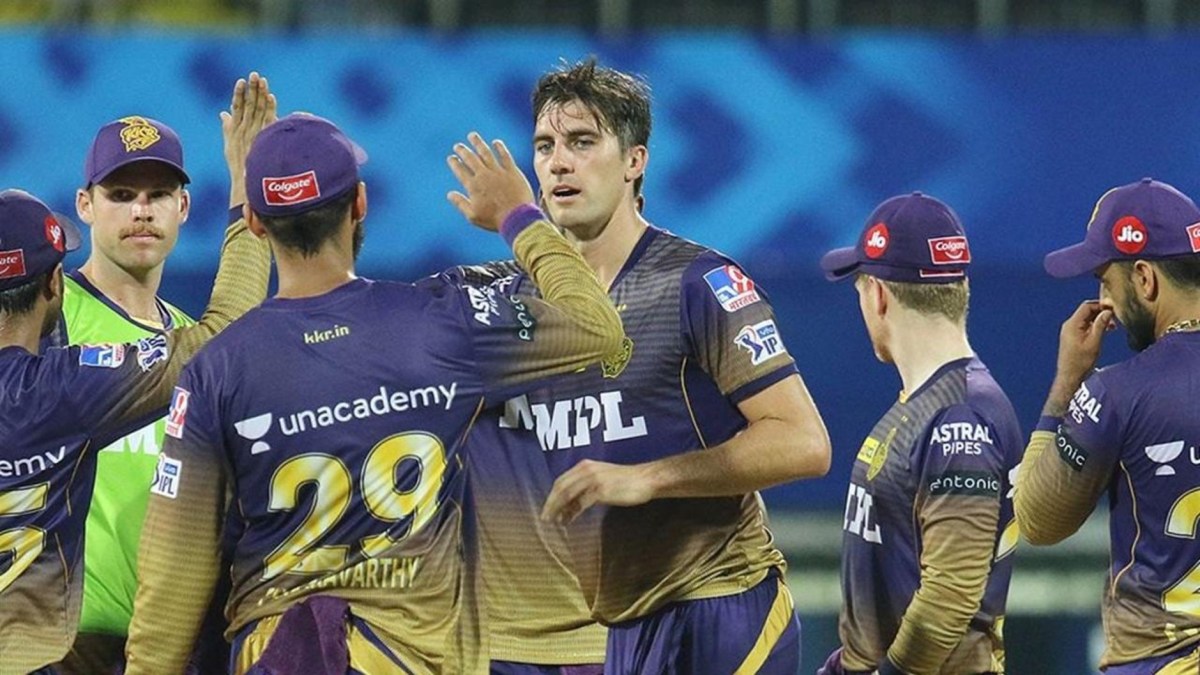
Pat Cummins has showed us what to do.

He is staying because IPL creates some joy for lockdown people – and he has made a big donation.

For business and trade the message is striking – keep in touch, build business relations and where you can, donate to support India.

Cummins has starred for the Kolkata Knight Riders so far this season.

The Australian superstar wrote on Twitter on Monday night to announce a donation in the fight against the virus, and to urge fellow cricketers to donate.

I am reproducing his entire Tweet because it is moving and inspirational:

“India is a country I’ve come to love dearly over the years and the people here are some of the warmest and kindest I’ve ever met.

“To know so many are suffering so much at this time saddens me greatly.

“There has been quite a bit of discussion over here as to whether it is appropriate for the IPL to continue while Covid-19 infection rates remain high. I’m advised that the Indian government is of the view that playing the IPL while the population is in lockdown provides a few hours of joy and respite each day at an otherwise difficult time for the country.

“As players, we are privileged to have a platform that allows us to reach millions of people that we can use for good. With that in mind, I have made a contribution to the “PM Cares Fund”, specifically to purchase oxygen supplies for India’s hospitals.

“I encourage my fellow IPL players – and anyone around else the world who has been touched by India’s passion and generosity – to contribute. I will kick it off with $50,000.

“At times like this it is easy to feel helpless. I’ve certainly felt that of late. But I hope by making this public appeal we can all channel our emotions into action that will bring light into people’s lives.

“I know my donation isn’t much in the grand scheme of things, but I hope it will make a difference to someone.”

India’s top ten business cities and what they are known for

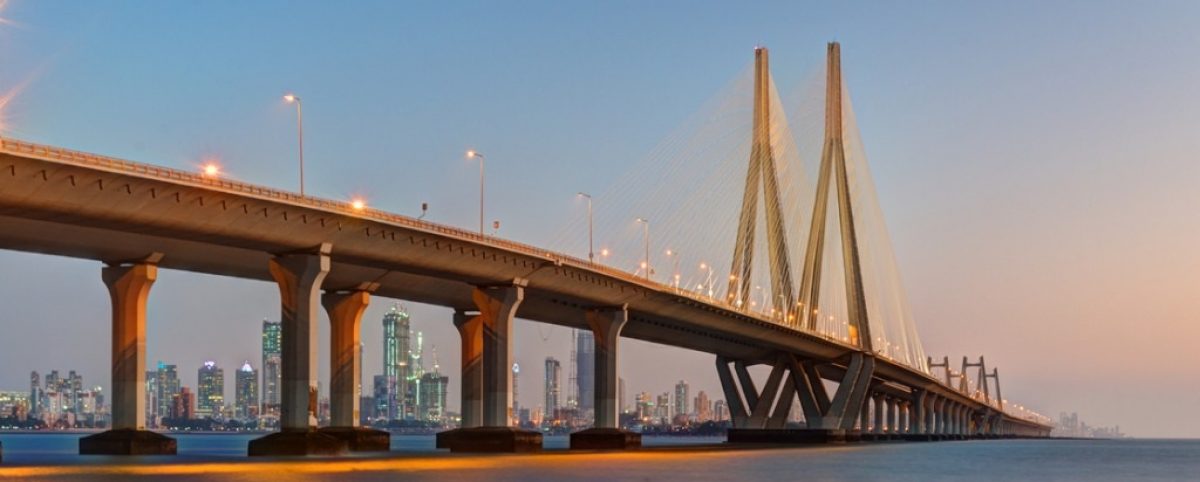
Mumbai – beautiful, never sleeps, the financial and commercial capital of India

Mumbai

Mumbai is the ultimate commercial and financial city of India – a true 24/7 powerhouse that never sleeps. It houses the headquarters of a large number of major Indian companies like Tata Group, Reliance Industries, Aditya Birla Group, Larsen & Toubro, Godrej Group, and Hindustan Petroleum among others. The city is also the headquarters of the Reserve Bank of India, National Stock Exchange, Bombay Stock Exchange, and – yes – Bollywood.

GDP (PPP) – 310.0 billion

Delhi

Delhi is the National Capital of India – and on a global scale, it is one of the great capitals of the world. It is also the most populous city of the country. Being the political center, Delhi is home to all the prominent political personalities and officeholders including the President, the Prime Minister, and distinguished ministries. Delhi is a metropolitan city and attracts a large part of the population from all the states. With the ever-growing rates of urbanisation, the city accommodates everyone and has a diversified economy.

GDP (PPP) – 293.6 billion

Kolkata

Kolkata – oh yes, I know it has a reputation as relaxed or even sleepy – but it was the capital of British India and houses India’s oldest stock exchange. Most people are not aware that more than 83 percent of the city’s population is employed in the tertiary sector. Kolkata is the third richest city in South Asia after Mumbai and Delhi. Kolkata is a house of many Indian corporations like Coal India Limited, ITC Limited, Britannia Industries, Allahabad Bank, National Insurance Company, and United Bank of India among others.

GDP (PPP) – 150.1 billion

Chennai

Chennai is one of India’s great southern cities with all the manners, politeness and conservatism that goes with it. It is the capital city of Tamil Nadu and sits by the Bay of Bengal. Given its glorious history and its significance as Madras Presidency during the British rule, Chennai is historically and culturally rich and diverse, attracting tourism in turn. Besides being a pioneer in art, culture, and music.

GDP (PPP) – 110.0 billion

Bengaluru

Bengaluru used to be called the “garden city” but today is better known for massive traffic jams. It has a “young” feel and houses some of India’s most trendy eating and drinking establishments. It contributes more than 35 percent of India’s IT exports. The city also houses some major manufacturing industries like Bharat Heavy Electricals Limited, Bharat Electronics Limited, and Bharat Earth Movers Limited among others. Infosys and Wipro have their headquarters in Bengaluru. The city is home to 8 billionaires.

GDP (PPP) – 86.0 billion

Hyderabad

Hyderabad comes across first as located in a dry and rocky area – but the city is known for its rich history, food, and its multi-lingual culture, both geographically and culturally. The city has an estimated population of around 8 million, making it 4th largest city in India, while the population of the metropolitan area was estimated above 9 million. Religiously and culturally, the city is united with Hindus, Muslims, and Christians.

GDP (PPP) – 75.2 billion

Pune

Pune, a place for learning, thinking and doing. Pune is a city located in the western Indian state of Maharashtra and now closely linked with Mumbai. It is the 8th largest city in India and the second largest in Maharashtra. India’s first Prime Minister called Pune “The Oxford of the East” because Pune attracts students from all over the world. There are a large number of good schools in Pune affiliated either with the Maharashtra State SSC Board or the All-India Indian Certificate of Secondary Education (ICSE) and CBSE boards.

GDP (PPP) – 69.0 billion

Ahmedabad

Ahmedabad was the historic home of Gandhi’s famous ashram and is now a dynamic commercial hub – it is one of the fastest-growing cities and is one of the best cities to live in. Ahmedabad is an economic and industrial hub of India and is the largest city in Gujarat. There are several significant companies located in the city and the place is known for the textile industry. This city attracts a large number of tourists every year as there are several amazing monuments along with numerous modern buildings. Have fun – go there during the amazing kite festival.

GDP (PPP) – 68.0 billion

Surat

Surat is known by several names – the silk city, the diamond city and the clean city – it is one of the cleanest cities in India and is the best developing urban community. Surat has the largest stone cutting and cleaning centers and is especially known for diamonds. Surat has a large textile industry and there are more than 380 dyeing and printing mills with 41,000 power looms.

GDP (PPP) – 59.8 billion

Visakhapatnam

Thankfully known by the shorter name of Vizag, this city manages to combine a powerful steel industry, major port and lots of natural beaty. It is a great economic destination that is also known as the financial capital of Andhra Pradesh. This coastal city is also known for its medication, programming, and pharmaceutical industry.

GDP (PPP) – 43.5 billion

(Thanks to multiple sources including INDIA TODAY for the above)