
Australian firm MoooFarm wins award for work in India

MoooFarm, co-founded by Australian Indian impact entrepreneur Param Singh (pictured below) has been awarded a winning prize of $30,000 for their breakthrough technology of ‘Facial Recognition of Cattle’ in the Agriculture Insuretech Innovation Challenge organised by the World Bank Global Index Insurance Facility.

param3

MoooFarm is an award-winning initiative that aims to increase income of 75 million small dairy farmers through capacity building, last mile extension and transfer of technology. Through its unique approach, MoooFarm addresses United Nation’s Sustainable Development Goals toward Gender Equality, Poverty and Responsible Production and Consumption.

MoooFarm, bagged a winning price of USD 30,000 by The World Bank Group in Data Analytics category for their unique solution of ’Facial Recognition of cattle’.

With an accuracy of 95.7%, MoooFarm was able to test the facial recognition model using deep learning technology. In the coming weeks, this breakthrough technology will reach each and every small-holder farmer via MoooFarm’s mobile based application and its network of Village level Entrepreneurs.

According to The World Bank Group, the Global Index Insurance Facility (GIIF), “helps smallholder farmers and micro-entrepreneurs gain better access to finance, manage financial losses, and protect their livelihoods against more frequent and more severe weather events…since 2009 it has facilitated more than 4.6 million contracts, covering over 23 million beneficiaries and $730 million in agricultural investments insured in more than 30 developing countries.”
Australia could benefit from Trump’s trade war with China

Here’s a very nice irony – Australia and India have really struggled to agree a Free Trade Agreement but one outcome of the Trump trade war on China is that the 15 countries in the Regional Comprehensive Economic Partnership (Including Australia and India) are now motivated to do a deal.

They are talking fast, negotiating hard and could come up with a sweeping deal this year that reduces the need for direct talks on an Australia-India FTA.

ModiMorrisonSmile2

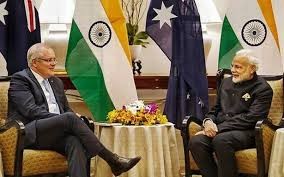
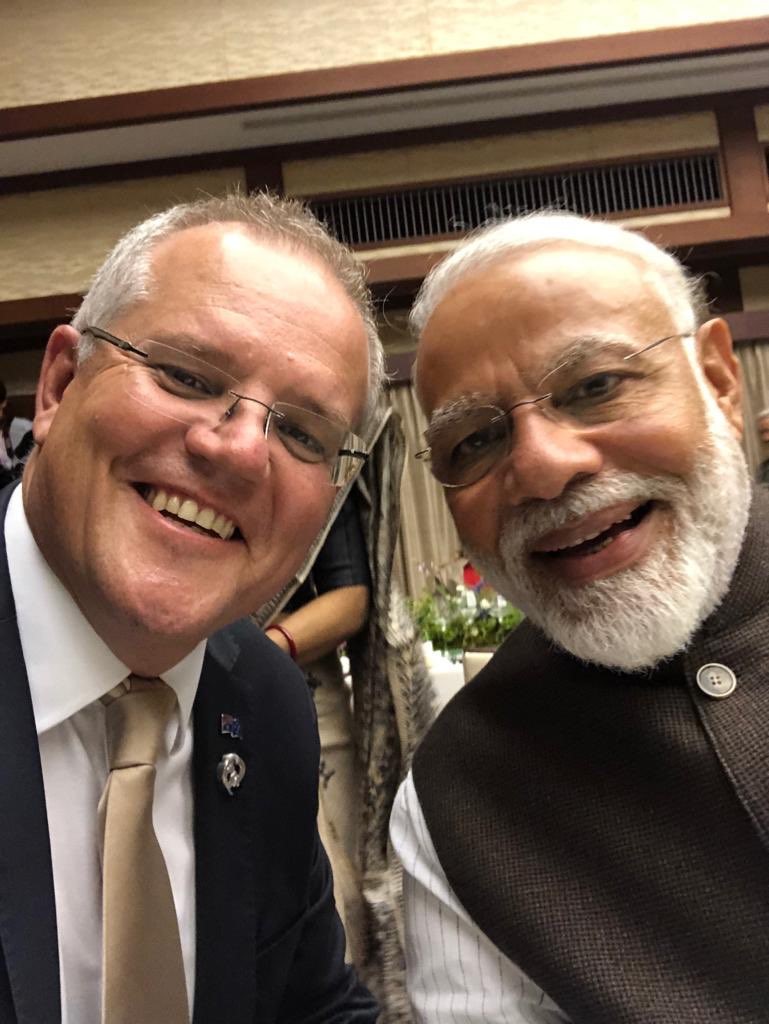
Australian PM Morrison (left) and Indian PM Modi – pretty happy about the future

RCEP will have the potential to deliver significant opportunities to Australian businesses and consumers. RCEP will cover ten of Australia’s top 15 trading partners, and collectively RCEP participating countries will account for a combined GDP of US$23.8 trillion (2016). These countries account for almost 60 per cent of Australia’s total two way trade, and over 65 per cent of our exports.

Thanks Donald.

Indian budget signals some shifts in education and skills training

The Indian Budget this month signalled continued commitment to free (free-er) market economy and was interesting in terms of education, skill development and related sectors.

The New Education Policy (NEP) is at the centre of reforms, set to bring major changes in school and higher education.

YoungIndians 2

Research is being given a big thrust with the National Research Foundation. Also, approx. US$60 million has been allocated to world-class institutions, signalling the continued thrust on excellence in higher education.

PM Modi is personally committed to having high ranking universities in India and some future deregulation is expected to allow greater global involvement – but nothing on this in the budget.

The finance minister also highlighted the ambitious Study in India programme, which has the potential to make India the hub of learning (again).

The National Sports Education Board is a much-needed initiative to promote sports amongst children who want to pursue that as a career.

We do hope the much-awaited Higher Education Commission of India (HECI) takes shape this financial year – still waiting on that one.

Aussie firm Atlassian sets up base in Bengaluru, India

Australian IT firm Atlassian, which provides its technology to customers such a NASA, Spotify and Lyft, has set up its global R&D Centre in Bengaluru and plans to hire 300 people.

This move by the Australian software developer firm shows it is betting big on the India market and its tech ecosystem. The company provides team collaboration and productivity software.

Atlassian Mike

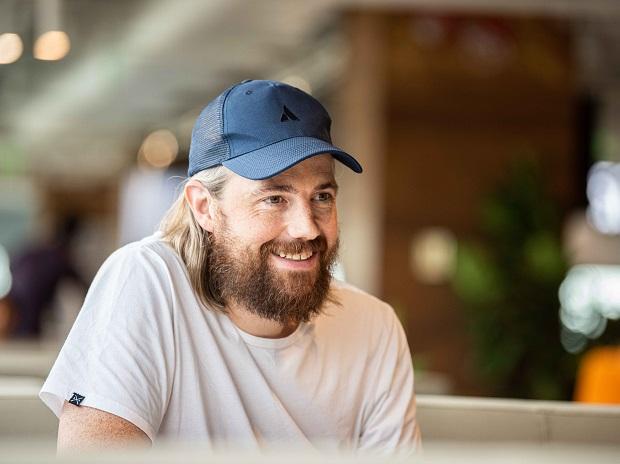
Mike Cannon-Brookes, (pictured) co-founder and co-chief executive of Atlassian, said in an interview. “It (India) is a big part of our growth plans as the company continues to grow very rapidly. We always try to build well-balanced R&D teams not just on the software side of the things but also design, product management, security and all the aspects that go into making great software products.

“One of the big advantages Bengaluru has is (the availability) of great talent in all those areas in one spot,” he added.

Indian budget to be presented today showing the way for Modi 2.0

The India Budget 2019 is due to be presented today by Finance Minister Nirmala Sitharaman (pictured).

This will be one of the most crucial Budgets for Modi 2.0 as it will become a guide for upcoming reforms and policies in the next five years of his government.

Modi2Promo

Come and learn more at our FREE Melbourne seminar (copy this and paste into your browser):

https://www.eventbrite.com/e/modi-20-journey-towards-greater-india-tickets-64489650280

‘Kithana acha he Modi!’ Morrison wrote in Hindi, which means “how good is Modi?”

The Australian Prime Minister took to Twitter on Saturday to share a cheerful selfie with Indian Prime Minister Narendra Modi — a fellow world leader attending the G20 summit in Osaka.

‘Kithana acha he Modi!’ Morrison wrote in Hindi, which means “how good is Modi?”.

Indian PM Modi replied in Aussie style – “Mate, I’m stoked about the energy of our bilateral relationship!”

ModiMorrisonSmile2

This relationship could be a key to a successful Regional Comprehensive Economic Partnership deal of 15 countries in our region – big step forward.

The personal connections of leaders can go a long way to overcome bureaucratic hurdles. Long may their relationship flourish!!

Let’s hope PM Modi and PM Morrison meet lots and do deals

Now, this is the kind of photo I would like to see a lot more of.

Australian PM Scott Morrison (left) and Indian PM Narendra Modi in discussions.

ModiMorrison2

This is vital for Indian Ocean strategic issues plus our trade and investment relations.

Here’s a very nice irony – Australia and India have really struggled to agree a Free Trade Agreement but one outcome of the Trump trade war on China is that the 15 countries in the Regional Comprehensive Economic Partnership (Including Australia and India) are now motivated to do a deal – they are talking fast, negotiating hard and could come up with a sweeping deal this year that reduces the need for direct talks on an Australia-India FTA.

Thanks Donald.


My interview with His Excellency Dr A.M. Gondane, High Commissioner of India to Australia – first extract “tariffs and trade”

One 12 June, I had the privilege of a one-on-one interview in Canberra with the Indian High Commssioner, Dr AM Gondane. Here is the first of a series of short extracts from that interview:

Gondane

Dr Gondane: “Australian tariff rates are low and ours are at a higher level. There are differences and we know that Australia is a very open economy. It is natural for Australia to desire Indian tariffs to match the Australian model, but this will take time. We have actually made a lot of progress and opened more than 90% of our tariff lines for restarting the negotiations.

“There are some sticking points, but I think, with careful negotiation and goodwill, the free trade agreement could be reached. Because India’s tariffs are higher it will naturally take longer to get them down.

“Both Australia and India are negotiating the Regional Comprehensive Economic Partnership (RCEP) forum (meeting in Melbourne this week) which could be another avenue for increased trade.

“The  RCEP provides good scope for commonality and the opening up of India and Australia economies – both are active in the RCEP,” the High Commissioner said.

The 15 Member countries of RCEP are Australia, India, China, Japan, Republic of Korea, Singapore, New Zealand, Malaysia, Indonesia, Brunei, Cambodia, Laos, Myanmar, Vietnam, Philippines. They are meeting in Melbourne this week.

Dr Gondane concluded with a wide ranging comment about the Indian Ocean region and pointed to Prime Minister Modi’s vision for the Indo-Pacific:

Modi oath

“The period of doubling of Indian economy has reduced and we can reach US $ 5 trillion within the next few years. We are already the fifth largest economy in nominal terms and third largest in purchasing power parity. That is why the Indian Prime Minister has elaborated on what is our conception of the Indo-Pacific.  Australia is an important partner in the Indian Ocean. These two powers will be of great consequence in the next twenty years.”

India-Australia trade relations set to grow at critical time

Many of us have championed closer economic ties between Australia and India. It is now more important than ever to get closer to India.

As Austrade expresses it – “With trade wars, powerful neighbours, and the odds on a recession narrowing within the next two years, considering Indian market entry has never been more mission-critical for Australian business.”

AusIndiaFlags

Some key statistics:

•In 2018, Australia’s total exports to India grew 10% to A$22.3 billion. India ranked number five in Australia’s export destinations.

•Two-way trade increased by a similar percentage to A$30.4 billion, making India Australia’s sixth largest two-way trade partner.1

•Australian investment in India increased almost 12% to A$15.6 billion, slightly ahead of India’s investment in Australia at A$15.1 billion.

However – and here is why Australia needs to balance trade – according to the Australian Bureau of Statistics, in 2016–17 (the latest year for which there is data), only 2,087 exporters engaged with India, compared to 7,214 for China.

Time to think India.

Family businesses in India are the world’s most upbeat

Family businesses in India are on a growth trajectory, with 89 per cent of them expecting to grow in the next two years, according to a survey.

The global survey, ‘Family Business Survey 2019’ by PwC, was done among 2,953 family leaders across 53 countries, including 106 family business leaders, between April 20 and August 10, 2018.

The survey has revealed that 89 per cent of family businesses in India expect to grow in the next two years, with 44 per cent of them looking at growing aggressively and 45 per cent expecting steady growth.

“Regulatory changes are getting family businesses to bring in order and professionalise the business, and disruptive technology is pushing them to transform. These new market dynamics are cultivating a renewed sense of ambition in family businesses, making them resilient in the face of change,” PwC India Partner and Leader, Entrepreneurial and Private Business, Ganesh Raju K said.

In terms of expansion, a little more than half of the family businesses are open to internationalisation, while 40 per cent are looking at diversification, the survey said.

Nearly half of the family businesses in India are open to mergers and acquisitions both within India and outside thus reinforcing the belief that inorganic growth will facilitate synergies and achieve incremental revenue, it said.

A lot of Indian family business owners are looking at private equity or venture capital funding or are looking at listing their business on stock exchanges.

Further, the survey said, more and more companies looking at professionalising their business functions are distinguishing between ownership and management as they feel partnering with the right talent might help family businesses to adapt to the changes.

About 73 per cent of Indian family businesses have the next generation working in the business and 60 per cent plan to pass on the management or ownership to the next generation.

It also found that 92 per cent of family businesses in India allow family members to work in the business. When it comes to spouses or partners, three-fourth of family businesses allow them to own shares and two-third allow them to work in the business.

BUT – there is some evidence the next generation of young Indians will want to branch out and create their own startups rather than the traditional path of joining the family firm.YoungIndians 2