These India numbers will boggle your mind but the future is more exciting

Here are some India and Australia numbers to contemplate:

(Thanks to Bill Cole, Partner International, BDO, pictured below, for some of this data)

billcole2

AUSTRALIA

  • Population: 24.6 million
  • GDP: USD 1.3 trillion
  • Top 5 Imports: Personal travel services, motor vehicles, refined petroleum and ships
  • Top 5 Exports: Iron ore, Coal, Education travel services, natural gas and personal travel services

INDIA

  • Population: 1.339 billion
  • GDP: USD 2.5 trillion
  • Top 5 Imports: Petroleum products, gems, electronics, chemicals and machinery
  • Top 5 Exports: Textiles, Gems, Chemicals, Products and Agricultural products

Top Trading Partners

Australia’s top 3 trading partners are China, Japan and the USA.

India comes in at number 7.

India’s top trading partners are China, USA and UAE, with Australia coming in at number 20.

So, what about the future?

asiamap8circle

Australia’s India Economic Strategy to 2035 Report:

  • Recommends that by 2035 Australia lift India into our top three export markets, make India the third largest destination in Asia for Australian outward investment and bring India into the inner circle of Australia’s strategic partnerships
  • Identifies 10 sectors where strengths of Australian businesses match India’s needs:
    • Education (flagship)
    • Agribusiness, resources and tourism (lead)
    • Energy, health, infrastructure, financial services, sport, science and innovation (promising)

It is sure a “big picture” report – but with the right approach it can be achieved.

ModiMorrisonSmile2

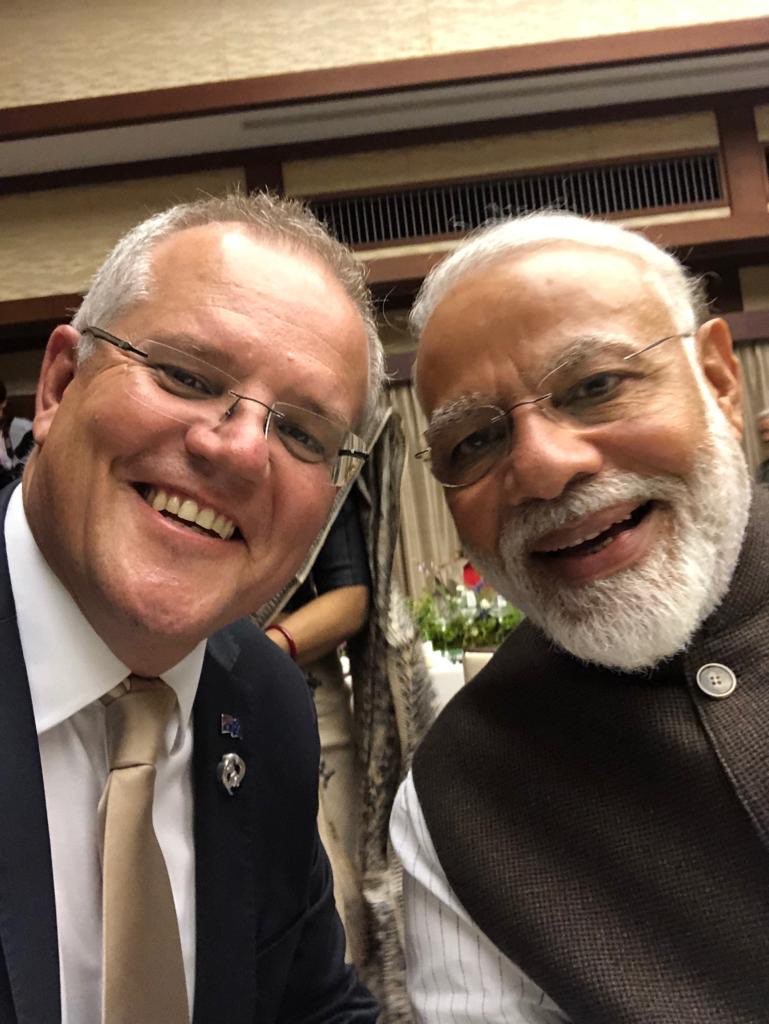
Seems PM Modi and PM Morrison are getting on well – so time for business, investment and education to pick up the baton and run with India. Ready?

Where to from here for the Coronavirus and India investments?

Where to from here for India?

India Avenue Investment Management – an Australian fund for India – has issued advice regarding the impact of the Coronavirus on investing in India. Here are some highlights:

As we have always articulated to investors, India is a market where you should build exposure during dire times as the structural story will outlast any cyclical events.

It’s a matter of portfolio construction and investment horizon. When it comes to satellite investments like investing in India, investors typically tend to sell during adversity and buy during euphoria.

As a business we seek to improve this experience for our investors by providing our insights of activity on the ground in India.

Globally markets around the world peaked on February 20th, 2020 and since then have fallen roughly 20% in local currency terms (S&P500). Currencies have also been moving around in a volatile fashion.

In India, markets have fallen approximately the same amount.

However, a corporate tax cut, bank recoveries, improving GST collections and a pick-up in PMI’s indicated most positive news was on the way in FY21 (India’s financial year is April-March).

The Coronavirus won’t stop India’s structural growth resuming its path at some point in FY21, however, it will impact global growth in at least the first half of 2020 and therefore India’s growth.

Whilst India doesn’t have significant links to the global supply chain (exports are only 11% of GDP), it benefits when global growth is strong given comparative advantages in exports of refined petrochemicals/oils, gems/precious stones, textiles, electronics, pharmaceuticals and automobiles.

However, the key risk for India is the virus making itself a home amongst India’s significant population of 1.3bn and the potential for it to spread quickly, without appropriate healthcare systems and medication for all.

We cannot estimate what the damage will be to markets, but we see the following positives: • Central Bank potential to cut cash rates significantly from the current 5.15% • US$475bn of forex reserves to defend the currency if required • A substantial fall in the oil price which will reduce inflationary pressures in India (India imports over 80% of its oil usage) • Fiscal stimulus likely to be forth coming • Potential to replace China in certain aspects of the global supply chain, given most are now seeking diversity of supply.

For those who have invested in our Fund, the next week or two (which we expect will see heightened panic amongst investors), will be a good time to add some further funds as India is well positioned to rebound as it often does from adversity.

However, how much bravery you have will determine when you invest!

It is not very often that you can identify an investment where you can buy quality growth stocks at P/E’s in the teens and cyclical growth for single digit P/E’s in a market like India. We are re-aligning our Fund to go overweight in the both these segments.

Thanks to India Avenue Investment Management for the above insights

Melbourne and Victoria leading the way on India growth story

My home town is leading big time on engagement with India.

Michelle Wade, Commissioner to South Asia, State Government of Victoria, Australia, outlined some of the facts in a recent speech to a BDO event “India – it’s time to diversify”.

Melbourne and Victoria are dominant in Indian student numbers, we have close on 180,000 Victorians who were born in India plus on tourism we lead the way.

According to Michelle Wade, trade and investment opportunities abound for us in India – including advanced technologies, edtech, health and wellness.

One key to doing well is to drill down and find organisations with the right capabilities, according to Wade.

BTW Victoria has business offices in Mumbai and Bengaluru – and have been very helpful to me.

Which Victorians are doing well in India? A few from the big list – Linfox, Deakin University, Rubicon Water, MedSurge, Monash University and Swisse.

Time you engaged with the India growth story?

Canada boosts student numbers and gains in diversification of source countries

Canada welcomed more than 400,000 new international students at all study levels in 2019, with Indian student enrolments accounting for most of the increase in new study permits issued.

More important than the increase – Canada is succeeding in diversification of source countries. This has become a “top priority” for Canada.

These students were for university, colleges and K-12 schools.

Immigration, Refugees and Citizenship Canada statistics show that 404,165 individuals were issued study permits in 2019, an increase of almost 50,000 on the previous year. In 2018, 355,100 new study permits were issued.

Although total figures for the 2019 student population are yet to be released, this new data indicates that the entire international student population in Canada now exceeds 600,000, according to one analyst.

The statistics reveal that 139,740 Indian students were issued study permits in 2019 – up from 107,175 in 2018 – and Indian citizens represent 35% of all 2019 new study permits.

The second biggest cohort came from China with 84,710 permits, marking a decrease on 2018 figures where 85,165 Chinese students were given study permits.

Iran (+39% to 9,795), Nigeria (+16% to 7,585), France (+9% to 14,670) all showed increases of study permits becoming effective in 2019, compared with 2018.

Other countries represented in the top 10 such as South Korea, Brazil, the US and Japan have remained stable, while Vietnam decreased slightly on 2018 figures.

Rounding off the top 15, the Philippines, Mexico, Bangladesh, Colombia and Taiwan all saw increases, with new study permits for the Philippines notably increasing by 56% to a total of 6,365 in 2019.

In 2018, just 40% of active study permits in Canada were for university study – the rest for students at colleges, Quebec’s CEGEPs or at K-12 schools, Universities Canada highlighted.

Although the 2019 breakdown is not yet available, the organisation expects a similar division.

“With the caveat that these new numbers reflect the system as a whole, rather than just university enrolments, Canadian universities are pleased to see continued growth in the number of students choosing Canada as their study destination,” explained assistant director of International Relations at Universities Canada, Cindy McIntyre.

Source: The PIE News


“Namaste Trump” good diplomacy for India but differences with USA remain

Can India make the most out of US President Donald Trump’s visit?

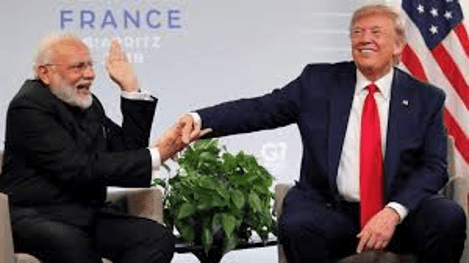
“Namaste Trump” this week been a great visit for India and looks to have been celebrated across the nation. Two leaders of great democracies.

But differences still exist, and the question is can India and PM Modi build on President Trump’s historic visit which took place this week?

PM Modi will drive the relationship, but he is not alone.

One man in South Block — Harsh Vardhan Shringla, India’s foreign secretary – will make a big contribution to the outcome.

India’s foreign secretary is seen as a calm and composed officer, and he has handled bilateral ties even during turbulent times as the Indian ambassador to the US.

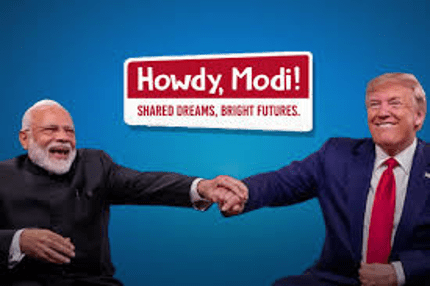
It was he who dreamed up and led the “Howdy, Modi!” event in Houston.

trumpmodi6

Now he has a lot of the responsibility of making “Namaste Trump” a success.

What will be the big issues? Top of the list is a free-trade agreement and disagreements on intellectual property rights. Plus how both countries feel about and react to China.

But clearly Namaste Trump is a big win for India and PM Modi and a mark of the increasing respect India has on the global stage.

trumpindia8

Indian PM Modi and US President Trump – two men who enjoy centre stage and get on well

India in the frame is it plans to open education to foreign investors and institutions


Global education is watching as India moves to allow foreign investments in education.

The recent Union Budget signalled India plans to ease rules on foreign investments in education and open up the regulated sector. The budget proposed to encourage foreign direct investment and external commercial borrowings (ECBs) in education.

It is timely – India’s education sector is “capital starved”.

We have to wait for the actual rules, but it looks like the government may allow foreign education players to repatriate a portion of their income in India instead of requiring them to plough back all their earnings into their Indian operations. This would remove a key restriction that academics and experts have flagged for years as a disincentive to foreign investment in education.

The outcome of all this could be more global investment into existing Indian institutions, plus more foreign education institutions opening up in India.

This would be change on a radical scale. It’s needed – India’s education sector is struggling at all levels.

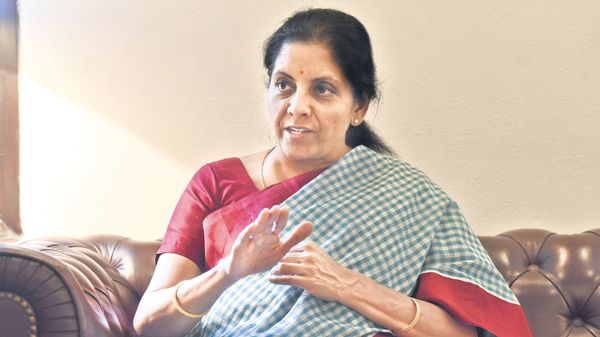
Finance Minister Nirmala Sitharaman (pictured above) said in her budget speech: “It is felt that our education system needs greater inflow of finance to attract talented teachers, innovate and build better labs”.

Please note – though FDI in education through the automatic route is already allowed, it has largely remained confined to the unregulated education technology space.

Expect innovation. Many European campuses are looking at opening special centres within Indian partner universities, rather than going it alone.

Plus greater global collaboration in delivering degrees could be a great outcome – so the student experiences both the Indian and the overseas providers.

So – here is what we are waiting for – the Centre needs to frame rules to ease both fund flow to India and institutional collaboration and how a foreign educational player investing in India will be allowed to take back money that they make in India.

Watch this space…

Trump to open Indian cricket stadium bigger than the MCG – not “fake news” – it will happen next week

Trump and Modi are good at surprises.

How about this? US President Trump will make his first visit to India next week and will open a new cricket stadium set to “dislodge the Melbourne Cricket Ground” as the world’s biggest cricket stadium. The Motera Stadium in Gujarat can take 110,000 spectators.

Interesting combination – look forward to seeing the Indians explaining the game of cricket to President Trump.

But sometimes these two are also predictable.

Australia knows very well the difficulty of getting a free trade deal with India – and so do the Americans (although their “America first” attitude makes negotiation difficult).

Nisha Biswal, president of the U.S.-India Business Council, said hopes were fading for the two sides to quickly bridge gaps in their efforts to restore some U.S. trade preferences for India and improve access for selected U.S. agriculture products and medical devices to India’s 1.3 billion consumers.

Still, PM Modi is good at using charm and relationship as a part of diplomacy so you can expect him to pull out all the stops for the visit of President Trump.

Melbourne seminar on India has best expert panel

BDO has assembled Melbourne’s best India panel to speak on Tuesday 3 March – book now – free event. Email michaelm@eastwestadvisers.net

They have a great line-up of speakers:
Michelle Wade, Victorian Trade Commissioner for India, Bengaluru
Susan Coles, Deputy State Director, Victoria, Department of Foreign Affairs and Trade
Bill Cole, Partner International, BDO
Sandeep Khurana, Director, EastWest Advisers
Michael Moignard, Director, EastWest Advisers

I am proud to be the MC of this one.

Venue: BDO, 727 Collins Street Melbourne
Date: Tuesday 3 March 2020
Time: 12 noon start (lunch will be provided)
Email michaelm@eastwestadvisers.net

Pictured below: Bill Cole, Partner International, BDO

billcole2

EV’s and charging stations boosted in India

Two announcements have given a great promotion to Electric Vehicles in India.

First, the Government has lowered the GST rate on EV’s to 5% from the standard 12%.

Second, leading company Tata Power will increase its network of electric vehicle charging stations to 700 by next year.

evcharge3

The company which has already installed 100 fast charging stations in various cities, including Delhi, Mumbai, Bengaluru, Pune and Hyderabad.

The company is not only targeting the public spaces but will also offering home EV charging stations.

The company is also in talks with metro rail authorities and municipal corporations for setting up EV charging stations. Moreover, it will set up charging stations at Tata Group owned outlets such as Chroma, WestSide, Titan watch showrooms and Indian Hotels.

evcharge4

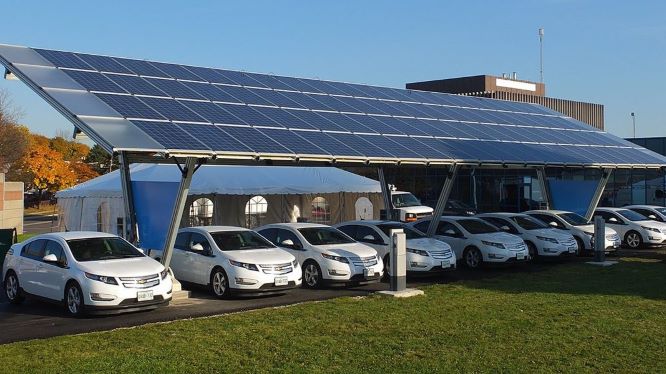
Pictured is a trial solar powered EV charge station in India

7 strategies for India market entry 2020

  1. Find the affluent millennials

India is home to the world’s largest population of millennials—typically defined as those aged 18-35. At 450 million, these millennials are influencing the way Indians eat, shop, commute and buy, much like their global counterparts. They are the first upwardly mobile group in recent history of India – and will have an impact very like the way western baby boomers changed most things.

YoungIndians4

According to Santosh Desai, managing director of Indian Brand Advisory Group Futurebrands, Indians used to be “born something” but now can “become something”.

  1. Drill down to the real middle-class market

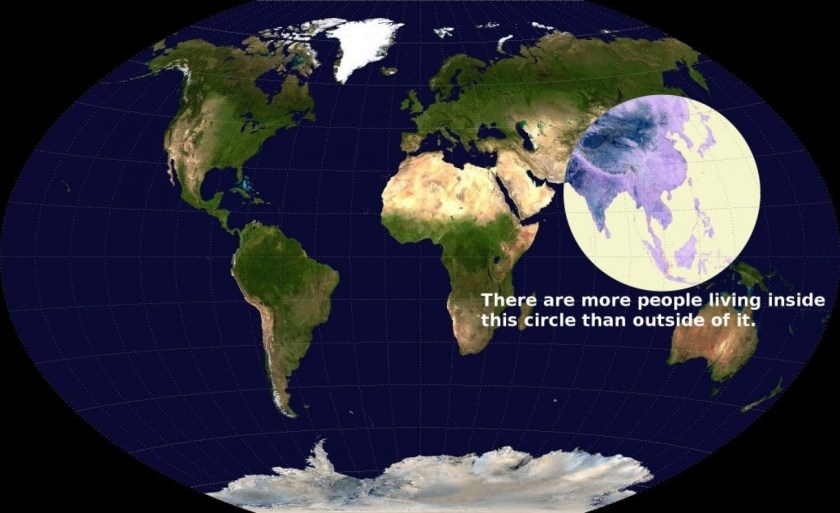
We know India has 1.3 billion people, but if you think too much about this you will get nowhere. Drill down to find your market.
asiamap8circle

For example, some estimate the “middle class” as high as 300 million. For me, this is way too high. Austrade takes a dimmer view – it estimates that there are approximately 30 – 80 million people in our target demographic, many of whom live outside Tier 1 cities. That’s a big range from 30 to 80, which shows that we just do not know. But for me Austrade’s numbers are too low.

Austrade looks for consumers that:

  1. can afford international travel to destinations, like Australia;
  2. can afford to send their children for study abroad; and
  3. can afford to eat at high-end restaurants and hotels or eat significant amounts of imported food and wine at home
  1. Think of India as many markets

Thinking of India as “one market” will slow down your impact and waste your marketing efforts. First, there is the divide between north, south, east and west. Then there are big metropolises (8-10) and hundreds of tier two cities (around one million plus). Then there are over 26 different languages, multiple food cultures, differing beliefs and interests. It is complex, so build that into your “many markets” strategy.

  1. Consumerism is changing in India

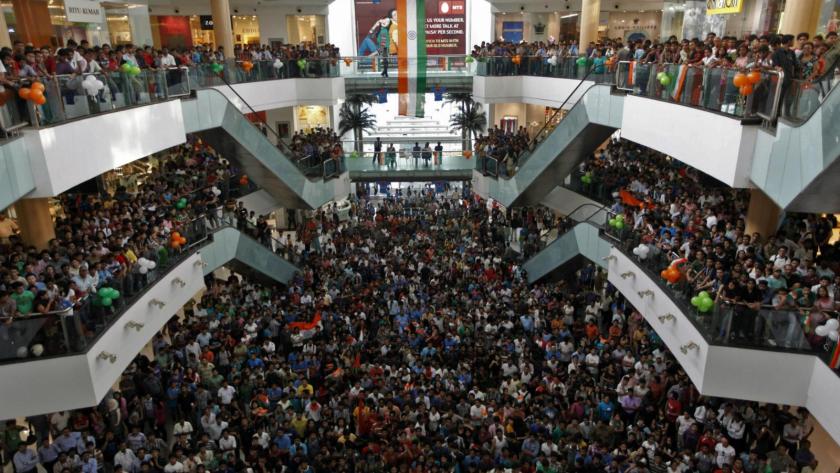
India had just 9 Shopping Malls in 2007. There are over 350 Shopping Malls in 2019. Plus 85 new Shopping Malls will be built in the next 5 years = 435 Shopping Malls in 2025.
malls

Add to this that online retail is taking off, with Amazon and the local Flipkart leading the way – Indian consumers use cell phones for online access.

Dr Mark Morley Trade Commissioner India Government of Australia makes a key point about opportunities for us: “Australia is well positioned with the Indian consumer. Across India, we have a great reputation for clean, safe and reliable supply. We are well known as a premium supplier of produce, and we have a global reputation for our quality brands.”

  1. Thinking local is a good way to start

Especially for those in food, beverages, education and fashion, your beginnings for India can start right here in Australia.

About 650,000 Australians claim Indian ancestry, and we have over 65,000 Indian students here, which means a significant local market spending money. Add to that the growth in Indian tourists – up to over 300,000 per year and growing at around 15%. This gives you a good market testing opportunity.

  1. Collaboration is the new relationship

If you just want to “sell” to India, sharpen your pencil and think short term – sooner rather than later, India will find an alternative to you.

To be in India for the long term, seek genuine opportunities to collaborate with Indians – once you and Indian collaborators are working together, your future is more secure. This is how Indians prefer to operate, so drop “transactional” thinking and focus on “collaboration” – it is the new relationship.

  1. Give India the time it needs

Cultures based on relationship (collaboration) are slower to move, so give India at least three years. You might “sell” sooner, but for most this is a very short-term market entry approach.