Australian banker says “this is India’s century”

This is the best, strongest vote of confidence in India from one of Australia’s leading corporations.

Mark Whelan, Group Executive at ANZ: “The time is very much appropriate to grow here. If you look at the basics of the Indian economy and where its place is in the world, this is India’s century”.

Rufus Pinto, Country Head, India, Australia and New Zealand Banking Group, outlined the rapid recent growth of ANZ in India: “ANZ India started our Institutional Banking operations in 2011. 13 years of existence across three branches today with over 80 bankers supporting the top Financial Institutions; Local Large Corporates and MNC’s working together with our home markets of Australia and New Zealand, and ~30 markets in our global network providing our clients a seamless agile offering.

“ANZ in India today house almost 20% of our global workforce, with our Global Capability Centre in Bengaluru,” he said.

This is change on a grand scale for a leading Aussie company.

Yes, this is India’s century.

Time to get on board?

Did you know Gallipoli played a huge role in Australia-India friendship?

Congratulations to the Australia India Institute for this celebration.

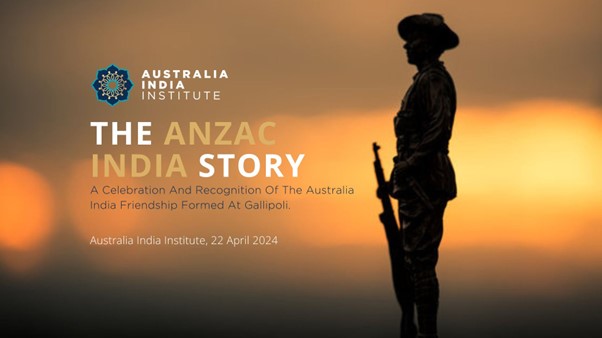
The Australia India Institute has celebrated the untold history of the ANZAC-India relationship formed at Gallipoli in 1915. 

Serving alongside the ANZACs for their entire campaign were troops of Britain’s Indian Army – gunners and drivers of two Indian mountain batteries. An Indian infantry brigade and a large Supply and Transport force soon joined them, with over 16,000 Indians serving on Gallipoli. 

The Institute hosted the untold story of the Anzac-India friendship, with one of Australia’s most distinguished military social historians Professor Peter Stanley.

He shared the role Indian troops played and the remarkable positive relationship that grew at Gallipoli between Anzacs and Indians.

Assistant Foreign Minister Tim Watts and Indian Consul General Melbourne Dr. Sushil Kumar, were part of this significant event. Indian Veterans who attended.

As part of this celebration of this unrecognised history, Mark Trayling presented the Bahadur painting to the Institute. The Bahadur painting was painted-by-mouth by Mr Ghosh, a resident of the Paraplegic Centre for Armed Forces in Pune, India. 

Salary hikes on way for young Indian professionals and executives

Want a decent salary hike? The best place to be right now could be India.

According to insights from Randstad India, corporate salary increments in India are projected to range from 8-11% this year, with junior professionals expected to receive the highest increases of 10-11%.

This shift reflects a growing trend towards skill-based compensation, allowing professionals with specialized expertise to negotiate salaries more flexibly.

It amounts to a big financial boost for India’s growing middle class.

Companies are increasingly focusing on hiring and upskilling freshers and junior-level candidates to meet organizational needs, yielding positive outcomes across industries.

Conversely, senior professionals may see “lower” salary hikes, averaging 8-9%, while medium-level professionals can expect around 9-10% increments.

Why pays the best?

Sectors like internet/e-commerce, manufacturing, and BFSI are likely to offer the highest increments, driven by factors such as value-added models in e-commerce and technological advancements in manufacturing.

Read more here:

https://www.businesstoday.in/industry/top-story/story/average-salary-hike-to-be-around-8-11-this-year-in-india-randstad-india-424497-2024-04-05

The many levels that make up India engagement for one major Australian company

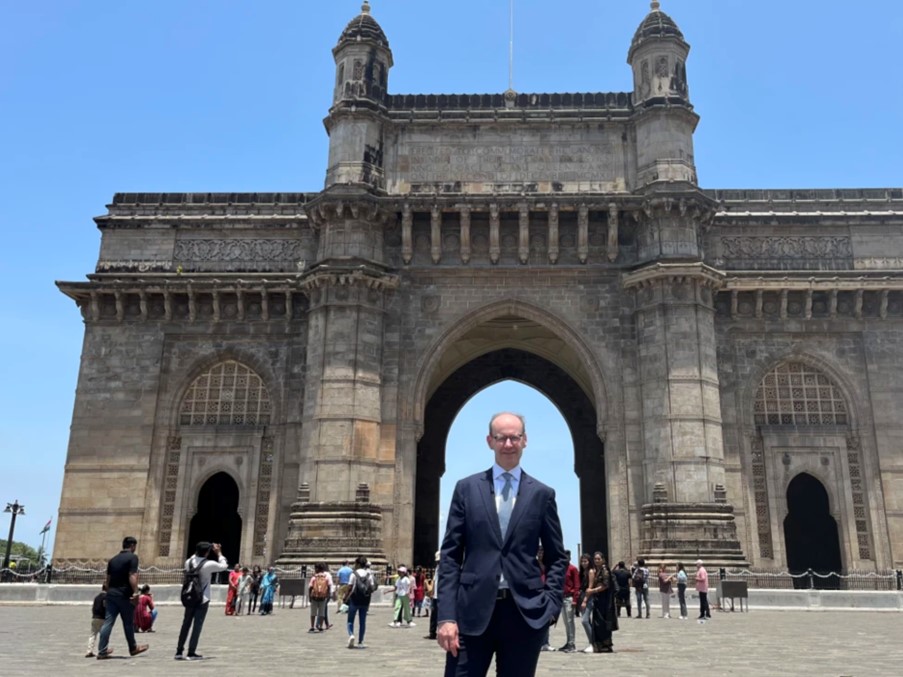
Shayne Elliott, CEO, ANZ Bank, pictured at Gateway of India, Mumbai, on a recent visit.

Australia’s ANZ Bank has proven that a long association with India (they started in 1986) can achieve a strong balance of business over there.

Patience is a great business builder.

And flexibility makes for sustainability.

Adaptation to the many levels of opportunity has worked for this bank.

Read more detail here:

https://bluenotes.anz.com/posts/2023/06/anz-news-india-growth-shayne-elliott?pid=bln-link-td-bln-06-23-tsk-rufus-india

Might be some lessons in there that can help with your India ambitions?

Old and new in India celebrated in stunning textiles exhibition at Melbourne Museum

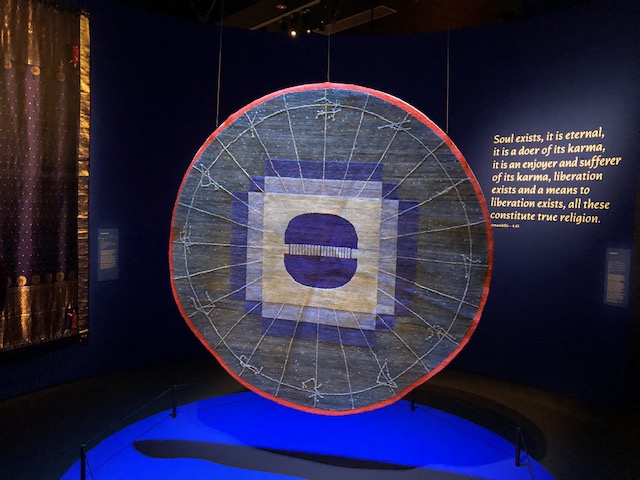
Art in both traditional and contemporary form is alive and thriving in India, judging by a beautiful exhibition at the Melbourne Museum.

Sutr Santati curated by Lavina Baldota of the Abheraj Baldota Foundation is worth seeing for the quality and innovation of the objects, which is matched by the display which adds to the beauty.

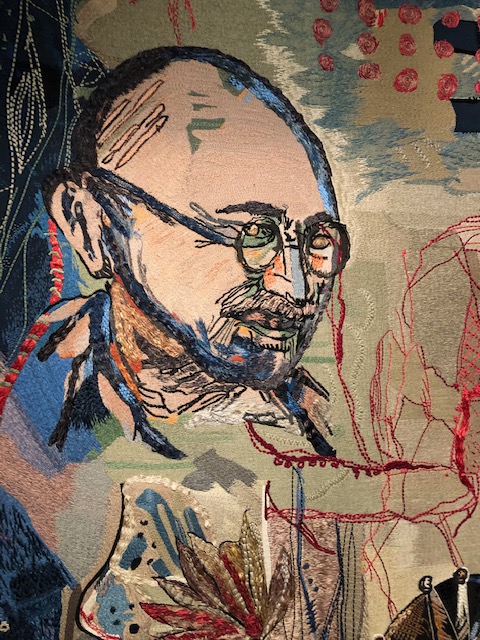
I was enthralled – but when I saw the great Mahatma Gandhi featured in one of the pieces, I just stopped and admired the way this exhibition pays homage to the history of free India and yet celebrates modern innovation.

It made me realise that it is only a little over 75 years when India had some of the finest FREEDOM FIGHTERS in the history of human struggle to be free.

Make sure you see this soon!

Celebrating 75 years of India’s independence, Sutr Santati showcases 75 hand-woven textiles created by contemporary Indian designers.

In May 2023, Melbourne Museum welcomes international exhibition Sutr Santati: Then. Now. Next. Stories of India woven in thread. Conceived and curated by Lavina Baldota of the Abheraj Baldota Foundation, the exhibition brings together diverse textile traditions of the country, conceived and created by some of its most prominent artisans, craftspeople and designers.

Sutr Santati means ‘continuity of thread’ in Hindi. As the exhibition title, it is a metaphor for ongoing dialogues in Indian culture and society, which shape its evolution, bridging the past with the future. The exhibition’s curatorial vision seeks to promote the ideals of organic and slow consumerism in reflecting India’s identity and the inherent collective, collaborative efforts which are required to push towards such goals.

The themes, techniques and materials of specially commissioned fabrics in the exhibition are viewed through the lens of innovation. In doing so, they reinforce the value of fabric – an important legacy of Indian independence – to define the country’s contemporary artistic landscape, and to push its creativity into the future.

Heartiest congratulations to Lynley Crosswell, CEO, Museums Victoria, and Rohini Kappadath, General Manager, Immigration Museum – you have given us a special opportunity to gain insights into India.

Austrade and DFAT doing the heavy lifting in building India-Australia ties

I cannot think of a time when so many BIG STEPS have paid off for Australia – thanks in large part to the great work of Austrade, DFAT and State Government business offices in India.

In the last six months there have been record numbers of ministerial visits both ways – and when government opens the doors, education and business can step through.

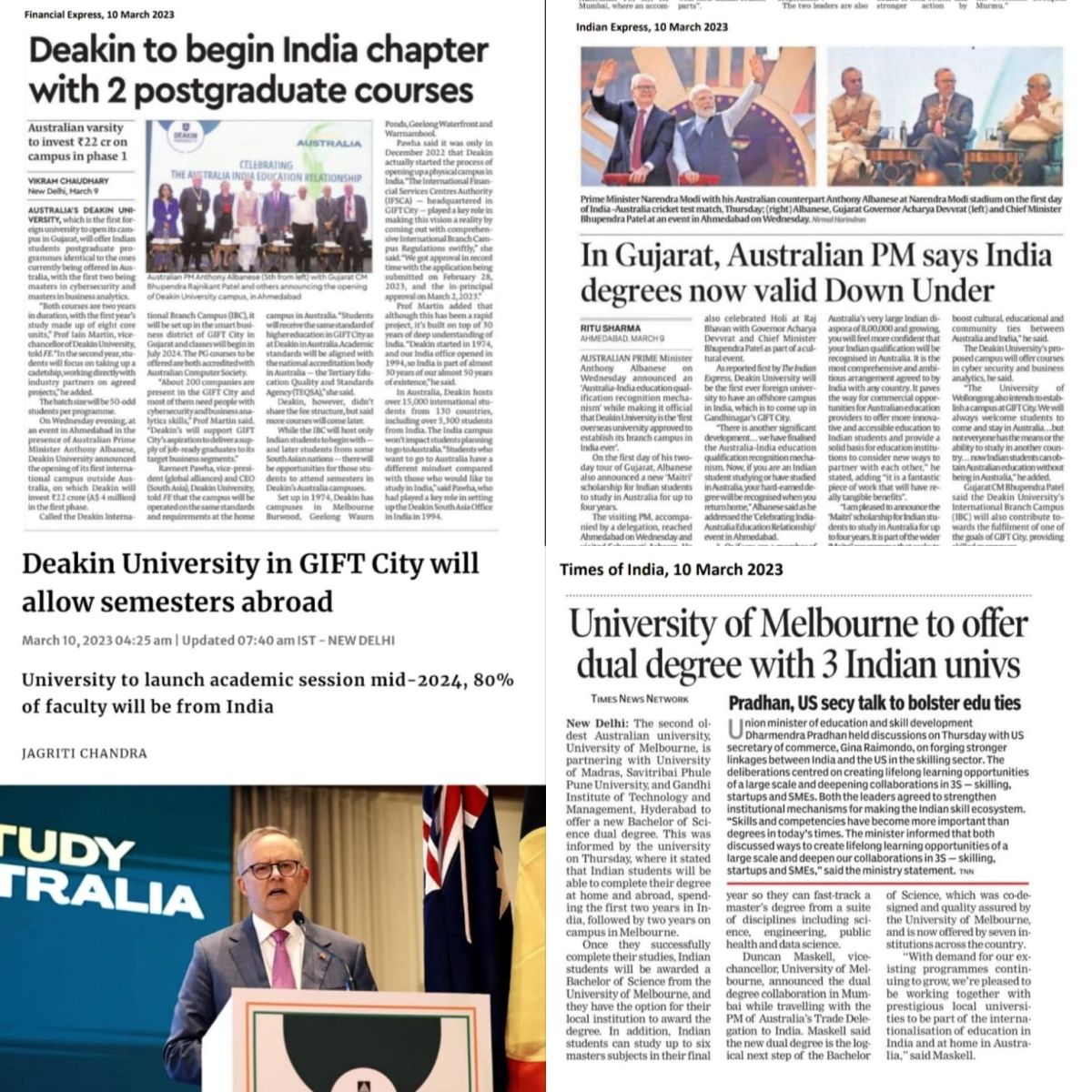
Of special note is the work in education of Monica Kennedy, Austrade Mumbai. As she reported – “From Deakin University‘s splendid announcement of setting-up a branch campus in #India, to University of Melbourne‘s partnership with three major Indian Universities – it warrants all the attention it is receiving.

“Team Australian Trade and Investment Commission (Austrade) is proud and elated to have played a part in these historic announcements.”

Check out just a couple of all the overwhelming media mentions of the developments.

Read some of the stories here:
https://bit.ly/3yxBNYo
https://bit.ly/3FcD1fJ
https://bit.ly/3Jvwgbt

Keep up the good work!

Online meetings present the challenge – how do I introduce myself?

Zoom, Teams and other online meetings are now part of our lives. In many of these meetings, you are called upon to introduce yourself. Maybe everyone is introducing themselves.

It can get the pulse raising and the mind in overdrive. What will I say? Where should I focus? Will they like me? Meanwhile, we are missing out on all the other interesting introductions happening.

The stress can be negative – or positive. Through practice, we can come to recognise stress when it arises and use it for good – ah, now, better concentration, sharper reflexes, and so on. In contrast, if we have a negative reaction to stress it can mess up our introduction – nervous, shaky voice, tongue-tied, rambling on….

So, what is the easiest way to introduce yourself?

Like all public communication, the secret is to keep it simple.

The simplest way to introduce yourself is in three parts (and this might mean just three sentences) – present, past and future. People love this approach – they recognise the structure, simplicity and like a note about the future.

A present-tense statement to introduce yourself: “Hi, I’m Stephen, and I’m a communication consultant and author. My current focus is mentoring and writing.”

Past tense might be just two or three points about your background and gives you credentials and credibility. An example: “My background is in corporate communication, and I have previously advised top 100 corporates and big four professional services firms.”

Future tense is all about projecting optimism and enthusiasm – two very likeable characteristics. In a meeting this should relate to the topic. “In the next 12 months I plan to do more writing towards a new book and meetings like this give me not only content, but the motivation to keep exploring”.

Simple? Present, past and future. Each can be as long or short as the occasion requires – but always err on the side of shorter. Trust me – you will gradually enjoy (and smile) while introducing yourself.

13 things Indians can’t believe about Australia

There is a lot to love about Australia, and given the number of Indian migrants, students and tourism who do come to Australia, it is clear Indians love it too. But Indians are also in for a few surprises.

1 Australia has a winter

Yes, one surprise for Indian visitors that it is not always sunny in Australia. Apart from the tropical north, most Aussie cities have four seasons. And people go snow skiing during the winter (resorts in NSW and Victoria).

2 Aussies will wear shorts plus a scarf and beanie on cold days

Bit strange to see, but such is the Aussie male love of wearing shorts that many do it during winter too.

3 A beer is not a beer

Indians who build up a thirst and drop into a pub might just order “a beer please” only to be asked if they would like a schooner, middy, pony, pot or a pint.

4 Kangaroos are not in the main city streets

Shocking to know that the sight of a kangaroo in any Australian major city would be more astounding to Aussies than to you – take short drive our of the city and you will see this very strange and highly dignified animal.

5 A short drive is always long

Speaking of short drives, Aussies will take off for a weekend getaway and drive for 5 or 6 hours. Nothing is close and every trip is a long trip in Australia, so they are used to long drives.

6 Yes, there are spiders the size of your hand

Spiders scare most Aussies as much as you – and some of these spiders are big. A huntsman can pop up when you least expect it. I won’t tell you about redbacks…just don’t put your hand into strange pipes or under rocks or rubbish.

7 Everything is “game on”

Rivalry is big in Australia, so everything is a competition – city vs city, state vs state, not to mention actual sport which is like a religion for Aussies – it pays to show even a mild interest in any sport to gain the respect of locals. Not to mention India vs Australia in cricket.

8 Thongs go with anything

The footwear known in Australia as “thongs” can be worn on a surprising number of occasions, including those hosting a social function in their home. It’s part of the national dress code, which values informality.

9 Sorry, but your name will not be your name

Australians love to play with names and, while this might be disrespectful in most countries, in Australia it is a sign of affection and acceptance if they abbreviate or adapt your name. Adding “o” is common – so I am often known as “Steve-o”. Again, friendly. So, Vijeth could become “Vij-mate”, or Abhishek become “Ab”, Sucheta becomes “Suchi” and so on – nicknames are everywhere.

10 Joking at funerals

Australians use humour to reduce the negative emotion of tough situations – so jokes might be shared, and laughter occur around the boardroom table, in class, during interviews and even at funerals. It’s a way of making everyone comfortable.

11 Tall poppies get cut down

Australia has the “tall poppy syndrome” which means anyone who takes themselves too seriously, or is too proud, or too vocal about their success, will probably be taken down. Sometimes it is a test to see if “you can take it”, because being able to laugh at what appears to be a criticism is seen as a good thing. They do it too themselves too – it is not uncommon for business teams representing their company to say to a potential client “we’ll find a way to mess it up” – but done with a grin.

12 Red lights are mandatory

Australian drivers stop at red lights. I know this is shocking to many Indians, but the level of compliance with small rules such as red lights is incredibly high. Even if they want to turn right and there is no oncoming traffic in sight, they will still stop if the light is red.

13 Informality is a sign of friendship

People are informal. At my golf club, a 12 year old junior member will see me and say “G’day Steve, how you going?” If Prime Minister Anthony Albanese walks by (which sometimes happens in this laid back country) many Aussies would greet him as “Albo” – yes, that is his nickname.

India changing at a great rate – opportunities abound

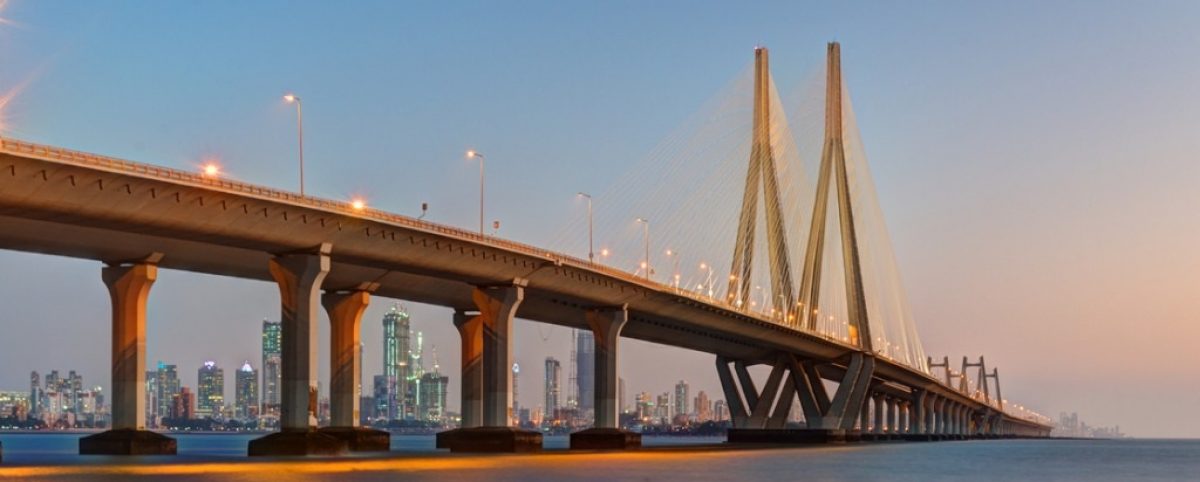
DLF Mall of India – one of the symbols of rapid change in India

Two stories this week provide some insight into how fast India is changing.

India buys Japanese eyewear firm

The first was in eye wear – with an Indian firm taking over a leading Japanese retailer. See more here:

https://www.newindianexpress.com/business/2022/jun/30/electric-two-wheeler-penetration-can-reach-to-100-per-centby-fy27-forecasts-niti-aayog-2471320.html

Two-wheelers to be 100% electric

The second was a prediction by the national planning body that the two-wheeler market in India (which is enormous) could reach 100% electric by 2026-27.

https://www.newindianexpress.com/business/2022/jun/30/electric-two-wheeler-penetration-can-reach-to-100-per-centby-fy27-forecasts-niti-aayog-2471320.html

Time to become part of India’s change?

Talk to Austrade.

https://www.austrade.gov.au/australian/export

Talk to Australia India Chamber of Commerce.

Talk to me.

Good news story of Indian entrepreneurship and creativity in Australia

Jaspreet Singh (left) and Surinder Singh started their own processing operation in 2016 in Australia.

This ABC story is such GOOD NEWS!

Two migrants from the Punjab, Jaspreet Singh and Surinder Singh, formed Kisaan – which means ‘farmer’ in Punjabi – started making Indian-style cheese before moving on to unhomogenised milk.

It has taken off!

Expecting more great things from these two!

Read on…

https://www.abc.net.au/news/2022-02-07/shepparton-kisaan-dairy-company-thrives/100806084?fbclid=IwAR0PBDGM0nN8wHdFi7f7iOpoZJrPhLq45Mra7Lvu9L23jYo4a6vWGLGsrLA