
To know culture deeply you need to ask the right questions – not just “how are we different?”

To do business we need to have some idea how people will behave. That is why operating globally and across borders requires a high level of cultural awareness.

But if all we do is gain a general idea of the culture and how they differ from us, we are likely to be unprepared.

We are amazed when the person we are dealing with does not fit the culture picture. The American we are trying to impress is in fact quiet and retiring, not brash and out there as we thought. Or the Indian we expected to be incredibly polite and reticent turns out to be brash and in your face.

Why do we get this wrong?

We have only asked one question instead of digging deeper. We have asked “What culture do they have and how does it differ from ours” – it is an important question but this is only the beginning of being prepared.

molinsky

What questions should we ask in addition to the big “culture difference” one? For this I turn to a global leader in understanding culture, Andy Molinsky,Professor of Organizational Behavior at the Brandeis International Business School. He’s the author of Global Dexterity and Reach. Here are his three questions:

Question 1: What do you know about the region? Just as it is useful to learn something about culture norms when diagnosing your situation, it is good to learn something about region norms. For example, if you were doing business in the United States and assumed that people from the Northeast would be quite similar to people from the South or from the Midwest, you might find yourself surprised. Similarly, you’d be misguided if you assumed that Southern and Northern Italy are identical or that people from rural and urban areas of China tend to act in similar ways.

For India, there are at least four major regional differences (north, south, east and west) but a country with 26 major languages has multiple regional differences.

Question 2: What do you know about the company or industry? Like countries and regions, companies and industries also have distinctive cultures. How you would interact with a boss at Google is quite different from how you would interact with a boss at Microsoft or Intel.

In India, the boss of an established company like Tata Sons is going to be very different from the CEO of the latest startup or the new telco.

Norms for behavior in the advertising industry are quite different from norms for behavior in the agricultural industry, and so on.

Question 3: What do you know about the people? Finally, ask yourself what you know, or what you might be able to find out, about the people you are interacting with. Are you communicating with a 60-year-old senior executive or a 20-something manager?

In India age differences matter enormously – there is a real generation chasm between the under 40’s and the over 40’s. People who are older are often more likely to reflect the norms of the overall society.

It would also be useful to know if the people you are interacting with are locals, born and raised in that particular setting and without extensive travel experience, or if they are cosmopolitans, with extensive travel background. Locals are much more likely to reflect the norms of the immediate region you are in, whereas cosmopolitans are likely to be open to a wider range of potential behaviors.

In many East Asian and Southeast Asian cultures, such as India, China, and Korea, relatively indirect forms of communication are used, especially from a subordinate to a superior — whereas superiors in these cultures are often quite direct with their subordinates.

Finding the answers to these questions before you cross cultures can be tricky, but it is possible. Books and articles will often give you some insight into these nuances, but one of the best ways to anticipate what you’ll encounter is by talking with expats: people similar to you who have studied, lived, or worked in the country in question.

Doing your homework before entering a new culture is one of the keys for success. But unless you ask the right questions, you might end up mistakenly overlooking the real differences that matter.

For India – keep digging, asking, researching – and persevere.

gateway3


Adapting to India’s combination of “direct and indirect” culture

Most cross-cultural trainers will tell you India is an “indirect” culture, meaning it does not say things bluntly, goes around the topic rather than directly to the heart of the matter.

This is one of those generalisations that is only partly right – and if you rely on it you will be in for surprises in India.

The reality is that India combines direct and indirect communication.

direct

At the point of meeting you, Indians can be very direct – “are you married, why is your husband/wife not here with you, what do you earn, can you find me a job, will you distribute my product”. For most westerners this is confronting, because our style of meeting and networking is very gradual.

But at the point of issues arising, this is where Indians can be very indirect.

If there is a problem with what you are wanting or what India promised for you, the communication becomes more obscure. India’s indirect communication can be hard to spot, even for India trade veterans. Some tell-tale signs are when the India side says “we will try to meet your deadline” – this generally is leading to the heart of the problem which is that they cannot deliver.

This indirect communication is not motivated to deceive or make your life difficult. in fact, it is based on the value India places on its relationship with you and a desire to keep that relation intact. This is why Indians rarely use the word “no” – the relationship is more important than the truth.

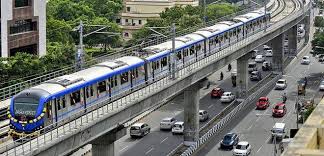
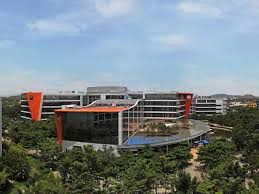
Chennai now a hot spot for startups and entrepreneurs

Chennai has a well educated population, skilled technical talent and is now emerging as a competitor to Bengaluru for startup and entrepreneurial activity.

Who would have thought? “Conservative and slow” was how Chennai was first described to me. Now it has changed.

chennai 3

Active angel investors operating in the region, are boosting the change.

But Chennai is not a city to boast or shout – it will let success do the talking for it.

chennai4

The region’s economy was earlier more dependent on the automobile industry but has shifted towards information technology sector.

Here are some of the startups – Freshdesk, OrangeSpace, Bharatmatrimony, Zoho and CaratLane – all doing exceptionally well.

Why Chennai?

Chennai is a home to many investors with deep pockets willing to invest in startups with innovative ideas. Good governance and integrity further make Chennai the preferred city for business leaders.

Add to that good roads, ports, railways and airports as positive factors.

chennai5

Chennai is among the top Indian cities with a maximum number of engineering and medical colleges in the region.

Another reality is that the former home of these new ventures – Bengaluru – just cannot accommodate all the new entrepreneurs, so many turn to Chennai.

Growth

Chennai has hosted a number of entrepreneurial events to attract emerging startups and one to watch coming up soon is Pudu Chennai, 2018.


India’s MSME sector to borrow up to USD100 billion

More rapid change in India – borrowing, especially by small business, used to be frowned upon. But a new study reveals digital lending to the MSME sector will grow 15 times to up to USD 100 billion annually in five years.

India’s rapid shift to digital is transforming MSME sector

Traditional banks will remain averse to lending to MSME’s – the micro, small and medium enterprises – with the new funding from “informal sources”, according to impact investing firm Omdiyar Network and consultancy firm BCG. Lending for this sector is primarily through the non-bank financial institutions.

Several countries, including Australia, are looking at innovative ways to fund this sector.

The study said there are 60 million MSMEs having turnovers of less than US$35 million at present and they are a major contributor both to the country’s GDP as well as to employment generation.

However, the contribution of Indian MSMEs is far below that of their counterparts in the US or even China as they lack access to formal sources of finance and pay interest rates which are 2.5 times the ones charged by the formal sector, it added.

The study stated that 40 per cent of the MSMEs will be receptive to digital lenders.

This will be possible on government policies like introduction of the unified payment interface (UPI) and goods and services tax (GST), massive reduction in costs of data connectivity and also the ‘India stack’ (more on this in next post).

An increasing number of MSMEs are willing to share their data online and 60 per cent believe they will get larger amount of payments through the digital means in the next three years, the study said.

Change– a way of life in modern Indian business.

Study shows which countries are best at preparing children for work


An analysis of the latest PISA report (Programme for International Student Assessment), which assesses how 15-year-olds in OECD countries are performing in science, mathematics and reading, has revealed the countries in which children are best at “collaborative problem-solving”.

Childrenworkingtogether

Employers highlight the importance of so-called “soft skills”, a suite of attributes that include social abilities like networking, communication, negotiation, team-building and problem-solving. At the root of these skills is how well a child gets on with others.

Asian countries Singapore, Japan and South Korea top the chart, with Canada, Estonia and Finland not far behind. Australia is at eighth spot. Denmark, the United States and United Kingdom also make the top 10.

children2

Soft skills and hard yards

The World Economic Forum’s Future of Jobs report 2016 argued that by 2020: “Creativity will become one of the top three skills workers will need. With the avalanche of new products, new technologies and new ways of working, [employees] are going to have to become more creative in order to benefit from these changes.”

But, whatever qualifications, experience or technical abilities today’s job interviewees may possess, employers cannot necessarily count on them having the soft skills that are now required as soon as they walk through the door.

children

As an article on TrainingMag.com pointed out: “There’s a subtle irony in [the fact that] hard skills are relatively easy to learn, while soft skills are often hard to learn.”

It pointed out that “hard skills are specific, teachable abilities that include technical proficiencies and are easily defined and measurable. You usually obtain a degree or diploma when you have these skills, such as software programmer, mathematician, accountant, tool-and-die maker, forklift driver, etc.”

But it adds that soft skills are less tangible and harder to quantify. “There is no degree or diploma for soft skills. They’re mostly learned through life experience on the job, such as active listening, interpersonal skills, knowing how to recognize people, and demonstrating caring concern.”

Start ’em young

Such skills are likely to be best acquired at an early age and the PISA analysis shows that some education systems are taking steps in the right direction. Finland has already moved to a model where collaboration is part of the regular curriculum and France is eyeing similar moves as it shakes up its education system in an effort to boost economically deprived children.

However, companies will probably have to recognize that while schools and universities should teach core skills, the burden of providing much of the life-long skills learning employees are going to need will fall on them.

As Vishal Sikka, the former chief executive of Infosys, wrote in the Financial Times: “Curriculums should be modernized to encourage creative problem finding and solving, and learning through doing, with mandatory computer science learning as the bedrock for enabling digital literacy.

“Organizations also need to make life-long learning resources available for employees to enhance skills development. Indeed, they should be required to dedicate a percentage of their annual revenue to reskilling staff.”

Childrenworking2


Indian universities not preparing students for the workplace – study

Indian universities are losing ground to global competitors when it comes to preparing students for the modern workplace, according to a new “Global University Employability Ranking” study, produced by French HR consultancy Emerging.

Harvard University tops the list, followed by California Institute of Technology and Massachusetts Institute of Technology.

Amity20183

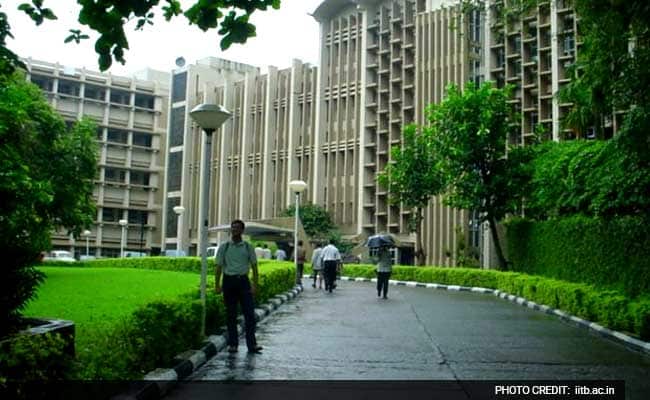
Leading in India are the Indian Institute of Science in Bangalore, Indian Institute of Technology in Delhi and IIT Bombay.

India still only has three universities in the top 150 for performance in employability.

The report shows that successful universities value soft skills such as collaboration, teamwork and communication. Employers are also increasingly ranking critical thinking skills as very important.

SwinJune

The capacity to adapt to a changing world and to keep learning are seen as essential.

Most improved this year according to the rankings were universities in East Asia and parts of Europe.

Hired2

India to create over 1.4 million new IT jobs as digital disruption gains pace

The numbers in India are always big!

India is likely to add over 1.4 million new IT jobs by 2027, primarily driven by emerging technologies like cybersecurity, Internet of things (IoT) and Big Data, a report by Cisco-IDC said.

4th2

“Of the 9.1 million IT positions in India in 2017, 5.9 million job postings from employers were for new-age roles,” it added.

The report said roles like social media administrator, machine learning designer, and IoT designer would be most sought after in the coming years.

digital2

It pointed out that about 22 per cent IT professional respondents said they self-funded their certification courses, while about 50 per cent of them underwent some training in 2017 – a reflection of the growing importance of upskilling in a rapidly changing technological landscape.

About 15 per cent IT professional respondents said took training leading to certification in 2017.

Interestingly, the report stated that seven out of 10 organisations look for IT certifications when hiring or promoting and getting certified put an applicant ahead of 85 per cent of his/her peers.

The top 10 technology trends impacting Indian job scenario include cybersecurity/data security, Big Data, Data analysis visualisation, IoT, Business Intelligence, Artificial Intelligence, Machine Learning, Virtualisation/Software defined infrastructure, Converged Infrastructure and cloud solutions/technologies.

digital3

Why everything you know about Indian tourism is wrong

Two recent major research reports show the high impact Indian tourists are having – with good news for the Asia-Pacific region.

The latest research published by Colliers International, ahead of Arabian Travel Market 2019 (ATM), showed Indians just love travelling west to Dubai and the gulf – the number of Indian visitors travelling to the Gulf Cooperation Council (GCC) nations over the coming five years will create an extra 10.8 million room nights, as Indians are among the world’s highest spenders per visit made abroad, according to new data.

The report predicts around nine million Indians will travel to the GCC states by 2022 37 per cent of India’s total outbound market with business, place of work and leisure underpinning this demand.

tourism6

But it is not just the gulf – numbers are up everywhere. Indian outbound tourists will account for 22.5 million worldwide tourists in 2018, with reports from the UN World Tourism Organisation (UNWTO) estimating this figure will increase by 122 per cent to reach over 50 million by 2022.

Adding to this, Indian tourists are among the world’s highest spenders per visit made abroad, with visitor spend expected to increase from USD 23 billion in 2018 to USD 45 billion by 2022.

tourism 5

There has been a huge amount of research and attention paid to the growth of outbound tourism for China, but a report issued last week from Tourism Research Australia looks at the current status and potential of the Indian market for tourism in Australia.

India has a population of around 1.3 billion, with consumer spending forecast to reach $3.6 trillion in 2020 – almost four times 2010 levels.

Between 2000 and 2015, outbound tourism grew more than four-fold to 21.8 million departures. The UNWTO predicts that by 2020, there will be around 35 million outbound departures from India – that is an average annual growth rate of 12% between 2015–20.

tourists

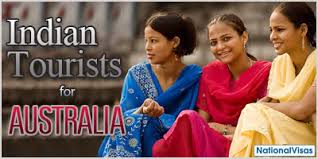
Indian tourism to Australia has grown even faster than the overall rise in outbound tourism from India, with a 6-fold increase between 2000 and 2015. Between 2005 and 2016, visitor arrivals from India grew by 299% to reach 262,300 – almost six times faster than the 51% growth in total inbound arrivals to Australia over the same period. Spend growth was even more impressive, increasing 350% to reach A$1.2 billion in 2016.

Using visitor numbers as a measure, Indian visitation to Australia is in about the same position as Chinese visitation was in 2004. India’s per-capita GDP is now at about the same level as China’s in 2005, so if GDP and tourism follow the same upward trajectory in the next decade in India as occurred in China in the last decade, then India has the potential to become a very important market in the future.

tourism7

TRA’s latest forecasts (TRA 2017) predict that arrivals from India to Australia will grow at an average annual rate of 8.7% between 2016–17 and 2026–27 to reach 642,000 visitors.

It is good news, but where you have a high local Indian population, a significant proportion are VFR – visiting friends and relatives. This means their economic impact is constrained. More than 40% of Indian visitors in 2016–17 were here for VFR purposes, relying on their hosts in Australia for accommodation, food and travel costs.

Are you ready for the Fourth Industrial Revolution?

The 4th Industrial Revolution presents some of the most transforming opportunities in human history. Why?

Because disruptive technologies and trends such as the Internet of Things (IoT), robotics, virtual reality (VR) and artificial intelligence (AI) are changing the way we live and work.

4th2

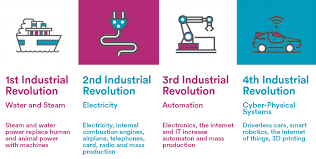
In fact, while previous industrial revolutions were based on one major change, we face ten happening together – robotics, artificial intelligence, nanotechnology, quantum computing, biotechnology, the Internet of Things, the Industrial Internet of Things, wireless technologies (5G), additive manufacturing/3D printing and fully autonomous vehicles.

The First Industrial Revolution took place from the 18th to 19th centuries in Europe and America. It was a period when mostly agrarian, rural societies became industrial and urban. The iron and textile industries, along with the development of the steam engine played central roles in the Industrial Revolution.

steam

The Second Industrial Revolution took place between 1870 and 1914. It was a period of growth for pre-existing industries and expansion of new ones, such as steel, oil and electricity, and used electric power to create mass production. Major technological advances during this period included the electric light, telephone phonograph and internal combustion engine.

The Third Industrial Revolution, often called the Digital Revolution, refers to the advancement of technology from analog electronic and mechanical devices to the digital technology available today. The era started during the 1980s and is ongoing. Advancements during the Third Industrial Revolution include the personal computer, internet and ICT.

The Fourth Industrial Revolution describes the exponential changes to the way we live, work and relate to one another due to the adoption of cyber-physical systems, the Internet of Things and the Internet of Systems.

How will it work? One example – as we implement smart technologies in our factories and workplaces, connected machines will interact, visualize the entire production chain and make decisions autonomously. This revolution is expected to impact all disciplines, industries, and economies.

klausschwab

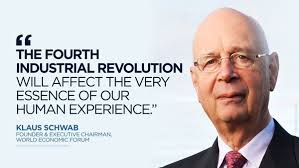
In his book, The Fourth Industrial Revolution, Professor Klaus Schwab, founder and executive chairman of the World Economic Forum, describes the enormous potential for the technologies of the Fourth Industrial Revolution as well as the possible risks. He said, “The changes are so profound that, from the perspective of human history, there has never been a time of greater promise or potential peril.”

Schwab calls for leaders and citizens to “together shape a future that works for all by putting people first, empowering them and constantly reminding ourselves that all of these new technologies are first and foremost tools made by people for people.

Will we put people first?

Have a happy Diwali

India’s DIWALI festival is one of the most joyous times to be in the country – lots of family and community gatherings, lamps lit in windows, and of course firecrackers going off day and night.

Diwali is, I think, the only festival that occurs in the whole of India.

Diwali20166Also known as Deepavali, a Sanskrit word meaning “rows of lighted lamps”, it is one of the most popular Hindu festivals celebrated across South Asia. But it is also celebrated by Jains and Sikhs.

Known as “the festival of lights”, it celebrates the victory of light over darkness, good over evil and knowledge over ignorance.

In my home city of Melbourne, Australia, DIWALI is big and celebrations take over the city centre’s Federation Square.

Happy Diwali – to all in the world, happiness in light, good and knowledge.