Gandhi lay drastically ill with the Spanish Flu almost 100 years ago

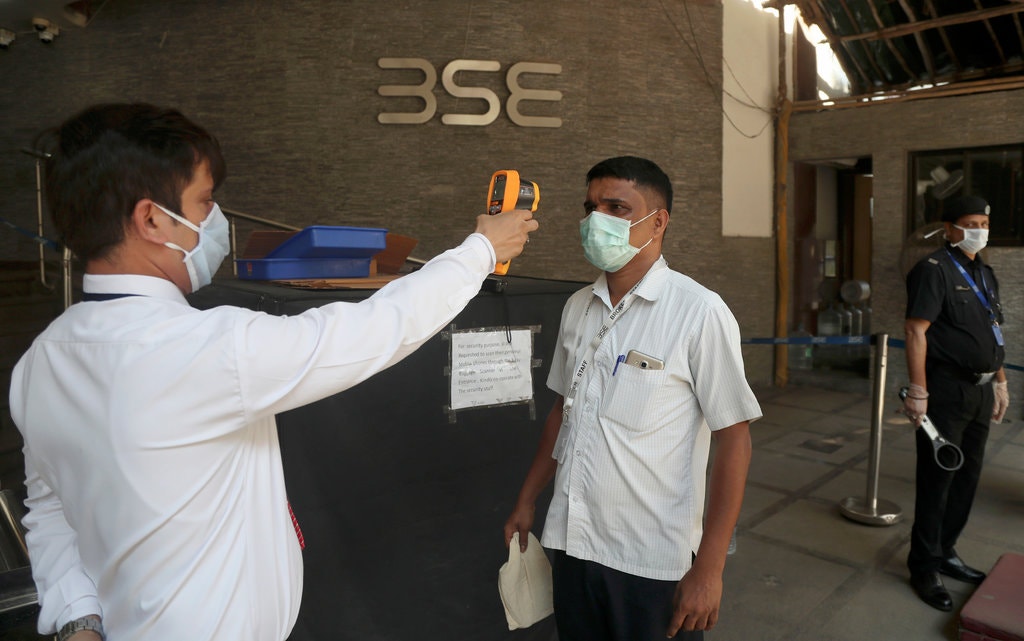
As India fights to contain the Corona Virus (pictured are temperature checks on visitors to the Bombay Stock Exchange) it has been announced that the historic Sabarmati Ashram (a former home of Mahatma Gandhi) will remain closed for visitors from March 19 till March 29 in view of the coronavirus threat, the trust managing the complex said on Wednesday. The ashram receives a large number of visitors everyday.

The closure comes almost 100 years after the great Mahatma Gandhi lay ill in this ashram – with the Spanish Flu (1918).

Sabarmati Ashram is located in the Sabarmati suburb of Ahmedabad, Gujarat, adjoining the Ashram Road, on the banks of the River Sabarmati.

I was there one year ago – a quiet, beautiful and emotional experience coming closer to the great Mahatma.

Gandhiashram

“All interest in living has ceased”, Mahatma Gandhi, battling a vile flu in 1918, told a confidante.

The highly infectious Spanish flu had swept through the ashram in Gujarat where 48-year-old Gandhi was living, four years after he had returned from South Africa. He rested, stuck to a liquid diet during “this protracted and first long illness” of his life. When news of his illness spread, a local newspaper wrote: “Gandhi’s life does not belong to him – it belongs to India”.

Fortunately for India and the world, Gandhi recovered. However, tragically the Spanish Flu killed between 17 and 18 million Indians.

Our thoughts are with India as it now battles to limit the Corona Virus – so far, all indications are that measures are succeeding.


India’s airlines are really hurting during this Coronavirus pandemic

SpiceJet’s chairman Ajay Singh is spending a lot of time in Delhi in front of civil aviation secretary Pradeep Singh Kharola.

The coronavirus has rattled India’s airlines, a big change from their New Year optimism. Many of them do not have deep pockets so are vulnerable.

In January, the industry was happy with fare discipline, controlled capacity addition, the absence of rival Jet Airways, and a slow but gradual demand recovery.

On Wednesday, IndiGo told the stock market that its earnings would be materially impacted because of the disruption, and domestic bookings had fallen 15%-20%.

The airlines’ anxiety comes from their weak balance sheets.

Those in the know say Singh is lobbying with the government to bring jet fuel under GST – such a reform could bring a windfall in reduced taxation of jet fuel.

Perhaps also on the cards is flexibility in payments to oil companies.

IndiGo has a fleet of 255 planes and money in the bank. The Tata Group backs Vistara and AirAsia India, while the Wadia Group owns Britannia and Bombay Dyeing, runs GoAir.

Government help or not, Indian airline execs are preparing for the worst – and some without money in the bank or big owners. Changes ahead?

India – how Australia’s trade will change and how we should communicate

In the 1990’s, Australia sold India coal and LNG. We also sent over copper, lead and gold, along with unprocessed foods such as chickpeas, lentils, almonds and oils.

According to India veteran Michael Moignard (pictured) of East West Advisers, it was the beginning of our trade relationship with India – so that makes it very recent.

MikeMoignard2

In the 2000’s our trade has shifted – uranium is in there but taking the prize has been education in the form of fee-paying students in Australia. Along with this has been IT and processed foods, with wine and packaged goods finding a market. Finally, Indians discovered Australia as a tourist destination.

So, what will the 2020’s look like?

Michael Moignard was our Senior Trade Commissioner in Delhi for 7 years, so it was good that he gazed into the crystal ball at a recent India seminar at BDO. This is what he saw:

“Sustainability” will become a big theme, covering services and products around water, waste, renewables and smart cities. That’s a big shift.

Education will continue to dominate but with a move to skilling India’s workforce – in India. And IT will blossom into IoT, Ai and more.

Continuing strong will be wine, packaged goods and tourism.

In short – it’s a good picture for Australia. Hope you are ready to participate!

Mike’s advice on how to approach India:

  • Don’t just think about selling your product and services to India (just sales and profits should not be the only motive)
  • Work together to create relationships, trust and mutual value (Indians value trust and personal relationships)
  • Ensure Indian counterparts understand you are there for the long haul…and not just for short-term profits
  • Don’t give the impression that your India strategy is just a diversification from China (and India is definitely not the next China)

Oh, and his final tip, use the phone much more and the emails much less.


These India numbers will boggle your mind but the future is more exciting

Here are some India and Australia numbers to contemplate:

(Thanks to Bill Cole, Partner International, BDO, pictured below, for some of this data)

billcole2

AUSTRALIA

  • Population: 24.6 million
  • GDP: USD 1.3 trillion
  • Top 5 Imports: Personal travel services, motor vehicles, refined petroleum and ships
  • Top 5 Exports: Iron ore, Coal, Education travel services, natural gas and personal travel services

INDIA

  • Population: 1.339 billion
  • GDP: USD 2.5 trillion
  • Top 5 Imports: Petroleum products, gems, electronics, chemicals and machinery
  • Top 5 Exports: Textiles, Gems, Chemicals, Products and Agricultural products

Top Trading Partners

Australia’s top 3 trading partners are China, Japan and the USA.

India comes in at number 7.

India’s top trading partners are China, USA and UAE, with Australia coming in at number 20.

So, what about the future?

asiamap8circle

Australia’s India Economic Strategy to 2035 Report:

  • Recommends that by 2035 Australia lift India into our top three export markets, make India the third largest destination in Asia for Australian outward investment and bring India into the inner circle of Australia’s strategic partnerships
  • Identifies 10 sectors where strengths of Australian businesses match India’s needs:
    • Education (flagship)
    • Agribusiness, resources and tourism (lead)
    • Energy, health, infrastructure, financial services, sport, science and innovation (promising)

It is sure a “big picture” report – but with the right approach it can be achieved.

ModiMorrisonSmile2

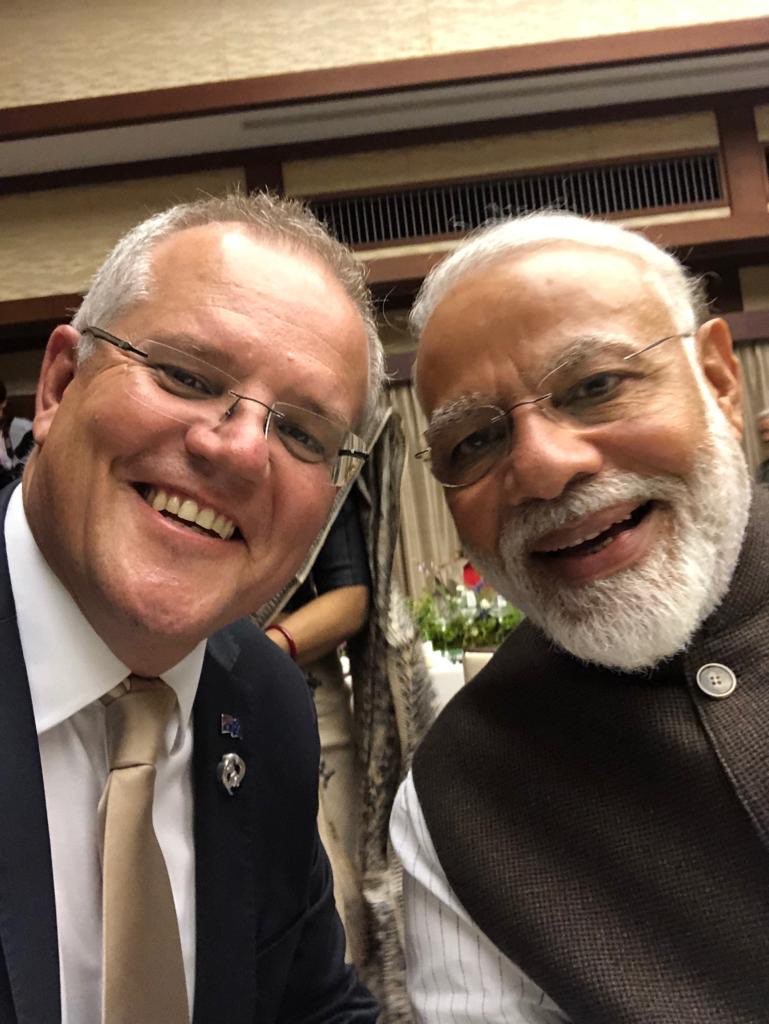
Seems PM Modi and PM Morrison are getting on well – so time for business, investment and education to pick up the baton and run with India. Ready?

Where to from here for the Coronavirus and India investments?

Where to from here for India?

India Avenue Investment Management – an Australian fund for India – has issued advice regarding the impact of the Coronavirus on investing in India. Here are some highlights:

As we have always articulated to investors, India is a market where you should build exposure during dire times as the structural story will outlast any cyclical events.

It’s a matter of portfolio construction and investment horizon. When it comes to satellite investments like investing in India, investors typically tend to sell during adversity and buy during euphoria.

As a business we seek to improve this experience for our investors by providing our insights of activity on the ground in India.

Globally markets around the world peaked on February 20th, 2020 and since then have fallen roughly 20% in local currency terms (S&P500). Currencies have also been moving around in a volatile fashion.

In India, markets have fallen approximately the same amount.

However, a corporate tax cut, bank recoveries, improving GST collections and a pick-up in PMI’s indicated most positive news was on the way in FY21 (India’s financial year is April-March).

The Coronavirus won’t stop India’s structural growth resuming its path at some point in FY21, however, it will impact global growth in at least the first half of 2020 and therefore India’s growth.

Whilst India doesn’t have significant links to the global supply chain (exports are only 11% of GDP), it benefits when global growth is strong given comparative advantages in exports of refined petrochemicals/oils, gems/precious stones, textiles, electronics, pharmaceuticals and automobiles.

However, the key risk for India is the virus making itself a home amongst India’s significant population of 1.3bn and the potential for it to spread quickly, without appropriate healthcare systems and medication for all.

We cannot estimate what the damage will be to markets, but we see the following positives: • Central Bank potential to cut cash rates significantly from the current 5.15% • US$475bn of forex reserves to defend the currency if required • A substantial fall in the oil price which will reduce inflationary pressures in India (India imports over 80% of its oil usage) • Fiscal stimulus likely to be forth coming • Potential to replace China in certain aspects of the global supply chain, given most are now seeking diversity of supply.

For those who have invested in our Fund, the next week or two (which we expect will see heightened panic amongst investors), will be a good time to add some further funds as India is well positioned to rebound as it often does from adversity.

However, how much bravery you have will determine when you invest!

It is not very often that you can identify an investment where you can buy quality growth stocks at P/E’s in the teens and cyclical growth for single digit P/E’s in a market like India. We are re-aligning our Fund to go overweight in the both these segments.

Thanks to India Avenue Investment Management for the above insights

Melbourne and Victoria leading the way on India growth story

My home town is leading big time on engagement with India.

Michelle Wade, Commissioner to South Asia, State Government of Victoria, Australia, outlined some of the facts in a recent speech to a BDO event “India – it’s time to diversify”.

Melbourne and Victoria are dominant in Indian student numbers, we have close on 180,000 Victorians who were born in India plus on tourism we lead the way.

According to Michelle Wade, trade and investment opportunities abound for us in India – including advanced technologies, edtech, health and wellness.

One key to doing well is to drill down and find organisations with the right capabilities, according to Wade.

BTW Victoria has business offices in Mumbai and Bengaluru – and have been very helpful to me.

Which Victorians are doing well in India? A few from the big list – Linfox, Deakin University, Rubicon Water, MedSurge, Monash University and Swisse.

Time you engaged with the India growth story?

Melbourne seminar on India has best expert panel

BDO has assembled Melbourne’s best India panel to speak on Tuesday 3 March – book now – free event. Email michaelm@eastwestadvisers.net

They have a great line-up of speakers:
Michelle Wade, Victorian Trade Commissioner for India, Bengaluru
Susan Coles, Deputy State Director, Victoria, Department of Foreign Affairs and Trade
Bill Cole, Partner International, BDO
Sandeep Khurana, Director, EastWest Advisers
Michael Moignard, Director, EastWest Advisers

I am proud to be the MC of this one.

Venue: BDO, 727 Collins Street Melbourne
Date: Tuesday 3 March 2020
Time: 12 noon start (lunch will be provided)
Email michaelm@eastwestadvisers.net

Pictured below: Bill Cole, Partner International, BDO

billcole2

EV’s and charging stations boosted in India

Two announcements have given a great promotion to Electric Vehicles in India.

First, the Government has lowered the GST rate on EV’s to 5% from the standard 12%.

Second, leading company Tata Power will increase its network of electric vehicle charging stations to 700 by next year.

evcharge3

The company which has already installed 100 fast charging stations in various cities, including Delhi, Mumbai, Bengaluru, Pune and Hyderabad.

The company is not only targeting the public spaces but will also offering home EV charging stations.

The company is also in talks with metro rail authorities and municipal corporations for setting up EV charging stations. Moreover, it will set up charging stations at Tata Group owned outlets such as Chroma, WestSide, Titan watch showrooms and Indian Hotels.

evcharge4

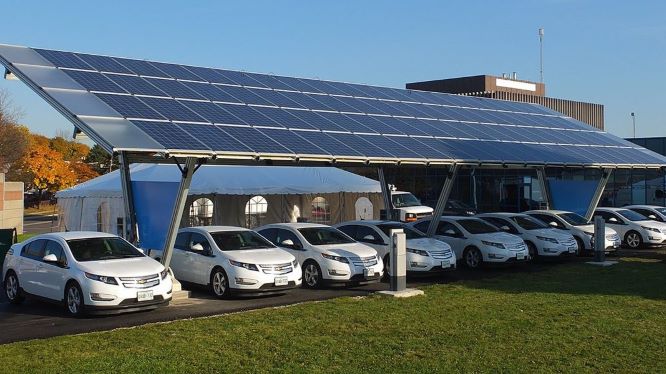
Pictured is a trial solar powered EV charge station in India

7 strategies for India market entry 2020

  1. Find the affluent millennials

India is home to the world’s largest population of millennials—typically defined as those aged 18-35. At 450 million, these millennials are influencing the way Indians eat, shop, commute and buy, much like their global counterparts. They are the first upwardly mobile group in recent history of India – and will have an impact very like the way western baby boomers changed most things.

YoungIndians4

According to Santosh Desai, managing director of Indian Brand Advisory Group Futurebrands, Indians used to be “born something” but now can “become something”.

  1. Drill down to the real middle-class market

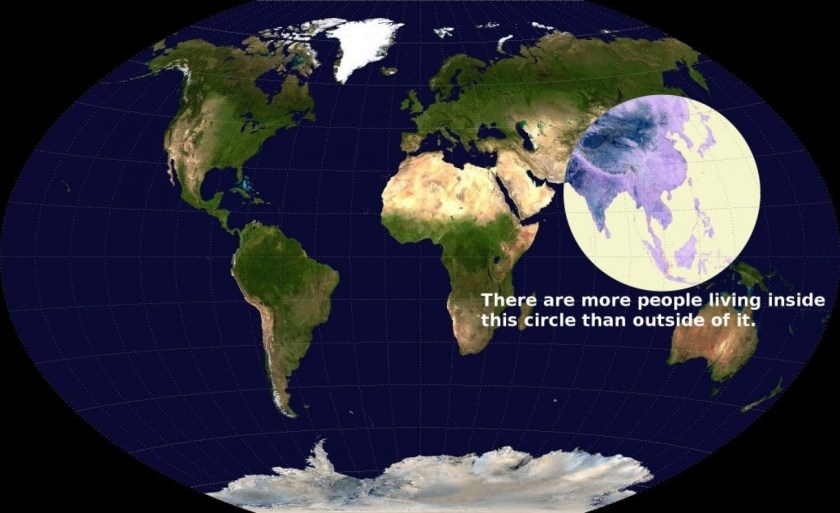
We know India has 1.3 billion people, but if you think too much about this you will get nowhere. Drill down to find your market.
asiamap8circle

For example, some estimate the “middle class” as high as 300 million. For me, this is way too high. Austrade takes a dimmer view – it estimates that there are approximately 30 – 80 million people in our target demographic, many of whom live outside Tier 1 cities. That’s a big range from 30 to 80, which shows that we just do not know. But for me Austrade’s numbers are too low.

Austrade looks for consumers that:

  1. can afford international travel to destinations, like Australia;
  2. can afford to send their children for study abroad; and
  3. can afford to eat at high-end restaurants and hotels or eat significant amounts of imported food and wine at home
  1. Think of India as many markets

Thinking of India as “one market” will slow down your impact and waste your marketing efforts. First, there is the divide between north, south, east and west. Then there are big metropolises (8-10) and hundreds of tier two cities (around one million plus). Then there are over 26 different languages, multiple food cultures, differing beliefs and interests. It is complex, so build that into your “many markets” strategy.

  1. Consumerism is changing in India

India had just 9 Shopping Malls in 2007. There are over 350 Shopping Malls in 2019. Plus 85 new Shopping Malls will be built in the next 5 years = 435 Shopping Malls in 2025.
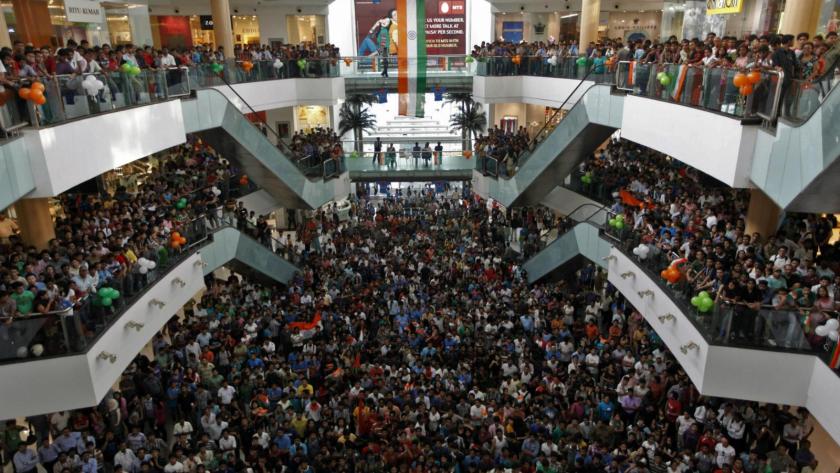
malls

Add to this that online retail is taking off, with Amazon and the local Flipkart leading the way – Indian consumers use cell phones for online access.

Dr Mark Morley Trade Commissioner India Government of Australia makes a key point about opportunities for us: “Australia is well positioned with the Indian consumer. Across India, we have a great reputation for clean, safe and reliable supply. We are well known as a premium supplier of produce, and we have a global reputation for our quality brands.”

  1. Thinking local is a good way to start

Especially for those in food, beverages, education and fashion, your beginnings for India can start right here in Australia.

About 650,000 Australians claim Indian ancestry, and we have over 65,000 Indian students here, which means a significant local market spending money. Add to that the growth in Indian tourists – up to over 300,000 per year and growing at around 15%. This gives you a good market testing opportunity.

  1. Collaboration is the new relationship

If you just want to “sell” to India, sharpen your pencil and think short term – sooner rather than later, India will find an alternative to you.

To be in India for the long term, seek genuine opportunities to collaborate with Indians – once you and Indian collaborators are working together, your future is more secure. This is how Indians prefer to operate, so drop “transactional” thinking and focus on “collaboration” – it is the new relationship.

  1. Give India the time it needs

Cultures based on relationship (collaboration) are slower to move, so give India at least three years. You might “sell” sooner, but for most this is a very short-term market entry approach.

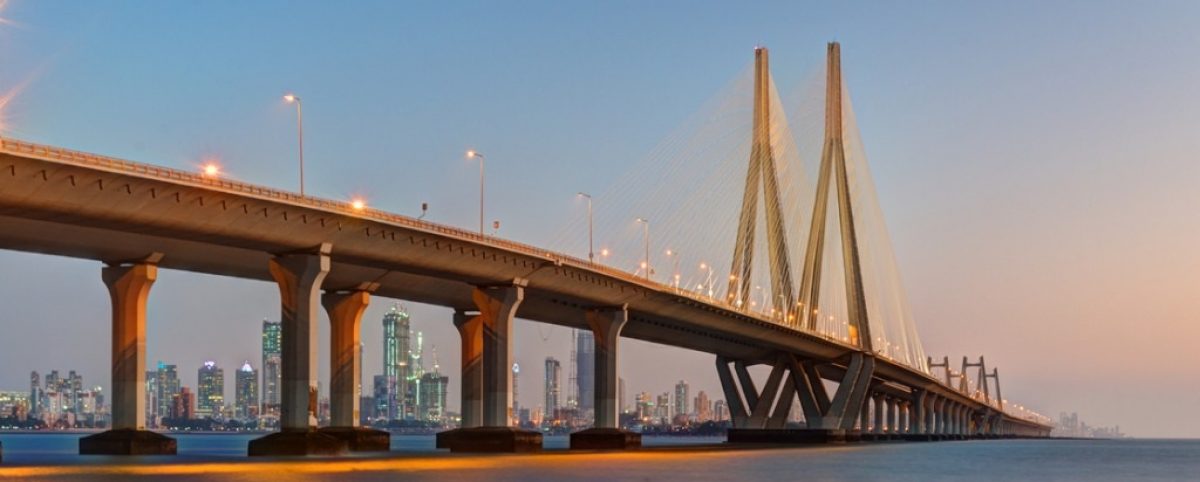
 

India FY20-21 Union Budget

Commentary by India Avenue India Avenue Investment Management (IAIM) – a boutique investment company focused on providing investment solutions for clients in Australia and New Zealand who seek exposure to India’s growth potential through its capital markets. The India Avenue Equity Fund is managed by the team at IAIM and has a bias towards companies which are experiencing strong growth through rising local demand.

The Government of India (GoI) is currently stuck in a dilemma between managing a challenging economic environment (slow growth, rising inflation and weak tax revenues) whilst maintaining fiscal prudence. Hence it was of little surprise to us that whilst the budget continued with its infrastructure push, simplification of the personal tax regime for middle income taxpayers and improvising ease of doing business, to a large extent their hands were tied.

This is evident from the fact that the Budget off balance sheet funding has grown 8% over FY20. Having said that, we expect that spending will likely pick up significantly in FY21 (April 2020-March 2021). Below are some of the key aspects of this year’s budget.

Fiscal Deficit

GoI raised the FY20 fiscal deficit target to 3.8% of GDP from 3.3% set earlier. The fiscal deficit target for FY21 was set at 3.5% of GDP.

Disinvestment

GoI raised the divestment target to INR 2.1tn (USD 29bn), more than double the previous year’s target of INR 1.05tn (USD 15.2bn). Privatisation examples include a few big ticket SOE’s like Bharat Petroleum Corporation Limited and a stake sale via an IPO of India’s largest life insurance player, Life Insurance Corporation of India.

Taxation

A 100% tax break was offered for sovereign wealth funds for investment in infrastructure. A reduced tax rate of 15% for new power generation investment. Removal of dividend distribution tax at the hands of the company and charging it in the hands of shareholders at their individual rates (particularly beneficial to foreign companies as they are subject to a withholding tax of merely 5-10%).

Infrastructure

The GoI continues to emphasise infrastructure as its key development focus. Key areas include building 100 more airports by 2024, development of 9,000kms of economic corridors, 2,000kms of coastal roads connecting ports and 2,000 kms of strategic highways.

Measures to attract foreign capital

Proposal to increase foreign portfolio investor limits in corporate bonds from 9% to 15%. Tax exemptions for Sovereign Wealth Funds fulfilling certain conditions, for dividends, interest and long-term capital gains arising from a debt or equity investment made in India.

Our View

The slowing economy and the Government’s current constraints to spend its way out of the slowdown remains a concern. This had led to a large dichotomy in returns with investors seeking “safety” in Large cap names. Names outside the top-15 have fallen significantly and priced in this concern over the last 2 years whilst India’s mega caps reach all time high prices and valuations. We emphasise that India is a not simply a beta story, as the country rapidly changes, typical of an emerging market country. India today will look markedly different in 5 years’ time and astute investors need to be ahead of the curve to fully participate in India’s ascent to the 3rd largest economy by 2025.

indiagate

Commentary by India Avenue Investment Management (IAIM)