Apple could be a case study in how not to do business in India

Apple is struggling with its iPhone in India and has not adapted to the Indian market, while Oppo (China), Samsung and Nokia have.  Noticed the Oppo logo on the Indian cricket team? Oppo from China is branding the Indian cricket team – smart positioning.
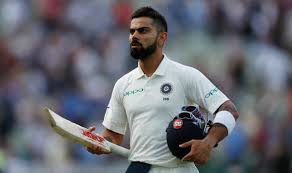
oppo

India is estimated to have 39 million new smartphone owners this year, according to eMarketer. More than 75% of the smartphones sold in the country cost less than $250 and 95% cost less than $500, analysts estimate. Most sales are less that $300 and come from local, unaffiliated shops in the countryside, where the majority of Indians live.

Among Apple’s current lineup, its lowest-priced phone in India is the iPhone 7, which typically costs around $550.

It is missing the target market on price, positioning and product – the features list is not right for India.

To succeed in India, you need product and marketing for India – that is the message of the Apple failure. Of course, the obstacles to the traditional Apple model of fully owned and branded stores are immense in India – so Apple needed to look for a new innovative model, but missed this boat.

The company hasn’t had the successes of fellow U.S. tech giants, who have found ways to claim some of India’s hundreds of millions of new consumers. Amazon.com Inc. has become a leading e-commerce player in the country. Alphabet Inc.’s Google and Facebook Inc. dominate online advertising. Netflix Inc. and Match Group Inc.’s Tinder are already among the biggest earning apps.

With 1.3 billion consumers, the country is the world’s biggest untapped tech market.

Just 24% of Indians own smartphones, and the number of users is growing faster than in any other country, according to research firm eMarketer.

The number of iPhones shipped in India has fallen 40% so far this year compared with 2017, and Apple’s market share there has dropped to about 1% from about 2%, research firm Canalys estimates. Some analysts call it a rout.

The list of market entry errors by Apple is impressive – wrong pricing in a price sensitive market, reluctance to change its traditional business model for selling the iPhone, rather than make a range of handsets, it has prioritized a limited number of coveted products, sold at high prices. The iPhone’s software features, like iMessage and AirDrop photo sharing, aren’t as big a draw for emerging-markets buyers, who often use Facebook and its WhatsApp messaging service to connect with friends and consume news and other content.

While competitors reacted to local consumer concerns—increasing battery life, for example, and offering less expensive models—Apple took an inflexible stand on its pricing and products.

The thing Apple is missing as it searches for market share in emerging markets is that if you can make it in India you can make it in the rest – Indonesia etc.

Meanwhile, competitors like China’s OnePlus, Xiaomi Corp. —sometimes called “the Apple of China”—and BBK Electronics Corp.’s Oppo and Vivo flooded India with smartphones, many of which cost less than $200. Some signed on Bollywood and cricket stars, among India’s biggest celebrities, to promote their products – and Oppo is on the cricket team shirts.

Unlike Apple, which typically spurns market research, competitors have conducted extensive on-the-ground research in India into local consumer habits, quickly incorporating functionality like special cameras for taking better selfies.

Now, that’s how you get into India – do your homework including market research, adapt to the market, make connections with existing sales and distribution channels, maximise what you can make there, utilise the local selling formats, adjust your product features and pricing and then link marketing plans with what works locally – cricket and Bollywood.

indiagate

6 trends to watch for India in 2019

1. Politics to dominate

Internal politics will dominate India with a general election due in May 2019. The Modi Government won in 2014 with a slogan of “good days are coming” but higher inflation, declining rural incomes and lack of jobs are all hitting government prospects, while the big unknown is the huge number of “first time” voters – India has 20 million young people turning 18 each year which means there will be around 100 million first time voters.

modiyoung

Modi has so far appealed strongly to young voters. However, state elections show that the Indian voter is now harder to predict. Most predict Modi will be returned but with a reduced majority. But when the world’s biggest democracy votes, politics becomes the theme of the year.

2. Trade deals point to stronger region

India has a growing number of trade deals that place it at a point of influence in the Indo-Pacific Region and there is a growing prospect of countries such as India, Indonesia and Australia leading a stronger Indian Ocean grouping. Of significance is the Regional Comprehensive Economic Partnership or RCEP (a trade alliance currently in negotiation among 16 countries in Asia and Oceania) which India could join in 2019 – perhaps a long shot but one to watch.

3. Fashion, weddings and pride

fashion

National pride has been growing (some call it Hindu pride, but it seems broader) and so we can expect Indian fashion, traditions and weddings to be bigger than ever – the wedding planning industry will be booming but fashion and festivals not far behind. The trend in India is to combine modernity with preservation of the past – a great balancing act. Another result is that well placed local brands – if marketed well – will attract huge consumer interest. And any year now the west will become very interested in “all things Indian” which is good news for Indian fashion, music, films and dance.

4. Economy and shares to grow

nifty50

Despite trade and currency wars slowing global growth, Moody’s and others predict continuing Indian economic growth and shares to remain buoyant for 2019. However, keep in mind shares have been booming – the Nifty 50 Index (the largest 50 stocks in India) rose from 7000 points at the end of 2015 to 11,750 points in September 2018. That is a growth of 57% in the market in just three years. It seems the psychological touch point is 10,500 for the Nifty – above that and shareholders will have a good year. Below that and watch out.

5. Business opportunities abound

health4

Healthcare for India has got to be one of the world’s biggest business opportunities with massive growth prospects for healthcare clinics and online service delivery. When you consider 60% of the people are rural but 80% of healthcare is urban (and not meeting demand there) so there will be a big rural boost. Agribusiness is strong with specific areas to watch – dairy, butter/ghee, strawberries, button mushrooms, salad supplies and alternative production such as hydroponics on urban fringes. But really, growth opportunities are everywhere as domestic demand soars – tourism (domestic and global) and education (including western immersion tours for Indian uni students) are top growth areas.

6. Energy up

India is a global leader in investment in alternative energy and this will gain ground with solar, wind and biomass to surge ahead. All of which makes the proposed and controversial Adani coal mine in Australia more of a mystery.

mumbaitrain

10 reasons every business can find a market in India

To understand what a great long-term opportunity India is, consider these facts:

  1. The numbers are on your side:  564 million below the age of 20
  2. The middle class is growing: 600 million growing middle-class, saving rates have tripled in last 12 years
  3. The mindset is right:  adaptability, competitive, entrepreneurial, believes in “learning, earning and spending”
  4. Challenges lead to opportunity:  mainly in areas such as transport and agricultural infrastructure, medical, power generation & distribution, education, healthcare
  5. Eating and drinking is changing: food & Beverages: food processing, food packaging, food warehouse and transport, health drinks
  6. Homes are stylish: home decor products, kitchenware essentials, bed and bath
  7. Paying for Healthcare: diagnostics and testing, medical equipment, health supplements, clean air and water products
  8. Consultancy Services are flat out: engineering, business development, product development, security analysis, accounting
  9. Infrastructure is big ticket: waste management, solar and wind technologies, temperature-controlled warehouses, air and noise pollution control technologies, towing trucks, and automated parking lot equipment.
  10. “Franchising” is popular: Top sectors with franchising opportunities are Education and Healthcare due to a huge mismatch between supply and demand now and in the coming years

Time to find your niche in India?

indiagate

Why everything you know about Indian tourism is wrong

Two recent major research reports show the high impact Indian tourists are having – with good news for the Asia-Pacific region.

The latest research published by Colliers International, ahead of Arabian Travel Market 2019 (ATM), showed Indians just love travelling west to Dubai and the gulf – the number of Indian visitors travelling to the Gulf Cooperation Council (GCC) nations over the coming five years will create an extra 10.8 million room nights, as Indians are among the world’s highest spenders per visit made abroad, according to new data.

The report predicts around nine million Indians will travel to the GCC states by 2022 37 per cent of India’s total outbound market with business, place of work and leisure underpinning this demand.

tourism6

But it is not just the gulf – numbers are up everywhere. Indian outbound tourists will account for 22.5 million worldwide tourists in 2018, with reports from the UN World Tourism Organisation (UNWTO) estimating this figure will increase by 122 per cent to reach over 50 million by 2022.

Adding to this, Indian tourists are among the world’s highest spenders per visit made abroad, with visitor spend expected to increase from USD 23 billion in 2018 to USD 45 billion by 2022.

tourism 5

There has been a huge amount of research and attention paid to the growth of outbound tourism for China, but a report issued last week from Tourism Research Australia looks at the current status and potential of the Indian market for tourism in Australia.

India has a population of around 1.3 billion, with consumer spending forecast to reach $3.6 trillion in 2020 – almost four times 2010 levels.

Between 2000 and 2015, outbound tourism grew more than four-fold to 21.8 million departures. The UNWTO predicts that by 2020, there will be around 35 million outbound departures from India – that is an average annual growth rate of 12% between 2015–20.

tourists

Indian tourism to Australia has grown even faster than the overall rise in outbound tourism from India, with a 6-fold increase between 2000 and 2015. Between 2005 and 2016, visitor arrivals from India grew by 299% to reach 262,300 – almost six times faster than the 51% growth in total inbound arrivals to Australia over the same period. Spend growth was even more impressive, increasing 350% to reach A$1.2 billion in 2016.

Using visitor numbers as a measure, Indian visitation to Australia is in about the same position as Chinese visitation was in 2004. India’s per-capita GDP is now at about the same level as China’s in 2005, so if GDP and tourism follow the same upward trajectory in the next decade in India as occurred in China in the last decade, then India has the potential to become a very important market in the future.

tourism7

TRA’s latest forecasts (TRA 2017) predict that arrivals from India to Australia will grow at an average annual rate of 8.7% between 2016–17 and 2026–27 to reach 642,000 visitors.

It is good news, but where you have a high local Indian population, a significant proportion are VFR – visiting friends and relatives. This means their economic impact is constrained. More than 40% of Indian visitors in 2016–17 were here for VFR purposes, relying on their hosts in Australia for accommodation, food and travel costs.

My state of Victoria hits record export levels and is open for business

Forgive me for being parochial in this blog, but I just have to talk about my home city of Melbourne and our state of Victoria – so well known to tourists for the Great Ocean Road (pictured below).

greatoceanroad

Victoria’s exports have hit record levels and are still growing as the Victorian Government helps more Victorian companies break into global markets and create local jobs. Exports from Victoria grew 6.45 per cent to reach a record $51.6 billion in 2017-18.

Victoria’s services export performance has been particularly strong. Valued at $22.5 billion in 2017, it now represents more than 40 per cent of total Victorian exports.

This has been driven by sectors like international education, which has grown 98 per cent since 2012 to $9.8 billion, and tourism which is up 62 per cent to $4.8 billion over the same period.

melbourne

Medical technologies and pharmaceuticals, a key sector identified for support through the government’s $200 million Future Industries Fund, has seen substantial growth, with exports of pharmaceutical products surging 72 per cent in the past two years to $1.56 billion.

Victoria is Australia’s biggest exporter of food and fibre, another key sector the Victorian Government is supporting, with exports reaching a record $12.8 billion in 2016-17. Victoria now accounts for 79 per cent of Australia’s dairy exports, 52 per cent of animal fibre, 45 per cent of horticulture and 38 per cent of prepared foods exports.

Victoria’s export growth is even more impressive given it has come over a period when the state’s single biggest exporter, Toyota, ceased production, highlighting the diversity and strength of our export sector.

mcgmelb

The Victorian Government offers a range of services to help local businesses get export ready, prepare market strategies and understand regulatory requirements so they can start taking their products and services to the world.

Since December 2014, more than 4600 Victorian companies have participated in 130 government-supported inbound and outbound trade missions, resulting in more than $267 million of actual export sales.

The government has also grown Victoria’s network of international trade and investment offices (VGTIs) to 22, which is more than any other state, and put in place strategies to grow trade and investment with key markets including ChinaIndiaLatin America, and Southeast Asia.

So – looking for a dynamic, quality partner or location for business and education? Try Victoria!

Spur

Above pic – just one hour drive from Melbourne CBD is the beautiful wine and food area the Yarra Valley and one of the great forest drives, the Black Spur.

Retail changing fast in India

The Indian retail market is changing fast, with a rapid consumer move to buying fast moving consumer goods (FMCG) via major retail outlets. This is happening across India but is fastest in urban centres.

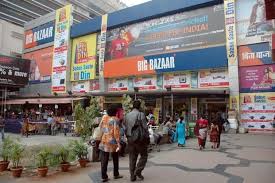
India’s first major store was Big Bazaar which opened in Kolkata in 2001.  For the first time, following demonetisation and implementation of the goods and services tax (GST), modern trade has touched the double-digit mark, accounting for 10% of the overall revenue of the FMCG sector, according to market research and insights provider The Nielsen Co.

bigbazaar2

Modern trade’s growth stood at 25% during the April-June quarter, compared with 16% in the July-September quarter last year.

According to Nielsen, stores that stock FMCG products, operate on a self-service business model and provide shopping baskets or carts to customers are classified as “modern trade” stores.

bigbazaar5

Stores include names such as Big Bazaar and DMart.

For Marico Ltd, the maker of Saffola and Parachute oils, channels such as modern trade comprise 11% of India sales, and are growing at 39%. On the other hand, e-commerce, comprising 1% of India sales, is growing at four times the overall growth rate, according to recent report by SBICap Securities Ltd.

bigbazaar4

Urban retail is growing due to rising urban household incomes and increasing penetration of organised retail in urban centres. The share of urban retail is expected to grow from 49% in 2015-16 to 52% by 2019-20, according to a May 2018 report by Firstcall Research.

Modern retail is seeing retailers launch new stores and consolidate their footprints. For instance, in 2017-18, Avenue Supermarts Ltd, which runs DMart chain of stores, added 24 stores, taking its total count to 155.

bigbazaar3

Over the last few years, Kishore Biyani’s Future Retail Ltd has strengthened its footprint in western India with the acquisition of Hypercity Retail India Ltd. In the north, the company acquired Easyday chain from Bharti Enterprises and Big Apple. In South India, the retailer bought Nilgiris and Heritage Foods chains.

biyani