India sets world record for longest tunnel above 10,000 feet

Atal Tunnel – recently opened by Indian PM Narendra Modi – is the world’s longest highway tunnel above 10,000 feet according to the World Book of Records. 

The tunnel carries a lot of importance strategically as it is 9.02 kilometres long which runs under the ‘Rohtang Pass’ and was constructed on the Manali–Leh highway.

It reduced the travel time by four to five hours and have reduced the distance on Manali–Sarcha road by 46 km. Lt General Mr. Rajeev Chaudhry, Director General of the Border Roads Organisation (DGBR), was honoured for the Border Roads Organisation (BRO’s) outstanding performance in establishing this engineering marvel connecting Manali and the Lahaul-Spiti Valley.

Time to take another look at modern India?

Are QUAD cracks showing? My article in India’s News18

India at the QUAD was being squeezed more than a little by the USA wanting the QUAD to condemn Russia over Ukraine. Russia is a long-standing friend of India (since 1947 independence).

And behind the scenes there are questions about the commitment of the USA to the region and specifically to South East Asia and the Indian Ocean.

The four QUAD countries (India, Australia, Japan and USA) are closer than ever before and doing positive things in supply chains, emergency relief and vaccines for poor countries.

But, are the cracks beginning to show?

My article in India’s biggest media group, Network 18 News:

https://www.news18.com/news/opinion/cracks-in-quad-are-showing-from-doubts-over-us-pledge-to-indo-pacific-to-differences-over-ukraine-4763273.html

Indian Budget 2022 – 6 takeaways

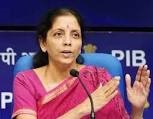
Finance Minister Nirmala Sitharaman delivers the 2022 Indian Budget

Finance Minister, Nirmala Sitharaman has delivered the 2022 Indian Budget – here are my 6 takeaways:

India is the fastest-growing large economy

At 9.2% for 2021-2022, India’s GDP growth will be the fastest of all the large economies.

Launching a digital currency

Indian minister’s 2022 budget speech focused on various incentives to boost India’s digital economy, including the launch of a digital rupee within 2022. Minister Sitharaman noted that the central bank digital currency will “give a big boost to the digital economy and lead to a more efficient and cheaper currency management system.”

India is going green

Calling climate change one of the highest external risks facing the country and the green economy a sunrise economy, the finance minister presented multiple proposals and pathways to climate action across different sectors. These include raising climate finance and developing greener public transportation.

Emphasizing inclusive development

The pandemic financially hurt millions of Indian families and analysts have warned against the threat of growing inequality amidst the pandemic. Prime Minister Modi’s government has, since 2014, laid a strong focus on citizen empowerment. India 2022 budget aims to expand its support for Indians, particularly vulnerable groups such as girls, women, senior citizens and farmers. The budget expands social welfare support, while economically empowering marginalised groups through job creation.

Expanding education and mental health care

The pandemic has meant that many Indian school children have lost up to 2 years of valuable schooling. Major educational programs include expanded digital tools for schools in remote regions.

In a significant move, Minister Sitharaman announced the launch of a National Tele-Mental Health Programme, which, built around 23 core health centres, will provide citizens with access to quality mental health counselling and care services.

But Covid is the big concern this year

With a new growth in Covid numbers, there is growing concern that the pandemic could hit India big again this year and could impact the budget numbers.

India’s TCS and Infosys rising, while IBM pushed down the ladder

Like most Indian IT giants, TCS offices are “campuses” which provide entire work and social life opportunities

According to Brand Finance, the Indian IT consultancy firm Tata Consultancy Services (TCS) has become the world’s second most valuable brand in the information technology (IT) services sector, while Accenture remains the world’s most valuable and strongest IT services brand.

According to the brand valuation consultancy’s newest Global 500 IT Services Ranking study, Infosys has emerged as the fastest growing IT services brand, with a 52% increase in brand value since last year and an 80% increase since 2020 to US$ 12.8 billion, putting it in third place.

TCS and Infosys have moved IBM from second to fourth place. IBM’s brand value is now US$ 10.6 billion, down 34% from last year and 50% since 2020.

Apart from TCS and Infosys, four more Indian firms are listed among the top 25 IT services brands: Wipro (7th), HCL (8th), Tech Mahindra (15th), and L&T Infotech (22nd).

This is an extraordinary achievement for the Indian IT sector and more is to come…

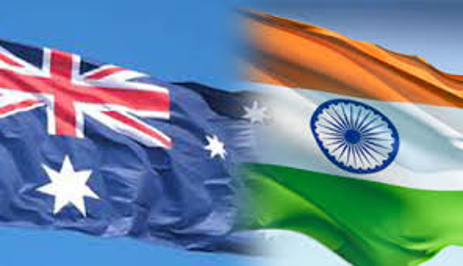
Happy 26 January – national days for Australia and India

Among the many shared interests of India and Australia, on 26 January both countries celebrate national days.

For Australia, 26 January is AUSTRALIA DAY and the date was chosen for the 1788 arrival of the first fleet and the raising of the British flag.

The Commonwealth of Australia was born in 1901 with Britain controlling Australia’s foreign policy. Independence was offered in 1931 and taken up in late 1942. From federation until World War 2, foreign policy was controlled by Britain, and Australia was expected to fight alongside Britain (as it did so in both world wars). 

For India, 26 January is REPUBLIC DAY, the date of the adoption of the India constitution. Each year, India celebrates three national festivals : Republic Day on 26 January, Independence Day on 15 August and Gandhi Jayanti on 2 October.

As the two nations – Australia and India – come closer together, this day provides part of the shared heritage.

Wishing much happiness to both countries today!

More good news! Consider Bangladesh – which for many symbolises everything wrong with the world – take another look

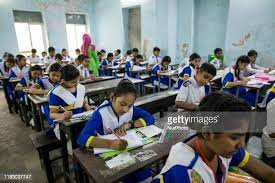
Literacy in Bangladesh jumped from 35% to 74%

Bangladesh, home to 160 million people, for many people in the west is a symbol of everything wrong with the unequal world.

But take another look.

It celebrated a ‘development miracle’ in 2021, its 50th year of independence. In the last three decades, GDP per capita has increased seven fold, 24 million people have been lifted out of poverty, life expectancy has risen to 73 years, infant and maternal mortality rates have fallen by a factor of five, the literacy rate has increased from 35% to 74%, and more than 97% of the population now has access to electricity, up from 62% in 2014.

Worth going over that again – it is genuine good news.

Yes, it’s already time to revisit your “new year resolutions”!

We are now a few weeks into 2022 so this is a good time to revisit your “new year resolutions” and perhaps take a different view.

This is from a friend and colleague Debashish Chatterjee who is a Director of Indian Institute of Management in Kozhikode, India:

3 Unusual Insights for 2022

#1. We begin the year with resolutions. They are often a laundry list of personal desires. A desire is an energy formation. When your desires are woven around a web personal pleasures, the energy they receive comes from your ego. This energy is limited. When your desires are for the greater good, the whole universe supports your desires. Enhance the circumference of your desires, you are bound to succeed.

#2. You do not have a busy life. You only have a busy mind. The world out there is nothing but a projection of the mind. Slow down the mind. Your world will transform around you. You will begin to see things that you had overlooked earlier. You will fumble less and create more.

#3. That which has a beginning also has an end. This was Buddha’s insight into the impermanence of life. Begin with the end in mind. Ask where are my actions and thoughts eventually leading me?

From INTO INDIA and Debashish, have a great 2022!

Happy New Year and a tolerant, multicultural future

A significant majority of people in wealthy countries now believe that having people of different ethnic, religious, and racial backgrounds improves society.

In the US, Canada, UK, Australia, New Zealand and Taiwan, 8 out of 10 people believe greater diversity is a benefit, and even in relatively culturally homogenous countries like Japan and Greece, the share has increased by double digits in the last four years.

Source – Future Crunch

Will 2022 see continued “hard diplomacy” or can we embrace “smart” and “soft” diplomacy?

INTO INDIA wishes you all a peaceful, prosperous, safe and healthy new year for 2022. This is our last post for this year.

The question for next year is how will we all get on better than we did in 2021?

I hope we will see “smart diplomacy” dominate next year – this is the kind of diplomacy that works with cultural and cross border differences. It is not insulting and does not force the other country into an aggressive response. It takes into account major global shared challenges such as climate change, Industry 4 and the continuing pandemic.

It is “smart” to talk to other countries in a way which allows them to make their own positive contribution to the debate – does not corner them into hostility.

Australia has done some “smart” diplomacy things this year – such as using former Prime Minister Abbott as a special envoy, a move well received in Asia.

Hoping countries will all be a lot smarter in 2022.

It would make it a good year for all of us.

Indian Finance Minister in Forbes “top 100 powerful women”

Ms. Nirmala Sitharaman, Union Finance Minister of India, features in the Forbes’ annual list of 100 most powerful women. The finance minister ranked 37 on the list and was featured for the third consecutive time. In 2020, Ms Sitharaman occupied the 41st spot and 34th spot in 2019.

Other Indians to feature in this list include Ms. Roshni Nadar Malhotra, CEO of HCL Corporation, Ms. Kiran Mazumdar Shaw, Biocon’s Executive Chairperson and Ms. Falguni Nayar, Nykaa Founder.

Forbes releases a list of the 100 most powerful women every year.

Featuring The top ten of ‘The World’s 100 Most Powerful Women’:

Mackenzie Scott, Philanthropist

Kamala Harris, US Vice-President

Christine Lagarde, European Central Bank President

Mary Barra, CEO of General Motors

Melinda French Gates, Philanthropist

Abigail Johnson, Fidelity Investments CEO

Ana Patricia Botí, Santander Executive Chairman

Ursula von der Leyen, President of European Commission

Tsai Ing-wen, Taiwan President

Julie Sweet, Accenture CEO