
University students out of step with employers on what employers really want in new hires

A NEW survey has revealed the skills that employers value and how different they are to what university graduates think are important. The QS Global Employer Survey 2018 has highlighted the misconceptions students have about what skills employers want and the areas where there is a graduate skills gap.

For the report released last month, more than 11,000 employers were surveyed around the world and their answers were compared to responses from 16,000 prospective students.

aboriginal

A key finding is that students relatively overvalue the importance of creativity and leadership skills, and undervalue the importance of flexibility/adaptability and teamwork.

The development of soft skills, such as team-playing and resilience, had become almost as important as the technical skills and knowledge acquired during a degree. What are known as “enterprise skills” such as problem solving, communication, teamwork and digital literacy, were in demand.SwinJune

The skills employers ranked as the most important for graduates:

  1. Problem solving
  2. Teamwork
  3. Communication
  4. Adaptability
  5. Data analysis
  6. Resilience
  7. Organisation
  8. Technical skills
  9. Creativity
  10. Leadership
  11. Language
  12. Commercial awareness

The skills students thought were the most important:

  1. Creativity
  2. Organisation
  3. Problem solving
  4. Leadership
  5. Teamwork
  6. Communication
  7. Resilience
  8. Commercial awareness
  9. Adaptability
  10. Technical skills
  11. Language
  12. Data analysis

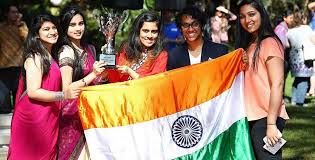
India Students

The biggest difference between the two answers was for creativity, which students placed as the most important skill but employers ranked ninth among their priorities.

This was followed by data analysis, which employers ranked highly as the fifth most important skill but students ranked 12th.

Students were also confused by leadership, which they ranked as fourth most important, but employers rated as 10th.

Employers also rated adaptability highly, in fourth place but students put this in ninth place.

The only skill to feature on the top three for both employers and students was problem solving.

The report suggests students around the world underestimate how much employers value flexibility/adaptability and analytical skills, as well as resilience. They wrongly assume creativity, leadership and organisational skills are more important.

Our Employability Skills Master Class helps students align with what employers want, and builds in the skills to thrive in the era of the Fourth Industrial Revolution.
cropped-steve22.jpg


India continues to lead the world in Business Process Management services

India continues to be the largest BPM (business process management) base in the world, generating close to USD 32.5 billion in revenue with an employee strength of 1.2 million.

bpm2

The Indian BPM industry is estimated to now account for over 37 per cent share in global sourcing and is witnessing a 1.7X revenue growth. Global BPM revenue is set to grow from USD 154 billion to a projected USD 167 billion in FY18, an increase of almost 8 per cent.

bpm3

Upskilling for digital, acquiring competencies through acquisitions or partnerships, building platforms and products, and leveraging centers of excellence in new technologies are some of the key priorities of Indian companies in the BPM industry.

The industry is taking advantage of emerging technologies such as Robotic process automation (RPA), artificial intelligence (AI), digital communications, Internet of Things (IoT), cognitive computing and more, to improve profitability, collaboration and competitiveness.

bpm4

India targets 40% of energy from solar and wind by 2030

To see how fast the world is turning away from coal and gas take a look at China and India – big things happening.

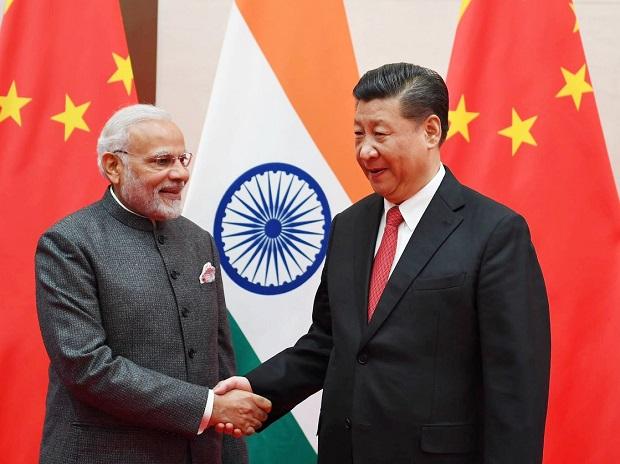
India is targeting 40 per cent of electricity generation from non-fossil fuel-based resources by 2030 as it looks to tap vast solar and wind potential to replace reliance on polluting coal to meet its energy needs, Prime Minister Narendra Modi said Tuesday.ModiXi

Modi said he saw the 121-country International Solar Alliance as the future OPEC for meeting energy needs of the world.

Speaking at the first Assembly of the ISA here, he said solar power will play the same role that oil wells have played over the past few decades in meeting global energy needs.

wind2

Humans have in the last 150-200 years relied on resources trapped below the earth’s surface for meeting energy needs. But for a secure future, resources available above the ground like solar and wind energy need to be harnessed, he said.

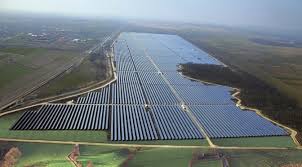
“This is the right time to invest in solar manufacturing,” he said adding he saw an investment potential of USD 70-80 billion in solar manufacturing.

How can Australian investors and superannuation funds best access investment into solar and wind in China and India?

adanisolar

My state of Victoria hits record export levels and is open for business

Forgive me for being parochial in this blog, but I just have to talk about my home city of Melbourne and our state of Victoria – so well known to tourists for the Great Ocean Road (pictured below).

greatoceanroad

Victoria’s exports have hit record levels and are still growing as the Victorian Government helps more Victorian companies break into global markets and create local jobs. Exports from Victoria grew 6.45 per cent to reach a record $51.6 billion in 2017-18.

Victoria’s services export performance has been particularly strong. Valued at $22.5 billion in 2017, it now represents more than 40 per cent of total Victorian exports.

This has been driven by sectors like international education, which has grown 98 per cent since 2012 to $9.8 billion, and tourism which is up 62 per cent to $4.8 billion over the same period.

melbourne

Medical technologies and pharmaceuticals, a key sector identified for support through the government’s $200 million Future Industries Fund, has seen substantial growth, with exports of pharmaceutical products surging 72 per cent in the past two years to $1.56 billion.

Victoria is Australia’s biggest exporter of food and fibre, another key sector the Victorian Government is supporting, with exports reaching a record $12.8 billion in 2016-17. Victoria now accounts for 79 per cent of Australia’s dairy exports, 52 per cent of animal fibre, 45 per cent of horticulture and 38 per cent of prepared foods exports.

Victoria’s export growth is even more impressive given it has come over a period when the state’s single biggest exporter, Toyota, ceased production, highlighting the diversity and strength of our export sector.

mcgmelb

The Victorian Government offers a range of services to help local businesses get export ready, prepare market strategies and understand regulatory requirements so they can start taking their products and services to the world.

Since December 2014, more than 4600 Victorian companies have participated in 130 government-supported inbound and outbound trade missions, resulting in more than $267 million of actual export sales.

The government has also grown Victoria’s network of international trade and investment offices (VGTIs) to 22, which is more than any other state, and put in place strategies to grow trade and investment with key markets including ChinaIndiaLatin America, and Southeast Asia.

So – looking for a dynamic, quality partner or location for business and education? Try Victoria!

Spur

Above pic – just one hour drive from Melbourne CBD is the beautiful wine and food area the Yarra Valley and one of the great forest drives, the Black Spur.

The Himalayas can show us a key difference between India and the west

Do Indians have a different world view and culture to the west? Of course, each country or region of the world has their own culture and differences exist – understanding and adapting to difference is one key to succeeding across cultures.

This simple statement about the Himalayas might help you see the difference.

If the Himalayas were located in the west, people would flock there for bungy jumping, extreme ski sessions, jumping out of planes and other extreme sports. For India, the Himalayas have been a location of contemplation, monasteries, thought and mindfulness.

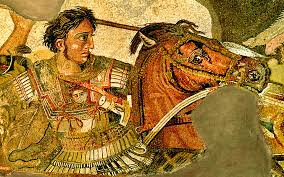
alexander

I saw a similar point made using the example of Alexander the Great. The west admires Alexander as a person of action, conquest, growth and acquisition – while a hero in India could be a guru sitting in contemplation under a tree.himalayaMy point is simple – when we understand cultural differences we can then adapt our behavior and communication while remaining true to our own culture.
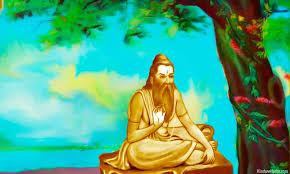


guru

Cultural generalisations can be helpful but remember they are just generalisations – there will be exceptions and culture is riddled with paradox. Many westerners are great contemplatives, while Indian history has many action heroes.

“The Pitch” – the next big thing for Indian students

What reality are students facing on graduation? Employers are impatient and demanding in job interviews, often starting with a blunt “Why should I hire you instead of all these other people?” and ending quickly if the answer is not convincing. This is particularly the case in India where almost half of the population is under 25.

On top of this, students who want to move into startups and new businesses will find financiers and advisors similarly impatient.

The reality for student graduates is they are entering a fast-moving world that demands to be convinced, right now. Can they do the convincing?

Repeated studies by employer groups suggest students are not at all convincing, not articulate, inexperienced in teamwork and show little leadership aptitude. How could they be, when most universities do not teach these skills?

Can we solve this problem? Can we create a generation of graduates who are job ready, who can hit the ground running?

The answer is “yes”, and the key to this is not so much the old fashioned soft skills training programs but it is found in the exciting world of “pitching”.

In the last quarter of 2017, several parties combined to conduct an Indian Student Employability Pilot Program in Melbourne. These included Australia India Business Council, ISANA International Education Association and my company EastWest Academy Pty Ltd.

The objective was to test whether a short intervention could add significant value to the students in terms of: Presentation skills (pitching); Interview techniques; Linked In profiles; CV’s.

The program included three group sessions plus interaction via WhatsApp, email and personal contact. To add real zest and motivation, the final session was an opportunity for the students to pitch to the board of ISANA International Education Association – a challenging but exciting prospect to convince influential leaders.

By focusing our intervention on a rapid program of developing a dynamic “pitch” for the forthcoming board meeting, the students had a clear goal, timeline and motivation.

Outcomes were exciting to experience. The pitches were competitive, with much improved clarity and pacing, slower speech and clear transmission of information. What was really exciting was the students quickly learned that any claim they make needs to be supported by proof – generally one additional sentence.

In addition, the presentation to the board was interactive and showed a good ability to handle tricky questions and effective use a two-part answer – if the question is about weakness, outline what that might be and then state what steps you have taken to improve. Or if about strengths, again, outline what that might be and then show proof of when you used that strength.

The key to this success was the excitement around “the pitch” – this is what the students wanted, they saw it could work for them and they put energy and skill into making high impact pitches. They are ready for the future.Never give up

10 things to know about modern India

  1. Successful and confident

Economic success has restored Indian confidence. Indian entrepreneurs are now recognized around the world and there is a national expectation that the next Bill Gates will be an Indian. This entrepreneurial spirit permeates the nation (most dream of becoming entrepreneurs) which is now confident.

economy

  1. Never forget rural people

Indian business and political leaders may live the urban lifestyles, but they do not forget the small towns and villages at the centre of rural life – and it’s not just the politicians with an eye for votes, with major corporates such as Infosys pouring resources and funding into village developments.

ruralindia

  1. Avoid pointing the finger

India is a land of great cultural diversity, many languages and countless opinions, but two things unite the nation – cricket and the World Trade Organisation. Indians become instantly passionate when challenged on their high tariffs, especially if the challenge comes from the west. The message is, point the finger at India and you can expect a robust response.

  1. Oceans of patience

Indians have oceans of patience which can drive westerners crazy, but it gives them a special strength in negotiations. This patience is derived from deeply held spiritual views such as impermanence – Indians are constantly reminded of the impermanence of this life, everything changes, and they can wait when often we cannot. Who has the advantage in this negotiation?

  1. Not just an IT miracle

Do not be fooled with the view that the Indian economic miracle is just driven by call centres and IT. Important as these are, look also at insurance, energy, retail, clean technology, manufacturing, pharmaceuticals and even agriculture as areas where efficiency is producing startling results.

 BKC3

  1. Dragon and elephant can dance

The dragon (China) and the elephant (India) have discovered that they can dance, and now China is India’s major trading partner. Competitors are becoming collaborators and western business leaders need to be aware that the Indians coming to negotiating tables will be leaders who confidently see that this century belongs to the east.ModiXi

  1. Not especially “Asian”

While India feels great about the success of “Asia”, in many ways it does not feel particularly “Asian”. First and foremost, Indians feel Indian, and to them that is vastly more relevant than being geographically part of Asia.

  1. Remember the “Father of the Nation”

Whether dealing with the young or the old, in India never forget the “Father of the Nation”, Mahatma Gandhi.

ATT00036_

  1. Equity up there with democracy

Partly because of Gandhi, Indian leaders are more concerned with equity than with spreading democracy around the world – and cannot understand the enthusiasm of the USA and its allies to champion democracy in unlikely locations.

  1. No junior partner

While many in the west still see India as a “developing” country and therefore a future player on the world stage, India has no intention of being a junior partner or a bit player in the world. Invite India in and you can expect them to want to be at the head of the table, making the running. This is a country whose time has come – and the people you deal with are highly aware of this.

Wipro wins biggest ever deal

Indian firm Wipro has won a more than $1.5 billion deal spread over 10 years from Illinois-based Alight Solutions LLC, achieving its largest ever contract. 

With this, the Bengaluru-headquartered software services exporter joins larger peer Tata Consultancy Services (TCS) in winning larger deals at a time when the outsourcing services industry is seeing a slowdown owing to emergence of digital services.

TCS bagged three such multi-year large deals totalling more than $5 billion in revenue since September 2017.

This is a big deal for Wipro’s new boss, Abidali Neemuchwala, who took over in February 2016.

wipro

“This deal will result in revenues of USD $1.5 to $1.6 billion for Wipro over the tenure (10 years). This is Wipro’s largest win to date. This engagement will enable the digital transformation of Alight’s offerings across health, wealth, HR and finance solutions,” said Wipro in a statement, adding that it would “enhance the employee experience of Alight’s clients by leveraging Wipro’s solutions in digital technologies, cognitive automation and data analytics.

“This is a testimony to the capabilities we have built through our strategic investments in Wipro Digital, cloud platforms and cognitive platform Wipro HOLMES. We will leverage this expertise to digitalize and modernize Alight’s core across platforms, technologies and operations,” Neemuchwala was quoted in the statement.

Wipro also said it has completed the transaction to acquire Alight HR Services India Pvt Ltd, the India arm of Alight Solutions.

Retail changing fast in India

The Indian retail market is changing fast, with a rapid consumer move to buying fast moving consumer goods (FMCG) via major retail outlets. This is happening across India but is fastest in urban centres.

India’s first major store was Big Bazaar which opened in Kolkata in 2001.  For the first time, following demonetisation and implementation of the goods and services tax (GST), modern trade has touched the double-digit mark, accounting for 10% of the overall revenue of the FMCG sector, according to market research and insights provider The Nielsen Co.

bigbazaar2

Modern trade’s growth stood at 25% during the April-June quarter, compared with 16% in the July-September quarter last year.

According to Nielsen, stores that stock FMCG products, operate on a self-service business model and provide shopping baskets or carts to customers are classified as “modern trade” stores.

bigbazaar5

Stores include names such as Big Bazaar and DMart.

For Marico Ltd, the maker of Saffola and Parachute oils, channels such as modern trade comprise 11% of India sales, and are growing at 39%. On the other hand, e-commerce, comprising 1% of India sales, is growing at four times the overall growth rate, according to recent report by SBICap Securities Ltd.

bigbazaar4

Urban retail is growing due to rising urban household incomes and increasing penetration of organised retail in urban centres. The share of urban retail is expected to grow from 49% in 2015-16 to 52% by 2019-20, according to a May 2018 report by Firstcall Research.

Modern retail is seeing retailers launch new stores and consolidate their footprints. For instance, in 2017-18, Avenue Supermarts Ltd, which runs DMart chain of stores, added 24 stores, taking its total count to 155.

bigbazaar3

Over the last few years, Kishore Biyani’s Future Retail Ltd has strengthened its footprint in western India with the acquisition of Hypercity Retail India Ltd. In the north, the company acquired Easyday chain from Bharti Enterprises and Big Apple. In South India, the retailer bought Nilgiris and Heritage Foods chains.

biyani

Independence Day – “India discovers herself again.”

Today is Independence Day for India – celebrated every year on 15 August. This freedom came in 1947 but had to be fought for with many great “freedom fighters” showing the way. Britain did not want to let go of this nation which had been a massive source of income for many years.

Because of that struggle, for all Indians Independence Day is a day to remember the people who fought the Britishers and gave up their lives to free the country from a foreign ruler – it is the day to “pledge and to protect the unity and integrity of our country.”

India Students

Independence Day is a national holiday and is celebrated with much fervour across the nation. Parades are held in all state capitals and district headquarters to celebrate Independence Day. Indians across the country also hoist the tricolour to mark the day. Many also fly kites, sing patriotic songs and exchange sweets to celebrate Independence Day.

On the eve of Independence Day, the President addresses the nation in a televised speech. On Independence Day, the Prime Minister greets the nation from the ramparts of the Red Fort in New Delhi.

Independence was proclaimed in 1947 by the first Prime Minister of India, Pandit Jawaharlal Nehru, who declared: “At the stroke of the midnight hour, when the world sleeps, India will awake to life and freedom. A moment comes, which comes, but rarely in history, when we step out from the old to the new, when an age ends and when the soul of a nation, long suppressed, finds utterance. We end today a period of ill fortune, and India discovers herself again.”

Well done India – and a very Happy Independence Day!