
The Belt and Road Initiative and the Geopolitics of the Indo-Pacific Region

David Morris is a former Australian diplomat and current expert/advisor on regional issues, risk and international relations. He recently wrote on “The Belt and Road Initiative and the Geopolitics of the Pacific Region” published in Research on Pacific Island Countries, Social Sciences Academic Press (China), 2019.

The Belt and Road Initiative has become associated with a geopolitical “China threat” discourse in the South Pacific, he writes.

Are China and Australia, the dominant regional player in the South Pacific, driven by geopolitical imperatives to compete for power? Or do their different geopolitical needs provide opportunity for cooperation that is mutually beneficial and manages risks in the region?

As a commentator on India and the Indian Ocean, I can see much of what David Morris writes could be applied to the Indian Ocean rim countries.

Morris analyses supposed Chinese “threats” as well as risks to China, including fears of a military base in Vanuatu, Chinese debt-funded projects in Tonga and closer economic cooperation with Papua New Guinea.

He concludes that it is feasible for Australia to meet its geopolitical imperatives if its regional security leadership can be maintained.

A geopolitical analysis of China in the South Pacific concludes that China is unlikely to seek regional security leadership if it can ensure access to trade routes and markets.

If Australia could move beyond geopolitical rhetoric, it should therefore be possible for Australia to partner with China to support sustainable development, mitigate risks and ensure broader stability of the South Pacific region, he writes.

With large doses of common sense, Morris writes that Australian activity could be complementary to China’s BRI, and that while there are political risks, the two countries could cooperate to reduce risk and ensure projects are sustainable.

This would be great – but my view is a big barrier to anything Australia does in our region is always its world view of “goodies and baddies” with the USA as the major “goody” and China the current “baddy”.

It would be great if influential countries like India, Australia and China could create a new collaborative model that brings real development to those poor communities in our region.

Is this possible?
ModiMorrisonSmile2

India launches Artificial Intelligence knowledge centre for NSE

India’s National Stock Exchange (NSE) has launched a Knowledge Hub in New Delhi, an Artificial Intelligence (AI) powered learning ecosystem that will assist the banking, financial services and insurance (BFSI) sector.

India has two major stock exchanges – the NSE and the Bombay Stock Exchange.

nse6

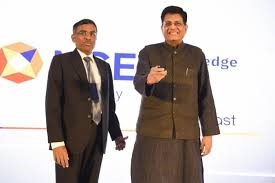
Speaking on this occasion Commerce & Industry Minister Mr Piyush Goyal (pictured above right) said that although India has developed as the second largest fintech hub in the world, a lot of work still needs to be done in the BFSI sector. He hoped that the Knowledge Hub created by NSE will fill in these gaps and help the financial sector to move into the future.

The NSE Knowledge Hub will enhance skills and help academic institutions in preparing future-ready talent for the financial service industry. It is also available on mobile and attempts to bring together world class content and learners through this state-of-the-art and future-ready platform.

The use of AI will ensure that the skill upgrade is affordable and accessible. Piyush Goyal said AI and Machine Learning will contribute US$ 1 trillion to the Indian economy by 2035.

Industry4.0 2

Is India really growing? Hyatt Hotels think so, adding 11 new hotels in 2020

Hyatt Hotels is bullish on India and plans to open 11 new hotels across India by the end of 2020.

Hyatt now has 32 hotels across 20 destinations under its eight brands in India – I recently stayed at Hyatt Regency in Chandigarh and it was an outstanding hotel – well located, good food and beverage service and everything went smoothly.

The hotels at Thrissur, Kochi, Jaipur, Dehradun, Trivandrum and Udaipur will be under the Hyatt Regency brand.

India is a very important market for Hyatt. It is one of the top three global growth markets for the company after the US and China and there is a huge scope of growth as the demand still exceeds the supply.

So, for Hyatt, in 2020 India is a growth story.

Reflections for the New Year – from Ram Dass

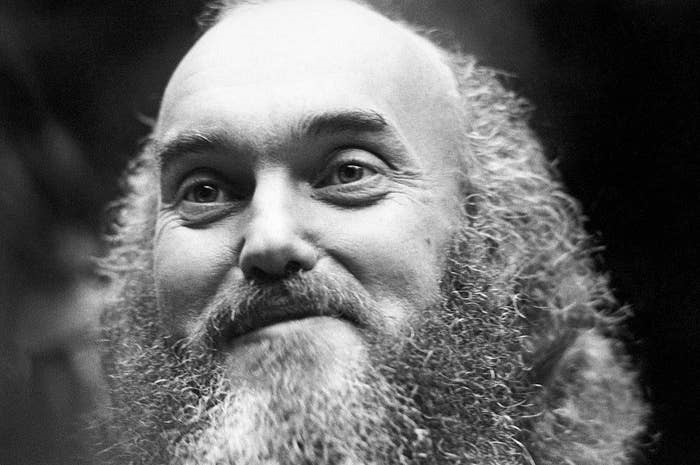
From his beginnings as Harvard Professor Richard Alpert, he became Ram Dass in India and is now at the age of eighty-eight. Here, for the New Year, are some of his quotes.

“Everybody is playing with their stories; who they think they are. It’s more fun to just witness it all. To be in the environment in which it’s all happening.”

“Treat everyone you meet like God in drag.”

“You walk down the street and you’re somebody; you dress like somebody; your face looks like somebody. Everybody is reinforcing their structure of the universe over and over again and you meet [each other] like two huge things meeting. We enter into these conspiracies. You say, I’ll make believe you are who you think you are if you make believe I am who I think I am.

“How do we know who we are? We might be one breath away from enlightenment or death or who knows? The uncertainty is great. It keeps it wide open.”

“Give up the anger. Working it through is making it something. Just give it up.”

“When you go out into the woods, and you look at trees, you see all these different trees. And some of them are bent, and some of them are straight, and some of them are evergreens, and some of them are whatever. And you look at the tree and you allow it. You see why it is the way it is. You sort of understand that it didn’t get enough light, and so it turned that way. And you don’t get all emotional about it. You just allow it. You appreciate the tree. The minute you get near humans, you lose all that. And you are constantly saying ‘You are too this, or I’m too this.’ That judgement mind comes in. And so I practice turning people into trees. Which means appreciating them just the way they are.”

“The game is to be where you are. Be it honestly and as consciously as you know how.”

And from me – wishing you a happy and healthy New Year.


How should you start a speech?

I have just had three wonderful weeks in India. I made some speeches. I listened to a lot of speeches.

I was asked: “What is the best way to start a speech?”

We all know the bad ways. For example, someone just reads from their powerpoint. Or someone is checking the microphone.

But from Conor Neill from Ireland I have long applied these three ways to start a speech:

Ask a QUESTION

My recent topic has been How to Communicate and Survive during Industrial Revolution 4.0. So some times I start with “How will you keep your job when robots take over?” The question should be about a problem your audience faces.

State a FACT

Find some amazing fact that leads to your topic. One of Conor’s favourites is “There are more people alive today than have ever died”. If the fact shocks, even better. With my topic I use “over 65% of the kids in school right now will find jobs that have not even yet been invented.”

Begin a STORY

“I was in India recently and I met a person who said something which changed how I think about communication and leadership”. The audience is keen to hear what that “something” was. It should connect to your topic.

So, that’s the beginning.

Then, I suggest you have a long pause every 5 minutes or so (shorter if you like) and use another beginning and bring the audience along again using one of these three starters.

Good luck! (equals good preparation).

The harsh truth about how Australia has made a mess of relations with India

Scott Morrison has a huge challenge ahead as he travels to India. As leading Asia commentator, Greg Sheridan, has written in The Australian, Morrison “needs to fundamentally reset the relationship.”

In my almost two decades now of connection with India, I have seen first-hand how badly Australia has dealt with India – and this goes for government, education and business. You could possibly put in the arts and culture too.

As Sheridan says: “There is no relationship of such importance that Australia, historically, has managed so badly.”

ModiMorrisonSmile2

Check out how Sheridan describes India – “By 2035 India will have more people than China. All forecasts are fallible, but it is widely thought that by 2030 India will be the world’s third largest economy. India commands ­immense soft power and cultural richness. In any bookshop there are novels written by Indians from India, and Indians in the diaspora. A chunk of the British and Canadian cabinets are of Indian origin. The US has had two ethnic Indian state governors, Bobby Jindal and Nikki Haley. Both became nat­ional figures. The best Australian film this year was Hotel Mumbai.”

One big hurdle for Aussies is that since independence India has been very close to Russia (and still is) and has the capacity to maintain close relations with countries we do not like.

Australia has a “goodies and baddies” approach to the world – whereas India does not make the same judgements. We need to work with this.

Sheridan provides the first accurate statement of how bad things have been – “…over many decades, Canberra comprehensively messed up the Indian relationship and achieved radically sub-par outcomes in our own interests. The three great non-Chinese Asian powers are India, Japan and Indonesia. They are critical to geo-strategic and economic balance in the Indo-Pacific. We have a deep relationship with Japan. We pay a lot of attention to Indonesia. But the work with India is almost all ahead.”

Are we up for this challenge? I am not sure. Canberra is so Washington focused, and China preoccupied, that India does not rate enough.

Sheridan wants Australia to try again for a free trade agreement with India. I love the idea, but I have little confidence we can achieve it. In my time with India, Australian diplomats have blamed India for every delay and the fact that we did not get a deal. I have talked to the Indians and am not so sure the blame was so one sided. The question is – can Australia adapt and become more flexible with India? If we can, we might just snare an FTA.

Well done Greg Sheridan for such insights in Australia’s relations with India.

Dalai Lama provides another insight into how India is very different

How is India different?

Last week the Tibetan spiritual leader the Dalai Lama delivering the 24th Dr Sarvepalli Radhakrishnan memorial lecture on “universal ethics” organised by the Indian Institute of Advanced Study, said India’s message of “ahimsa, kindness, love and compassion” spread even during religious conflicts and World Wars.

So, there is one guide to India’s difference – in my own words – despite having some internal conflicts of its own, the Indian starting point is non-violence, kindness, love and compassion. Not saying it always works out that way, but…

How many other cultures can we say this for? Think how strongly the concept of “revenge” has taken hold in the west – someone does wrong by us, we will “track them down”. Just one example of a different mindset.

The Dalai Lama has lived in India since 1959, and he also called for a “revolution” in India’s education system by combining its 3,000-year-old ancient tradition of high moral teachings with the modern education. This would be a good thing everywhere.

“Those mental quality subjects like non-violence, love, kindness and compassion should be included as an academic subject instead of religious teachings,” the 84-year-old said.

What do you think?

hhdl

Solar is getting really interesting as Australia to build world’s biggest solar farm – energy for Asian neighbours

Plans to build a giant solar power and battery facility in central Australia to supply electricity to Singapore will go ahead thanks to backing from tech and mining billionaires Mike Cannon-Brookes and Andrew ‘Twiggy’ Forrest.

The duo are co-leads on an investment round for Singapore-based Sun Cable‘s $22 billion proposal for a 10-gigawatt (GW) solar farm and 22GWh battery storage near Tennant Creek, in the Northern Territory.

asiamap8circle

Solar is stepping up while the Australian Government continues to step back – locked into an ideological stance of opposing any alternative to coal and denying any impact on the climate. Sad to see this continue.

Singapore gets 95% of its electricity from imported LNG and Sun Cable hopes running a 4500km high voltage direct current cable from the 15,000 hectare site – around a quarter of the size of Singapore itself – via Darwin to the island state will supply up to one-fifth of the city’s power needs. It will be the world’s largest solar farm and also supply the NT capital.

The 10GW plant is nearly double the 5,500 megawatts Snowy Hydro scheme, which generates around 4500GWh anually. The Australia-Singapore Power Link (APSL) plant’s generation capacity is four times more than Australia’s largest coal-fired power station.

Central to the project is Sydney solar energy startup 5B, founded by Chris McGrath and Eden Tehan in 2013.

The business developed new technology for portable, prefabricated solar arrays, re-engineering the supply chain and simplifying how solar projects are delivered, using fewer materials, rapid deployment and streamlined logistics.

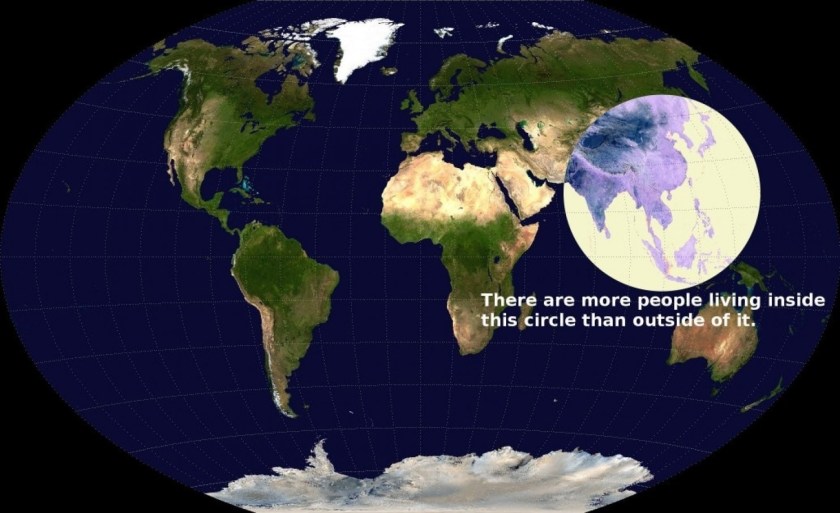
If Australia makes this happen, we can become the biggest energy supplier to the Asian region – Indonesia, Malaysia and more.

The project is expected to take six to seven years to complete.

Big Battery gets bigger too

News of Sun Cable’s progress comes in the same week that South Australia’s Hornsdale Power Reserve, dubbed the Tesla Big Battery, announced plans to expand the world’s largest battery by 50% by mid 2020.

The 50 MW/64.5 MWh expansion, supported by Tesla, will be the first grid-scale battery in Australia to provide inertia benefits to the National Electricity Market (NEM), which is critical to grid stability and the future integration of renewable energy.

Solar looks set to change history – for the better.

solar2

Indian education market and Australia’s leading universities talking the same language

While I was in India working on the Genesis India Horticultural Collaboration Project 2019, our top universities (The Group of Eight) were in India with Federal Education Minister Hon Dan Tehan.

(Pictured above are, from left, Hon Dan Tehan, Australian Education Minister, Vicki Thomson Go8 Chief Executive and Dr Craig Jeffrey, Director, Australia India Institute).

This is an important mission – if we can get a deep understanding of what India is driving for, we will develop collaboration that will be for the good of both countries.

The concept of just taking in fee paying Indian students without some sense of balance and collaboration could have a short shelf life.

The visit was timely and served to reinforce Go8 commitment to supporting and assisting with India’s ambitious higher education policy priorities which were recently announced.

Go8 represents Australia’s leading research-intensive universities with seven of its eight members ranked in the world’s top 100 universities.

I was impressed with this summary from Vicki Thomson Go8 Chief Executive: “We understand that by working cooperatively we can best assist where we can, developing opportunities for quality students, graduates and researchers, and, critically the future academics who will lead the vital train-the-trainer work India requires.”

“There is potential for research intensive universities like the Go8 to partner with Indian institutions and Indian industry on projects with potential to be nation building on both sides. Success in these areas can capture public imagination and support and encourage further investment and commitment from both the Australian and Indian Government’s,” Ms Thomson said.

Three Go8 universities are already engaged in Indian partnerships at PhD level. Since 2008 the Monash-IITB Research Academy has been providing joint PhD training, the University of Queensland/IIT-Delhi collaboration uses a similar model and more recently the University of Melbourne has entered into a collaboration with three of the prestigious Indian Institutes of Technology to deliver a joint doctoral degree program.

I like the language of the Go8 – “Expanding this collaboration is key to our ongoing partnership with India.”

Now, that is the pathway to the future in education.

India has many remarkable achievements and hosting the Tibetans is one of them

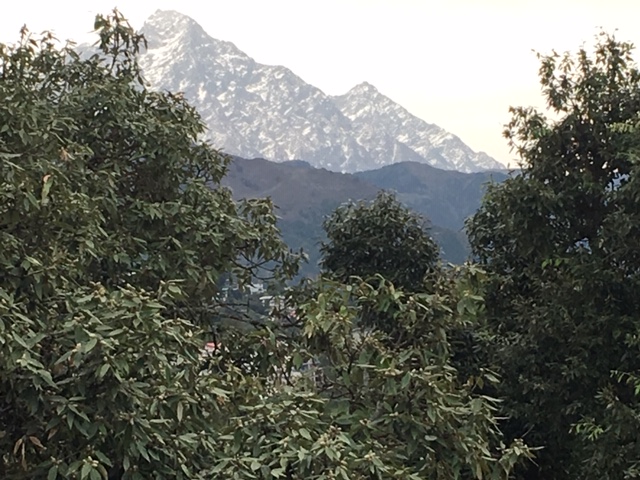
Today I am in Dharamshala, a town on the western end of the Himalayas. This picture is taken from my hotel.

In this area in the 1950’s something remarkable happened.

The Tibetans, fleeing their own country, came here in thousands along with their young leader, His Holiness the Dalai Lama.

I do not know the history too well, but I understand that India opened its arms and gave land and refuge here and in other parts of India for the Tibetans.

hhdl

Today the Dalai Lama is older and looking a little frail, but his contribution to the western knowledge of Buddhism and putting “kindness” ahead of any belief system is just amazing – thanks in part to the country that hosted him.

Just another side of this country which at the time was struggling itself.

Remarkable India.