Indian budget to be presented today showing the way for Modi 2.0

The India Budget 2019 is due to be presented today by Finance Minister Nirmala Sitharaman (pictured).

This will be one of the most crucial Budgets for Modi 2.0 as it will become a guide for upcoming reforms and policies in the next five years of his government.

Modi2Promo

Come and learn more at our FREE Melbourne seminar (copy this and paste into your browser):

https://www.eventbrite.com/e/modi-20-journey-towards-greater-india-tickets-64489650280

Let’s hope PM Modi and PM Morrison meet lots and do deals

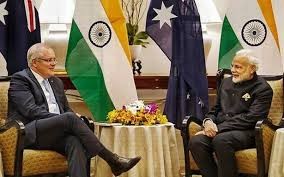
Now, this is the kind of photo I would like to see a lot more of.

Australian PM Scott Morrison (left) and Indian PM Narendra Modi in discussions.

ModiMorrison2

This is vital for Indian Ocean strategic issues plus our trade and investment relations.

Here’s a very nice irony – Australia and India have really struggled to agree a Free Trade Agreement but one outcome of the Trump trade war on China is that the 15 countries in the Regional Comprehensive Economic Partnership (Including Australia and India) are now motivated to do a deal – they are talking fast, negotiating hard and could come up with a sweeping deal this year that reduces the need for direct talks on an Australia-India FTA.

Thanks Donald.


My interview with His Excellency Dr A.M. Gondane, High Commissioner of India to Australia – first extract “tariffs and trade”

One 12 June, I had the privilege of a one-on-one interview in Canberra with the Indian High Commssioner, Dr AM Gondane. Here is the first of a series of short extracts from that interview:

Gondane

Dr Gondane: “Australian tariff rates are low and ours are at a higher level. There are differences and we know that Australia is a very open economy. It is natural for Australia to desire Indian tariffs to match the Australian model, but this will take time. We have actually made a lot of progress and opened more than 90% of our tariff lines for restarting the negotiations.

“There are some sticking points, but I think, with careful negotiation and goodwill, the free trade agreement could be reached. Because India’s tariffs are higher it will naturally take longer to get them down.

“Both Australia and India are negotiating the Regional Comprehensive Economic Partnership (RCEP) forum (meeting in Melbourne this week) which could be another avenue for increased trade.

“The  RCEP provides good scope for commonality and the opening up of India and Australia economies – both are active in the RCEP,” the High Commissioner said.

The 15 Member countries of RCEP are Australia, India, China, Japan, Republic of Korea, Singapore, New Zealand, Malaysia, Indonesia, Brunei, Cambodia, Laos, Myanmar, Vietnam, Philippines. They are meeting in Melbourne this week.

Dr Gondane concluded with a wide ranging comment about the Indian Ocean region and pointed to Prime Minister Modi’s vision for the Indo-Pacific:

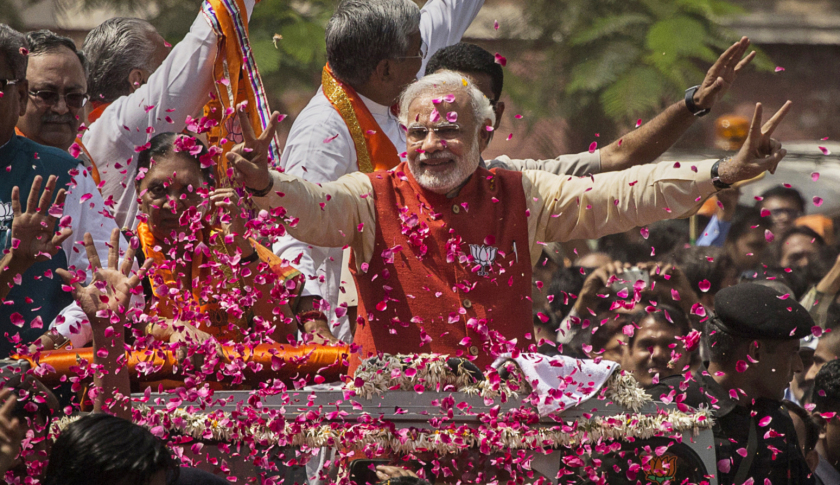
Modi oath

“The period of doubling of Indian economy has reduced and we can reach US $ 5 trillion within the next few years. We are already the fifth largest economy in nominal terms and third largest in purchasing power parity. That is why the Indian Prime Minister has elaborated on what is our conception of the Indo-Pacific.  Australia is an important partner in the Indian Ocean. These two powers will be of great consequence in the next twenty years.”

India-Australia trade relations set to grow at critical time

Many of us have championed closer economic ties between Australia and India. It is now more important than ever to get closer to India.

As Austrade expresses it – “With trade wars, powerful neighbours, and the odds on a recession narrowing within the next two years, considering Indian market entry has never been more mission-critical for Australian business.”

AusIndiaFlags

Some key statistics:

•In 2018, Australia’s total exports to India grew 10% to A$22.3 billion. India ranked number five in Australia’s export destinations.

•Two-way trade increased by a similar percentage to A$30.4 billion, making India Australia’s sixth largest two-way trade partner.1

•Australian investment in India increased almost 12% to A$15.6 billion, slightly ahead of India’s investment in Australia at A$15.1 billion.

However – and here is why Australia needs to balance trade – according to the Australian Bureau of Statistics, in 2016–17 (the latest year for which there is data), only 2,087 exporters engaged with India, compared to 7,214 for China.

Time to think India.

Family businesses in India are the world’s most upbeat

Family businesses in India are on a growth trajectory, with 89 per cent of them expecting to grow in the next two years, according to a survey.

The global survey, ‘Family Business Survey 2019’ by PwC, was done among 2,953 family leaders across 53 countries, including 106 family business leaders, between April 20 and August 10, 2018.

The survey has revealed that 89 per cent of family businesses in India expect to grow in the next two years, with 44 per cent of them looking at growing aggressively and 45 per cent expecting steady growth.

“Regulatory changes are getting family businesses to bring in order and professionalise the business, and disruptive technology is pushing them to transform. These new market dynamics are cultivating a renewed sense of ambition in family businesses, making them resilient in the face of change,” PwC India Partner and Leader, Entrepreneurial and Private Business, Ganesh Raju K said.

In terms of expansion, a little more than half of the family businesses are open to internationalisation, while 40 per cent are looking at diversification, the survey said.

Nearly half of the family businesses in India are open to mergers and acquisitions both within India and outside thus reinforcing the belief that inorganic growth will facilitate synergies and achieve incremental revenue, it said.

A lot of Indian family business owners are looking at private equity or venture capital funding or are looking at listing their business on stock exchanges.

Further, the survey said, more and more companies looking at professionalising their business functions are distinguishing between ownership and management as they feel partnering with the right talent might help family businesses to adapt to the changes.

About 73 per cent of Indian family businesses have the next generation working in the business and 60 per cent plan to pass on the management or ownership to the next generation.

It also found that 92 per cent of family businesses in India allow family members to work in the business. When it comes to spouses or partners, three-fourth of family businesses allow them to own shares and two-third allow them to work in the business.

BUT – there is some evidence the next generation of young Indians will want to branch out and create their own startups rather than the traditional path of joining the family firm.YoungIndians 2

What will PM Modi do for India in his second term?

What will Modi 2.0 do for India?

With the world’s biggest democracy opting for stability and returning the Narendra Modi Government for a second five-year term, all eyes are on what will Modi 2.0 do?

Here are some actions to look out for. As my friend Amith Karanth from India Australia Exchange Forum says: “Modi will also pull some surprises”.
modi2.0

Looking ahead at Modi’s priorities

Health – telemedicine, more doctors, increase immunisation

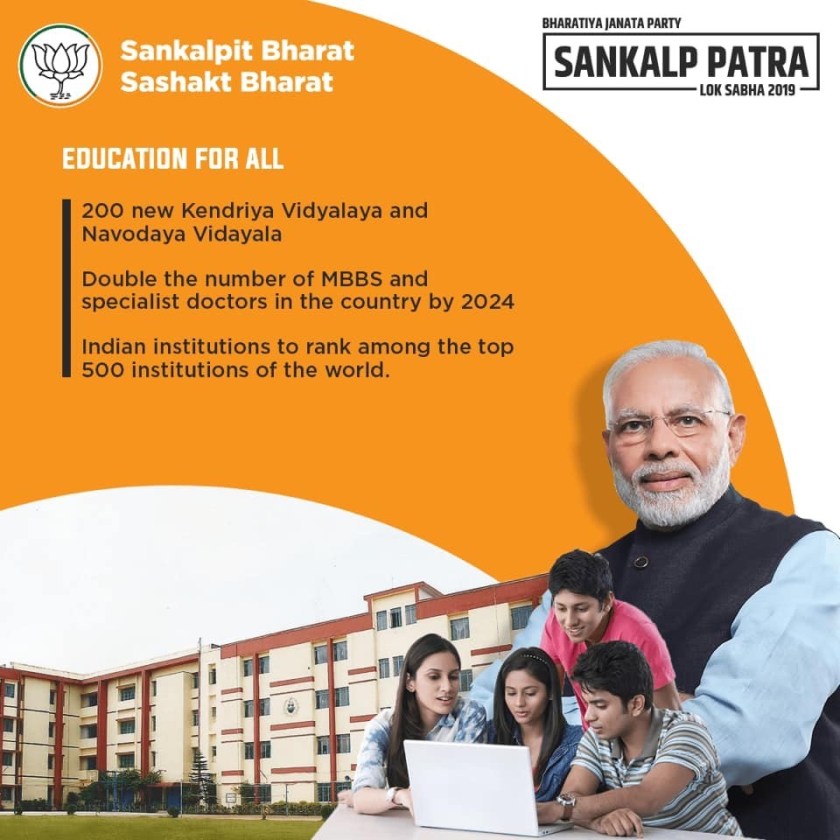
Education – Modi wants India to have a top 100 global university – he will deregulate many top universities to allow this improvement

Add 50 city metros

Inclusion – banking for all, reduce poverty to single digit

Employment creation and lifting farm/shopkeeper incomes will continue to be a focus

Building more infrastructure

Devolving more responsibility and power to the state governments, extending the level of competition between them and empowering local leaders

Streamlining the GST, which was a minor miracle itself, but has multiple complexities

While privatisation of government institutions such as banks and more is needed – this might remain in the “too hard basket” in term two

Modi2.02

Looking at what Modi has already achieved

Moves against corruption such as demonetisation (one of his major surprises), reduction in cash and movement towards digital payments

Introduction of a GST, arguably the world’s biggest tax reform – meaning the central and state governments are now awash with funds and can now do things

Focus on startups and cheaper loans for SME’s has created real growth in new enterprises

National campaigns such as “Clean India” have begun the big job – providing access for many millions to toilets is just one of the outcomes

Some reforms to the insolvency and bankruptcy has increased confidence in doing business

Modi has been a relentless global salesperson for India and attracted record foreign investment

India’s infrastructure has changed massively in five years – with more to do

Modi

Just watch India’s TCS and Accenture dominate the future world of IT

Tata Consultancy Services Ltd (TCS) is set to surpass DXC Technology Co. to become the world’s third-largest software services provider in fiscal 2018-19 – behind IBM and Accenture.

TCS grew 9.6%, or added $1.82 billion in new business, to end with $20.91 billion in revenue in the year ended 31 March.

TCS’s strong performance over the two years has seen a change of guard at the top. In 2017, TCS entrusted Rajesh Gopinathan, who was then chief financial officer, to take over as chief executive and succeed N. Chandrasekaran, who was named the chairman of Tata Sons Ltd. Still, the company managed to retain all its senior executives and improved its growth and profitability, with the consensus view that this was one of the smoothest management transitions at an Indian corporate entity.

Experts predict the fight for world dominance will be between TCS and Accenture.

But when it comes to profitability, TCS is already way in front – TCS ended last year with a 25.6% operating margin, while Accenture and DXC had 14.8% and 14% profitability, respectively.

New era for India-Australia as Ms Petula Thomas becomes Director of Indo-Australia Chamber of Commerce

Exciting news for the India-Australia relationship – Ms Petula Thomas has been appointed the new Director of the Indo-Australian Chamber of Commerce.

Petula worked with the British Deputy High Commission (BDHC), Australian Trade Commission (Austrade) and British Airways in Chennai over the past 15 years and brings a wealth of experience in strategic leadership, international relations, marketing and business development.

Petula is a passionate innovator and supporter of Women in Leadership, so I feel she will make a big positive difference in this role.

PetulaThomas

She is also a strong communicator.

We need strong and effective communication to enhance the India-Australia role and to make it easier for business of both countries to get together.

I hope the IACC can pioneer more exchange of people, more two-way missions, great education, more collaboration, improved cross-cultural understanding and positive steps to ensure that business in both countries know best what works in each country.

By the way – Petula has an amazing track record, winning four global and regional performance awards from the Foreign & Commonwealth Office in London, when she headed Consular Operations for South India, leading on Customer Engagement for the MENASA region (Middle East North Africa and South Asia) and Communications/Digital strategy for India.

Petula has worked with Austrade, Australian Government, where she received commendation from the Deputy CEO Austrade for successfully delivering on multi-city Industry events in India & Australia. During her career with British Airways Plc. she received a Regional CASAMEA award (Central Asia South Asia Middle East & Africa) for Revenue Development/Sales from British Airways Plc.

Petula has a First class Masters Degree in Science and recent qualifications in Project Management and Customer Relationship Management (including Sales, Marketing and E-commerce).

We wish her every success and happiness in the important new role.

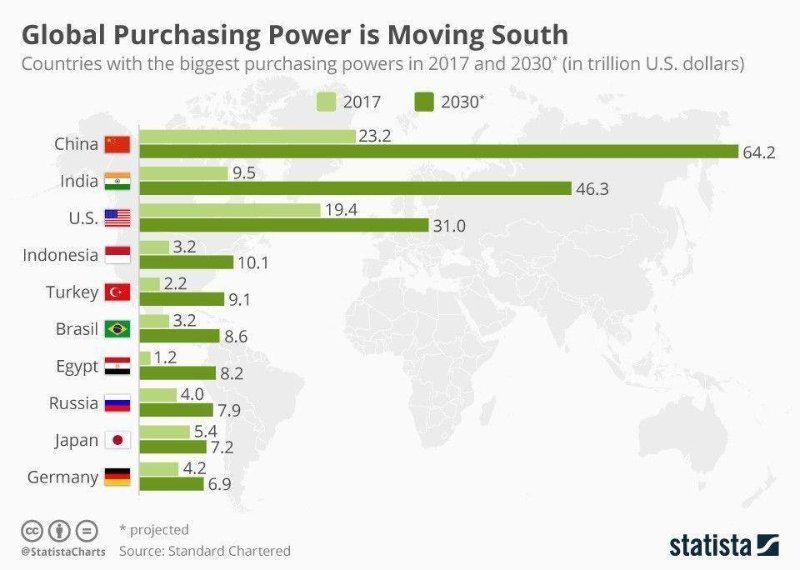
Global Purchasing Power is moving to Asia

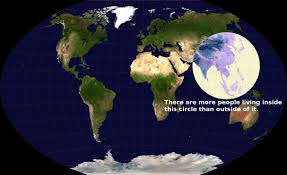
The biggest nation on Earth, China, is expected to keep its top spot as the country with the largest purchasing power on Earth and is on track to almost triple its purchasing power by 2030, according to an analysis by the British Bank, Standard Chartered.

India will almost quadruple its purchasing power, moving to rank 2.

China will double the USA while India will beat USA by approx 50%.

asia map

In the case of Japan, the country is expected to lose 5 ranks and emerge as the country with the 9th highest purchasing power worldwide.

Developing economies like Indonesia, Turkey, Brazil and Egypt are set to move into ranks four to seven respectively, toppling the reign of countries like Japan and Germany, which are still growing their purchasing power but at a much slower rate. The U.S. is expected to only drop one rank to position 3 but is grappling with slower growth.

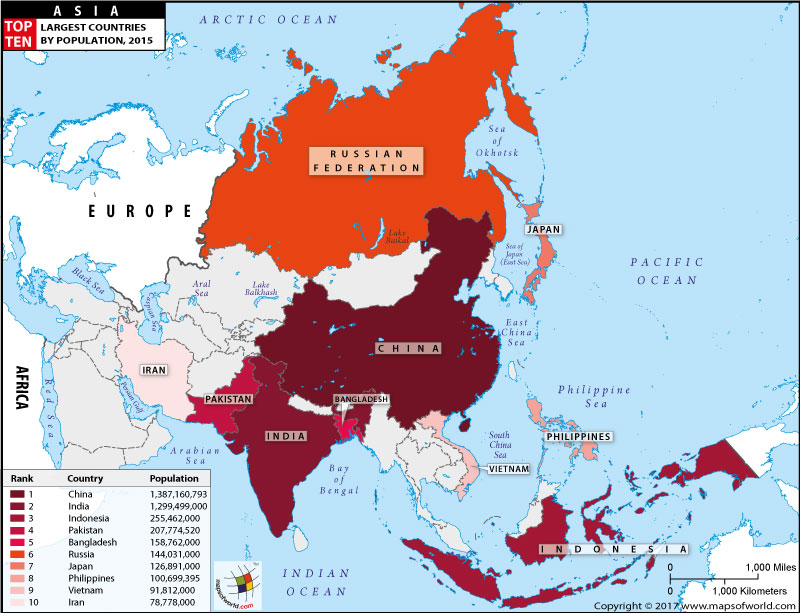
In summary – an amazing outcome for Asia – especially China, India and Indonesia.

asia map 2

How is your Asia engagement strategy going? Time to begin, change or reinvigorate? Get good advice so you avoid the mistakes of many before you.

Megacities right on Australia’s doorstep – opportunities in Asia-Pacific

In 1900 only 15% of the globe’s population resided in cities. By 2008 over half of the world’s population lived in cities. The trend continues.

Megacities have 10 million or more people and the future growth is in Asia Pacific.

In 2017, Asia Pacific accounted for the largest number of megacities, with 19 of the 33 (58%). China and India are the regional and global leaders, with six and four megacities each in 2017, respectively. For India these are Mumbai, Delhi, Bangalore and Kolkata. Chennai will join them within a decade.

mumbaitrain

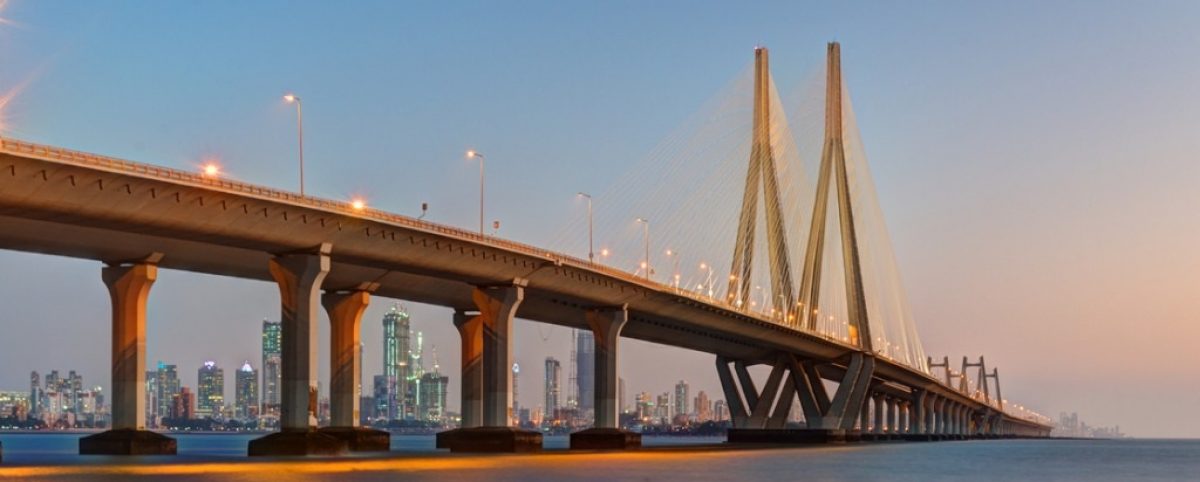
Pictured – Mumbai, one of India’s four Megacities

Jakarta, capital of Indonesia, (picture below) will replace Tokyo as the globe’s biggest city – 35.6 million by 2030.

jakarta2

Ageing is expected to have an impact on many key megacities in East Asia over 2017–2030. Growth in the share of over 65-year-olds will be particularly apparent in Seoul, and Chinese megacities such as Beijing and Shanghai.

The twin opportunities for Australia – become involved in the move towards “smart cities” and provide services for the ageing populations. It’s right on our doorstep.