India and Japan closely watching USA elections


India and Japan might feel better about regional affairs if Biden wins the Presidency of the USA next week.

Why? Because neither country feels comfortable with the bombast and cold war rhetoric emerging from the Trump Administration and US Secretary of State, Mike Pompeo.

Even Australia, which is often too keen to outdo the US, was cautious in response to Pompeo and alluded to our interest in a good relationship with China.

These are some of the key points I take from a recent very thoughtful analysis by John McCarthy AO, a Senior Advisor to Asialink and former Australian Ambassador to the United States, Indonesia, Japan, and High Commissioner to India.

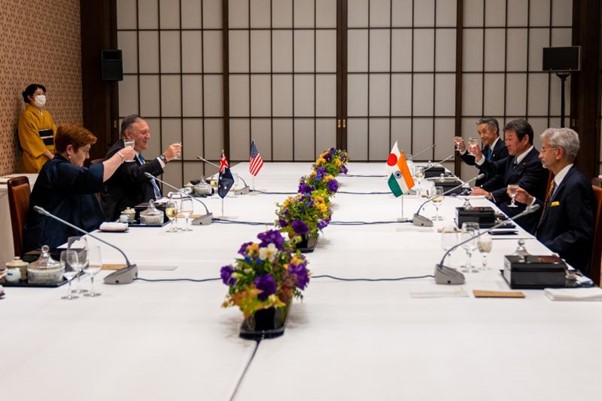
McCarthy makes the point that Pompeo went much further than Japan or India would like when he told the recent Quad meeting in Tokyo that they should “build out a true security framework”.

McCarthy wrote: “Apart from not sharing Pompeo’s buccaneer spirit, Japan continues to seek some equilibrium in its relations with China and has constitutional issues with security groupings. And while India continues to have serious border issues with China, it shows no inclination to veer from its doctrine of Strategic Autonomy.”

“If the Quad is to be in our interests, it has to be a cautious Quad. It is acknowledged—at least formally—by Quad members that ASEAN remains central to regional interstate architecture,” he said.

McCarthy also illustrated how “cause and effect” works in diplomacy: “The more the Quad develops a distinct identity, the greater the risk of growing regional fracturing between three groups—China, the Quad, and ASEAN—possibly with China pulling at Myanmar, Cambodia and Laos, and the Quad pulling at Vietnam. This will make it all the harder to develop even the loose regional approaches on managing China’s rise-particularly on the South China Sea.”

Important to note, as McCarthy does in his conclusion, that Biden’s main priority on election would be to get his own house in order.

That, at least, would yield positive outcomes for us all and be a relief from the bombast.

Suzlon Group appoints new CEO for next stage of renewable energy

Suzlon Group, India’s largest renewable energy provider, has announced that it has appointed Mr. Ashwani Kumar as its Group CEO.

This is a significant announcement for sustainable energy and India in particular.

The Suzlon Group is one of the leading renewable energy solutions providers in the world with a global presence across 18 countries in Asia, Australia, Europe, Africa and Americas. Headquartered at Suzlon One Earth in Pune, India; the Group is comprised of Suzlon Energy Limited (NSE & BSE: SUZLON) and its subsidiaries.

Ashwani Kumar, with over three decades of experience in the areas of projects, business development and finance at leading Indian Power and Infrastructure companies is a Mechanical Engineer, and an alumnus of IIM Bangalore and The Harvard Business School.

Mr Tulsi Tanti

Mr Tulsi Tanti, Chairman and Managing Director, Suzlon Group, is the driving force who has built Suzlon into a major global wind energy player.

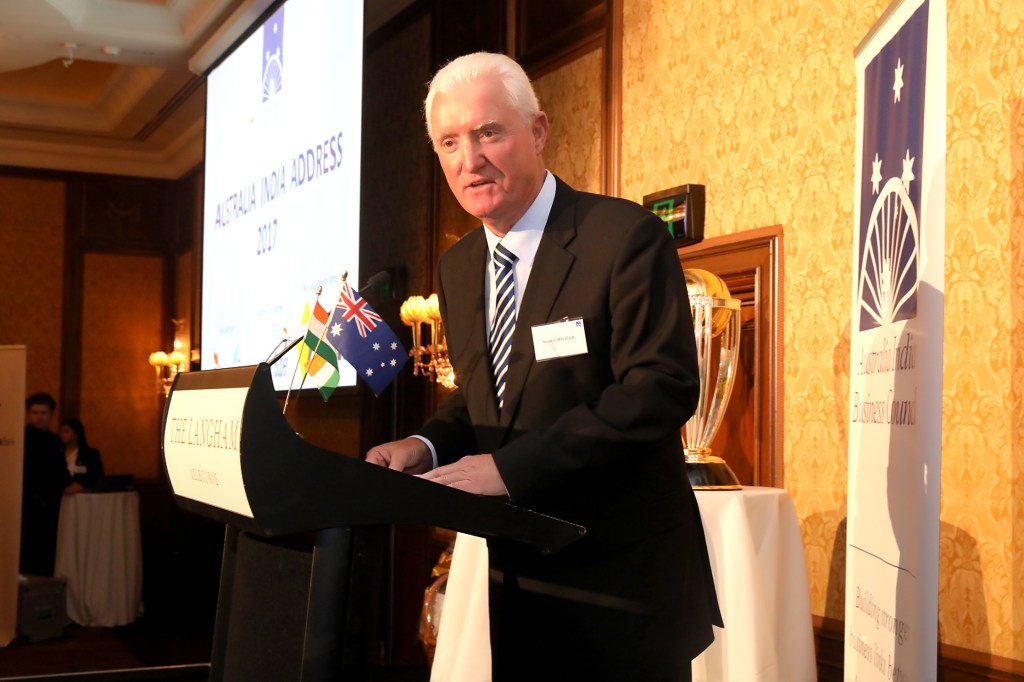
Mr Tanti is picture sixth from left when he presented the Australia India Address in Melbourne.

India boosts Quad naval cooperation as China hostility continues

New defence ties in the Indian Ocean region are rolling out on a regular basis – the latest one reports Australia will join three-way Malabar naval exercises – involving the United States, Japan and India.

Australia left the program after participating in 2007 – leaving following some strong criticism from China.

The move back by Australia shows how much regional attitudes to China have changed.

This new move could raise concerns in China, which has criticised similar joint drills as “destabilising”. China has been slamming import restrictions on Australian cola, cotton, wine and other products.

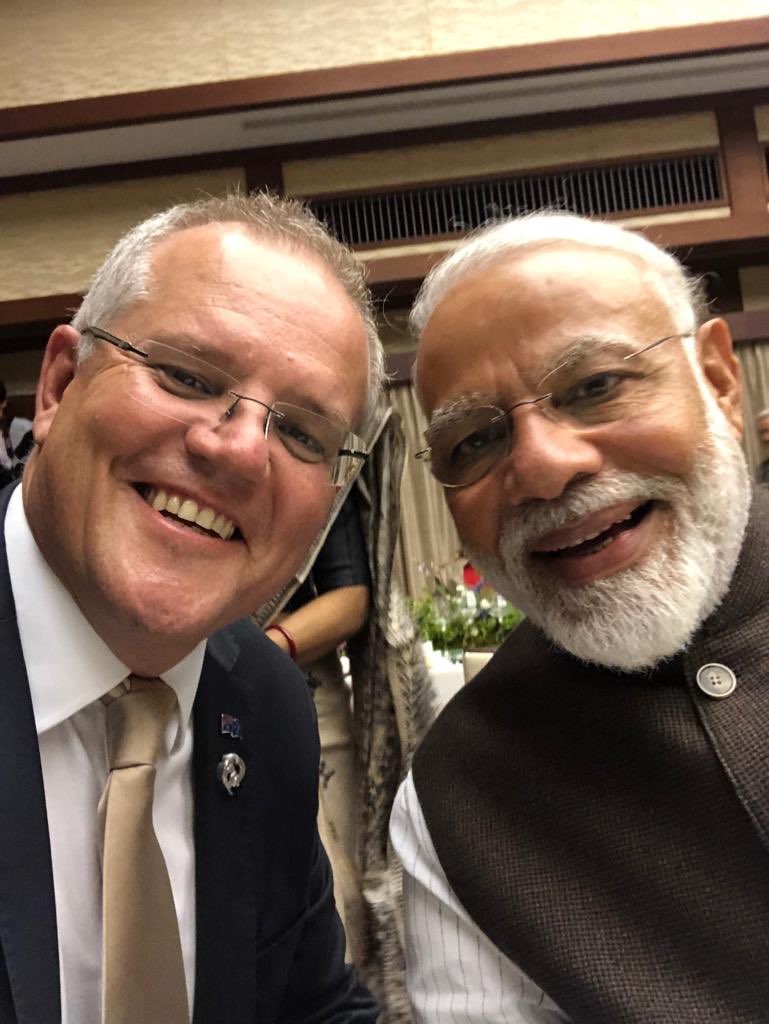
In contrast to declining relations with China, Australian PM Morrison and Indian PM Modi are working closely together.

India took the initiative of inviting Australia back in a sign of cooperation between the “Quad” countries.

The Malabar exercises are held in the Bay of Bengal.

The joint drills are super significant because they are the first concrete action of the Quad grouping.

China has denounced the Quad as an attempt to contain its development.

India’s decision on expanding the exercises comes at a time when it is locked in a military stand-off on the disputed land border with China.

Four Indian startups become unicorns during Covid19

Great Indian story of succeeding in tough times – four Indian startups, Postman, Nykaa, Unacademy and Razorpay, have become unicorns amid covid-19.

In the venture capital world, a “unicorn” is a startup with a value of $1 billion.

The nation is on track to have 8 unicorns in 2020, almost the same number of additions as in 2019.

According to a study titled ‘Covid-19 and the Antifragility of the Indian Startup Ecosystem,’ India is on its way to having 100 unicorns by 2025.

The study was launched by TiE-Delhi, a global non-profit organisation supporting entrepreneurship in collaboration with Zinnov, a global management and strategy consulting company.

It revealed that total funding fell by 50% compared to pre-covid levels during the lockdown. As a result, around 40% of start-ups have been adversely affected and 15% have been forced to discontinue operations.

The third largest start-up ecosystem in the world was jolted by the multi-dimensional pandemic and the effect was extreme during the lockdown period from March to June 2020. However, the rate of recovery, both in demand and in investor sentiment, was faster than anticipated as the economy opened.

Why is India doing so well in tough times?

During Covid19 there has been a big move to digital consumption – so startups in education, healthcare and trade have boomed.  

India to be focus of Canada’s giant pension fund investments

 Canada’s massive pension fund plans to invest up to a third of its funds in emerging markets over the next five years and India is an important destination, according to a senior executive. 

The Canada Pension Plan Investment Board (CPPIB) manages about 434.4 billion Canadian dollars ($329.75 billion) as of June 30. A bulk of its investments are in North America — around 34% of total assets are allocated in the United States — followed by Asia. 

“We expect to invest up to one third of the Fund in emerging markets by 2025 and India is a key component of that,” Suyi Kim,  CPPIB’s Asia Pacific head, told CNBC by email.

“Our investments in India span different asset classes including infrastructure, real estate, public and private equities, funds and co-investments and credit,” Kim said, adding, “We see domestic consumption, technology and increasing demand for infrastructure to support the growth underpinning many of the themes and opportunities we look at in India.”

CEO Mark Machin recently told CNBC that the pension fund was reviewing its bond holdings in light of near zero interest rates. watch nowVIDEO02:50Near zero interest rates are challenging for Canada’s massive pension fund, CEO says

CPPIB has an office in India. Some of its investments thereinclude a stake in Kotak Mahindra Bank as well as $225 million to the India Resurgence Fund, which invests in distressed assets in the country. 

In December, CPPIB said it agreed to invest up to $600 million in India’s National Investment and Infrastructure Fund that included a $150 million commitment in NIIF’s Master Fund and co-investment rights of up to $450 million in future opportunities.  

Time for Australian superannuation funds to increase commitment to India?

7 ways “culture” can be what helps or hinders westerners and Indians working together

Disputes over contracts and plans

Most westerners place a high importance on rules, laws, regulations and contracts. They are almost “set in stone” and apply without exception. Most importantly, rules come before relationships – even if it is a family member. Variations to agreement cause confusion and even anger.

In Asia and especially in India, there are all the rules and contracts and so on, but the common view is that each circumstance and each relationship is different, so the rule may or may not apply. It becomes a moment by moment thing. Variations to agreements are taken for granted and fully expected to happen.

How does this work in business? For many westerners, any change to a contract becomes a time to consult the lawyers and can be a relationship ending event. For Asians, change is expected and accepted.

Why western individualism hits the collective wall

Even children are encouraged to make their own decisions in the west – including on courses, careers and most definitely on choice of partner. Under individualism, you make your choices and must take care of yourself – and in some countries this is harshly applied, in others there is a more compassionate welfare safety net.

Most Asian families make decisions for their children, including courses, careers and partners. The view is that the group – the family and so on – is more important than the individual. In return, the group looks after any member at time of need.

How does this work in business? An American is ready to sign the deal now – but the Asian partner wants time to talk to colleagues and ensure a group decision. Pressure versus group consultation.

Why westerners misunderstand indirect communication

In the west people can work together without having a good relationship and direct communication is highly valued. In fact, any indirect communication – going around the bush – creates mistrust in the other or is simply missed by the westerner. They just want the facts – a simple “yes” or “no” will do.

In India there is an overlap between work and personal life and they choose indirect communication because their major concern is to keep the relationship. Being direct such as saying “no” is difficult.

How does this work in business? People in the west keep work and personal lives separate so are less likely to socialise with Asian colleagues – or any colleagues – after work.

Why some hide face, while others save it

Most westerners make a big effort to hide emotions – this varies of course. They see “reason” as more important than “feelings”, so they often keep thoughts to themselves.

In Asia, spontaneous emotional responses can break out and this often surprises westerners. Saving face can become the most important thing.

How does this work in business? An Asian colleague will give or expect some emotional outbursts but is also looking for the following harmony.

Why becoming someone clashes with born something

Westerners value people by what they do or what they have achieved. Performance is king, no matter who you are.

Asian culture generally values people for who they are, so power, title and respect matter greatly, but of course the person should behave according to this status.

How does this work in business? Westerners will often “high five” with everyone including junior colleagues and everyone gets in to share the celebration, while in Asia the leader might receive most of the credit.

Why order dominates the western mind

“Order’ is highly prized in the west. That means doing things on schedule, being punctual, sticking to your plans and a “time is money” view of most things. They react badly to any disturbance to the smooth schedule.

“Time” is viewed differently across Asia, with the past, present and future seen as interwoven and so plans and commitments are more flexible.

How does this work in business? This different view of schedules and time causes relationship breakdowns and can see the end of the deal.

Why westerners feel in control of everything, including climate change

“Control” is big in the west – to the extent they see people as controlling nature or the environment, down to how they work with teams and with the organisation. Conflict is fine so long as the job gets done.

Asian cultures see nature and the environment more as controlling them – events, circumstances are in control more than the team. Conflict is avoided even at the expense of timely delivery.

How does this work in business? Westerners will need to give more reassurance and feedback to their Asian teams and setting clear objectives becomes paramount for both sides.

Adapting via Cross-Cultural Understanding Courses

These cultural differences can have big impacts, but with learning and adaptability, both sides can find they quickly work well, understand more and feel better about how things are going. Cultural understanding provides quick and positive results. Cultural ignorance can be the deal breaker. My “Cross-Culture Understand” training program can set you on the right course – whether an Indian wanting to engage the west, or westerner wanting to engage India.

Stephen Manallack speaking at the Australia India Address

New global mining rush brings India and Australia together

When Australia and India signed a strategic partnership in June, we knew it was “about China” but we did not know was just how much it was about China.

Now we find that the strategic partnership allows for Australia to supply “rare earth” resources to India.

Why is this so strategically important?

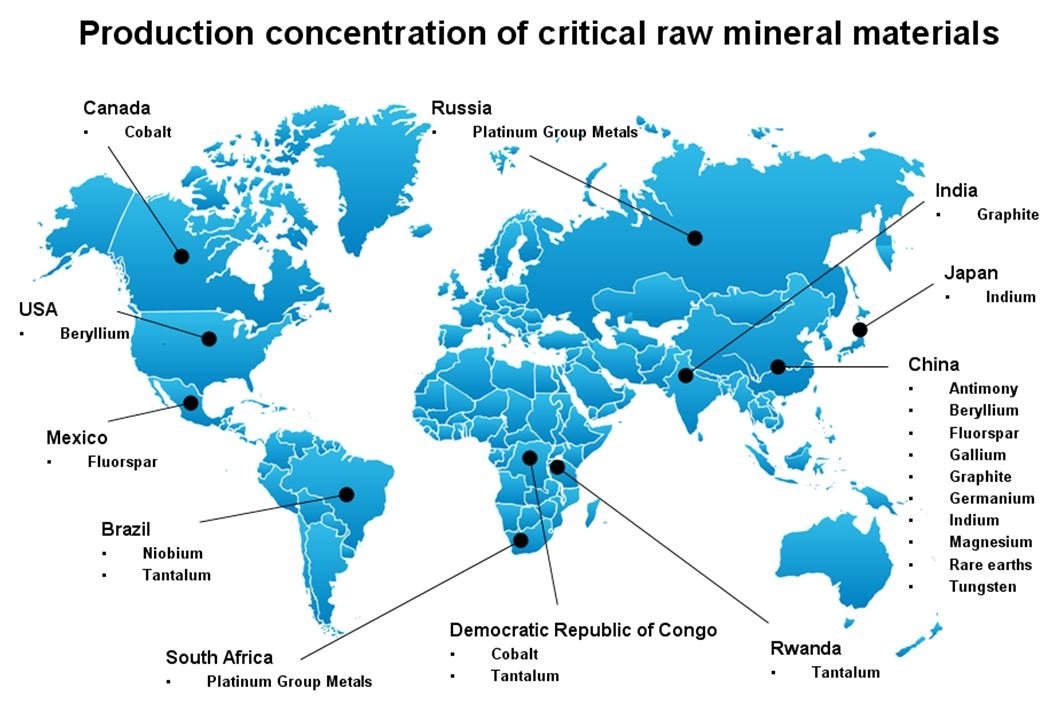
Your phone, camera or electric car are completely dependent on key “rare earth” minerals that are processed only in China.

Only a year or so ago, this dependence on China seemed to be OK. Now nations are not so sure, and the Japan, India and Australia collaboration on supply chains is just one of many responses.

Here is how vital these “rare earth” minerals are – there are 0.15 grams of palladium in an iPhone, 472 kilograms of combined rare earths in an F35 fighter jet and four tonnes in a Virginia-class submarine.

But the big one in this group is graphite – it is a key for the lithium-ion batteries in phones, laptops, military and medical equipment and electric cars.

China provides 70 per cent of the world’s exports of graphite and has declared it a “strategic material”.

Graphite illustrates the scale of the world’s dependence on China and you can see how global concerns have now become a mix of commerce and defence. Graphite is in demand because it is the most electrically conductive mineral known.

Australian Resources Minister Keith Pitt expressed the global concerns this way: “It does not matter if you are importing loaves of bread or anything else, if you only have one supply line, that is an increased risk.”

Graphite and other “rare earth” minerals are far from being loaves of bread, for they hold the key to making most of our digital economies and defences work. Australia has lots of graphite – there is one graphite reserve in South Australia of 200 million tonnes.

In addition to the deal with India, Australia has recently announced several deals in the US and there could be more to come.

No wonder the world is keeping an eye on Australia for “rare earth’ minerals, and no wonder India and Australia have firmed up their strategic partnership.

It is easy to see how Australia’s deals on “rare earth” minerals work in conjunction with strategic arrangements – therefore the deals are with the US, Japan, India and parts of Europe.

Everyone is now making a priority of having a diverse source of materials – not just China – and this whole new “minerals rush” is bringing India and Australia closer together.

Why do westerners sweat so much over plans and deals? It’s all about “culture”

Why do westerners fret so much over contracts and project plans? Why do they become angry and agitated if things have to change? And why do their relationships end when the other side has a different view of planning? Why do westerners and Asians struggle to understand each other?

The answer can be found in one word – culture.

In writing about cultural differences, I do not mean to give offence, criticise, imply one is better or create division – my aim is understanding.

For Asia and the west, culture can be “make or break” in business, yet most of us are not even aware that the way we think is largely determined by our culture. This lack of awareness is poor preparation for global business and trade, where knowing culture is king.

With Asia, culture becomes complicated for westerners and many give up on it.

With India, cultural understanding becomes even more complicated, because it is a land of many cultures, different ways of seeing the world and is rich in diversity. For me, this is one of the great attractions of India. It is also why I go to Asia a lot. But for others it can become a deal breaker.

So, how can we bring an understanding of cultural differences to our business and trade negotiations between westerners and Asia? How can we find acceptance and understanding even when there is difference?

That answer can be found in two words – understanding culture.

Why contracts and project plans end in disputes

Most westerners place a high importance on rules, laws, regulations and contracts. They are almost “set in stone” and apply without exception. Most importantly, rules come before relationships – even if it is a family member. Variations to agreement cause confusion and even anger.

In Asia and especially in India, there are all the rules and contracts and so on, but the common view is that each circumstance and each relationship is different, so the rule may or may not apply. It becomes a moment by moment thing. Variations to agreements are taken for granted and fully expected to happen.

How does this work in business? For many westerners, any change to a contract becomes a time to consult the lawyers and can be a relationship ending event. For Asians, change is expected and accepted.

Why western individualism hits the collective wall

Even children are encouraged to make their own decisions in the west – including on courses, careers and most definitely on choice of partner. Under individualism, you make your choices and must take care of yourself – and in some countries this is harshly applied, in others there is a more compassionate welfare safety net.

Most Asian families make decisions for their children, including courses, careers and partners. The view is that the group – the family and so on – is more important than the individual. In return, the group looks after any member at time of need.

How does this work in business? An American is ready to sign the deal now – but the Asian partner wants time to talk to colleagues and ensure a group decision. Pressure versus group consultation.

Why westerners misunderstand indirect communication

In the west people can work together without having a good relationship and direct communication is highly valued. In fact, any indirect communication – going around the bush – creates mistrust in the other or is simply missed by the westerner. They just want the facts – a simple “yes” or “no” will do.

In Asia there is an overlap between work and personal life and they choose indirect communication because their major concern is to keep the relationship. Being direct such as saying “no” is difficult.

How does this work in business? People in the west keep work and personal lives separate so are less likely to socialise with Asian colleagues – or any colleagues – after work.

Why some hide face, while others save it

Most westerners make a big effort to hide emotions – this varies of course. They see “reason” as more important than “feelings”, so they often keep thoughts to themselves.

In Asia, spontaneous emotional responses can break out and this often surprises westerners. Saving face can become the most important thing.

How does this work in business? An Asian colleague will give or expect some emotional outbursts but is also looking for the following harmony.

Why becoming someone clashes with born something

Westerners value people by what they do or what they have achieved. Performance is king, no matter who you are.

Asian culture generally values people for who they are, so power, title and respect matter greatly, but of course the person should behave according to this status.

How does this work in business? Westerners will often “high five” with everyone including junior colleagues and everyone gets in to share the celebration, while in Asia the leader might receive most of the credit.

Why order dominates the western mind

“Order’ is highly prized in the west. That means doing things on schedule, being punctual, sticking to your plans and a “time is money” view of most things. They react badly to any disturbance to the smooth schedule.

“Time” is viewed differently across Asia, with the past, present and future seen as interwoven and so plans and commitments are more flexible.

How does this work in business? This different view of schedules and time causes relationship breakdowns and can see the end of the deal.

Why westerners feel in control of everything, including climate change

“Control” is big in the west – to the extent they see people as controlling nature or the environment, down to how they work with teams and with the organisation. Conflict is fine so long as the job gets done.

Asian cultures see nature and the environment more as controlling them – events, circumstances are in control more than the team. Conflict is avoided even at the expense of timely delivery.

How does this work in business? Westerners will need to give more reassurance and feedback to their Asian teams and setting clear objectives becomes paramount for both sides.

Adapting

These cultural differences can have big impacts, but with learning and adaptability, both sides can find they quickly work well, understand more and feel better about how things are going. Cultural understanding provides quick and positive results. Cultural ignorance can be the deal breaker.

Why did Australia-India-Japan Economic Ministers’ reach an historic agreement on a Supply Chains Resilience Program?

September 1 saw an important move by Japan bear fruit with India and Australia – the three are fast tracking supply chain cooperation and have given their bureaucrats just a few months to work out the details.

While Japan led the deal, in recent times India has growing concerns about supply chain dependence on China combined with Chinese border stoushes, while Australia is being hit by Chinese trade restrictions.

All three countries are very “China trade dependent”. They also have a vested interest in a stable Indian Ocean and Pacific Ocean.

The Joint Ministerial Conference was held by video and involved Australia’s Minister for Trade, Tourism and Investment, Senator the Honourable Simon Birmingham, India’s Minister of Commerce and Industry, His Excellency Piyush Goyal, and Japan’s Minister of Economy, Trade and Industry, His Excellency Kajiyama Hiroshi.

What does Supply Chain Resilience mean?

In the context of international trade, supply chain resilience is an approach that helps a country to ensure that it has diversified its supply risk across a clutch of supplying nations instead of being dependent on just one or a few – in this case, dependent on China.

Why is Japan taking the lead?

While Japan exported $135 billion worth of goods to China in 2019, it also imported $169 billion worth from the world’s second-largest economy, accounting for 24% of its total imports, according to data from tradingeconomics.com. Electrical and electronic gear, and machinery, nuclear reactors and boilers were sectors that clocked up significant imports into Japan. So, if China stops production (as it did during Covid19) then economic activity in Japan is heavily impacted.

As part of the country’s economic stimulus package, the Japanese government recently earmarked $2.2 billion to incentivise its companies to move their manufacturing out of China – much of it likely to go back to Japan.

Why was Japan keen to have India in there?

Japan is the fourth-largest investor in India with cumulative foreign direct investments touching $33.5 billion in the 2000-2020 period accounting for 7.2% of inflows in that period, according to quasi government agency India Invest.

Imports from Japan into India more than doubled over 12 years to $12.8 billion in FY19. Exports from India to the world’s third-largest economy stood at $4.9 billion that year, data from the agency showed.

What motivated Australia?

Australia, Japan and India are already part of another informal grouping, the Quadrilateral Security Dialogue, or the Quad, which includes the U.S.

China has been Australia’s largest trading partner and that it counts for 32.6% of Australia’s exports, with iron ore, coal and gas dominating the products shipped to Asia’s largest economy. Education is the leading part of Australia’s services exports. But relations including trade ties between the two have been deteriorating for a while now – kind of a flow on from the US-China trade war.

What does India stand to gain, or lose?

While the US recently became India’s biggest trading partner, close behind is China – the two economies are close – maybe too close for India’s liking. China’s share of imports into India in 2018 (considering the top 20 items supplied by China) stood at 14.5%, according to an impact analysis by the Confederation of Indian Industry in February 2020. In areas such as Active Pharmaceutical Ingredients for medicines such as paracetamol, India is fully dependent on China. In electronics, China accounts for 45% of India’s imports, the analysis showed.

Chinese supplies dominate segments of the Indian economy. Sectors that have been impacted by supply chain issues arising out of the pandemic include pharmaceuticals, automotive parts, electronics, shipping, chemicals and textiles.

How does Indian democracy work?

Pictured above is Indian Prime Minister Narendra Modi

I am often asked about India’s democracy – most people know of India as “the world’s biggest democracy” but few know the structure of it. Here is a short summary:

Indian government

The Republic of India is a federal democracy comprising 28 states and nine union territories. The Head of State is the President and the Head of Government is the Prime Minister – currently PM Narendra Modi.

Indian Parliament

loksabha

The Indian Parliament is bicameral, comprising the 545-member Lok Sabha (‘people’s’ or lower house) and the 245-member Rajya Sabha (‘states’ or upper house). Lok Sabha members are elected by universal adult suffrage every five years (except for two appointed Anglo-Indian members) using the ‘first past the post’ voting system. The Rajya Sabha is not subject to dissolution; one third of its members retire every second year. One third of Rajya Sabha members are elected every two years by the legislative assemblies of the Indian states.

BJP is the current Government

The 2019 Indian national election for the Lok Sabha saw the Bharatiya Janata Party (BJP) win a second consecutive term with 303 out of 543 seats.

bjp