India to be focus of Canada’s giant pension fund investments

 Canada’s massive pension fund plans to invest up to a third of its funds in emerging markets over the next five years and India is an important destination, according to a senior executive. 

The Canada Pension Plan Investment Board (CPPIB) manages about 434.4 billion Canadian dollars ($329.75 billion) as of June 30. A bulk of its investments are in North America — around 34% of total assets are allocated in the United States — followed by Asia. 

“We expect to invest up to one third of the Fund in emerging markets by 2025 and India is a key component of that,” Suyi Kim,  CPPIB’s Asia Pacific head, told CNBC by email.

“Our investments in India span different asset classes including infrastructure, real estate, public and private equities, funds and co-investments and credit,” Kim said, adding, “We see domestic consumption, technology and increasing demand for infrastructure to support the growth underpinning many of the themes and opportunities we look at in India.”

CEO Mark Machin recently told CNBC that the pension fund was reviewing its bond holdings in light of near zero interest rates. watch nowVIDEO02:50Near zero interest rates are challenging for Canada’s massive pension fund, CEO says

CPPIB has an office in India. Some of its investments thereinclude a stake in Kotak Mahindra Bank as well as $225 million to the India Resurgence Fund, which invests in distressed assets in the country. 

In December, CPPIB said it agreed to invest up to $600 million in India’s National Investment and Infrastructure Fund that included a $150 million commitment in NIIF’s Master Fund and co-investment rights of up to $450 million in future opportunities.  

Time for Australian superannuation funds to increase commitment to India?

Indian economic indicators positive for investors – Kotak

As India moves gradually from tough “lockdown” to enter an “unlock’ phase, economic and market indicators remain positive for investors – according to the latest Indian Markets report from Shibani Kurian, Head – Equity Research, Kotak Mahindra Asset Management Company Limited. Extracts from their report:

Key highlights

  1. High frequency economic indicators in India continued to show improving trends
  2. All eyes are now on the festive season starting from the end of October till the first half of November.
  3. Government sticks to its borrowing plan for dated securities in H2FY21; Bodes well for bond yields though some concerns on increase in supply still linger on; state finance remain vulnerable
  4. Monetary Policy Committee (MPC): New external member appointed; Rates likely to remain on hold in the upcoming policy meet on October 9, 2020
  5. GST collections: Trends improve in August; Trend is positive but partly due to a low base as well as collections pf payments due during May-July 2020
  6. Rainfall trends remain healthy; This bodes well for farm cash flows and rural demand; Food-grain production likely higher by 2.8% YoY

Indian markets witnessed a fair degree of volatility in the month of September 2020 on the back of global uncertainty heading into the US elections. The large cap Nifty Index fell 1.50% while the NSE midcap index fell 1.52% in September (both in USD terms).

Among the indicators we track, the e-way bill generation is now up to the Feb’20 peak run-rate levels, and up YoY for 7 weeks. Expressway-toll collections are now 3% above pre-COVID levels. Rail freight, unemployment data, electricity consumption and petrol consumption were some of the other indictors which showed improvement.

The key to the direction of the domestic equity markets would be the trajectory of demand post the festive season and the path towards economic growth normalization.

There are expectations around a possible announcement on the fiscal front along with market awaiting the outcome of the monetary policy meeting now scheduled on October 9.

Even as the high frequency activity indicators improved, some cities like Pune, Bengaluru and Mumbai saw a “second wave” of infections with a rise in daily new cases. However, while the new additions rose, the pace of recovery also improved resulting in the reduction in the addition to the active cases. The case fatality rate in India remains below the global averages thereby significantly reducing the probability of another nationwide lockdown.

Thanks to Shibani Kurian, Head – Equity Research, Kotak Mahindra Asset Management Company Limited, and Nikhil Iyer, EVP, Kotak Mahindra (UK) Ltd. – Singapore Branch

Indian firm Godrej innovating with PR

Direct Communication is one of the global PR, because when done well it ensure the brand engages directly with audiences and influencers.

It is rarely done well – but Indian firm Godrej is showing the way.

Of course, direct engagement is not a replacement but represents a complementary approach to traditional communications based on paid, earned and owned media.

Godrej is pioneering direct communications in India through its owned media platforms L’Affaire, Vikroli Cucina, Design Deko, etc.

Sujit Patil, VP & Head Corporate Brand and Communications Godrej Industries Limited & Associate Companies was driven into this because research few years back showed that the affinity towards for brand Godrej amongst Millennials and youngsters could be much better. There are 450 million millennials in India. so you better take notice when they are not.

Patil says: “The three pillars of our owned media platform strategy are – content creation, experiential engagement and building a community of advocates for the brand Godrej.”

Godrej began with the food space as seven of Godrej businesses have a significant share of the kitchen (Interio kitchens, appliances’, Real Good Chicken, Cartini Knives, Protekt hand wash etc.).

Patil again: “The runaway success of ‘Vikhroli Cucina’ as a platform to engage with KOLs in the food space encouraged us to launch ‘L’Affaire’ which is  our owned media property that enables brands and businesses in the lifestyle space to meaningfully engage with audiences in an experiential manner.”

“Since the customer experience and brand ethos are the core of owned media platforms, it pushes brands to create Relevancy among its target consumers to drive Engagement using interesting Content which eventually leads to Community building through Experience.

“The authentic content that gets created is used as a constant fuel for the social media handles of the participating brands. 

Godrej has innovated to support people during Covid19.

“We started the L’Affaire Saturday night live music series during the initial phase of the lockdown. This was basically started to keep our followers engaged by giving them a good dose of happiness and positivity during the uncertain times. It still continues every Saturday and due to a good traction for the Masterbrand, we added Wilderness Wednesdays, Travel Tuesdays and now Writers Wednesdays. “

Sujit Patil says the PR industry is undergoing a huge cultural and behavioral change.

“The ‘R’ in PR today represents Reality, Resolution, and Reputation. Brands will look at building closer ties through experiences and engaging content with the audience. In fact, the skew will be towards building more direct channels with the target audience offering bi-directional engagement opportunities. The trust in earned and owned media will witness an increase. Therefore, brands which have utilized the lockdown time to re-assess, introspect, and adapt their communication strategy have an edge over others” he concludes.

7 ways “culture” can be what helps or hinders westerners and Indians working together

Disputes over contracts and plans

Most westerners place a high importance on rules, laws, regulations and contracts. They are almost “set in stone” and apply without exception. Most importantly, rules come before relationships – even if it is a family member. Variations to agreement cause confusion and even anger.

In Asia and especially in India, there are all the rules and contracts and so on, but the common view is that each circumstance and each relationship is different, so the rule may or may not apply. It becomes a moment by moment thing. Variations to agreements are taken for granted and fully expected to happen.

How does this work in business? For many westerners, any change to a contract becomes a time to consult the lawyers and can be a relationship ending event. For Asians, change is expected and accepted.

Why western individualism hits the collective wall

Even children are encouraged to make their own decisions in the west – including on courses, careers and most definitely on choice of partner. Under individualism, you make your choices and must take care of yourself – and in some countries this is harshly applied, in others there is a more compassionate welfare safety net.

Most Asian families make decisions for their children, including courses, careers and partners. The view is that the group – the family and so on – is more important than the individual. In return, the group looks after any member at time of need.

How does this work in business? An American is ready to sign the deal now – but the Asian partner wants time to talk to colleagues and ensure a group decision. Pressure versus group consultation.

Why westerners misunderstand indirect communication

In the west people can work together without having a good relationship and direct communication is highly valued. In fact, any indirect communication – going around the bush – creates mistrust in the other or is simply missed by the westerner. They just want the facts – a simple “yes” or “no” will do.

In India there is an overlap between work and personal life and they choose indirect communication because their major concern is to keep the relationship. Being direct such as saying “no” is difficult.

How does this work in business? People in the west keep work and personal lives separate so are less likely to socialise with Asian colleagues – or any colleagues – after work.

Why some hide face, while others save it

Most westerners make a big effort to hide emotions – this varies of course. They see “reason” as more important than “feelings”, so they often keep thoughts to themselves.

In Asia, spontaneous emotional responses can break out and this often surprises westerners. Saving face can become the most important thing.

How does this work in business? An Asian colleague will give or expect some emotional outbursts but is also looking for the following harmony.

Why becoming someone clashes with born something

Westerners value people by what they do or what they have achieved. Performance is king, no matter who you are.

Asian culture generally values people for who they are, so power, title and respect matter greatly, but of course the person should behave according to this status.

How does this work in business? Westerners will often “high five” with everyone including junior colleagues and everyone gets in to share the celebration, while in Asia the leader might receive most of the credit.

Why order dominates the western mind

“Order’ is highly prized in the west. That means doing things on schedule, being punctual, sticking to your plans and a “time is money” view of most things. They react badly to any disturbance to the smooth schedule.

“Time” is viewed differently across Asia, with the past, present and future seen as interwoven and so plans and commitments are more flexible.

How does this work in business? This different view of schedules and time causes relationship breakdowns and can see the end of the deal.

Why westerners feel in control of everything, including climate change

“Control” is big in the west – to the extent they see people as controlling nature or the environment, down to how they work with teams and with the organisation. Conflict is fine so long as the job gets done.

Asian cultures see nature and the environment more as controlling them – events, circumstances are in control more than the team. Conflict is avoided even at the expense of timely delivery.

How does this work in business? Westerners will need to give more reassurance and feedback to their Asian teams and setting clear objectives becomes paramount for both sides.

Adapting via Cross-Cultural Understanding Courses

These cultural differences can have big impacts, but with learning and adaptability, both sides can find they quickly work well, understand more and feel better about how things are going. Cultural understanding provides quick and positive results. Cultural ignorance can be the deal breaker. My “Cross-Culture Understand” training program can set you on the right course – whether an Indian wanting to engage the west, or westerner wanting to engage India.

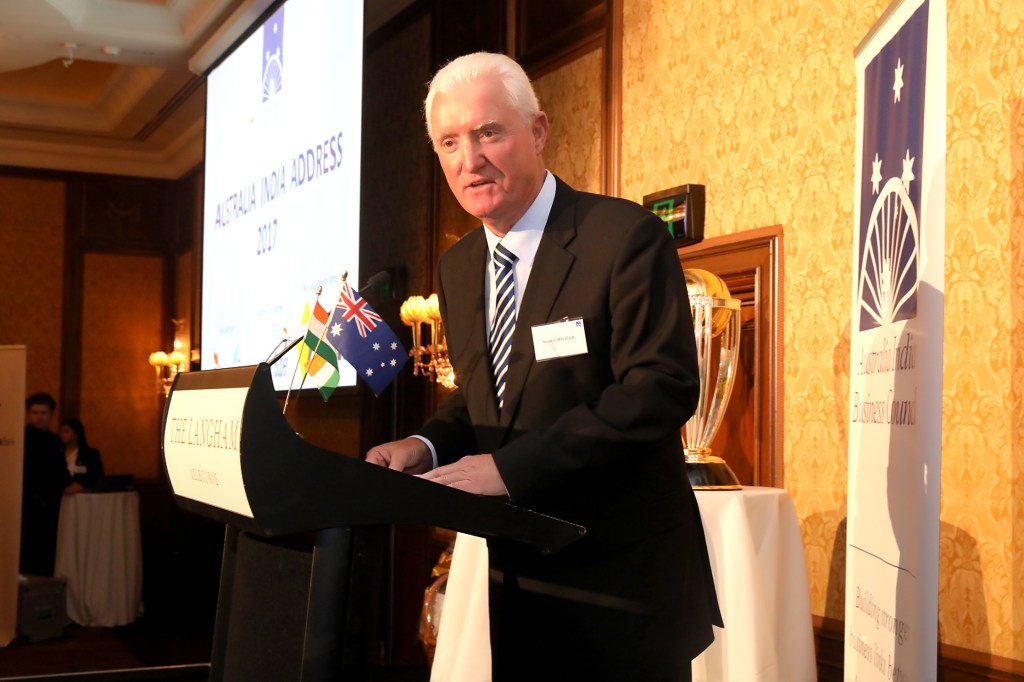
Stephen Manallack speaking at the Australia India Address

India’s “festive season” runs to the end of the year – brands should take the digital advertising route

Right from August, India gets into a festive mood.

In India this is the time to shop. But what about this year, with the impact of Covid19?

Sanjay Mehta is the Joint CEO of digital marketing consultancy Mirum India and he has some sound advice for brands and the festive season.

“What should you do to become a winning brand? Yes, you’ll certainly want to do marketing, but what specifically? It may not be the best time to experiment with expensive brand campaigns, simply because the lack of measurability of such campaigns makes it difficult to evaluate impact. Your key objective would be to spend money to deliver the best ROI in this challenging year.

“Digital advertising is the most potent weapon for a marketer to reach the consumer. After all, the Covid era has definitely seen significantly increased online time spends by the consumer. And the high level of measurability on digital allows you to do extremely result oriented marketing.

“Digital advertising is often used as a catch-all term to cover several different types of online marketing strategies, but what you should include in your media plan is a good combination of search engine marketing, some programmatic display ads — most certainly social media ads on platforms like Facebook, Instagram, Twitter, etc — video ads, and maybe a good influencer marketing programme as well.

“In these last few months of stay-at-home, we have seen several edtech, fintech and healthcare brands create a huge market for themselves, solely using such digital advertising means.

“The overarching recommendation is to have a good budget apportioned for digital advertising, and spend it prudently on the best result-producing media, to ensure high impact” Sanjay says.

He also advises brands to be set up for selling online.

“Additionally, owing to the consumer now getting used to the convenience of online shopping, ensure that your brands are well-set up to be sold online, and provide the consumer a very seamless experience shopping at your online store.

“Get set for digital fireworks in your marketing mix for the festival season and have a happy Diwali for your business!” he concludes.

So – get involved and active in India’s festive season.

E-commerce and wellness trends spark new opportunities in South Asia, says Austrade

The health & wellness trend

Since the onset of the coronavirus pandemic, consumers in South Asia have focused on boosting their health and immunity. This is a sector where Australian companies have already made commercial inroads — and more opportunities will arise. Australia’s iconic wellness brand, Swisse, reacted quickly and is now selling across 10 major e-commerce platforms in India.

Indian consumers are highly receptive to Australian wellness products. Consumers appreciate our clean, green and reliable manufacturing standards, and these high standards confer an automatic brand premium on Australian wellness products.

Similarly, there is increased demand across South Asia for products that are perceived to boost people’s immune system. In India and Bangladesh this applies to fresh produce, and in particular to Manuka honey. The demand for Australian citrus in Bangladesh has remained high this year, even during the local harvest season.

E-commerce: the next big shift

The rapid growth of e-commerce in the health and wellness sector is accelerating opportunities for Australian companies and South Asia is uniquely poised for a boom. With a combined 670 million internet users – and over 130 million online shoppers – the region is the second largest mass market for Australian companies, second only to China.

Growth in regional e-commerce is rapid. Online retail clocked A$75 billion in sales across South Asia in 2018–19. With year-on-year growth of over 40 per centthe region’s internet economy is forecast to be worth more than A$200 billion within the next five years.

Based on market observations by Austrade in South Asia, we forecast that the market for Australian e-commerce products will grow exponentially in the coming years. This applies especially to health, beauty, nutraceuticals and processed-food products.

The impact on Australian exporters

These two consumer trends – a growing appetite for wellness goods and enthusiasm for e-commerce – create good scope for Australian companies wanting to diversify their export markets to the South Asia region. Australian companies with a brand narrative that speaks to health and immunity will likely find ready markets among consumers.

Thanks to Austrade for the above analysis

Which 3 Indian states are the best for startup ecosystems?

The Results of the second edition of Ranking of States on Support to Start-up Ecosystems were released by Minister of Commerce & Industry and Railways Shri Piyush Goyal this week.

The “top 3” might surprise you?

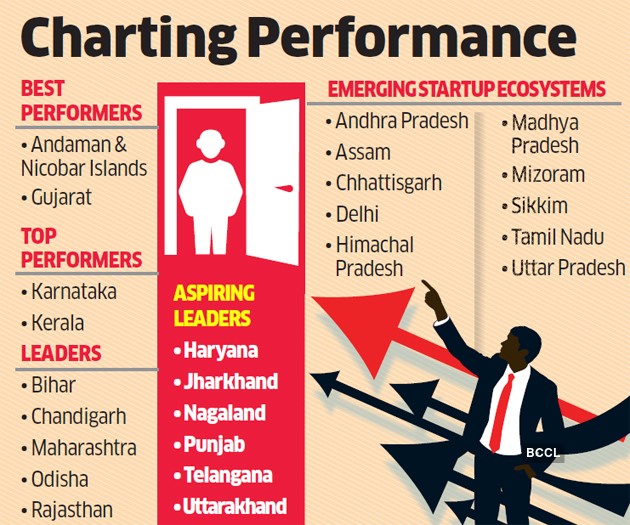
The States’ Start-up Ranking Framework 2019 has 7 broad reform areas, consisting of 30 action points ranging from Institutional Support, Easing Compliance, Relaxation in Public Procurement norms, Incubation support, Seed Funding Support, Venture Funding Support, and Awareness & Outreach.

The top 3 states – in order – Gujarat, Karnataka and Kerala.

Why do westerners sweat so much over plans and deals? It’s all about “culture”

Why do westerners fret so much over contracts and project plans? Why do they become angry and agitated if things have to change? And why do their relationships end when the other side has a different view of planning? Why do westerners and Asians struggle to understand each other?

The answer can be found in one word – culture.

In writing about cultural differences, I do not mean to give offence, criticise, imply one is better or create division – my aim is understanding.

For Asia and the west, culture can be “make or break” in business, yet most of us are not even aware that the way we think is largely determined by our culture. This lack of awareness is poor preparation for global business and trade, where knowing culture is king.

With Asia, culture becomes complicated for westerners and many give up on it.

With India, cultural understanding becomes even more complicated, because it is a land of many cultures, different ways of seeing the world and is rich in diversity. For me, this is one of the great attractions of India. It is also why I go to Asia a lot. But for others it can become a deal breaker.

So, how can we bring an understanding of cultural differences to our business and trade negotiations between westerners and Asia? How can we find acceptance and understanding even when there is difference?

That answer can be found in two words – understanding culture.

Why contracts and project plans end in disputes

Most westerners place a high importance on rules, laws, regulations and contracts. They are almost “set in stone” and apply without exception. Most importantly, rules come before relationships – even if it is a family member. Variations to agreement cause confusion and even anger.

In Asia and especially in India, there are all the rules and contracts and so on, but the common view is that each circumstance and each relationship is different, so the rule may or may not apply. It becomes a moment by moment thing. Variations to agreements are taken for granted and fully expected to happen.

How does this work in business? For many westerners, any change to a contract becomes a time to consult the lawyers and can be a relationship ending event. For Asians, change is expected and accepted.

Why western individualism hits the collective wall

Even children are encouraged to make their own decisions in the west – including on courses, careers and most definitely on choice of partner. Under individualism, you make your choices and must take care of yourself – and in some countries this is harshly applied, in others there is a more compassionate welfare safety net.

Most Asian families make decisions for their children, including courses, careers and partners. The view is that the group – the family and so on – is more important than the individual. In return, the group looks after any member at time of need.

How does this work in business? An American is ready to sign the deal now – but the Asian partner wants time to talk to colleagues and ensure a group decision. Pressure versus group consultation.

Why westerners misunderstand indirect communication

In the west people can work together without having a good relationship and direct communication is highly valued. In fact, any indirect communication – going around the bush – creates mistrust in the other or is simply missed by the westerner. They just want the facts – a simple “yes” or “no” will do.

In Asia there is an overlap between work and personal life and they choose indirect communication because their major concern is to keep the relationship. Being direct such as saying “no” is difficult.

How does this work in business? People in the west keep work and personal lives separate so are less likely to socialise with Asian colleagues – or any colleagues – after work.

Why some hide face, while others save it

Most westerners make a big effort to hide emotions – this varies of course. They see “reason” as more important than “feelings”, so they often keep thoughts to themselves.

In Asia, spontaneous emotional responses can break out and this often surprises westerners. Saving face can become the most important thing.

How does this work in business? An Asian colleague will give or expect some emotional outbursts but is also looking for the following harmony.

Why becoming someone clashes with born something

Westerners value people by what they do or what they have achieved. Performance is king, no matter who you are.

Asian culture generally values people for who they are, so power, title and respect matter greatly, but of course the person should behave according to this status.

How does this work in business? Westerners will often “high five” with everyone including junior colleagues and everyone gets in to share the celebration, while in Asia the leader might receive most of the credit.

Why order dominates the western mind

“Order’ is highly prized in the west. That means doing things on schedule, being punctual, sticking to your plans and a “time is money” view of most things. They react badly to any disturbance to the smooth schedule.

“Time” is viewed differently across Asia, with the past, present and future seen as interwoven and so plans and commitments are more flexible.

How does this work in business? This different view of schedules and time causes relationship breakdowns and can see the end of the deal.

Why westerners feel in control of everything, including climate change

“Control” is big in the west – to the extent they see people as controlling nature or the environment, down to how they work with teams and with the organisation. Conflict is fine so long as the job gets done.

Asian cultures see nature and the environment more as controlling them – events, circumstances are in control more than the team. Conflict is avoided even at the expense of timely delivery.

How does this work in business? Westerners will need to give more reassurance and feedback to their Asian teams and setting clear objectives becomes paramount for both sides.

Adapting

These cultural differences can have big impacts, but with learning and adaptability, both sides can find they quickly work well, understand more and feel better about how things are going. Cultural understanding provides quick and positive results. Cultural ignorance can be the deal breaker.

Why did Australia-India-Japan Economic Ministers’ reach an historic agreement on a Supply Chains Resilience Program?

September 1 saw an important move by Japan bear fruit with India and Australia – the three are fast tracking supply chain cooperation and have given their bureaucrats just a few months to work out the details.

While Japan led the deal, in recent times India has growing concerns about supply chain dependence on China combined with Chinese border stoushes, while Australia is being hit by Chinese trade restrictions.

All three countries are very “China trade dependent”. They also have a vested interest in a stable Indian Ocean and Pacific Ocean.

The Joint Ministerial Conference was held by video and involved Australia’s Minister for Trade, Tourism and Investment, Senator the Honourable Simon Birmingham, India’s Minister of Commerce and Industry, His Excellency Piyush Goyal, and Japan’s Minister of Economy, Trade and Industry, His Excellency Kajiyama Hiroshi.

What does Supply Chain Resilience mean?

In the context of international trade, supply chain resilience is an approach that helps a country to ensure that it has diversified its supply risk across a clutch of supplying nations instead of being dependent on just one or a few – in this case, dependent on China.

Why is Japan taking the lead?

While Japan exported $135 billion worth of goods to China in 2019, it also imported $169 billion worth from the world’s second-largest economy, accounting for 24% of its total imports, according to data from tradingeconomics.com. Electrical and electronic gear, and machinery, nuclear reactors and boilers were sectors that clocked up significant imports into Japan. So, if China stops production (as it did during Covid19) then economic activity in Japan is heavily impacted.

As part of the country’s economic stimulus package, the Japanese government recently earmarked $2.2 billion to incentivise its companies to move their manufacturing out of China – much of it likely to go back to Japan.

Why was Japan keen to have India in there?

Japan is the fourth-largest investor in India with cumulative foreign direct investments touching $33.5 billion in the 2000-2020 period accounting for 7.2% of inflows in that period, according to quasi government agency India Invest.

Imports from Japan into India more than doubled over 12 years to $12.8 billion in FY19. Exports from India to the world’s third-largest economy stood at $4.9 billion that year, data from the agency showed.

What motivated Australia?

Australia, Japan and India are already part of another informal grouping, the Quadrilateral Security Dialogue, or the Quad, which includes the U.S.

China has been Australia’s largest trading partner and that it counts for 32.6% of Australia’s exports, with iron ore, coal and gas dominating the products shipped to Asia’s largest economy. Education is the leading part of Australia’s services exports. But relations including trade ties between the two have been deteriorating for a while now – kind of a flow on from the US-China trade war.

What does India stand to gain, or lose?

While the US recently became India’s biggest trading partner, close behind is China – the two economies are close – maybe too close for India’s liking. China’s share of imports into India in 2018 (considering the top 20 items supplied by China) stood at 14.5%, according to an impact analysis by the Confederation of Indian Industry in February 2020. In areas such as Active Pharmaceutical Ingredients for medicines such as paracetamol, India is fully dependent on China. In electronics, China accounts for 45% of India’s imports, the analysis showed.

Chinese supplies dominate segments of the Indian economy. Sectors that have been impacted by supply chain issues arising out of the pandemic include pharmaceuticals, automotive parts, electronics, shipping, chemicals and textiles.

Vidhi is a young think tank becoming a key advisor for the Indian Government

The Vidhi Centre for Legal Policy (‘Vidhi’) is an independent think-tank doing legal research to make better laws and improve governance for the public good – and right now it is the Indian Government’s “go to” advisor on policy areas, research, drafting and other legal matters.

Vidhi is a combination of great brains but the one to watch is Arghya Sengupta, Founder and Research Director at Vidhi, Rhodes Scholar who spent time at Oxford and prior to founding Vidhi, he was at Oxford as a Lecturer in Administrative Law at Pembroke College.

His special areas include regulation of the digital economy – the hot topic of the day.

Vidhi is a strongly independent think tank.

But, just to give you some idea of their amazing achievements and output – Vidhi has produced 2 books, 87 blogs, 8 briefing books, 43 conferences, 1 film, gained 32 international partnerships, 30 journal articles, 411 Op-Ed pieces and 112 reports.

Vidhi has assisted the government in 29 draft statutes and in 35 rules and regulations drafts.

Vidhi Centre for Legal Policy is one to watch.