India-Australia trade relations set to grow at critical time

Many of us have championed closer economic ties between Australia and India. It is now more important than ever to get closer to India.

As Austrade expresses it – “With trade wars, powerful neighbours, and the odds on a recession narrowing within the next two years, considering Indian market entry has never been more mission-critical for Australian business.”

AusIndiaFlags

Some key statistics:

•In 2018, Australia’s total exports to India grew 10% to A$22.3 billion. India ranked number five in Australia’s export destinations.

•Two-way trade increased by a similar percentage to A$30.4 billion, making India Australia’s sixth largest two-way trade partner.1

•Australian investment in India increased almost 12% to A$15.6 billion, slightly ahead of India’s investment in Australia at A$15.1 billion.

However – and here is why Australia needs to balance trade – according to the Australian Bureau of Statistics, in 2016–17 (the latest year for which there is data), only 2,087 exporters engaged with India, compared to 7,214 for China.

Time to think India.

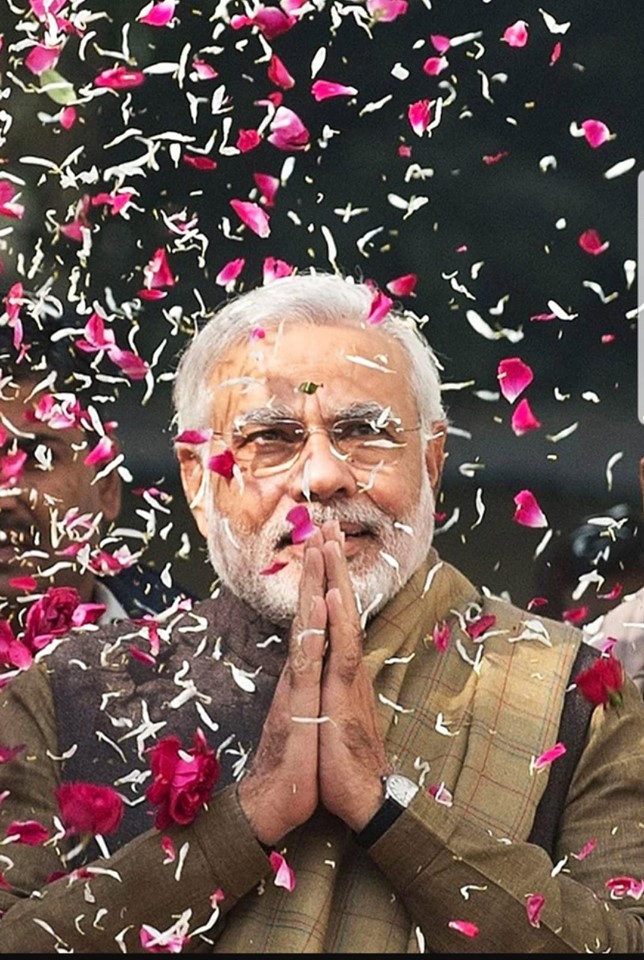
Some inspiring quotes from Indian PM Narendra Modi

We are harbingers of peace. We come from the land of Gandhi and Buddha.

All religions and all communities have the same rights, and it is my responsibility to ensure their complete and total protection. My government will not tolerate or accept any discrimination based on caste, creed and religion.

Modi20192

The diversity of India, of our civilization, is actually a thing of beauty, which is something we are extremely proud of.

I believe that a government has only one religion – India first. A government has only one holy book – our Constitution. A government has only one kind of devotion – towards nation.

Our country does not believe in the concept of your God and my God. We believe that all gods are one. We have different ways of accepting Him. All ways lead to Him.

Our country does not believe in the concept of your God and my God. We believe that all gods are one. We have different ways of accepting Him. All ways lead to Him.

Modi 2.0 – What will Modi do in 7 major policy areas?

Health

Telemedicine and diagnostic laboratories

More medical colleges

National immunisation programs

Modernisation

50 cities to have metros

Toilets for all Indians

State road network expansion

Inclusion

Banking access for all

Pension for small shop keepers

Poverty reduced to single digit

Economy

Grow to $5 trillion by 2025 and $10 trillion by 2032

Infrastructure spend

Credit scheme for MSME’s

Governance

Simultaneous elections

Time-bound delivery of public services

Upgrade governance standards

Education

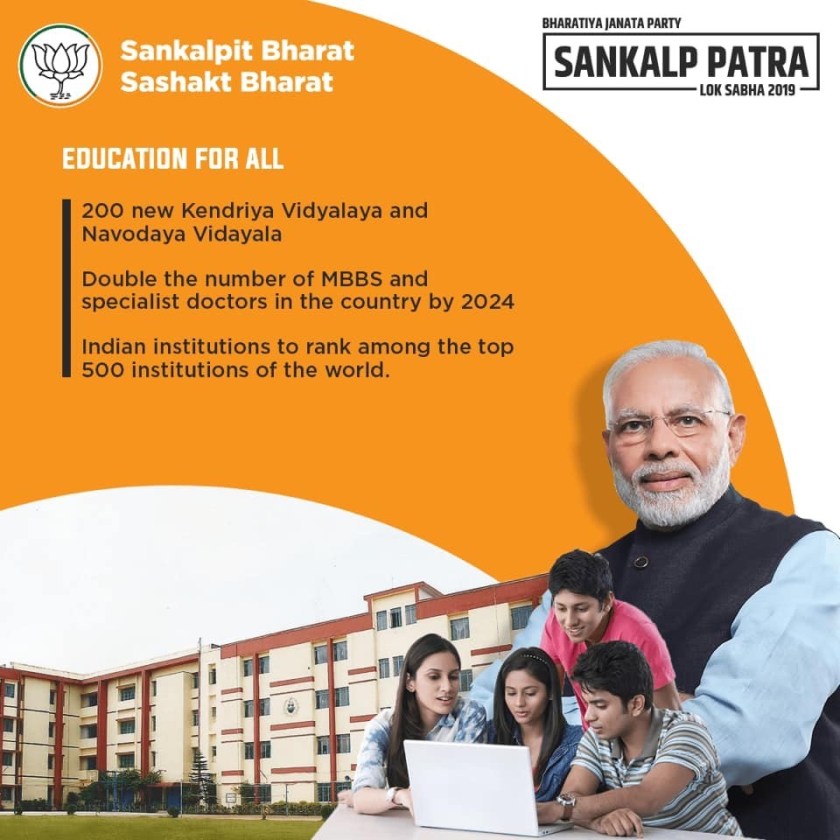
Indian institutions to rate in top 500 in world

Medical and specialist doctors

Foreign Policy

Increase diaspora interaction

Multilateral cooperation on terrorism and corruption

Increase diplomatic corp

PLUS since this is PM Modi, expect the unexpected in this new 5 year term as Indian Prime Minister.

Australia – just be quiet and accept that China and India are the new powers and we are not top of their minds

Australia should calm down on Asia and just build healthy relationships.

Media and politicians react hysterically to even the smallest policy shift out of China. We sweat over the relationship. And if China has any dispute with a neighbour, we want to jump in and offer our advice.

We should just quietly get used to the new reality that China is now the world’s second biggest economy and is about to become the biggest.

change - secret

And when it comes to India, Australia cannot see beyond divisions and communal unrest. Objectively looking at the numbers will tell us India is a stable, growing economy that in our region will be a close number two to China.

Australians will agonise over whether getting closer to India is a good buffer to China.

Forget it – just get closer to India because that in itself is a good idea. Same for China.

Get over it. Things have changed.

Now – how do we build sensible and quiet relations with China and India – two countries that probably don’t think about Australia too often?

Be inspired! Some great quotes from Australian-Indian business leader Vivek Chaand Sehgal

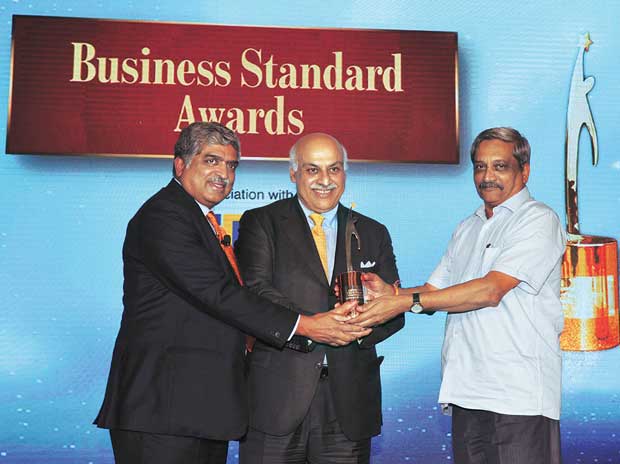
I recently saw some inspirational quotes from Australian-Indian business leader Vivek Chaand Sehgal, Chairman of Samvardhana Motherson Group (SMG).

“In Sanskrit we say that what doesn’t grow is dead.”

“A river, without other rivers flowing into it, will never reach the sea.”

VivekCEOofyearbusstandard

“In Hinduism we believe in four stages of life … the third is where you hand over what you have done, before going to the mountains, so I’m probably just about there.”

“There’s a saying in Sanskrit – ‘the world is a family’.”

“Only the most brainless businessman arbitrages labour or walks away when he doesn’t have to. He ignores the genius of a whole people, and our university partners have shown us that out-of-the-box thinking is still everywhere in Australia.”

Be inspired!

Australia’s PM Morrison should visit India to protect our education trade

Australian Prime Minister Scott Morrison needs to move fast to protect Australia’s education trade with India, now that the world’s biggest democracy has given Prime Minister Narendra Modi a second term in power.

Modi is a reformer – he can move fast and in surprising ways. We know he wants to transform education and there might be some shocks ahead for Australian universities.

Modi knows Indians mainly study abroad because their Indian universities are not up to standard. So he wants to change that.

The second Modi Government is aiming to boost India’s very low rankings among global universities. Freeing up his university sector will see closer ties with elite universities in England and America, and we could fall down the list if we do not act now.

Based on his track record so far, the Indian PM could make massive changes, deregulating up to one hundred of its best universities at any time soon.

Many in Delhi are critical of Australian universities which they claim have simply wanted a one-way transaction to make money out of Indian students. While some of our universities have created serious collaborations with India, in general this criticism is valid.

The next wave of education will see success for those who can create real collaboration, with two-way exchanges of students. Whether Australia can move fast on this is in doubt.

PM Modi is a politician who is not afraid of delivering surprises, as shown with his demonetisation move in his first term aimed at reducing corruption and driving the economy to digital rather than cash transactions. Surprises can transform into shocks if the leaders do not have a close personal connection – that’s why PM Morrison needs to act now to shore up our education trade.

What will PM Modi do for India in his second term?

What will Modi 2.0 do for India?

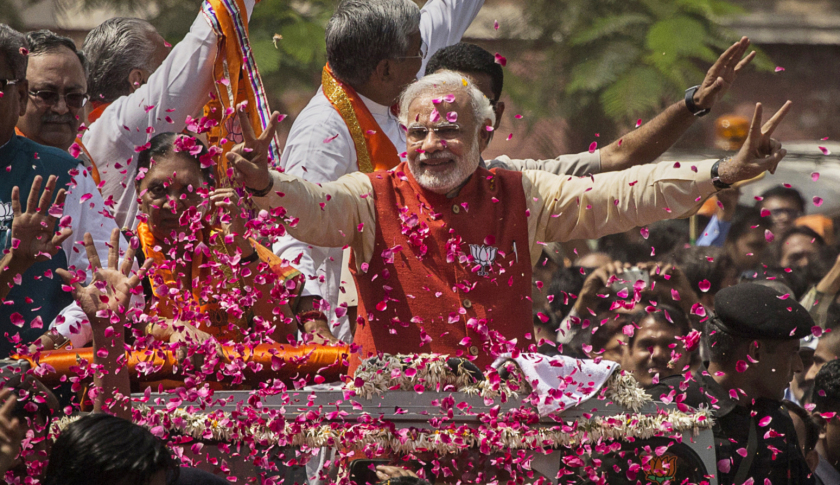
With the world’s biggest democracy opting for stability and returning the Narendra Modi Government for a second five-year term, all eyes are on what will Modi 2.0 do?

Here are some actions to look out for. As my friend Amith Karanth from India Australia Exchange Forum says: “Modi will also pull some surprises”.

modi2.0

Looking ahead at Modi’s priorities

Health – telemedicine, more doctors, increase immunisation

Education – Modi wants India to have a top 100 global university – he will deregulate many top universities to allow this improvement

Add 50 city metros

Inclusion – banking for all, reduce poverty to single digit

Employment creation and lifting farm/shopkeeper incomes will continue to be a focus

Building more infrastructure

Devolving more responsibility and power to the state governments, extending the level of competition between them and empowering local leaders

Streamlining the GST, which was a minor miracle itself, but has multiple complexities

While privatisation of government institutions such as banks and more is needed – this might remain in the “too hard basket” in term two

Modi2.02

Looking at what Modi has already achieved

Moves against corruption such as demonetisation (one of his major surprises), reduction in cash and movement towards digital payments

Introduction of a GST, arguably the world’s biggest tax reform – meaning the central and state governments are now awash with funds and can now do things

Focus on startups and cheaper loans for SME’s has created real growth in new enterprises

National campaigns such as “Clean India” have begun the big job – providing access for many millions to toilets is just one of the outcomes

Some reforms to the insolvency and bankruptcy has increased confidence in doing business

Modi has been a relentless global salesperson for India and attracted record foreign investment

India’s infrastructure has changed massively in five years – with more to do

Modi

New era for India-Australia as Ms Petula Thomas becomes Director of Indo-Australia Chamber of Commerce

Exciting news for the India-Australia relationship – Ms Petula Thomas has been appointed the new Director of the Indo-Australian Chamber of Commerce.

Petula worked with the British Deputy High Commission (BDHC), Australian Trade Commission (Austrade) and British Airways in Chennai over the past 15 years and brings a wealth of experience in strategic leadership, international relations, marketing and business development.

Petula is a passionate innovator and supporter of Women in Leadership, so I feel she will make a big positive difference in this role.

PetulaThomas

She is also a strong communicator.

We need strong and effective communication to enhance the India-Australia role and to make it easier for business of both countries to get together.

I hope the IACC can pioneer more exchange of people, more two-way missions, great education, more collaboration, improved cross-cultural understanding and positive steps to ensure that business in both countries know best what works in each country.

By the way – Petula has an amazing track record, winning four global and regional performance awards from the Foreign & Commonwealth Office in London, when she headed Consular Operations for South India, leading on Customer Engagement for the MENASA region (Middle East North Africa and South Asia) and Communications/Digital strategy for India.

Petula has worked with Austrade, Australian Government, where she received commendation from the Deputy CEO Austrade for successfully delivering on multi-city Industry events in India & Australia. During her career with British Airways Plc. she received a Regional CASAMEA award (Central Asia South Asia Middle East & Africa) for Revenue Development/Sales from British Airways Plc.

Petula has a First class Masters Degree in Science and recent qualifications in Project Management and Customer Relationship Management (including Sales, Marketing and E-commerce).

We wish her every success and happiness in the important new role.

Global Purchasing Power is moving to Asia

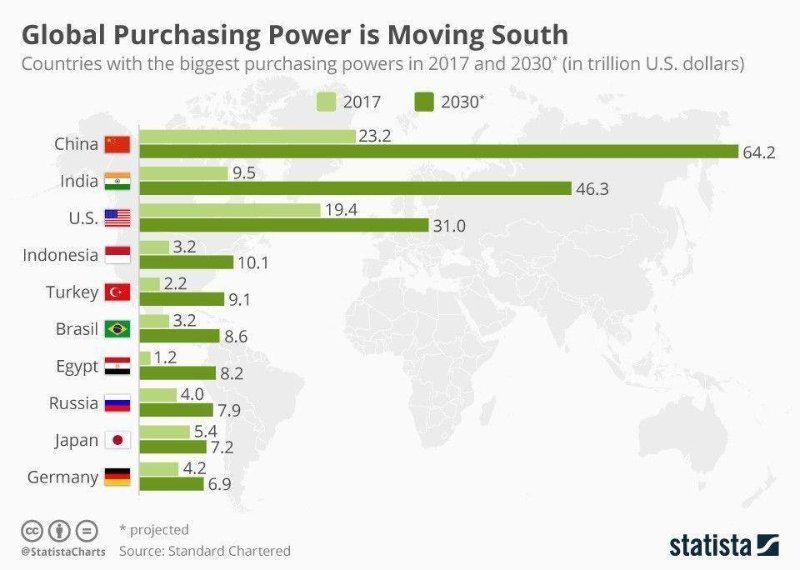
The biggest nation on Earth, China, is expected to keep its top spot as the country with the largest purchasing power on Earth and is on track to almost triple its purchasing power by 2030, according to an analysis by the British Bank, Standard Chartered.

India will almost quadruple its purchasing power, moving to rank 2.

China will double the USA while India will beat USA by approx 50%.

asia map

In the case of Japan, the country is expected to lose 5 ranks and emerge as the country with the 9th highest purchasing power worldwide.

Developing economies like Indonesia, Turkey, Brazil and Egypt are set to move into ranks four to seven respectively, toppling the reign of countries like Japan and Germany, which are still growing their purchasing power but at a much slower rate. The U.S. is expected to only drop one rank to position 3 but is grappling with slower growth.

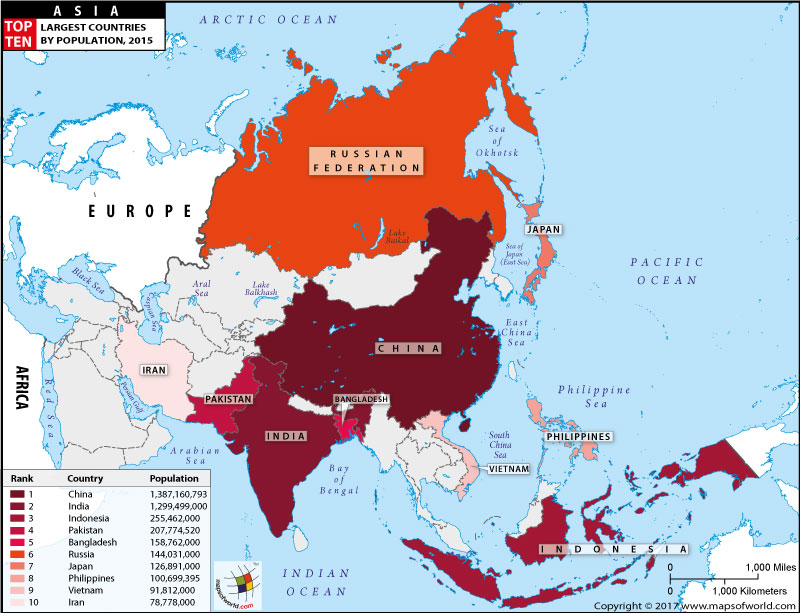
In summary – an amazing outcome for Asia – especially China, India and Indonesia.

asia map 2

How is your Asia engagement strategy going? Time to begin, change or reinvigorate? Get good advice so you avoid the mistakes of many before you.

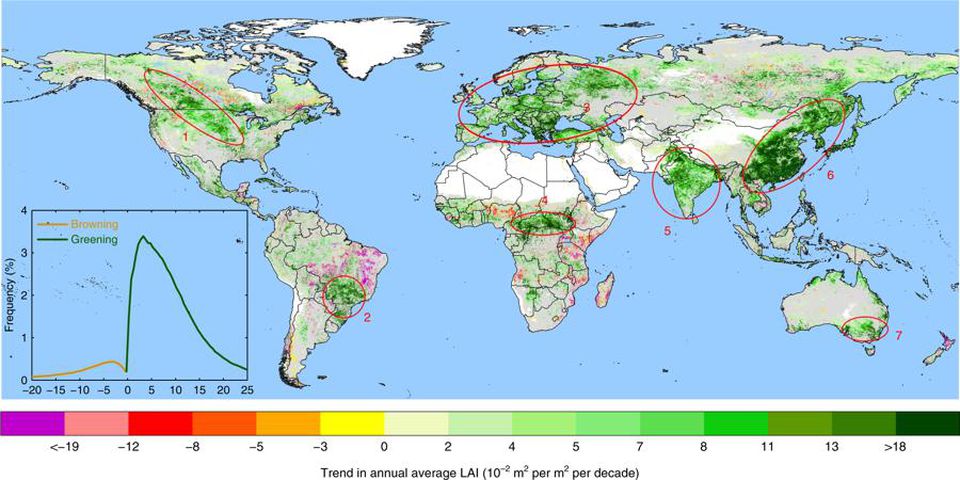
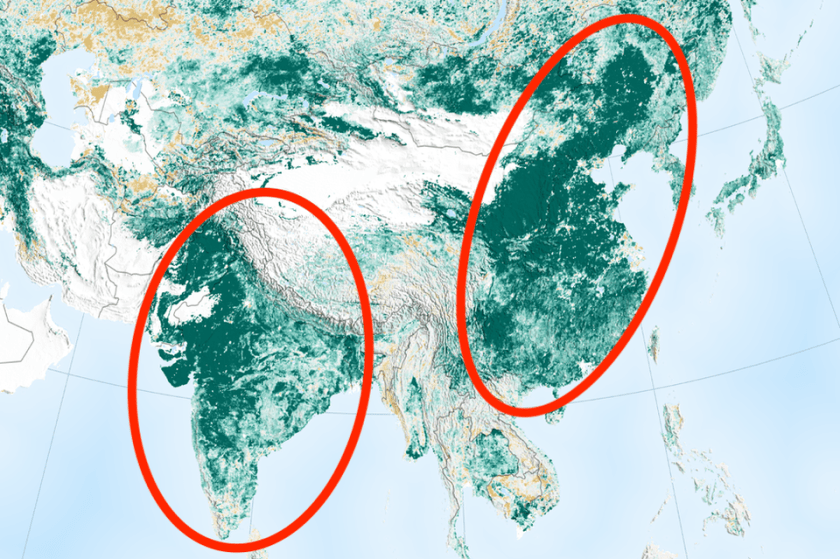
Let’s give credit where due – India and China are greening the planet!

Congrats to India and China – these two are doing heaps to green the planet.

NASA discovered the good news – the world is a greener place today than it was 20 years ago. What prompted the change? Well, it appears China and India can take the majority of the credit.

The countries are responsible for the largest greening of the planet in the past two decades. The two most populous countries have implemented ambitious tree planting programs and scaled up their implementation and technology around agriculture.

India continues to break world records in tree planting, with 800,000 Indians planting 50 million trees in just 24 hours.

So – let’s give praise where it is due.

Green2