
Why Australia makes diplomatic errors in Asia – Article 3

Australians display a remarkable lack of curiosity about the culture of other countries.

Leading trade missions, I find few who really want to dig deep and understand the culture they are visiting. Most are either not interested or overly confident that good old Aussie friendship will get us through. It does not.

mateship

Friendship is overlaid by culture, so what we see as merely being friendly can give offence in other cultures.

Cultural training for businesses rarely goes beyond the “how to greet and exchange business cards” approach which is merely the tip of the cultural iceberg.

diplomacy3

By learning about cultures, including our own, we can work out effective ways to stay true to ourselves while adapting to others. But this is a long way off.

Look at the case of relationships with India – soon to become one of the world’s top five economies and a vital cog in Indian Ocean regional security.

First there was the ban on sales on uranium – but the problem was more than the ban, it was our outspoken and public defence of not selling them uranium until they complied with global protocols.

It came across as a public lecture. It could have been done so much better in private diplomacy.

Then there was the issue of violence against an Indian student in Australia – before any investigation, Australia very strongly and publicly denied that there was any racist element in the attack. Clearly this was a premature claim and it riled the Indians, with hints of a cover up.

Again, a public spat which should have been a behind closed doors discussion and then a considered and cautious public statement. In the end, the relationship and trust were repaired but it took a Prime Ministerial visit and a lot of time to achieve this.

Underneath all these diplomatic errors is lack of cultural sensitivity.

culture7

This is the third in a series on “Why Australia makes diplomatic errors in Asia”.
Why Australia makes diplomatic errors in Asia – Article 2

As a regular visitor to India I note that USA President Donald Trump seems to be respected and popular there – he is evaluated in India based on his economic record and not on his bloopers.

I have not heard him ridiculed over there. His high office makes ridicule unthinkable.

Not so in Australia – from day one he has been ridiculed at all levels. Of course, he has provided ample material for these critics. I use this as an example of differing world perspectives, not as a defence of President Trump.

tallpoppy2

We always bring the “tall poppy syndrome” into play when we look around the world and we relish seeing the mighty fall – or at least have their weaknesses exposed. How many Aussies realise that most of the world and certainly Asia does not have tall poppy syndrome and are mystified when it is explained to them?

This syndrome is not a good cultural basis for friendships in Asia – and combine that with an aggressive public mindset and you have poor diplomacy.

In reality Australia is one of the friendliest nations – just not in politics or diplomacy.

This is the second in a series on “Why Australia makes diplomatic errors in Asia”.

Why Australia makes diplomatic errors in Asia – Article 1

Australia’s biggest challenge in relating to Asia is culture.

OUR culture, not theirs.

We have seen it recently with China and our call for an inquiry into the origins of Covid19 – surely a topic for behind the scenes diplomacy but it became a public fight and still bubbles along.

diplomacy

In our culture “if I am right, I will speak up, name and shame”.

In Asian culture, if I am right, I might speak but only “around the bush” and in a way that “saves face” and preserves relationship.

This is no small difference – it is the gulf that divides us from reaching our potential in our region.

“Saving face” is a part of Asian culture – so pointing the finger when something has gone wrong is the last thing we should do – better outcomes come from cultural awareness.

diplomacy3

We all know the best diplomacy happens behind closed doors. The above might explain why so much of Australia’s diplomacy is conducted on the front page and the TV news.

This is the first in a series on “Why Australia makes diplomatic errors in Asia”.

Indian PM Modi announces A$400 billion stimulus policy

Indian prime Minister Narendra Modi has announced a A$400 billion stimulus package, one of the biggest in the world’s responses to Covid19.

The package is approximately 10% of India’s GDP.

The stimulus package is called “Atmanirbhar Bharat Abhiyaan” and aims to make India self reliant and to revive the stalled economy.

Details are still coming out but part of the program will be major reforms across areas such as land, labour and liquidity laws to underpin a boost to the “Make in India” campaign.

Other areas will likely include supply chain for agriculture, reforms to national taxation, simplification of some laws, build capable human resources and strengthening the financial system.

It is typical Modi – ambitious, unexpected in magnitude and investors are already reacting with enthusiasm.

A great Indian Australian continues to give – Dr Rao and family

Well done Jana!

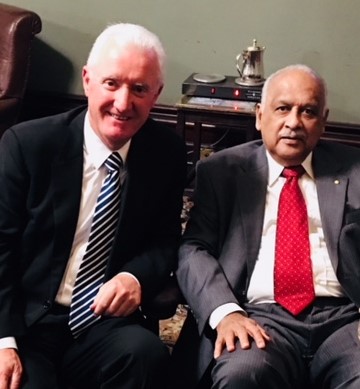
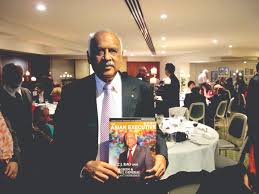
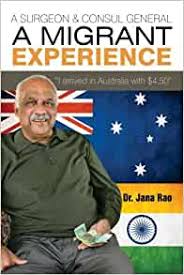
The Australia India Institute has just announced that the Australia India Social and Charitable Ventures Limited, through Mr T. Janardhana Rao OAM (pictured above and below) and his family, are providing a gift of at least $400,000 dollars over four years to the Australia India Institute.

jana 3

The Aii said: “This extremely generous gift will support the Australia India Institute’s engagement activities with the University and business communities and also support students from India or of Indian heritage.”

Professor Craig Jeffrey, Director of the Aii, thanked Mr Rao and his family noting, “This important gift will greatly enhance the efforts of the Institute and University of Melbourne to develop the study of India and engage with the Indian diaspora. We are extremely grateful to Mr Rao and his family for their generosity and vision.”

For around 25 years Jana was both a surgeon and the Honorary Indian Consul in Victoria – a huge task.

He has been an inspiration to me for many years – pictured below:

JanaRao 5

Jana continues to be an example to us all – respectful, modest, a great listener, a principled man who could be very strong but never in an aggressive or divisive way, a man of quiet consensus and leading by example.

His son Harish Rao is a former National Chair of the Australia India Business Council, an advisor to the Australia India Institute, Director of the Australia World Orchestra and more – and my personal mentor on things India.

jana2


Asia Society doing great things to connect Australia with India and beyond

Very good news for my hometown Melbourne and our State of Victoria.

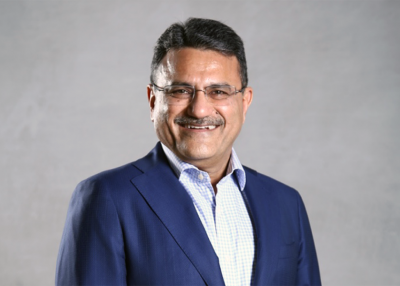
Manoj Kohli, Country Head of SoftBank India, SoftBank Group International, was appointed the second Asia Society-Victoria Distinguished Fellow in May 2020.

Manoj Kohli - profile photo 900 x 600

Asia Society Australia-Victoria Distinguished Fellowship is a partnership between Asia Society Australia and the Victorian Government to bring the best minds and ideas from Asia and Australia to Victoria. It aims to generate new ideas and promote greater economic, strategic and cultural connectivity between Australia and the Asia-Pacific region. The Fellowship will showcase the state of Victoria as Australia’s centre of excellence for Asia insights and capabilities.

The Asia Business Taskforce

On Friday 5 October 2019, the Business Council of Australia and Asia Society Australia announced the formation of an Asia taskforce of senior leaders from the business, education and government sectors to examine how Australian companies and organisations can increase their presence and position in Asia to ensure our continued prosperity and deliver progress for future generations.

The Asia Business Taskforce is chaired by Mark van Dyck, Managing Director (Asia-Pacific), Compass Group, and co-led by Jennifer Westacott, CEO of the Business Council of Australia, Philipp Ivanov, CEO Asia Society Australia, and Andrew Parker, Asia Practice Leader and Partner at PwC.

The taskforce examines how Australia can build and enhance its position with the powerhouse Asian economies in our proximity, diversify our economic partners, and prepare for a more strategically and economically competitive region.

Throughout 2020, the taskforce aims to delivering a series of policy recommendations to government.

These are two brilliant programs of the Asia Society here in Australia.


India should be a vital part of the world’s biggest trade deal – RCEP

The countries involved in the world’s biggest trade deal hope to welcome India back into the group – this was announced after their remote meeting last week.

The 16-country Regional Comprehensive Economic Partnership – known as the RCEP – would be the world’s largest when operational, spanning India to New Zealand, including 30% of global GDP and half of the world’s people.

rcep3

But resistance from India – concerned about a flood of cheap mass-produced Chinese goods hurting small businesses in its economy – came to a head last year when India walked out of the deal. I hope it comes back to RCEP.

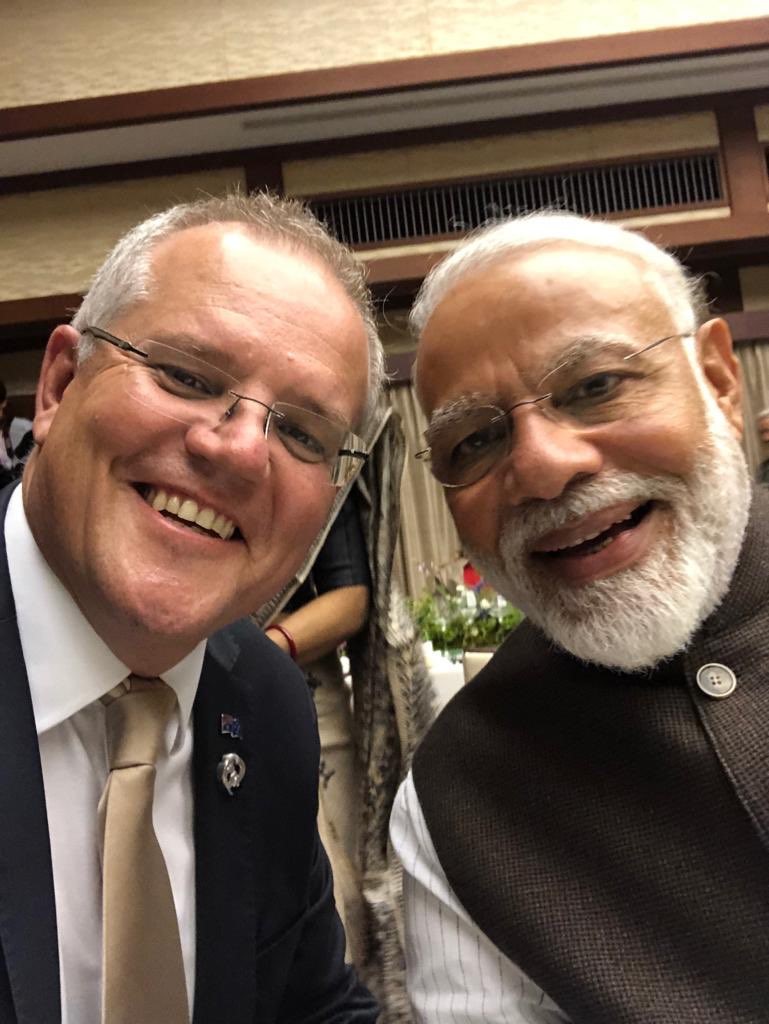
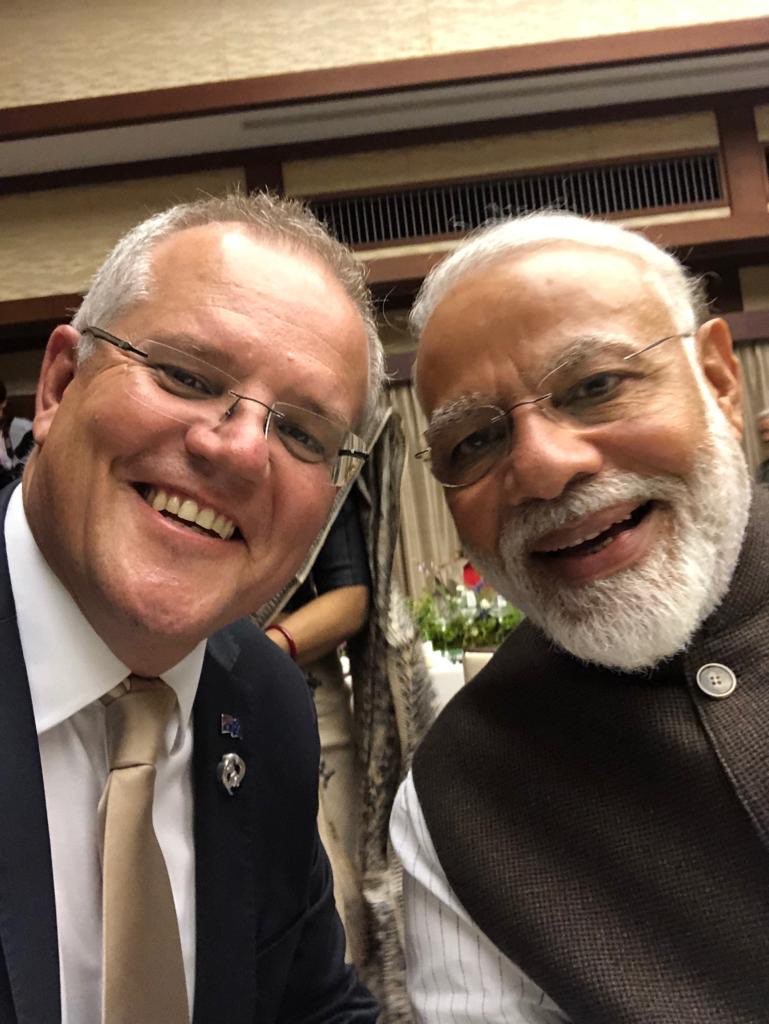
India had legitimate concerns and hopefully RCEP will deliver on these. Australian Prime Minister Morrison and Indian Prime Minister Modi have a good relationship and could work together on the way forward.

ModiMorrisonSmile2

The meeting, while reaching out to India, also made it clear that one way or another the RCEP deal will be finalised and signed in 2020. 

RCEP includes the ASEAN nations plus China, Japan, Korea, Australia and New Zealand.

Will Australia’s vision swing to the Indian Ocean rim after Covid-19?

Australia is torn between two worlds – it has an unchanging alliance with the USA, but it is placed in the middle of a massively changing region, the Indian Ocean. The two can make life uncomfortable.

We are all expecting life to be somehow different after Covid-19. Perhaps one of the differences will be Australia looking more to the west – to the Indian Ocean.

If so, there will be a lot of diplomatic wriggling to be done, with China and the USA looking on.

Why does the Indian Ocean matter so much?

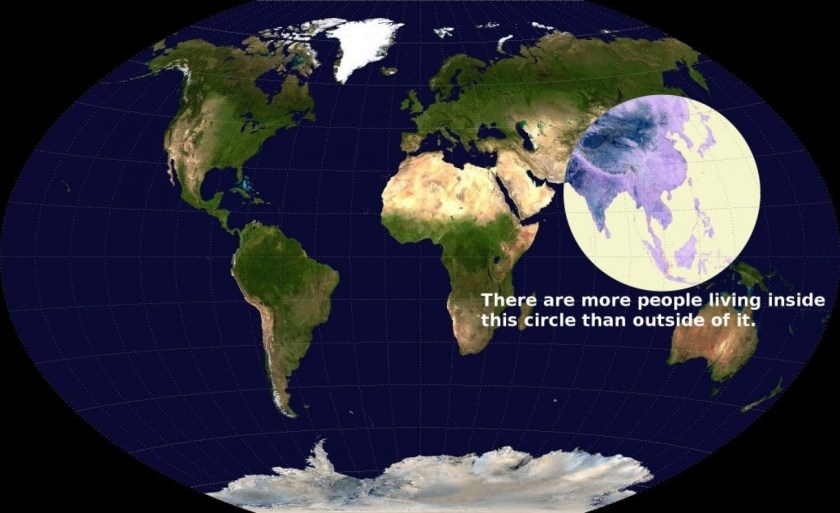
One third of the world’s population (2.5 billion) live around the Indian ocean rim. Their average age is below 30, making it the youngest region on earth.

This ocean is critical to global trade and food and energy security.

There are a dizzying array of global strategic and regional military and security interests.

It is at the crossroads of how the world works. Global trade and economic growth flow in and through it.

But it is also a region where instability and conflict can quickly arise – badly drawn borders create disputes, internal conflicts are rife and competing national interests make for a volatile region.

Why is the Indian Ocean so important for Australia?

First, it’s our neighbourhood.

Second, we are starting from way behind for we have long ignored this region and only recently have been building solid bridges.

Third, one-third of Australia’s coastline borders the Indian Ocean.

Fourth, our future depends on security of lines of trade and the development of both on-shore and off-shore assets – these hold the key to our economy and development.

Fifth, when you look at this Wikipedia map of the “western world” you might wonder why we have not looked to the Indian Ocean before.

westernworld2

Best of both worlds?

Looking west to the Indian Ocean does not mean we have to ignore our powerful friends – China to the north and USA to the east.

Changing our view while keeping our old friends will take diplomatic skill.

And probably it also takes time.


These India numbers will boggle your mind but the future is more exciting

Here are some India and Australia numbers to contemplate:

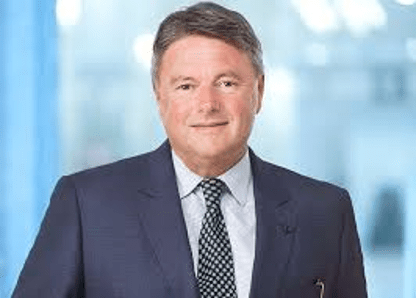
(Thanks to Bill Cole, Partner International, BDO, pictured below, for some of this data)

billcole2

AUSTRALIA

  • Population: 24.6 million
  • GDP: USD 1.3 trillion
  • Top 5 Imports: Personal travel services, motor vehicles, refined petroleum and ships
  • Top 5 Exports: Iron ore, Coal, Education travel services, natural gas and personal travel services

INDIA

  • Population: 1.339 billion
  • GDP: USD 2.5 trillion
  • Top 5 Imports: Petroleum products, gems, electronics, chemicals and machinery
  • Top 5 Exports: Textiles, Gems, Chemicals, Products and Agricultural products

Top Trading Partners

Australia’s top 3 trading partners are China, Japan and the USA.

India comes in at number 7.

India’s top trading partners are China, USA and UAE, with Australia coming in at number 20.

So, what about the future?

asiamap8circle

Australia’s India Economic Strategy to 2035 Report:

  • Recommends that by 2035 Australia lift India into our top three export markets, make India the third largest destination in Asia for Australian outward investment and bring India into the inner circle of Australia’s strategic partnerships
  • Identifies 10 sectors where strengths of Australian businesses match India’s needs:
    • Education (flagship)
    • Agribusiness, resources and tourism (lead)
    • Energy, health, infrastructure, financial services, sport, science and innovation (promising)

It is sure a “big picture” report – but with the right approach it can be achieved.

ModiMorrisonSmile2

Seems PM Modi and PM Morrison are getting on well – so time for business, investment and education to pick up the baton and run with India. Ready?

“Namaste Trump” good diplomacy for India but differences with USA remain

Can India make the most out of US President Donald Trump’s visit?

“Namaste Trump” this week been a great visit for India and looks to have been celebrated across the nation. Two leaders of great democracies.

But differences still exist, and the question is can India and PM Modi build on President Trump’s historic visit which took place this week?

PM Modi will drive the relationship, but he is not alone.

One man in South Block — Harsh Vardhan Shringla, India’s foreign secretary – will make a big contribution to the outcome.

India’s foreign secretary is seen as a calm and composed officer, and he has handled bilateral ties even during turbulent times as the Indian ambassador to the US.

It was he who dreamed up and led the “Howdy, Modi!” event in Houston.

trumpmodi6

Now he has a lot of the responsibility of making “Namaste Trump” a success.

What will be the big issues? Top of the list is a free-trade agreement and disagreements on intellectual property rights. Plus how both countries feel about and react to China.

But clearly Namaste Trump is a big win for India and PM Modi and a mark of the increasing respect India has on the global stage.

trumpindia8

Indian PM Modi and US President Trump – two men who enjoy centre stage and get on well