My “shopping mall index” shows you must revisit India for consumers

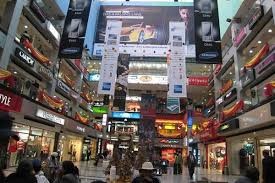
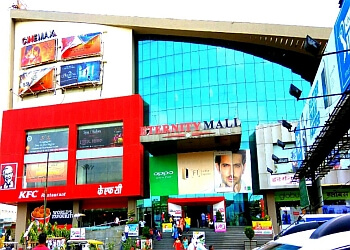
India had just 9 Shopping Malls in 2007.

There are over 350 Shopping Malls in 2019.

Plus 85 new Shopping Malls will be built in the next 5 years = 435 Shopping Malls in 2025.
ambience6

That’s my “shopping mall index” That’s why you should revisit India.

India today is a heady mix of three powerful elements – an appetite and reality of rapid change, a young population and the Governments now have funds to spend.

Add to this that online retail is taking off, with Amazon and the local Flipkart leading the way.
mall3

Dr Mark Morley Trade Commissioner India Government of Australia makes a key point about opportunities for us: “Australia is well positioned with the Indian consumer. Across India, we have a great reputation for clean, safe and reliable supply. We are well known as a premium supplier of produce, and we have a global reputation for our quality brands.”

One challenge for Australian businesses is to fully understand the market – and the answer is that hardly anyone knows what size the market is.

We know there are 1.3 billion people.

Within that, some estimate the “middle class” as high as 300 million.

Austrade takes a dimmer view – it estimates that there are approximately 30 – 80 million people in our target demographic, many of whom live outside Tier 1 cities. Thats a big range from 30 to 80, which shows that we just do not know. Austrade looks for consumers that:

  1. can afford international travel to destinations like Australia;
  2. can afford to send their children for study abroad; and
  3. can afford to eat at high-end restaurants and hotels, or eat significant amounts of imported food and wine at home.

The point is, we need more and better data.

But my “shopping mall index” should give you a reason to revisit.

And if you act soon but take a long term view, now is the time to start.
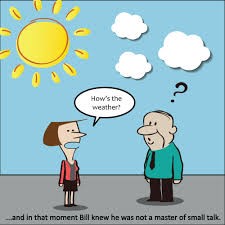
“Small talk” – essential skill if you want to be in global trade

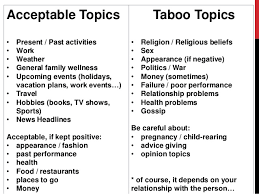
Many people are uncomfortable with “small talk”, the so-called relaxed chat that happens when we meet and prior to the real discussion. But it is an essential business tool for global trade. See where you fit:

1. Does small talk feel a bit strange and personal?

You might rather sit in the corner and keep quiet – but walking around the room and chatting is a vital negotiation step – it begins the relationship building. MY TIP – prior to any major trade meetings, take an hour to visit some major memorial, new centre, historic building or tourism stand out. There’s your topic of small talk!

smalltalk3

2. But small talk is superficial

Yes, you are right, it is superficial. But the paradox is it is also important. it is about connecting, about seeing how the other person operates, and finally it is about trying to make others feel comfortable. MY TIP – think less about yourself and more about the other person. They might be nervous about small talk too.

3. How do you know what to talk about?

It’s not as hard as you might think – the weather, the last week at work, some family happening, the wonderful meal you had yesterday, what is coming up next week. MY TIP – an easy way to participate in small talk is to ask questions – how has your week been?

4. Small talk is a waste of time

Small talk feels like a waste of time but it is one step towards building relationship. If you make the other person feel relaxed, engaged and interested, they will feel grateful. MY TIP – don’t be too serious, laugh as you say things, keep it lighthearted.

5. Can small talk be risky?

If you keep it light, smile, make eye contact, offer some friendly insight into your world, there is no risk. But if the small talk suddenly shifts to the major topic of the day (before the real discussions have started) then be cautious. MY TIP sometimes you just have to back away. It is not the time for serious stuff.

6. But how do you end the small talk?

Everyone in a crowded room knows that you cannot and should not spend the whole evening with them, so once there has been enough small talk, you should move on and start again with someone else. It’s called “working the room”. MY TIP with a big smile and friendly face just say “really good talking to you and I hope we catch up later on”. Easy.

Thanks to Dr Andy Molinsky for some of the above.

smalltalk6

Australia will relate better to Asia by removing the “bamboo ceiling”

Former Labor Government Minister and current Chancellor of the Australian National University – Gareth Evans – has raised an important challenge for Australia that is too often swept under the carpet.

Australia’s “bamboo ceiling” keeps Asian Australians out of top positions.

Here is the view of Gareth Evans:

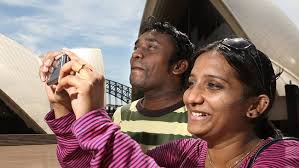
“The “bamboo ceiling” in Australia is real. Asian-Australians now comprise up 12 per cent of our total population but hold only around 3 per cent of senior leadership positions in our public institutions and ASX 200 companies. They have been an under-appreciated and under-utilised national resource for far too long.”

tourists3

Gareth Evans sums it up so well:

“The bamboo ceiling is an issue on which we have ducked and weaved and dithered for too many years. The Asian century is off and running and we have in our midst a fantastic community resource with which to take maximum advantage of all the opportunities it offers.”

Well said.

And my view?

fairgo

Removing the “bamboo ceiling” would reduce Australia’s anxiety and uncertainty over Asia – it would allow Australia to play a big role in the “Asian Century”.

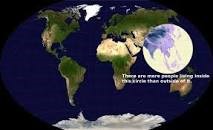
One third of the world’s population lives on our doorstep – and they are on the rise as economies and powers.

By getting our own house in order – removing the “bamboo ceiling” – we can live positively and well in the world’s most exciting region.

China and India are our biggest source of migrants – let’s give them every opportunity.

Fair go, Australia!

The 4 paradoxes of doing business with India

Slow and Fast

We think you need to commit three years to building business in India – but when you first go be ready for anything because demand can be instant. Or not. A careful understanding of the market and assessment of whether it is right for you is essential.

Price and Relationship

We know Indians chase a bargain. But price alone is not enough for longevity in India – you need to build relationships. I would build the relationship first, because anyone can undercut your price.

Status and Money

Status in a hierarchical society such as India is paramount. But now so is money. Making it. Showing it. If your product combines status and money it is a good fit. When there, be careful to fully respect the status of whoever you are dealing with.

“India” and “Many Indias”

India is not one market – it combines many languages and cultures, with people in one part of the country not even being able to understand people in another part. We begin by understanding the regional differences between north, south, east and west – but this is only the beginning of drilling deep to know who you are dealing with and who you are targeting. Beware someone who promises to take you “across India” in one major campaign.

Step one is to get some good market research – the only safe and sound beginning. Add to that some cross-cultural training.

Time, knowledge and patience are the keys.

Steve1

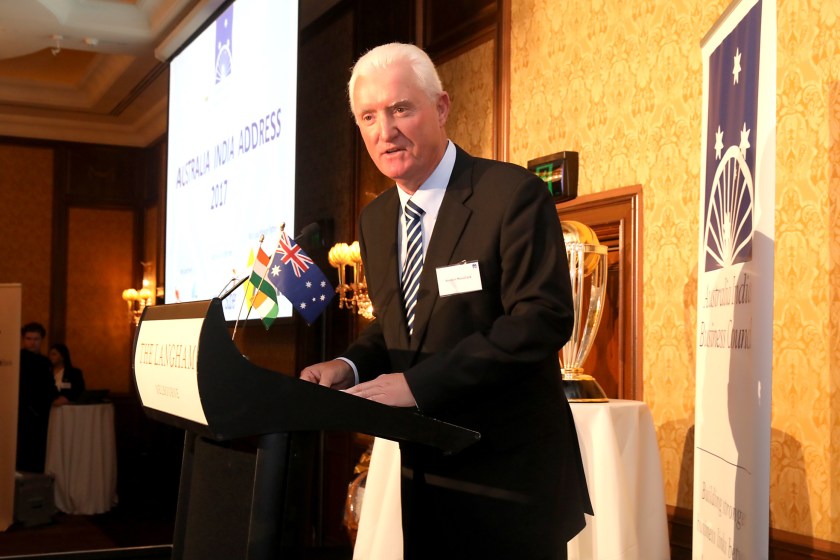
Stephen Manallack speaking at Australia India Business Council function

Melbourne is home to many Indians

India is now the biggest source of migrants to Australia, and most come to my city, Melbourne.

Australia is really a “nation of migrants” because all citizens apart from the original indigenous inhabitants came here as migrants.

There are around 170,000 Indian born people here – with many more “Indian-Australians” who were born here. This makes up 3% of our population.

diwali5

Diwali is a huge celebration in Melbourne – pictured is Federation Square

50% are families with children and 46% have Australian citizenship.

25% are professionals.

Melbourne is a popular choice for Indian students and tourists.

The Indian community is a big part of making Melbourne a diverse and multicultural city.

Diwali20166

Many business and community functions are held in Melbourne for Diwali – seen here from left are Stephen Manallack. Preeti Daga, Molina Asthana and Anoushka Gungadin. At back are Ian Nathaniel and Michael Moignard

What is the great legacy of the west?

For over 200 years the west has dominated. Economically strong, trading nations, global defence forces. It is a good time to ask – what is the great legacy of the west?

The Age of Enlightenment, time of reasoning, power of science, all were revived by the west. This is the view that together we can solve problems.

Enlighten2

Free market economics – has shown how to lift people out of poverty and share the wealth – not perfect, but probably the best model.

Psychology of the positive – anything is possible. Contrast this with “fatalism”. Love this “can do”.

Good Government – the west leads in healthcare, infrastructure and education – and in the west people receive lots of government sponsored information and practical ways to live better. Of course, not perfect.

This is a legacy that will impact on those emerging leaders such as India and China.

Why is the west being so jittery about the rise of Asia?

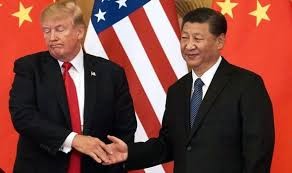
Trade war on China. Military action here and there.

The west is jittery. Yet all we have is the return to the normal state of affairs – until exactly 200 years ago China and India were major global economies. Now they are again.

So, why is the west so jittery about the rise of Asia?

First, the west “won” the cold war against Russia without firing a single shot. Great victory – but the pride of that has become hubris and shows in a belief that only western liberal democratic countries can succeed. And here comes China. Not western, not liberal and not democratic. Jittery.

russia2

Second, 9/11 was a shocking event that dominated the mind of the west then – and now.

Wile we focused on 9/11, two things happened – rising China joined the World Trade Organisation and the lowest earners in the USA were hit by a 50% decline in income.

Hence – Trump. And hence, lots of jittery decisions being made throughout the west.

Can the west get back to rational, calm and innovative leadership? I hope so.

Thanks to Kishore Mahbubani for inspiring some of the above.


India’s richest man to target retail as a balance to energy investments

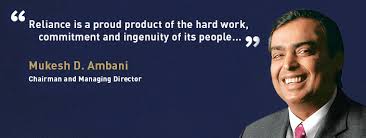
Mukesh Ambani, India’s richest man and boss of Reliance Industries Ltd (RIL), is launching an ambitious plan to boost retail revenue as a balance to his energy interests.

Mukesh Ambani

RIL will soon hire distributors to sell private-label brands owned by its retail unit through neighbourhood stores – across categories such as staples, food, home and personal care and general merchandise.

RIL sells these products through its retail stores under brand names such as Best Farms, Good Life, Masti Oye, Kaffe, Enzo, Mopz, Expelz and Home One.

Ambani expects the consumer businesses to contribute nearly as much to RIL’s overall earnings as the energy and refining businesses by 2025.

As part of this strategy, RIL is taking on online retailers such as Amazon and Flipkart in the e-commerce segment and the likes of Hindustan Unilever Ltd and ITC Ltd in the offline segment.

Watch this space!

Reliance Retail already operates neighbourhood stores, supermarkets, hypermarkets, wholesale, specialty and online stores.

India – have a go! Some “quick tips” for those thinking of doing business with India

Have a go! India is already a large market and growing fast – with a massive young population driving future demand. Interest is growing in “all things western” and demand in many sectors (IT, education, resources) is just so big it cannot be satisfied locally.

Do your homework! Failures are many and most can be traced back to lack of research or inability to adapt to the local market. Factors such as cultural differences, consumer trends and what the market wants have to be identified.

ModiMorrisonSmile2

Above Australian PM Morrison and Indian PM Modi hit it off at a recent meeting

Use our reputation! Australia is generally well thought of in India – those who come here are amazed at the quality of our cities. Use this for brand advantage and to open doors.

cotton5

Choose the right channel. Distribution, e-commerce choices and so on will be make or break for you if consumers are your target. Aussie firm COTTON ON recently set up and online sales entry into India, the first step towards a physical presence.

India is a “relationship” culture – meaning they want to get to know you first. It might take several visits for you to create the connection. Otherwise you get a short term transaction this year that might not be there next.

Indians can help you! Finding local Indian talent has been a big success factor for so many global companies, large and small. If you cannot afford to establish a local team then perhaps you cannot afford to do business there.

Adapt to culture – get some training to understand how to behave and how your Indian counterpart might think. We are different! If you are culturally adaptive you can succeed and enjoy the difference.

Have both short term and long-term goals – and long term with India means committing to this venture for at least three years.

But above all – have a go!

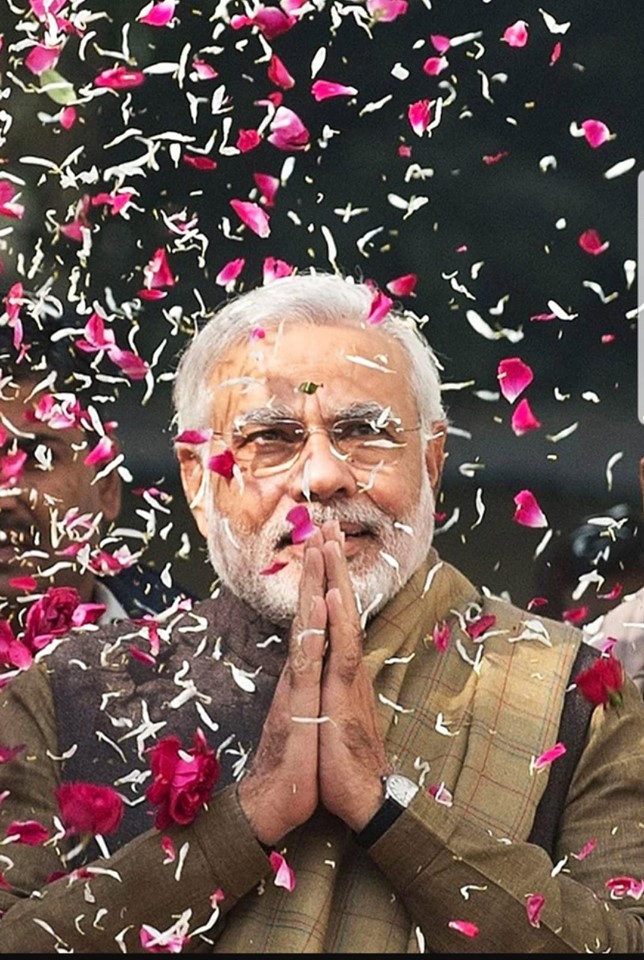
Some inspiring quotes from Indian PM Narendra Modi

We are harbingers of peace. We come from the land of Gandhi and Buddha.

All religions and all communities have the same rights, and it is my responsibility to ensure their complete and total protection. My government will not tolerate or accept any discrimination based on caste, creed and religion.

Modi20192

The diversity of India, of our civilization, is actually a thing of beauty, which is something we are extremely proud of.

I believe that a government has only one religion – India first. A government has only one holy book – our Constitution. A government has only one kind of devotion – towards nation.

Our country does not believe in the concept of your God and my God. We believe that all gods are one. We have different ways of accepting Him. All ways lead to Him.

Our country does not believe in the concept of your God and my God. We believe that all gods are one. We have different ways of accepting Him. All ways lead to Him.