Australian media – especially Fairfax – misrepresent modern India

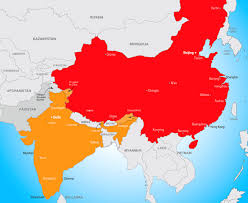
India is not understood in Australia – China continues to hold our national imagination. Our myopia on India is a problem because within ten years India is tipped to become the third largest economy in the world.

Multiple cliched views of India dominate – slums (despite millions lifted out of poverty), public sector corruption (despite serious advances through use of IT) and the so-called Hindu fundamentalism of Indian Prime Minister Narendra Modi (despite four years of relative communal stability).

How does Australia get India so wrong? Our media influences our national perspective on India, and recent coverage of developments in the holy city of Varanasi (The sacred as strategy, The Age, 9 April) shows how we focus on cliché and miss the big picture. The article branded development in this city as Modi’s move to “insert religion into the centre of the political debate”.

So, what is happening in India and why should Australia care?

Four things are important for Australia – India’s investment growth, rising local consumption, over a decade of around 7% economic growth per year and governments (central and 29 states) awash with money due to the GST.

As a result, every part of this country is being transformed and demand is rising for products and services of the type Australia is good at. By contrast, our trade with India is stagnant – if not for rising numbers of Indian students, trade would be in decline. Clearly, we are missing something.

What is the real picture in Varanasi? Sure, as reported a major new promenade is being built – as much as anything to enhance the tourism appeal of this great city. Branding it as driven by a religious view is as silly as claiming tourist development around Uluru is “divisively pro-indigenous”.

But the bigger picture is far more interesting. Varanasi is just one of one hundred “smart cities” being developed across India, with new roads, freeways, cleanliness, sewage treatment, trade and convention centre, traffic management and more upgraded within five years. Located on the banks of the River Ganges, the city will also become a multi-modal river and road transport hub, supporting local industry.

Varanasi is preparing for a 25 per cent growth in tourist numbers, fuelled by a combination of India’s middle class and international visitors.

To see this as promoting “a distinctly Hindu state” displays a stubborn refusal to see the bigger picture in India. What is happening here is happening across India.

Just look at tourist numbers for the Taj Mahal, India’s best-known symbol of Muslim India rule – located in Agra, another city having infrastructure upgrades as part of the Modi Government’s Smart City program. In the last year there were approximately five million tourists, of which 4.5 million were Indians of all beliefs. This weight of numbers demands infrastructure upgrade, and the Taj Mahal and Varanasi are examples of many across the country.

Indians are becoming more interested in their own history and they can afford travel. It makes no sense to link this to some divisive religious plot.

International yoga day is another example of Indians promoting and being confident about their heritage – celebrated in countries around the world with many millions in the west now more interested in yoga. That yoga grew within Hindu India is incidental.

Australia should know how much India is changed – we have just taken our first delivery of railway carriages made in India for Sydney’s public transport upgrade. Modi’s “Make in India” program is working.

Health is improving – a new study shows that the lives of 50,000 Indian children have been saved through a measles vaccination campaign run between 2010 and 2013.

We know a lot about the generosity of Bill Gates, but Indian tech billionaire Azim Premji has just given away US$21 billion to philanthropy, becoming the biggest endowment in Asia – our region.

At a BDO “Improving Business with India” seminar last month I tongue-in-cheek explained rapid change in India by launching my “India Shopping Mall Index”. Here goes – there were 3 shopping malls in India in 1999 – just 20 years later there are over 350 malls and another 85 in the pipeline.

The Indian Finance Minister has estimated India will have a middle class of around 600 million by 2030 when it becomes number three economy in the world.

All of this is exciting news for Australia – we would know about these great changes and opportunities if we avoided the old cliched views of India. If we continue to view India though a prejudiced lens, we will see only what we look for – such as Modi and Hindu nationalism or the poverty of slums – and we will miss the great changes that offer real possibilities for us.

Within our volatile and changing region, India could become our most important friend – but right now we are looking at India with blinkers on.

Stephen Manallack is a blogger at IntoIndia.blog and former President, Australia India Business Council (Victoria)

The above article was submitted to The Age on Tuesday 9 April – not yet published.

History in the making as India begins shipping trains to Australia  

When a consignment of six metro coaches built in Baroda was shipped from Mumbai on Friday, it created history in India’s manufacturing sector.

The metro coaches, built for the Australian government, was the first of its kind India has ever exported.

The coaches, which measure 75 feet in length and weigh 46 tonnes each, were loaded in house by the Mumbai Port Trust.

Over the next two-and-a-half years, a total of 450 ‘Made in India’ metro coaches will be exported to Australia.

This is also the first of its kind export India is doing ever since the launch of ‘Make in India’, which aims at turning the country into a global manufacturing destination.

Things are changing fast in India and it is good to see it linking with Australia as it creates history.

(Thanks also to my friend and former AIBC President Rashi Kapoor for alerting me to this story)

trains2

Pictured are “made in India” carriages for the Kochi metro system – so India is supplying for domestic demand as well as exporting

Why I am an optimist

Seeing the massive changes in India and China, it is clear that in five years they will have less pollution and better health than today.

In fact, there is a lot of good news around if you look for it in the right places.

news1

These reports come from my friends at FUTURE CRUNCHhttps://futurecrun.ch/goodnews

Volkswagen, the largest car manufacturer in the world, responsible for 1% of global carbon emissions, has committed to going fully carbon neutral by 2050. NYT

America has officially entered coal cost crossover. 74% of existing coal plants now cost more to operate than to replace with wind and solar. Utility Dive

Between 10th and 17th March, Germany got 72.6% of its electricity from renewable energy resources. Did someone just say “baseload power?” Renew Economy

In January 2015, at the height of ISIS’s power, 7.7 million people were estimated to live under its rule. As of last week, that number is zero. CNN

Between 2010 and 2013, India ran a measles vaccination campaign. A new study estimates that it saved the lives of about 50,000 children. Nature

This year will see almost two billion people in 50 countries vote, the largest number in history. Did someone just say “death of democracy?” Al Jazeera

Indian tech billionaire Azim Premji is giving away $21 billion to philanthropy, the fifth largest endowment in the world and the biggest in Asia. ET Tech

Clever win by animal rights activists. Australia has passed a law that prevents companies using data from animal testing for developing cosmetics. The Age

Deep in the frozen forests of Russia’s far east, the Siberian tiger is staging a quiet comeback, thanks to government-led conservation efforts. CBC

And – the above is just one of their regular fortnightly summaries.

Good news – it’s there if you look in the right places.

There are also many locations where you will find constant “bad news” – the choice of where to get your information is up to you. Below are examples of news sources committed to spreading fear and despair…

news

Indian governments “awash with money” as the GST has impact

Gross Goods and Services Tax (GST) collection by the Government of India reached Rs 1.07 trillion (US$ 15.41 billion) in March 2019, registering the highest monthly collection in FY19.

This is a stunning boost to both the Central and the 29 State Governments.

We used to advise businesses wanting to enter India that they should only deal with government there “if they have to”. But things have changed. Not only do the central and the State Governments have lots of money, they are all proactive in encouraging business – and competing hard to outdo each other on ease of business and encouragement for entrepreneurs.

gst5

So, our advice today – include governments in your list of people to talk to about doing business with India.


gst3

India’s product and services exports to hit US$540 billion this year

Can this be true?

India’s merchandise and services export would touch USD 540-billion mark this fiscal, Indian Commerce Minister Suresh Prabhu said Thursday.

Seems the figures back it up – India was once an isolated domestic economy but is now a major global exporter.

He said exports are growing at a healthy pace and shipments of goods would reach over USD 330 billion.  Similarly, services exports would touch about USD 200 billion.

The goods exports grew by 8.85 per cent this year and the Indian economy continues to hit around 7 per cent growth annually.

Surely this is one of the world’s great economic stories.

How China and India differ in the consumer goods market

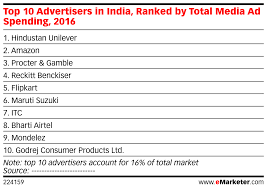
India’s share in the consumption of consumer goods is expected to double by 2030 and favourable demographics (youth) will soon take it ahead of China in regional market dynamics, according to a report by Credit Suisse.

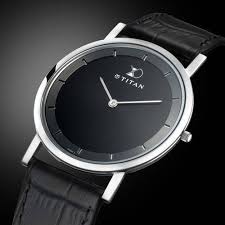
Interestingly, in India it is the home-grown brands like watchmaker Titan, hosiery company Rupa and another watchmaker Sonata which are gaining the most out of this propensity to spend in India.

consumer8

However, India is at a comparative disadvantage vis-a-vis China because of factors like less urbanisation, high concentration of urban pockets and lower enrolments in higher education.

It said in 2015, China had 150 million more people in working age than India, while by 2045, the northern neighbour will have 300 million less people than India in the bracket.

Additionally, China will also have to grapple with ageing related issues by 2045, it said, pointing out that the Communist country will have 350 million people aged over 65 as against 200 million in India.

consumer1

It marked out the apparel and meat sectors as the ones with ‘high’ growth potential as the per capital income of the country grows, followed by beverages, cars, cereals, personal computers, smart phones and education with ‘medium’ growth potential, while healthcare, consumer credit and tourism were the ones with ‘low’ potential.

consumer 4

From a consumption perspective, the Chinese prefer more of travel and entertainment-related options, it is staples that dominate the Indian story, the brokerage said.

India scores over China when it comes to spending intentions, the brokerage said, pointing out that the desire to spend is declining “more broadly” in China.

consumer3


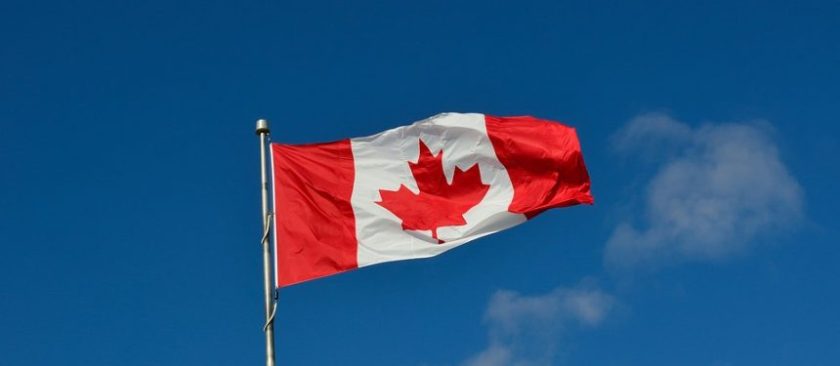
A “watch out!” for Australian education – the UK and Canada are competing big time

The UK and Canada are innovative and aggressive in their pursuit of international education – reminding Australia that if we regard international education as “just a transaction and revenue opportunity”, we might see decline in future.

First, from the UK:

Ambitions to grow international student numbers by 30% and boost the economic impact of the industry to £35bn annually by 2030 are at the centre of the new UK International Education Strategy. This is huge!

Among the key points of the strategy is an extension of the post-study work visa “to ensure the UK continues to attract and welcome” international students, and plans to improve the visa process and support student employability. Warning Australia – improve the work prospects for international students or expect a backlash.

Other propositions include the appointment of a new International Education Champion to develop global partnerships, tighter collaboration across government department on international education policy and a call for sector groups to bid into the £5m GREAT Challenge Fund to promote the UK internationally.

Current UK numbers are 458,000 international students – increasing to 600,000 under the plan. That’s competition for Australia.

canadaflag

Second, to Canada:

The government proposes to invest CA$147m and $8m per year after that to support work and study opportunities abroad, with the development of an outbound student mobility program, and to promote Canadian education abroad with a focus on its quality. Love this combination!

“In an increasingly global economy and labour market, Canadian youth need to develop a range of skills. These include adaptability, fluency in more than one or two languages and inter-cultural skills—skills that are best fostered through international experiences, such as travelling, studying and working overseas,” the budget text read.

“The investment…will give more students – including those from marginalised backgrounds – the international study and work opportunities so highly sought by Canadian employers,” a Universities Canada spokesperson said.

What should Australia do?

  • Improve employment rights for international students
  • Use international students (paid) to teach us their language and culture
  • Add value by increasing employability skills of international students
  • See students as a long term resource, building a bridge to key economies

What are your thoughts?

children3

IMF confirms India leads as a growth economy

India has been one of the fastest growing large economies in the world, the International Monetary Fund (IMF) has said, asserting that the country has carried out several key reforms in the last five years, but more needs to be done.

Responding to a question on India’s economic development in the last five years at a fortnightly news conference here, IMF communications director Gerry Rice Thursday said, “India has of course been one of the world’s fastest growing large economies of late, with growth averaging about seven per cent over the past five years.”

“Important reforms have been implemented and we feel more reforms are needed to sustain this high growth, including to harness the demographic dividend opportunity, which India has,” he said.

Details about the Indian economy would be revealed in the upcoming World Economic Outlook (WEO) survey report to be released by the IMF ahead of the annual spring meeting with the World Bank next month, he said.

This report would be the first under Indian American economist Gita Gopinath, who is now IMF’s chief economist.

“The WEO will go into more details. But amongst the policy priorities, we would include accelerate the cleanup of banks and corporate balance sheets, continue fiscal consolidation, both at centre and state levels, and broadly maintain the reform momentum in terms of structural reforms in factor markets, labour, land reforms and further enhancing the business climate to achieve faster and more inclusive growth,” Rice said.

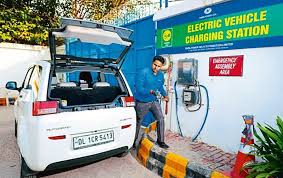
World auto industry investing in Indian auto startups

India is attracting global investment, especially in automotive startups – global automobile manufacturers have invested around $491 million in 2018 in Indian automobile industry start-ups, led by Essel Green Mobility’s investment of $300 million into Bengaluru-based on-demand AC bus service provider Zipgo, according to market intelligence firm Venture Intelligence.

essel

There were 13 investments during the year. In 2018, Taiwanese two-wheeler manufacturer Kwang Yang Motor, known as Kymco, invested $65 million in Gurugram-based electric two-wheeler maker Twenty Two Motors, while auto major Mahindra and Mahindra invested $40 million in self-drive car company Zoomcar.

Toyota Tsusho Corporation, the trading arm of Toyota Group, invested around $30 million in Droom Technology, the operator of India’s largest online automobile marketplace by co-leading Series D fundraising of the company. The firms also concluded a pact on the overseas expansion of the used car and motorcycle marketplace business.

essel2

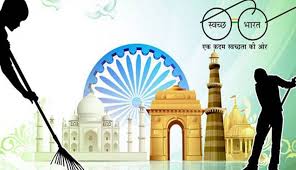
What’s the “biggest story in the world you have not heard about”? Happening in India right now

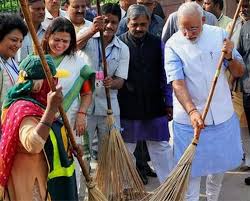
“The biggest global story you haven’t heard about right now is India’s sanitation drive,” according to my friends at FUTURE CRUNCH. See https://futurecrun.ch/ 

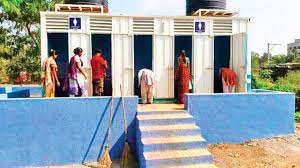
Since 2014, 90 million toilets have been built, 93% of households now have access, and 500 million people have stopped defecating in the open.

This is change on a massive scale – but not such a big story for the short concentration span of the major media.

swachbharat3

Pictured – Indian Prime Minister Modi launches the program in 2014

The government claims that since its Swachh Bharat Mission programme started in October 2014, 500 million people have stopped defecating in the open, down from 550 million at the beginning of the programme to less than 50 million today. Over 90 million toilets have been built across rural India under the Mission. 615 districts have been declared ODF, along with 30 ODF States and Union Territories, as per the government.

“A clean India would be the best tribute India could pay to Mahatma Gandhi on his 150-birth anniversary in 2019,” said Shri Narendra Modi, Indian Prime Minister, as he launched the Swachh Bharat Mission at Rajpath in New Delhi.

swachbharat

The Independent Verification Agency has presented their findings to the Expert Working Group (EWG) constituted for oversight of the survey, comprising representatives from organizations including the World Bank, UNICEF, Water Aid, Bill & Melinda Gates Foundation, India Sanitation Coalition, NITI Aayog, and Ministry of Statistics and Program Implementation.

Swachh Bharat Abhiyan or Swachh Bharat Mission is a nation-wide campaign in India for the period 2014 to 2019 that aims to provide sanitation, clean up the streets, roads and infrastructure of India’s cities, towns, and rural areas. The campaign’s official name is in Hindi and translates to “Clean India Mission” in English.

It is India’s largest cleanliness drive to date with three million government employees and students from all parts of India participating in 4,041 cities, towns, and rural areas.

Do you agree this could be the biggest story in the world today that you have not heard about?