Just watch India’s TCS and Accenture dominate the future world of IT

Tata Consultancy Services Ltd (TCS) is set to surpass DXC Technology Co. to become the world’s third-largest software services provider in fiscal 2018-19 – behind IBM and Accenture.

TCS grew 9.6%, or added $1.82 billion in new business, to end with $20.91 billion in revenue in the year ended 31 March.

TCS’s strong performance over the two years has seen a change of guard at the top. In 2017, TCS entrusted Rajesh Gopinathan, who was then chief financial officer, to take over as chief executive and succeed N. Chandrasekaran, who was named the chairman of Tata Sons Ltd. Still, the company managed to retain all its senior executives and improved its growth and profitability, with the consensus view that this was one of the smoothest management transitions at an Indian corporate entity.

Experts predict the fight for world dominance will be between TCS and Accenture.

But when it comes to profitability, TCS is already way in front – TCS ended last year with a 25.6% operating margin, while Accenture and DXC had 14.8% and 14% profitability, respectively.

New era for India-Australia as Ms Petula Thomas becomes Director of Indo-Australia Chamber of Commerce

Exciting news for the India-Australia relationship – Ms Petula Thomas has been appointed the new Director of the Indo-Australian Chamber of Commerce.

Petula worked with the British Deputy High Commission (BDHC), Australian Trade Commission (Austrade) and British Airways in Chennai over the past 15 years and brings a wealth of experience in strategic leadership, international relations, marketing and business development.

Petula is a passionate innovator and supporter of Women in Leadership, so I feel she will make a big positive difference in this role.

PetulaThomas

She is also a strong communicator.

We need strong and effective communication to enhance the India-Australia role and to make it easier for business of both countries to get together.

I hope the IACC can pioneer more exchange of people, more two-way missions, great education, more collaboration, improved cross-cultural understanding and positive steps to ensure that business in both countries know best what works in each country.

By the way – Petula has an amazing track record, winning four global and regional performance awards from the Foreign & Commonwealth Office in London, when she headed Consular Operations for South India, leading on Customer Engagement for the MENASA region (Middle East North Africa and South Asia) and Communications/Digital strategy for India.

Petula has worked with Austrade, Australian Government, where she received commendation from the Deputy CEO Austrade for successfully delivering on multi-city Industry events in India & Australia. During her career with British Airways Plc. she received a Regional CASAMEA award (Central Asia South Asia Middle East & Africa) for Revenue Development/Sales from British Airways Plc.

Petula has a First class Masters Degree in Science and recent qualifications in Project Management and Customer Relationship Management (including Sales, Marketing and E-commerce).

We wish her every success and happiness in the important new role.

6 ways young Indians are taking a different approach to employment

As the fastest growing economy today, India is home to a fifth of the world’s youth. Half of its population of 1.3 billion is below the age of 25, and a quarter is below the age of 14.

The World Economic Forum and the Observer Research Foundation recently collaboratively conducted a survey of more than 5,000 youth in India.

  1. Indian youth are independent, optimistic and open to a changing labour market

The influence of family and peers on the career and educational choices of India’s youth is in decline. Young people are increasingly seeking productive employment opportunities and career paths that reflect their individual aspirations. Moreover, a third of the respondents report being interested in entrepreneurship, and 63% report being highly or moderately interested in supplementing their income with gig work.

  1. Indian youth need more guidance and career counselling

Many youth report facing multiple barriers to finding desirable and suitable job opportunities. Factors like information asymmetries on jobs and skills, and lack of guidance for setting realistic career goals and making professional choices, are holding back young Indians. 51% of respondents report that a lack of information about available job opportunities that match their skill sets is a significant barrier. Around 30% report a lack of access to any kind of counselling or mentoring opportunities. 44% of respondents view this as the most important factor in the demand-supply mismatch.

  1. Young Indians are interested in pursuing higher education and skills development

84% of respondents consider a post-graduate degree as a requirement for their ideal job, while 97% aspire to a degree in higher education. They are also keen on other forms of ongoing education, with 76% of youth reporting that they are very interested in participating in a skills development programme. Increased employment opportunities and higher wages are the main motivators for this goal.

  1. The private sector must do more to bridge the skills gap

The private sector needs to play a more active role in enhancing the capabilities and skills of India’s youth. India is faced with a paradox: there is significant youth unemployment, and yet the private sector bemoans a lack of adequately skilled and market-ready workers. Notwithstanding the government’s role in providing basic education and training, there is a significant need for greater private sector involvement. This will ensure that training initiatives are demand-driven and impart skills that match industry requirements.

  1. India’s socio-cultural norms add further complexity

34% of the surveyed youth report that discriminatory and personal biases related to their marital status, gender, age or family background are a major barrier when looking for a job. 82% of female respondents said their ideal employment would be full-time, disproving the stereotype that women prefer part-time jobs. Similarly, despite the persistent view that household work and unpaid work are suitable and desirable for women, only 1% of surveyed female youth report this as being a desirable option for them.

  1. Social Media and the internet can play a bigger role in effective job-hunting

81% of survey respondents rely on media and internet sources for obtaining information about employment opportunities. The prevalence of social media and internet use among India’s youth presents an opportunity to expand their awareness about education pathways, employment opportunities, skill needs, and available skill development programmes.


6 things young Indians want in employment

As the fastest growing economy today, India is home to a fifth of the world’s youth. Half of its population of 1.3 billion is below the age of 25, and a quarter is below the age of 14.

The World Economic Forum and the Observer Research Foundation recently collaboratively conducted a survey of more than 5,000 youth in India.

  1. Indian youth are independent, optimistic and open to a changing labour market

The influence of family and peers on the career and educational choices of India’s youth is in decline. Young people are increasingly seeking productive employment opportunities and career paths that reflect their individual aspirations. Moreover, a third of the respondents report being interested in entrepreneurship, and 63% report being highly or moderately interested in supplementing their income with gig work.

  1. Indian youth need more guidance and career counselling

Many youth report facing multiple barriers to finding desirable and suitable job opportunities. Factors like information asymmetries on jobs and skills, and lack of guidance for setting realistic career goals and making professional choices, are holding back young Indians. 51% of respondents report that a lack of information about available job opportunities that match their skill sets is a significant barrier. Around 30% report a lack of access to any kind of counselling or mentoring opportunities. 44% of respondents view this as the most important factor in the demand-supply mismatch.

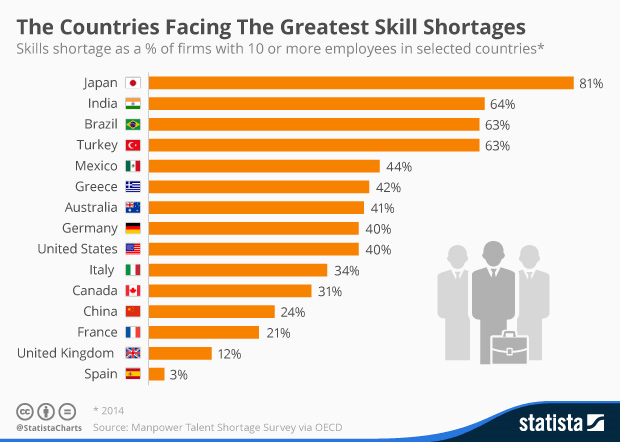
Youth

  1. Young Indians are interested in pursuing higher education and skills development

84% of respondents consider a post-graduate degree as a requirement for their ideal job, while 97% aspire to a degree in higher education. They are also keen on other forms of ongoing education, with 76% of youth reporting that they are very interested in participating in a skills development programme. Increased employment opportunities and higher wages are the main motivators for this goal.

  1. The private sector must do more to bridge the skills gap

The private sector needs to play a more active role in enhancing the capabilities and skills of India’s youth. India is faced with a paradox: there is significant youth unemployment, and yet the private sector bemoans a lack of adequately skilled and market-ready workers. Notwithstanding the government’s role in providing basic education and training, there is a significant need for greater private sector involvement. This will ensure that training initiatives are demand-driven and impart skills that match industry requirements.

YoungIndians 2

  1. India’s socio-cultural norms add further complexity

34% of the surveyed youth report that discriminatory and personal biases related to their marital status, gender, age or family background are a major barrier when looking for a job. 82% of female respondents said their ideal employment would be full-time, disproving the stereotype that women prefer part-time jobs. Similarly, despite the persistent view that household work and unpaid work are suitable and desirable for women, only 1% of surveyed female youth report this as being a desirable option for them.

  1. Social Media and the internet can play a bigger role in effective job-hunting

81% of survey respondents rely on media and internet sources for obtaining information about employment opportunities. The prevalence of social media and internet use among India’s youth presents an opportunity to expand their awareness about education pathways, employment opportunities, skill needs, and available skill development programmes.


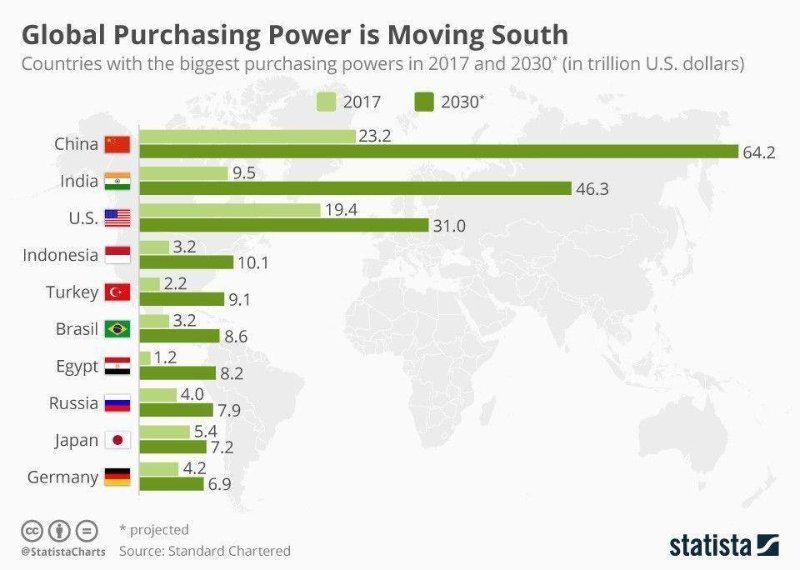
Global Purchasing Power is moving to Asia

The biggest nation on Earth, China, is expected to keep its top spot as the country with the largest purchasing power on Earth and is on track to almost triple its purchasing power by 2030, according to an analysis by the British Bank, Standard Chartered.

India will almost quadruple its purchasing power, moving to rank 2.

China will double the USA while India will beat USA by approx 50%.

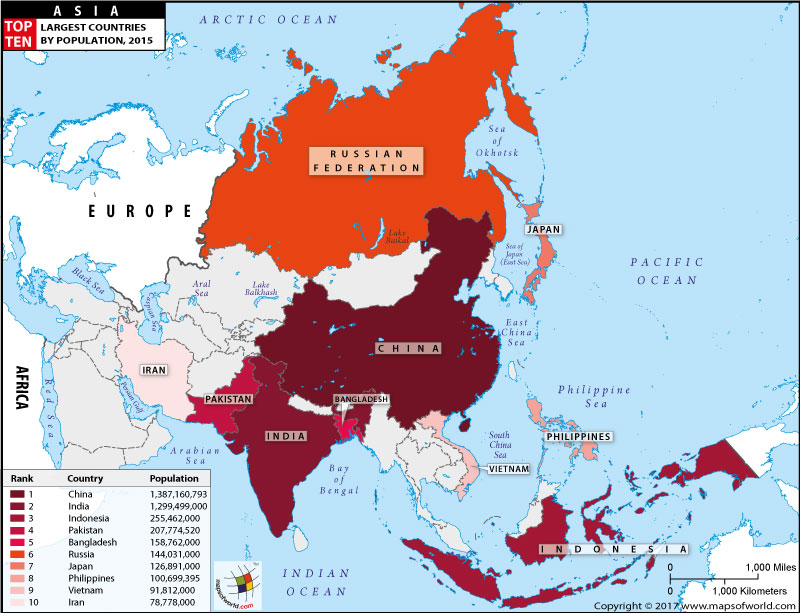
asia map

In the case of Japan, the country is expected to lose 5 ranks and emerge as the country with the 9th highest purchasing power worldwide.

Developing economies like Indonesia, Turkey, Brazil and Egypt are set to move into ranks four to seven respectively, toppling the reign of countries like Japan and Germany, which are still growing their purchasing power but at a much slower rate. The U.S. is expected to only drop one rank to position 3 but is grappling with slower growth.

In summary – an amazing outcome for Asia – especially China, India and Indonesia.

asia map 2

How is your Asia engagement strategy going? Time to begin, change or reinvigorate? Get good advice so you avoid the mistakes of many before you.

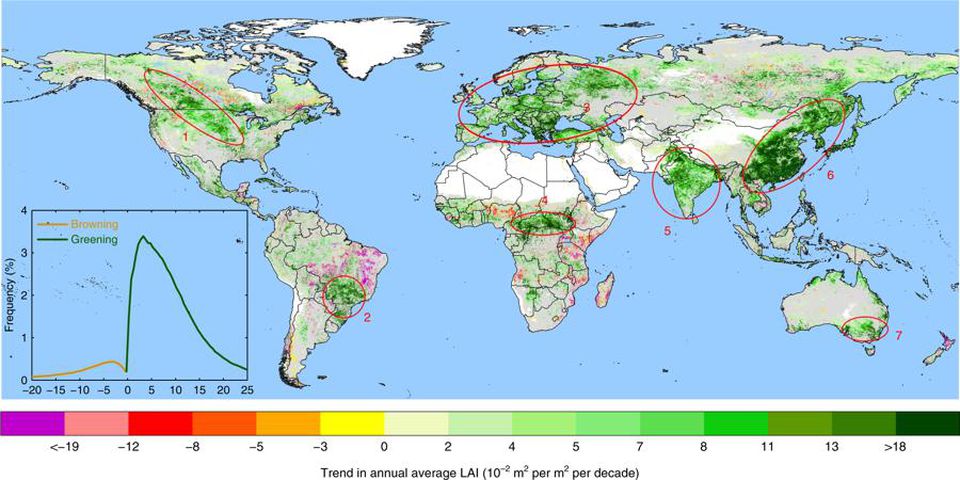
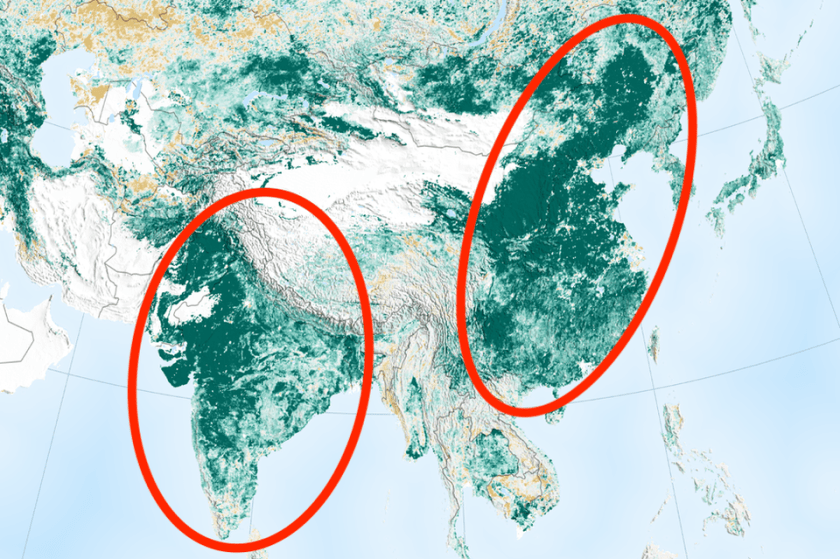
Let’s give credit where due – India and China are greening the planet!

Congrats to India and China – these two are doing heaps to green the planet.

NASA discovered the good news – the world is a greener place today than it was 20 years ago. What prompted the change? Well, it appears China and India can take the majority of the credit.

The countries are responsible for the largest greening of the planet in the past two decades. The two most populous countries have implemented ambitious tree planting programs and scaled up their implementation and technology around agriculture.

India continues to break world records in tree planting, with 800,000 Indians planting 50 million trees in just 24 hours.

So – let’s give praise where it is due.

Green2

Megacities right on Australia’s doorstep – opportunities in Asia-Pacific

In 1900 only 15% of the globe’s population resided in cities. By 2008 over half of the world’s population lived in cities. The trend continues.

Megacities have 10 million or more people and the future growth is in Asia Pacific.

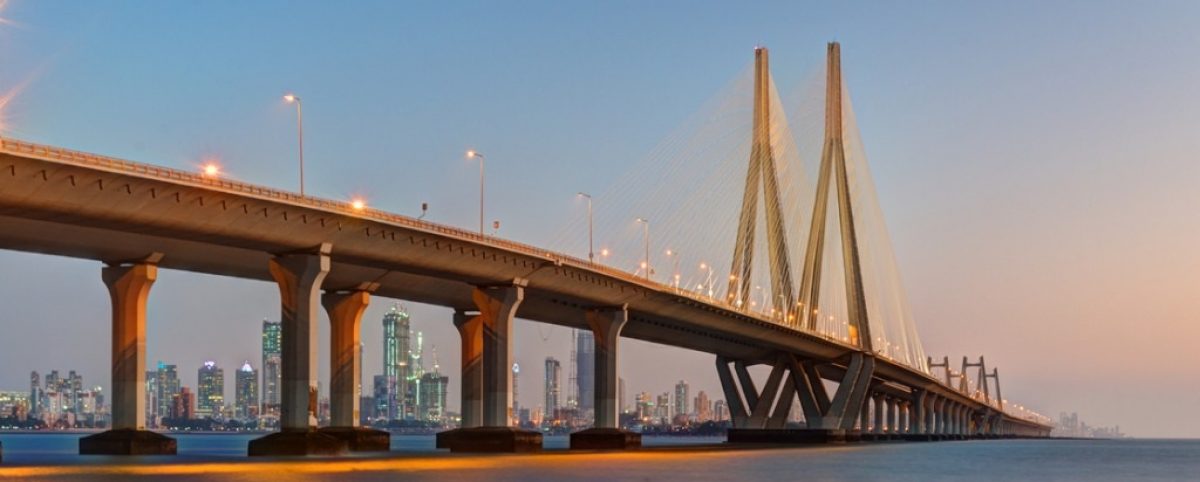
In 2017, Asia Pacific accounted for the largest number of megacities, with 19 of the 33 (58%). China and India are the regional and global leaders, with six and four megacities each in 2017, respectively. For India these are Mumbai, Delhi, Bangalore and Kolkata. Chennai will join them within a decade.

mumbaitrain

Pictured – Mumbai, one of India’s four Megacities

Jakarta, capital of Indonesia, (picture below) will replace Tokyo as the globe’s biggest city – 35.6 million by 2030.

jakarta2

Ageing is expected to have an impact on many key megacities in East Asia over 2017–2030. Growth in the share of over 65-year-olds will be particularly apparent in Seoul, and Chinese megacities such as Beijing and Shanghai.

The twin opportunities for Australia – become involved in the move towards “smart cities” and provide services for the ageing populations. It’s right on our doorstep.

India has a huge future in tourism – not just a destination, India is an experience!

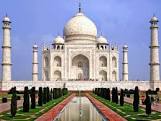
Think tourism in India and most people think Taj Mahal and the Golden Triangle. But there is so much more to the Indian tourism story.

India is changing and tourism is growing – it is now 10 million visitors per year and will grow to 30 million by 2028. The growth will include new parts of India, and new forms of tourism – cruises, medical, mind and wellness, sports, adventure and religion.

tourism7

India has just built the world’s tallest statue – the “Statue of Unity” of Sardar Vallabhbhai Patel, an independence fighter and India’s first Home Minister. At 182 metres, it is already bringing tourists into the state of Gujarat.

patel33

Things can change quickly these days – China is now the world’s leading tourist destination with over 100 million visitors per year. Other high ranking countries are France (90m), USA (77m) and Japan (30m).

For Australia, India provides around 300,000 tourists per year, but China is number one at 1.4 million.

Some of my wonderful experiences of touring India include ayuvedic massage in Kerala that fixed a problematic shoulder, covered in coloured powder in Kolkata during Holi, visiting Raj Ghat the wonderful Gandhi shrine and gardens in New Delhi and being embraced by an Indian family I met there, being on Chowpatty Beach in Mumbai during the Ganesha Festival with one million of my closest new friends. And on it goes. India is not so much a destination as an experience!

Watch out for the next phase of India tourism – it will take you beyond the Taj Mahal.


Are you ready for the facts on how much India has changed?

(Based on an article by Monika Halan, consulting editor at Mint and writer on household finance, policy and regulation)

Indian elections have just opened – so, how long does it take to find out if your name is on the Indian electoral role? Go to the Election Commission site, it asks you to SMS to check if your name is on the list—thirty seconds later, you will get a confirmation that your name is or is not there. Things move fast in modern India.

As Monika Halan writes – “Most people get their Provident Fund (PF) balance on SMS too. Also, the passport and visa processes are mostly all automated and keeps us well-informed about the progress of the process.”

So, what else works fast and well in India?

The metro network where it exists, in cities like Delhi and Kochi, is superb.

trains2

Getting or renewing a passport used to be a total nightmare a decade back. Enter private sector plus technology and the average time it takes for the passport application process is 30 minutes to under 4 hours. The passport reaches home by courier in a couple of days. At every stage, you get an SMS informing you what will happen next.

What about getting a driving licence? At least in Delhi, the process is mostly painless—online form filling, and 30 minutes to three hours of time in the local office. The licence reaches home in just a few days – according to Monika Halan.

Property registration used to be a nightmare. But Halan says “That again is a breeze. Again, a mix of technology and processes has reduced transaction time and pain hugely.”

Payments is the other huge success story of modern India. Forgetting your wallet at home is no big deal anymore. The money is in the phone. In a wallet, on an app or available through mobile banking. Riding on the backbone built by the National Payments Corp. of India (NPCI), transaction options and ease are both world-class.

payment

So how long does it take you to get a Wi-fi connection? How long does it take you to open a bank account? At least in the big metros, a Wi-fi connection happens within a day. Opening a bank account takes lesser time. The average time for these services in most developed countries is much longer. In most of Europe, for instance, it takes at least a month to get both these services.

Modern India is fast. Click on “buy” at 11pm and hear the doorbell ring at 9am the next morning.

A huge shift has happened in India and even Indians have failed to notice. The mix of technology, competition and cheap labour – plus reformist governments – means modern India has some of the simplest and fastest processes in the world.

All of this in just over a decade.

Time to catch up with what is really happening in modern India?

Australian media – especially Fairfax – misrepresent modern India

India is not understood in Australia – China continues to hold our national imagination. Our myopia on India is a problem because within ten years India is tipped to become the third largest economy in the world.

Multiple cliched views of India dominate – slums (despite millions lifted out of poverty), public sector corruption (despite serious advances through use of IT) and the so-called Hindu fundamentalism of Indian Prime Minister Narendra Modi (despite four years of relative communal stability).

How does Australia get India so wrong? Our media influences our national perspective on India, and recent coverage of developments in the holy city of Varanasi (The sacred as strategy, The Age, 9 April) shows how we focus on cliché and miss the big picture. The article branded development in this city as Modi’s move to “insert religion into the centre of the political debate”.

So, what is happening in India and why should Australia care?

Four things are important for Australia – India’s investment growth, rising local consumption, over a decade of around 7% economic growth per year and governments (central and 29 states) awash with money due to the GST.

As a result, every part of this country is being transformed and demand is rising for products and services of the type Australia is good at. By contrast, our trade with India is stagnant – if not for rising numbers of Indian students, trade would be in decline. Clearly, we are missing something.

What is the real picture in Varanasi? Sure, as reported a major new promenade is being built – as much as anything to enhance the tourism appeal of this great city. Branding it as driven by a religious view is as silly as claiming tourist development around Uluru is “divisively pro-indigenous”.

But the bigger picture is far more interesting. Varanasi is just one of one hundred “smart cities” being developed across India, with new roads, freeways, cleanliness, sewage treatment, trade and convention centre, traffic management and more upgraded within five years. Located on the banks of the River Ganges, the city will also become a multi-modal river and road transport hub, supporting local industry.

Varanasi is preparing for a 25 per cent growth in tourist numbers, fuelled by a combination of India’s middle class and international visitors.

To see this as promoting “a distinctly Hindu state” displays a stubborn refusal to see the bigger picture in India. What is happening here is happening across India.

Just look at tourist numbers for the Taj Mahal, India’s best-known symbol of Muslim India rule – located in Agra, another city having infrastructure upgrades as part of the Modi Government’s Smart City program. In the last year there were approximately five million tourists, of which 4.5 million were Indians of all beliefs. This weight of numbers demands infrastructure upgrade, and the Taj Mahal and Varanasi are examples of many across the country.

Indians are becoming more interested in their own history and they can afford travel. It makes no sense to link this to some divisive religious plot.

International yoga day is another example of Indians promoting and being confident about their heritage – celebrated in countries around the world with many millions in the west now more interested in yoga. That yoga grew within Hindu India is incidental.

Australia should know how much India is changed – we have just taken our first delivery of railway carriages made in India for Sydney’s public transport upgrade. Modi’s “Make in India” program is working.

Health is improving – a new study shows that the lives of 50,000 Indian children have been saved through a measles vaccination campaign run between 2010 and 2013.

We know a lot about the generosity of Bill Gates, but Indian tech billionaire Azim Premji has just given away US$21 billion to philanthropy, becoming the biggest endowment in Asia – our region.

At a BDO “Improving Business with India” seminar last month I tongue-in-cheek explained rapid change in India by launching my “India Shopping Mall Index”. Here goes – there were 3 shopping malls in India in 1999 – just 20 years later there are over 350 malls and another 85 in the pipeline.

The Indian Finance Minister has estimated India will have a middle class of around 600 million by 2030 when it becomes number three economy in the world.

All of this is exciting news for Australia – we would know about these great changes and opportunities if we avoided the old cliched views of India. If we continue to view India though a prejudiced lens, we will see only what we look for – such as Modi and Hindu nationalism or the poverty of slums – and we will miss the great changes that offer real possibilities for us.

Within our volatile and changing region, India could become our most important friend – but right now we are looking at India with blinkers on.

Stephen Manallack is a blogger at IntoIndia.blog and former President, Australia India Business Council (Victoria)

The above article was submitted to The Age on Tuesday 9 April – not yet published.