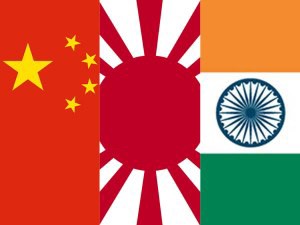
China, Japan and India – the new startup triangle

China is a major provider of funding and control of many Indian startups. In 2015, Alibaba invested in Paytm through its affiliate Ant Financial. In 2017, Tencent took major stakes in Flipkart and Ola.

ola

Japan is also a serious provider of funding in India. Japanese giant Softbank has invested over US$8B in startups in the country, with a goal of $10B by 2024 that now looks surprisingly conservative.

As a result of this “triangle”, India is currently home to 26 startups valued over US$1B.

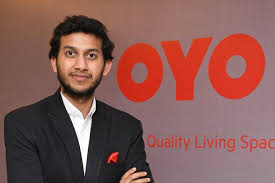
Oyo Hotels and Homes is raising US$1.5 billion from founder Ritesh Agarwal, SoftBank Group Corp., and other investors as it expands into foreign markets such as the U.S. and Europe.
agarwal

Agarwal, 25, will spend $700 million to buy new shares in the company.

Indian edtech startup CollegeDekho, which helps students connect with prospective colleges and keep track of exams, has raised US$8 million in a Series B round.

Last October, Indian e-commerce startup Snapdeal raised US$627 million at a valuation of over $2 billion. In the same month, India’s Uber-style taxi service, Olaraised $210 million, while being valued at over $1 billion in under three years.

snapdeal

India’s largest online retailer and version of Amazon is Flipkart which recently raised another US$700 million at over a $11 billion valuation.

India’s online restaurant guide, Zomato, recently bought US-based Urbanspoon for over $50 million—one of the largest acquisitions by an Indian startup.

zomato

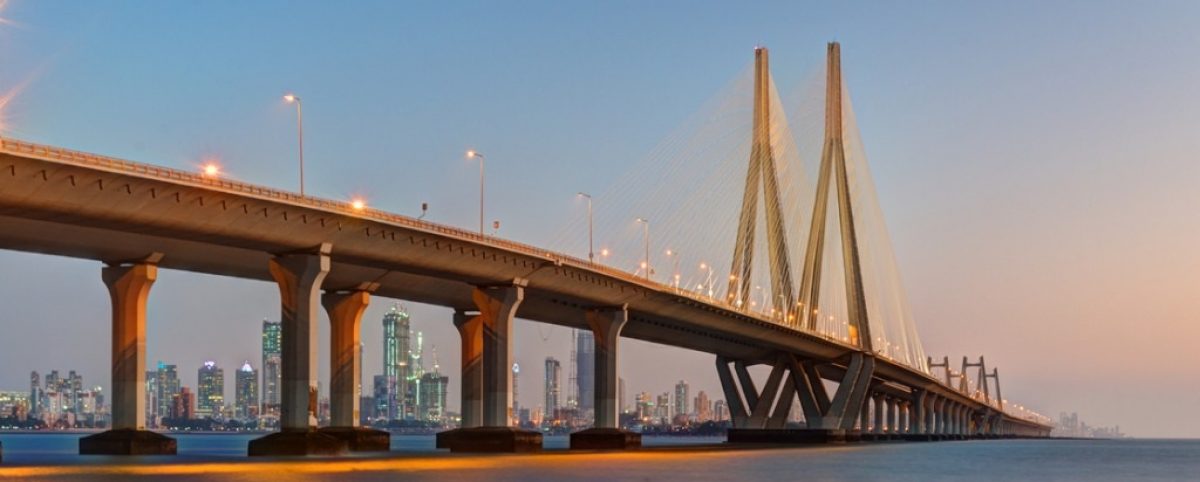
India’s Silicon Valley – Both Koramangala in Bangalore and Hiranandani Powai (pictured below) in Mumbai – are becoming thriving ecosystems to nurture startups in India.

hirandani

Things are changing in modern India – and the “triangle” of India, China and Japan is playing a big role in the change.

 Time to look again?

I hope Australian PM Morrison will speak in January at India’s Raisina Dialogue

Good news – Australian Prime Minister Scott Morrison is to visit India next year.

There is a hint that the timing is January.

I hope he chooses to become a keynote speaker at the Raisina Dialogue – January 14-16.

Raisina Dialogue is a multilateral conference committed to addressing the most challenging issues facing the global community. Every year, global leaders in policy, business, media and civil society are hosted in New Delhi to discuss cooperation on a wide range of pertinent international policy matters.

The Dialogue is structured as a multi-stakeholder, cross-sectoral discussion, involving heads of state, cabinet ministers and local government officials, as well as major private sector executives, members of the media and academics.

The conference is hosted by the Observer Research Foundation in collaboration with the Government of India, Ministry of External Affairs.

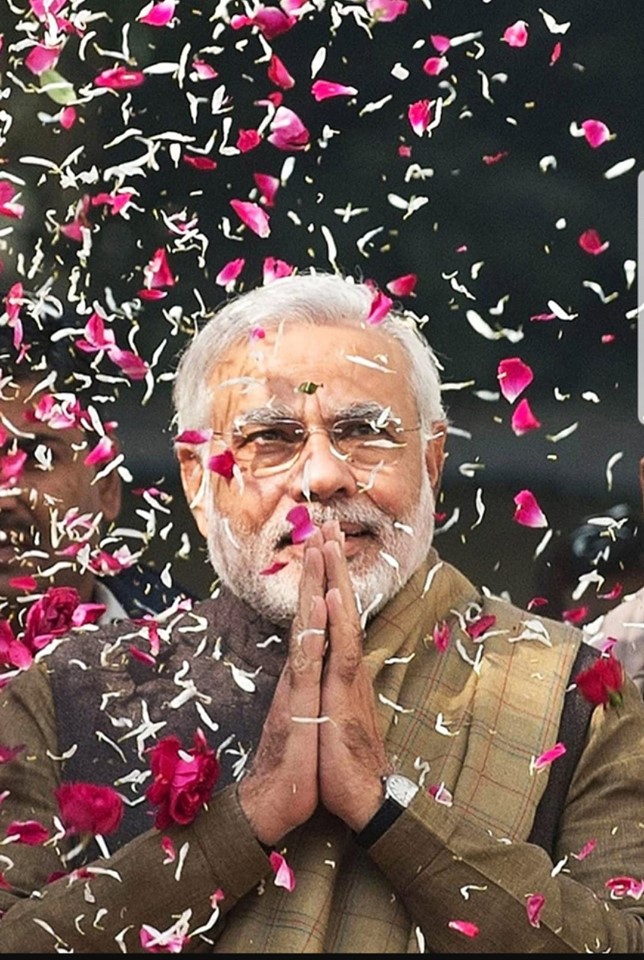
The visit is also a great opportunity to further develop the positive relationship PM Morrison has with Indian Prime Minister Narendra Modi.

Modi20192

The world has been changed by Gandhi – celebrating 150 years since his birth

History recognizes Mahatma Gandhi (1869-1948) as India’s “Father of the Nation”.

But he has been the “Father of Change” throughout the world.

ATT00036_

Peaceful freedom campaigners such as Nelson Mandela, Martin Luther King and Tibet’s Dalai Lama owe much to this great man.

Gandhiashram

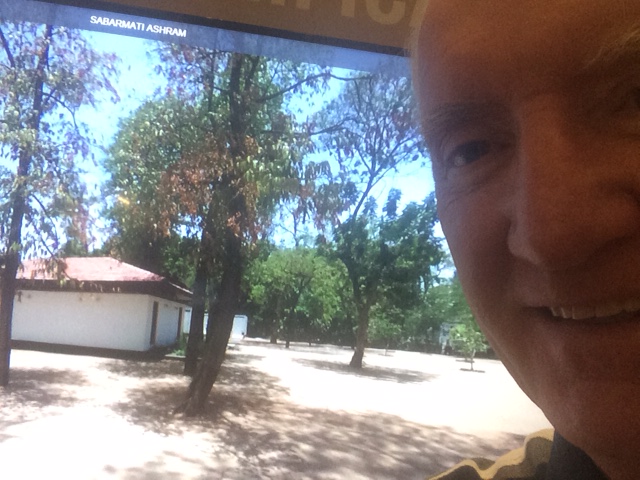
I am pictured visiting the Gandhi Ashram in Gujarat

In my own generation it was our opposition to the Vietnam War that led us to study Gandhi and his methods of non-violent protest. In this way he inspired young people in the 1960’s in Australia, USA, Canada and more.

I especially love his message encouraging tolerance: “As long as you derive inner help and comfort from anything, keep it”. He said: “The golden rule is to test everything in the light of reason and experience, no matter from where it comes.”

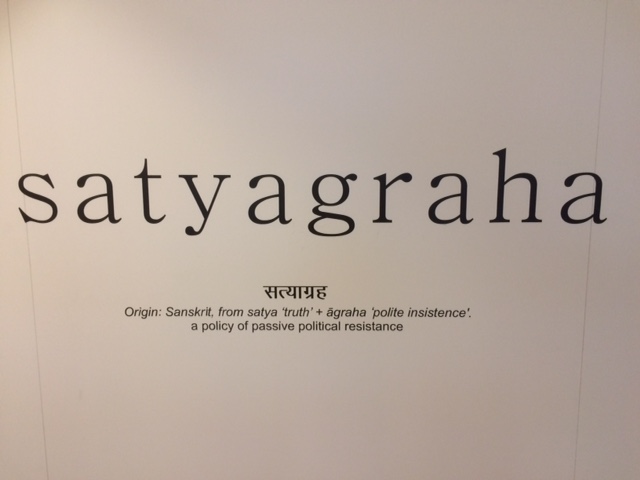
gandhisatyagraha

Some more Gandhi messages for specific sectors:

Communities: “The weak can never forgive. Forgiveness is the attribute of the strong”.

Leadership: “I suppose leadership at one time meant muscles; but today it means getting along with people.”

Careers: “The best way to find yourself is to lose yourself in the service of others.”

Business: “A customer is the most important visitor on our premises; he is not dependent on us. We are dependent on him. He is not an interruption in our work. He is the purpose of it. He is not an outsider in our business. He is part of it. We are not doing him a favour by serving him. He is doing us a favour by giving us an opportunity to do so.”

Innovation: “Freedom is not worth having if it does not include the freedom to make mistakes.”

Education: “Live as if you were to die tomorrow. Learn as if you were to live forever.”

In our ever-busy lives, Gandhi is a role model in taking time out for the simple things. I saw this in bustling Mumbai at Mani Bhavan (Gandhi House), a three storey home with shuttered windows, a residence that Mahatma Gandhi was able to use. His room is simply furnished, austere. He would sit and read, spin cotton or talk to friends. It was his quiet time.

This was indeed the man who said there was enough in the world for everyone’s need but not for everyone’s greed.

No surprise then that Gandhi’s core approach to life was “You must be the change you want to see in the world”, a message very alive today as we seek to enhance our tolerant, multicultural communities.

ATT00012_

“Small talk” – essential skill if you want to be in global trade

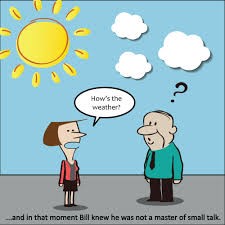
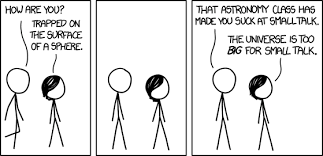
Many people are uncomfortable with “small talk”, the so-called relaxed chat that happens when we meet and prior to the real discussion. But it is an essential business tool for global trade. See where you fit:

1. Does small talk feel a bit strange and personal?

You might rather sit in the corner and keep quiet – but walking around the room and chatting is a vital negotiation step – it begins the relationship building. MY TIP – prior to any major trade meetings, take an hour to visit some major memorial, new centre, historic building or tourism stand out. There’s your topic of small talk!

smalltalk3

2. But small talk is superficial

Yes, you are right, it is superficial. But the paradox is it is also important. it is about connecting, about seeing how the other person operates, and finally it is about trying to make others feel comfortable. MY TIP – think less about yourself and more about the other person. They might be nervous about small talk too.

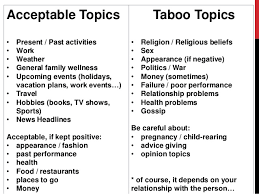
3. How do you know what to talk about?

It’s not as hard as you might think – the weather, the last week at work, some family happening, the wonderful meal you had yesterday, what is coming up next week. MY TIP – an easy way to participate in small talk is to ask questions – how has your week been?

4. Small talk is a waste of time

Small talk feels like a waste of time but it is one step towards building relationship. If you make the other person feel relaxed, engaged and interested, they will feel grateful. MY TIP – don’t be too serious, laugh as you say things, keep it lighthearted.

5. Can small talk be risky?

If you keep it light, smile, make eye contact, offer some friendly insight into your world, there is no risk. But if the small talk suddenly shifts to the major topic of the day (before the real discussions have started) then be cautious. MY TIP sometimes you just have to back away. It is not the time for serious stuff.

6. But how do you end the small talk?

Everyone in a crowded room knows that you cannot and should not spend the whole evening with them, so once there has been enough small talk, you should move on and start again with someone else. It’s called “working the room”. MY TIP with a big smile and friendly face just say “really good talking to you and I hope we catch up later on”. Easy.

Thanks to Dr Andy Molinsky for some of the above.

smalltalk6

Australia will relate better to Asia by removing the “bamboo ceiling”

Former Labor Government Minister and current Chancellor of the Australian National University – Gareth Evans – has raised an important challenge for Australia that is too often swept under the carpet.

Australia’s “bamboo ceiling” keeps Asian Australians out of top positions.

Here is the view of Gareth Evans:

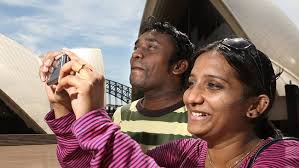
“The “bamboo ceiling” in Australia is real. Asian-Australians now comprise up 12 per cent of our total population but hold only around 3 per cent of senior leadership positions in our public institutions and ASX 200 companies. They have been an under-appreciated and under-utilised national resource for far too long.”

tourists3

Gareth Evans sums it up so well:

“The bamboo ceiling is an issue on which we have ducked and weaved and dithered for too many years. The Asian century is off and running and we have in our midst a fantastic community resource with which to take maximum advantage of all the opportunities it offers.”

Well said.

And my view?

fairgo

Removing the “bamboo ceiling” would reduce Australia’s anxiety and uncertainty over Asia – it would allow Australia to play a big role in the “Asian Century”.

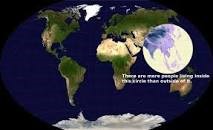
One third of the world’s population lives on our doorstep – and they are on the rise as economies and powers.

By getting our own house in order – removing the “bamboo ceiling” – we can live positively and well in the world’s most exciting region.

China and India are our biggest source of migrants – let’s give them every opportunity.

Fair go, Australia!

Melbourne is home to many Indians

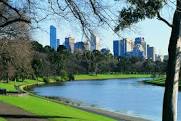
India is now the biggest source of migrants to Australia, and most come to my city, Melbourne.

Australia is really a “nation of migrants” because all citizens apart from the original indigenous inhabitants came here as migrants.

There are around 170,000 Indian born people here – with many more “Indian-Australians” who were born here. This makes up 3% of our population.

diwali5

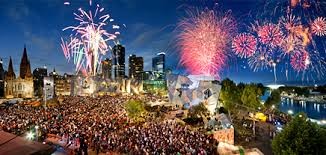
Diwali is a huge celebration in Melbourne – pictured is Federation Square

50% are families with children and 46% have Australian citizenship.

25% are professionals.

Melbourne is a popular choice for Indian students and tourists.

The Indian community is a big part of making Melbourne a diverse and multicultural city.

Diwali20166

Many business and community functions are held in Melbourne for Diwali – seen here from left are Stephen Manallack. Preeti Daga, Molina Asthana and Anoushka Gungadin. At back are Ian Nathaniel and Michael Moignard

New airport for Navi Mumbai on the way

India’s infrastructure major, L&T (Larsen and Toubro), has bagged the contract for construction of the Navi Mumbai International Airport.

The company did not provide value of the contracts but said the orders fall under “major” category which ranges between US$ 715.40 million and US$ 1 billion.

navi3

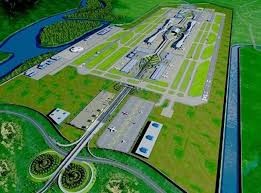
Navi Mumbai (shown in these pictures) is a part of Greater Mumbai and is a planned satellite city.

This second international airport for bustling Mumbai is no small venture – it is being developed to initially handle a capacity of 10 million passengers per annum. The project will subsequently be enhanced to handle 20 MPA.

navi7

Regular visitors to India will notice constant upgrades in infrastructure – infrequent visitors will be amazed at the global quality of many Indian airports.

navi5


Why is the west being so jittery about the rise of Asia?

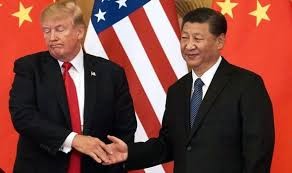
Trade war on China. Military action here and there.

The west is jittery. Yet all we have is the return to the normal state of affairs – until exactly 200 years ago China and India were major global economies. Now they are again.

So, why is the west so jittery about the rise of Asia?

First, the west “won” the cold war against Russia without firing a single shot. Great victory – but the pride of that has become hubris and shows in a belief that only western liberal democratic countries can succeed. And here comes China. Not western, not liberal and not democratic. Jittery.

russia2

Second, 9/11 was a shocking event that dominated the mind of the west then – and now.

Wile we focused on 9/11, two things happened – rising China joined the World Trade Organisation and the lowest earners in the USA were hit by a 50% decline in income.

Hence – Trump. And hence, lots of jittery decisions being made throughout the west.

Can the west get back to rational, calm and innovative leadership? I hope so.

Thanks to Kishore Mahbubani for inspiring some of the above.


Ho Hum! “Trade war” not worrying Indian companies active in China

Seems Indian companies active in China think that the USA-China trade war is all a bit “ho hum” – or maybe an opportunity?

tradewar3

Indian organisations working in China don’t expect any critical effect of the escalating trade war among Beijing and Washington on their business, a new survey conducted by the Confederation of Indian Industry (CII) has stated, including that most of the companies intend to put more in Beijing in 2019.

The survey of Indian organisations working in China indicates cautious optimism and certainty when contrasted with the past survey a year ago. “Most organisations don’t see a significant effect of the present trade situation between the US and China on their business,” said Mr Chandrajit Banerjee, Director General, CII.

In excess of 120 Indian organisations work in China separated from a sizeable number of merchants who have workplaces here; 57 of the organisations reacted to the CII poll.

As per the survey, two-fifths are considering inclining up their investment more than 2018. More IT and BPO organisations intend to make extra investment in 2019 contrasted with 2018.

My “top 10” of Indian companies active in China:

Adani Global; Essar; Jindal Steel & Power; Reliance ADAG; TCS; Tata Sons; Union Bank of India; Allahabad Bank; Bank of Baroda; Bank of India.

tcs

Also in China are Zee TV; Jet Airways; Apollo International; Ashok Leyland.

What is the “fourth industrial revolution” and why is India important?

The First Industrial Revolution introduced the use of steam power to mechanize production.

The Second Industrial Revolution saw a number of groundbreaking inventions in transport, telecommunications and manufacturing, including the use of electric power to generate mass production.

The Third Industrial Revolution brought the internet and other technological innovations, which have ushered society into the digital era.

Today, society is challenged by a Fourth Industrial Revolution, an age in which scientific and technological breakthroughs are disrupting industries, blurring geographical boundaries, challenging existing regulatory frameworks, and even redefining what it means to be human.

Emerging technologies such as artificial intelligence (AI), blockchain, drones and precision medicine are swiftly changing lives and transforming businesses and societies, inevitably posing new risks and raising ethical concerns. How can society ensure that its policies, norms and standards are able to keep up with these rapidly evolving technologies?

The World Economic Forum has chosen India as the base for its Centre for the Fourth Industrial Revolution – India is the world’s largest democracy having the second highest number of scientists and engineers – shaping the future.

Modi oath