
To succeed in Asia, you have to trade the “I” for the “Us” – a David Thomas cross cultural insight

INTO INDIA has consistently called for greater cross-cultural preparation for Aussie firms going into India (and Asia). Here is an absolute gem on this topic.

Read on from DAVID THOMAS…

From an early age, I was taught that the squeaky door is the one that gets the oil. This is typical western thinking. We’re raised to be soloists – standing out, grabbing the spotlight, speaking with confidence and getting the deal done in record time (preferably before lunchtime!).

But as soon as you step into Asia, you realise that the squeaky door doesn’t get greased – it gets replaced. The “We” reigns supreme. It’s a collective world where harmony and trusted relationships are the engine of commerce.

While a Westerner is busy trying to be the “disruptor,” the local players are busy building consensus. If you push too hard or make someone “lose face” just to prove a point, you haven’t won a negotiation – you’ve closed a door forever. I’ve seen this happen myself and it often comes as a surprise (until you’ve thought really hard about what happened).

In an individualistic culture, the contract is the start of the relationship. Here in Asia, the relationship IS the contract.

It’s the same principle as that left-hand turn in local traffic; it only works because everyone is subconsciously looking out for the group as a whole. If everyone drove with a “Me first” attitude, the whole city would grind to a halt.

To succeed in Asia, you have to trade the “I” for the “Us”. You have to learn that fitting into the rhythm is far more powerful than trying to beat the drum yourself. And just like navigating those chaotic streets, you certainly won’t feel that pulse from a distance!

REACH OUT TO DAVID – davidthomas@thinkglobal.com.au

READ MORE: https://www.davidthomas.asia/
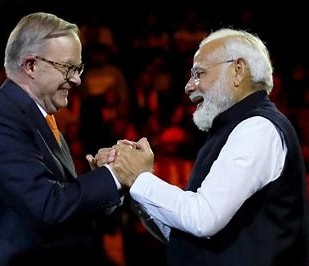
Will 2026 be the year of “Australia’s Strategic India Shift”?

For decades Australia has talked about the growing importance of India – while in reality putting all its energy into relations with China and the USA.

2026 could be the year of the big shift to India.

As my good friend Mugunthan Siva, CEO of India Avenue Investment Management, points out – “For Australia, the implications are clear. India is not simply a fast‑growing market; it is a strategic partner.”

A new strategic relationship is emerging — one built on complementary strengths, shared economic interests, and long‑term structural alignment. India is becoming increasingly significant for Australia, and the shift is now being reinforced at the policy level.

What is the evidence?

As of January 2026, Australia will scrap tariffs on all Indian exports – this is the outcome of the India-Australia Economic and Trade Agreement (ECTA). Siva believes this is not just a symbolic gesture – “It is a structural reset”.

In the past both countries have really seen each other as short term “transactional” targets. Now we shift in 2026 to long term economic partners.

Mugunthan Siva says: “For Australia, it opens the door to deeper integration with the world’s fastest‑growing major economy. For India, it strengthens access to a stable, high‑income market with strong demand for services, resources, and education.”

Why is this so strategic?

We love the growth story of India, but in 2026 our relations could become a “strategic story”, powered by four engines from the India side – demographics, digitisation, financialisation and formalisation.

Maybe this time it really is “happy new year” for India and Australia.

READ MORE HERE:

https://www.livewiremarkets.com/wires/australia-s-strategic-india-shift