India expecting a good monsoon

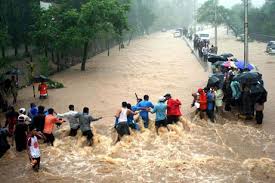
Good weather news for the Indian economy – rainfall is likely to be normal during the June-to-September southwest monsoon season.

monsoon2

This would be the third consecutive year India will have a normal monsoon, with positive outcomes for the agribusiness sector.

Few westerners realise just how reliant India is on the monsoon. We know it is not a great time to travel there (I have, and the bumpy flights can be really challenging).monsoon4

The next major assessment of the monsoon will take place around mid-May when everyone is hopeful it will hit Kerala in the south and make its way north.

The onset of the monsoon in June is the trigger for planting of rain-fed “Kharif crops”, which include rice, maize, sorghum, millet, various pulses, soyabean, oilseeds and cotton.

To show how important the monsoon is, India receives 70% of its annual rainfall in the four-month period, which in turn irrigates over half of its farm lands lacking assured irrigation.


Why you have to PRAY for success in India

Prayer1

While the west sees the “Asian Century” as a huge opportunity, we are clearly lagging when it comes to India. For most, trade with China is many times greater than trade with India.

India is now much better for business and investment and things are improving at a great rate – so, my advice is to take another look, have another go.

But you also need to follow my PRAY formula for India!

P – Patience is needed

R – Relationships are the key

A – Adapt to culture

Y – Yes means “maybe”

Prayer3

Patience

Adopt a patient long term view and for investors India is a 5 to 10 year game. It is very easy to get MOU’s (Memorandum of Understanding) signed with fanfare in India but too many do not produce any outcome. One way to improve our cultural dexterity would be to take a long-term view and apply lots of patience.

Businesses should not start out on market entry unless they are prepared to commit at least five years to making it work. Governments need the same longer-term perspective. Rushed trade missions, political announcements and photo opportunities amount to very little – we see them as an achievement, but they are just a beginning. Our business executives and even many diplomats do not build patience into their strategies.

Relationships

India is a collective culture which means relationships are the number one factor in success, and building relationships takes time. Many who see India as not a short-term transaction opportunity can find success, but not for long as someone with a better price comes along. A better strategy is to aim for longer success through a focus on building relationships. The first trade meeting in India can be exciting and positive, but from the India side this is just seen as an introduction and they will wait to see if the relationship grows. Even our companies and governments take too short a view when sending people to India – a two or three-year stint there is just not enough. Trust and relationship take time. Others prefer to manage the India relationship from offices in Singapore or elsewhere – this is seen by the India side as evidence you are not committed to India.

Adapt

See beyond the politeness: Indians are among the most courteous and generous hosts on the planet.  To succeed, our businesses and governments need to dig deeper and fine the reality beyond the politeness.  The dumbest question for a business to ask in India is “can you help me with market entry for my products?” The answer will always be “yes” and you will sit idle for a long time back home until you realise this is not the right question.

Realise that language and thinking are different: One of the big problems in our relations with India is what makes it seem easy – Indians speak English. As a result, whereas our businesses and government when dealing with China, Japan or any other non-English speaking nation will have interpreters and consultants, in India the use of English creates the illusion that communication is taking place. Yet when we deal with other English-speaking nations, we factor in their thinking as well – we know Americans speak English but think differently from Aussies. Our biggest mistake is assuming that Indians think like we do.

Yes

Within Indian culture built so solidly on relationship above all else, the word “no” is a real relationship breaker and is rarely or never used. “Yes” can in fact mean “maybe” or even “no” and you need to look for the signs. Like most of Asia, Indians are indirect communicators. Problems are rarely addressed directly and unless you have an ear for indirectness, you will miss the warning signs. In addition, indirect communication creates misunderstanding because the Indian side will always have to agree with whatever you may be asking.

These barriers have kept westerners and India apart while seeming to be quite together. Hence it negatively impacts diplomatic, defence, investment and trade ties. If we can adopt a caring, humble and inquisitive approach – learning cultural dexterity – we will build the relationships which are the key to success.

And of course, you have to PRAY.

Prayer2


Frontier Advisors puts India ahead of China for investors

China has led for decades – but now investment advisors are putting India ahead. The latest is from Frontier Advisors as reported by Investment Strategy.

In summary, India is a long-term investment – a 10-year-plus horizon – with favourable demographics, population growth and an emerging middle class.

Here is how they saw both markets and why they favour India:

indiagateThe report says about China:

  • economic growth is likely to continue to slow as credit growth and investments, such as in infrastructure and property, fades
  • reforms in excess capacity sectors and deleveraging is occurring as authorities switch focus to “quality” of economic growth rather than the pace of growth
  • monetary policy is tightening despite an unchanged benchmark interest rate
  • environmental issues are being addressed, and
  • economic transition is taking place as the Government focuses on higher value sectors.

It says there is a risk that China deleverages too quickly and destabilizes the economy, “but a hard landing still seems unlikely”.

Meanwhile the new US restrictive trade policies heighten uncertainty.cropped-investingindia3.jpg

On India, the report says:

  • India is a long-term investment – a 10-year-plus horizon – with favourable demographics, population growth and an emerging middle class
  • Its economic growth path will likely be different from China’s: while social inequality is a problem, education is seen as crucial to alleviating this; demographics suggest it has multi-decades to “harvest” a return from this, while China’s was shorter because of the one-child policy
  • valuations in listed equities are not cheap, “but they seldom are”
  • Government bond yields look attractive, although higher inflation is a risk, and
  • there are opportunities in real assets, such as the “National Corridor Project”. But its history has been poor and there is a reduced capacity for liquidity

https://www.investindia.gov.in/


India’s urban growth and 100 Smart Cities provide opportunities for all

Urbanisation in India is one of the major economic and population changes in the modern world – but making the most of this business opportunity requires a new approach from governments and business.

The Indian urbanisation boom is in two areas:

  • In existing urban areas for upgraded infrastructure and utilities
  • In 100 “Smart Cities”

The sheer size of these projects mean that individual companies going over could get swamped or lost – while countries such as Canada, South Korea, Japan and Singapore are taking fully coordinated solutions across – from finance through construction to management. The Indian government expects international money to fund 80% of the Smart Cities projects.

The needs are in areas most western cities are good at – efficiencies in water and electricity, new and improved transport provisions, and better waste management and sanitation, design and management, roads, public transport, upgraded utilities, management and municipal services and solutions to meet current environmental challenges.

Urban Development and Governance 

Municipal and state governments are key stakeholders alongside the private sector in the development of new urban areas. The introduction of e-governance for the delivery of administrative services is a rising trend across India that aims to reduce administrative delays, corruption, and improve analytical capabilities of cities.

Transport

Transport infrastructure will increasingly focus on areas such as ring roads and commuter train services alongside the basic logistical needs of a growing Indian industrial base – road and highway infrastructure is one of the largest infrastructure investment priorities, as well as traffic management solutions, electronic traffic management systems, centralised traffic light control, and digital signage.

Water, Sanitation and Solid Waste Management

The new Indian government has pledged to achieve ‘24×7 Water and 100 per cent sewerage’ by 2019 through the CLEAN-India [Swachh Bharat] initiative.  Water conservation is a significant issue in most major cities in India, and water shortages are a major threat to future urban development.

Energy

It is expected that efficiency gains can be made with the use of smart grids, improved demand management systems, implementing energy conservation building codes, and streetlight management. A sustainable energy mix will include more renewable energy sources, with solar and wind energy developing fast.

Finance

Financing of urban infrastructure in India comes from a number of sources including national, state and municipal budgets as well as the private sector. Of note has been the trend for countries such as USA, Singapore, Canada and Japan to present to India a consolidated program incorporating the finance and project implementation.

Conclusion

Opportunities abound as a result of urbanisation in modern India. The keys to success will be identifying the best opportunities and collaborating with a targeted solution – meaning businesses and their advisors need to get together and involve government as well.

On just one day – from Gandhi and origins of free India to the economic growth story

A lot can happen in one day, especially when we are dealing with India where change is super fast.

My day began with a visit to Melbourne’s Immigration Museum (in the last two centuries over 9 million migrants have made Australia home) and saw the wonderful Gandhi exhibition. It focuses on the early development of “Ahimsa” and “Satyagraha” and showed peaceful protests such as the salt march. Clearly the colonial power, England, had no idea how to respond and the march to freedom stepped ahead.

GandhiSteve

After such a peaceful visit, I thought to check the business news out of India – and saw 5 stories in one day that show what is happening there and perhaps why you should be there.

Economic Growth

As per the World Economic Situation and Prospects 2018 report of the United Nations, the Indian economy is projected to grow at 7.2 per cent in 2018-19 and 7.4 per cent in 2019-20. The report indicates that the outlook for India remains largely positive, underpinned by robust private consumption and public investment as well as ongoing structural reforms.

Solar Power on Target

The country’s 100GW solar mission target will be achieved ahead of its target in 2022, Minister for Science and Technology Harsh Vardhan said today.

“The government has set a target of 175GW of renewable power by 2022 and out of it 100GW should be in solar. It will not be a problem,” he said.

solar2

Foundry Casting – 2nd largest

India has overtaken the United States to emerge as the second largest producers of casting, behind China from last year, a top functionary of the Indian Institute of Foundrymen (IIF), said here today. The production in the country stood at 11 Million tonnes, valued at 19 Billion U.S Dollars in 2017, behind China, which produce 40 million tonnes, IIF president Amish Panchal told reporters here. Stating that the foundry sector needs to grow at least three-fold in the next 10 years, he said the industry employs about 2.5 million people.

Port traffic grows

The major ports in India have recorded a growth of 4.77 per cent and together handled 679.35 Million Tonnes of cargo during the period April 2017 to March 2018 as against 648.39 Million Tonnes handled during the corresponding period of previous year.

indiagateNine Ports – Kolkata (including Haldia), Visakhapatnam, Paradip, Kamarajar, Chennai, Cochin, New Mangalore, JNPT and Deendayal also registered positive growth in traffic. Cochin Port registered the highest growth of 16.52 per cent, followed by Paradip 14.68 per cent, Kolkata (incl. Haldia) 13.61 per cent, JNPT 6.2 per cent and New Mangalore 5.28 per cent.

Railway modernisation continues

Indian Railway has inducted three numbers of 09-3X Dynamic Tamping Express machines, the state of the art integrated track maintenance. These machines were inaugurated and flagged off by Shri M.K. Gupta, Member Engineering, Railway Board at Faridabad. Seven number of such machines are planned to be included within next six months in the present fleet of 874 track maintenance machines over IR for deployment on heavy density Routes.

Indian rail

Speaking about communication and cross-cultural understanding this week to Amity University students

Enjoyed speaking this week to 65 visiting students from Amity University, New Delhi, at RMIT University. My favourite topics – communication & employability. Degrees are vitally important but what gets the job and gains the promotion is communication. Seen here with (from left) Dr Geeta Mishra, Dr Hima Bindu Kota and Dr Anupama Rajesh.

Amity20189

My favourite quote comes from Stephen Covey’s best seller “The 7 Habits of Highly Effective People”: “Communication is the most important skill in life”.

We also talked about cultural differences such as direct (Australia) versus indirect (India) communication styles – and how knowing this can help us become better global business leaders.

What are the top things employers are looking for in potential hires? Of course, you must have a degree and the better it is the better for you. But no job will be offered if you cannot show these top things – communication, team player, potential leader.

India reforms continue as the e-Way system handles interstate goods

When India introduced a GST it was hailed as one of the biggest tax reforms in history – certainly impacting more people than any other reform.

India is fast moving away from paper and towards digital. It is not just about efficiency, it is also about removing opportunities for corruption.

From 1 April the e-Way Bill system became mandatory for all inter-State movement of goods. This is another step forward for India as it is fast becoming a leading global economy.

One of the big barriers to global companies operating in India has been the cost and delays in moving goods across state borders. This e-Way should change all that for the better.

Cricket scandal reminds us we might all have a problem with ethics

The ball tampering scandal surrounding the Australian cricket team could shine a light on the unfashionable topic of ethics. For many years, most cricket fans in Australia have disliked the over aggressive approach of our players – now we see that this “win at all costs” thinking led to actual cheating.

It is not just cricket that faces ethical challenges. Globally, Facebook has been massively damaged by secret use of data. In Australia, the major banks are all hurting because of practices that are more about making money and less about ethical banking. Around the world, churches and charitable groups are under the spotlight for abuse of our most weak and vulnerable – our children. Now cricket has its turn.

But here we face a roadblock. In the west we do not have an agreed and common “language” of ethics. We struggle to find answers to what is ethical. We can spot a breakdown in ethics when it happens, but cannot identify what the ethical alternative is or how to apply it.

Because our society cannot explain ethics, our schools struggle to teach it – and any public dialogue becomes complex.

Can we have a simple formula for what is ethical?

I learned from India that a personal ethical approach can be based on two simple guidelines. First, is my proposed action going to do any harm? If the answer is yes (harm to self or others) then it at least needs to be reconsidered. Second, is there an opportunity for my actions to be of benefit to myself and others? My teacher had this way of expressing core ethics: “Mindful and aware I give no harm, but always look to contribute”.

With this approach the Australian cricket team would not have tampered with the ball and might even reconsider their addiction to the nasty bullying that we call “sledging”.

But it is really an issue for the rest of us too. Even in seemingly trivial actions like driving in traffic, the western supremacy of the individual over community has led most of us to behave in ways we might not be proud of.

Can we recreate a language of what is ethics, starting by agreeing on some simple ways to describe ethical behaviour?


Australian investment manager continues to delve deep into India

India Avenue Investment Management is an outstanding Australian fund manager headed up by Mugunthan Siva – the team is doing a great job. Few external managers dig as deep into India as they do.

Their recent “India Grassroots Tour” to Mumbai/Pune provided many valuable insights including:

  • The fundamental tailwinds for India remain in place 
  • Listed corporates likely to see strong earnings growth over the next 2-3 years as demand/capex pick up (from a low base)
  • Some Indian businesses, like Bharat Forge exporting more to a global audience, allowing a broader use of capacity
  • Meeting a savvy billionaire founder of a corporate gave us some insights on India’s corporate culture
  • Infosys’s campus in Pune was phenomenal. A great place for tomorrow’s tech heads to work. Sports facilities, restaurants etc.
  • Meeting the Central Bank and discussing India’s Banking issues. Whilst issues exist, broadly the financial system remains secure
  • Some of India’s bright fund managers present with strong clarity of thought and a thorough understanding of their ecosystem – a huge advantage for investing in Indian stocks

India Avenue Investment Management provides unique insights into investing in India and explain in detail how they go about it. I continue to be interested in their progress and recommend you take a look too. There is a lot of good information on their website.

http://indiaavenueinvest.com/

indiagate


The way India thinks about time

How do we perceive time? And what does this mean for my appointments or travel schedule? In the west we see time as sequential, a straight line, whereas in India your host sees time as synchronic, they see the past, present and future as interrelated.

In a nutshell, this approach to time explains why westerners are always rushing about, completing one meeting and rushing on to the next, while your Indian host seems relaxed, not in a rush, dealing with many other things while meeting with you and so on.

Sequential cultures include the UK, USA, Canada and Australia. Synchronic is definitely India and probably all Asia.

Anyone who has been at an Indian business function will see this working out – while announcements and speeches are being made, people move in and out of the room, mobile phones ring and are answered (even by presenters), private discussions take place and the scene is a moveable feast. But the western equivalent will ask for mobiles to be switched off, will collectively frown when they ring, will sit and not move – paying attention to the single topic at hand.

On returning home from one of my early trips to India, for the first month or two I told everyone about one of the “disaster” meetings I had in India – while I was presenting my proposal, my Indian colleague was constantly interrupted, taking calls, signing letters, giving instructions and so on. At any time there seemed to be four or five people in his office, all actively doing things and distracting him – or so I thought. But two months down the track I discovered that he had been paying attention, knew what I proposed and even more, wanted to go ahead. Disaster to triumph without even knowing it!

Time – just one of several major areas of cultural difference that we face when engaging with wonderful INDIA.