
Australia will relate better to Asia by removing the “bamboo ceiling”

Former Labor Government Minister and current Chancellor of the Australian National University – Gareth Evans – has raised an important challenge for Australia that is too often swept under the carpet.

Australia’s “bamboo ceiling” keeps Asian Australians out of top positions.

Here is the view of Gareth Evans:

“The “bamboo ceiling” in Australia is real. Asian-Australians now comprise up 12 per cent of our total population but hold only around 3 per cent of senior leadership positions in our public institutions and ASX 200 companies. They have been an under-appreciated and under-utilised national resource for far too long.”

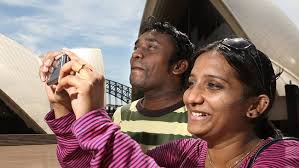
tourists3

Gareth Evans sums it up so well:

“The bamboo ceiling is an issue on which we have ducked and weaved and dithered for too many years. The Asian century is off and running and we have in our midst a fantastic community resource with which to take maximum advantage of all the opportunities it offers.”

Well said.

And my view?

fairgo

Removing the “bamboo ceiling” would reduce Australia’s anxiety and uncertainty over Asia – it would allow Australia to play a big role in the “Asian Century”.

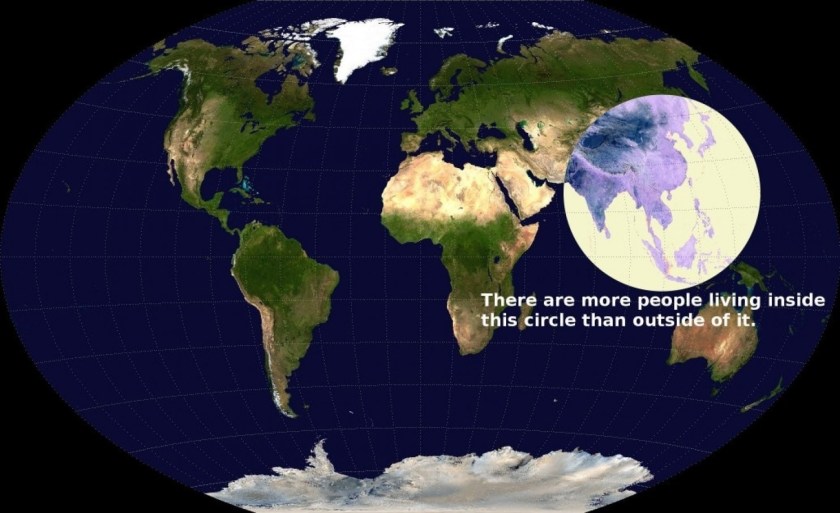
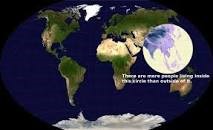
One third of the world’s population lives on our doorstep – and they are on the rise as economies and powers.

By getting our own house in order – removing the “bamboo ceiling” – we can live positively and well in the world’s most exciting region.

China and India are our biggest source of migrants – let’s give them every opportunity.

Fair go, Australia!

Mutual Funds continue robust growth in India

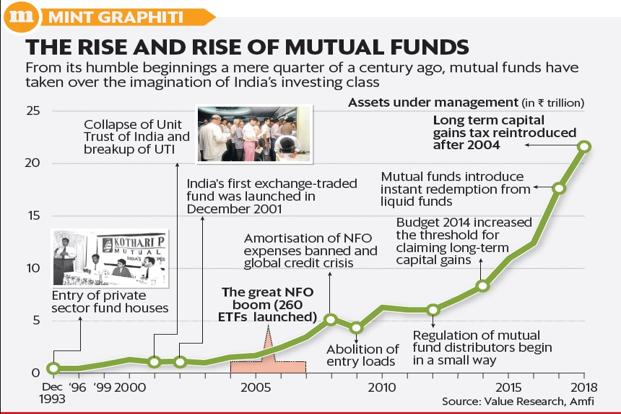
The Indian Mutual Funds’ asset base increased to US$364.4 billion in August, a rise of 4 per cent as compared with the preceding month, on the back of robust inflows in equity and liquid schemes. There are 44 mutual funds in India, according to data from the Association of Mutual Funds in India (AMFI).

Mutual fund houses witnessed an overall inflow of US$14.59 billion last month – fund managers attributed growth in the asset base to higher retail participation and robust inflows in equity schemes and liquid funds.

mutual

Retail investor interest in equity mutual funds, for the fourth time in succession, continues to be steady, displaying maturity, despite uncertain economic and volatile market situation.

The 4 paradoxes of doing business with India

Slow and Fast

We think you need to commit three years to building business in India – but when you first go be ready for anything because demand can be instant. Or not. A careful understanding of the market and assessment of whether it is right for you is essential.

Price and Relationship

We know Indians chase a bargain. But price alone is not enough for longevity in India – you need to build relationships. I would build the relationship first, because anyone can undercut your price.

Status and Money

Status in a hierarchical society such as India is paramount. But now so is money. Making it. Showing it. If your product combines status and money it is a good fit. When there, be careful to fully respect the status of whoever you are dealing with.

“India” and “Many Indias”

India is not one market – it combines many languages and cultures, with people in one part of the country not even being able to understand people in another part. We begin by understanding the regional differences between north, south, east and west – but this is only the beginning of drilling deep to know who you are dealing with and who you are targeting. Beware someone who promises to take you “across India” in one major campaign.

Step one is to get some good market research – the only safe and sound beginning. Add to that some cross-cultural training.

Time, knowledge and patience are the keys.

Steve1

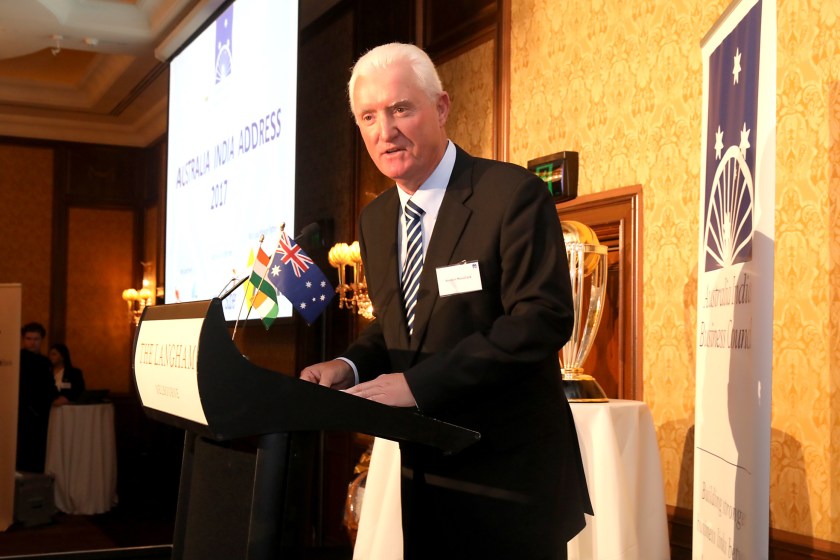
Stephen Manallack speaking at Australia India Business Council function

Melbourne is home to many Indians

India is now the biggest source of migrants to Australia, and most come to my city, Melbourne.

Australia is really a “nation of migrants” because all citizens apart from the original indigenous inhabitants came here as migrants.

There are around 170,000 Indian born people here – with many more “Indian-Australians” who were born here. This makes up 3% of our population.

diwali5

Diwali is a huge celebration in Melbourne – pictured is Federation Square

50% are families with children and 46% have Australian citizenship.

25% are professionals.

Melbourne is a popular choice for Indian students and tourists.

The Indian community is a big part of making Melbourne a diverse and multicultural city.

Diwali20166

Many business and community functions are held in Melbourne for Diwali – seen here from left are Stephen Manallack. Preeti Daga, Molina Asthana and Anoushka Gungadin. At back are Ian Nathaniel and Michael Moignard

New airport for Navi Mumbai on the way

India’s infrastructure major, L&T (Larsen and Toubro), has bagged the contract for construction of the Navi Mumbai International Airport.

The company did not provide value of the contracts but said the orders fall under “major” category which ranges between US$ 715.40 million and US$ 1 billion.

navi3

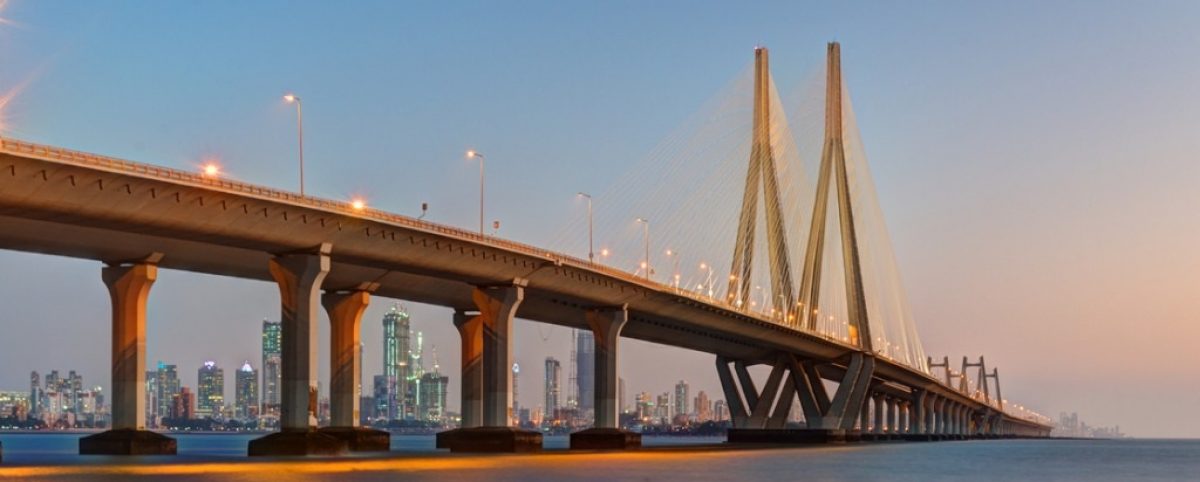
Navi Mumbai (shown in these pictures) is a part of Greater Mumbai and is a planned satellite city.

This second international airport for bustling Mumbai is no small venture – it is being developed to initially handle a capacity of 10 million passengers per annum. The project will subsequently be enhanced to handle 20 MPA.

navi7

Regular visitors to India will notice constant upgrades in infrastructure – infrequent visitors will be amazed at the global quality of many Indian airports.

navi5


What is the great legacy of the west?

For over 200 years the west has dominated. Economically strong, trading nations, global defence forces. It is a good time to ask – what is the great legacy of the west?

The Age of Enlightenment, time of reasoning, power of science, all were revived by the west. This is the view that together we can solve problems.

Enlighten2

Free market economics – has shown how to lift people out of poverty and share the wealth – not perfect, but probably the best model.

Psychology of the positive – anything is possible. Contrast this with “fatalism”. Love this “can do”.

Good Government – the west leads in healthcare, infrastructure and education – and in the west people receive lots of government sponsored information and practical ways to live better. Of course, not perfect.

This is a legacy that will impact on those emerging leaders such as India and China.

The changing mindset of India

The mindset of India has split into two camps – one, the traditional, opposes spending and innovation – the other, entrepreneurial, chases innovation and adventure. It can be tough to navigate.

I was talking to an Indian colleague the other day about collaboration around Hydroponics – growing vegetables and some fruits in a liquid solution combined with various forms of protection such as glasshouses.

This is ideal for India – does not need good land, uses less water, produces the same quality 365 days per year and so on. Plus it grows crops that India’s growing urban populations demand – fresh capsicums, lettuce, broccoli, cucumber and strawberries.

But the early India response is an insight into the competing mindsets.

From one quarter of traditional banking, no thanks, it would cost money to install. Forget the benefits. Forget the competitive advantage. If it costs money, NO.

delhi2

From another side of the India mindset comes an enthusiastic response – an entrepreneurial and CSR view. This can make money plus help poor rural farmers and poor rural women. So, YES.

As an optimist, I am guessing the YES side will win on this one.

The Australian Government is probably facing this varying mindset as it seeks to heavily promote Australian coal exports to India.

coal2

Yes, our coal can provide India with uninterrupted power, increasing efficiency and quality of life (and add to the already overwhelming pollution).

No, it would cost money and we put up with interrupted supply anyway. And, No, because we do not have the distribution network so alternatives such as solar are attractive for rural villages (even if interrupted, “it’s better than nothing”).

I am guessing that the NO side might win on the coal issue. But let’s wait and see.

Why is the west being so jittery about the rise of Asia?

Trade war on China. Military action here and there.

The west is jittery. Yet all we have is the return to the normal state of affairs – until exactly 200 years ago China and India were major global economies. Now they are again.

So, why is the west so jittery about the rise of Asia?

First, the west “won” the cold war against Russia without firing a single shot. Great victory – but the pride of that has become hubris and shows in a belief that only western liberal democratic countries can succeed. And here comes China. Not western, not liberal and not democratic. Jittery.

russia2

Second, 9/11 was a shocking event that dominated the mind of the west then – and now.

Wile we focused on 9/11, two things happened – rising China joined the World Trade Organisation and the lowest earners in the USA were hit by a 50% decline in income.

Hence – Trump. And hence, lots of jittery decisions being made throughout the west.

Can the west get back to rational, calm and innovative leadership? I hope so.

Thanks to Kishore Mahbubani for inspiring some of the above.


IndiGo is modern India – starting in 2006 and now the biggest airline

IndiGo airline is the story of modern India.

Now India’s largest airline, IndiGo expects to see a growth at 30 per cent a year over the next few years.

It is the largest airline in India by passengers carried and fleet size, with a 48.1% domestic market share as of June 2019.

Yet the company started flying in 2006.

Indian airport

IndiGo commenced operations on 4 August 2006 with a service from New Delhi to Imphal via Guwahati.

According to Dutta, chief executive of the airline, “We expect that half of that growth will go international, half will go domestic.” He is positive about the international operations of the airline.

The airline presently has around 238 aircraft in its fleet comprising of ATRs and narrow body aircraft.  The airline is looking at wide body aircraft.

Modern India – things change fast.

indigologo

Ho Hum! “Trade war” not worrying Indian companies active in China

Seems Indian companies active in China think that the USA-China trade war is all a bit “ho hum” – or maybe an opportunity?

tradewar3

Indian organisations working in China don’t expect any critical effect of the escalating trade war among Beijing and Washington on their business, a new survey conducted by the Confederation of Indian Industry (CII) has stated, including that most of the companies intend to put more in Beijing in 2019.

The survey of Indian organisations working in China indicates cautious optimism and certainty when contrasted with the past survey a year ago. “Most organisations don’t see a significant effect of the present trade situation between the US and China on their business,” said Mr Chandrajit Banerjee, Director General, CII.

In excess of 120 Indian organisations work in China separated from a sizeable number of merchants who have workplaces here; 57 of the organisations reacted to the CII poll.

As per the survey, two-fifths are considering inclining up their investment more than 2018. More IT and BPO organisations intend to make extra investment in 2019 contrasted with 2018.

My “top 10” of Indian companies active in China:

Adani Global; Essar; Jindal Steel & Power; Reliance ADAG; TCS; Tata Sons; Union Bank of India; Allahabad Bank; Bank of Baroda; Bank of India.

tcs

Also in China are Zee TV; Jet Airways; Apollo International; Ashok Leyland.