India now a top FDI destination – assuring economic growth

FDI fuels double-digit growth

Austrade’s Ashley Brosnan sets out the FDI picture:

Despite the COVID-19 crisis, foreign direct investment (FDI) inflows into India grew 13% in 2020. This is an extraordinary achievement – and a landmark development in a country that has historically proved challenging to foreign investors.

The rapid inflow of investment makes India one of the few countries to experience double digit growth in FDI during 2020. It means India is now a top 10 destination for FDI, and it heralds a sea change in global investment sentiment.

Multinationals are seeking to move their supply chains into the subcontinent. The push factor is a desire to diversify from an over-dependence on China. The principal pull factor is a young, competitive workforce, particularly in the information technology and construction sectors.

FDI flows into India contrast sharply with the global picture. For example, FDI flows into China grew by 4% last year, while FDI flows globally fell 42%. FDI flows into developed economies fell 69%.

Investment in India is likely to grow significantly over the next decade.

India growth 2021 12.6% – the only world economy to be over 10%

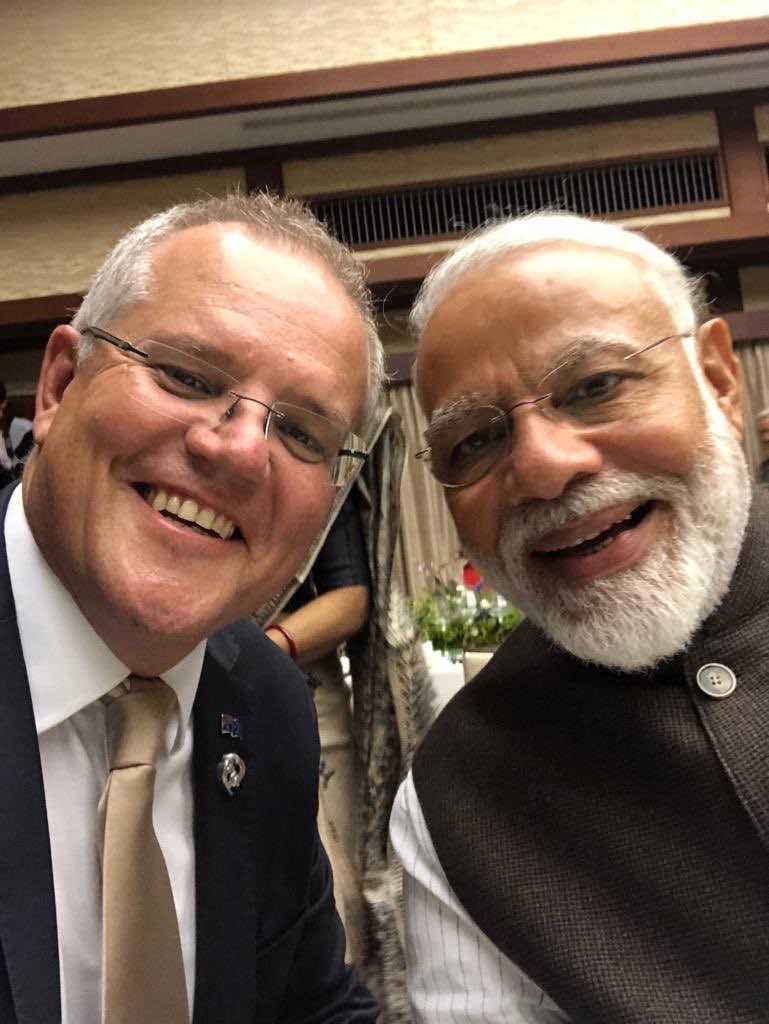
Prime Ministers Modi and Morrison are close – and should talk more about trade.

Rapid recovery in 2021

Austrade’s Ashley Brosnan points to India’s post-coved economic recovery based on fast rollout of the vaccine, falling caseloads, economic stimulus and Foreign Direct Investment – it has every angle covered:

The OECD projects that India’s economy will grow 12.6% in 2021. This will make India the only major country to achieve double digit growth in 2021.

It should be acknowledged that the Indian economy is among the worst affected by the pandemic, which has resulted in strict, multi-month lockdown restrictions. GDP fell 10.3% in 2020 damaging household income and business confidence.

But rapid economic growth in 2021 will be driven by an expansive vaccine rollout, falling COVID-19 caseloads, and extensive economic stimulus.

Not forgetting that India is now a top 10 destination for Foreign Direct Investment.

Let’s build a secure Indo-Pacific but talk of war is not helping

First mission of the UK’s new mega aircraft carrier The Queen Elizabeth, was into the Indo-Pacific which is the world’s hottest region right now.

Globally the key strategic location of the world is moving this way – to the Indo Pacific region – and it is happening with some urgency.

Why?

Because of the economic success, military preparedness, activity in the region and the general rise of China.

Urgent discussions are happening among democracies and those in the region – such as India – are seeking defence support to balance things with China.

It is all happening in a rush.

India is fast tracking strategic discussions and arrangements and just completed some ground-breaking strategic deals with the UK and the European Union.

Of symbolic importance, the first mission of the UK’s new mega aircraft carrier (The Queen Elizabeth) was into the Indian Ocean.

The language of all these deals is about China – without mentioning the name. For example, most seek “an open, free, inclusive and rules-based Indo-Pacific region, underpinned by respect for territorial integrity and sovereignty, rule of law, transparency, freedom of navigation and overflight in the international seas, unimpeded lawful commerce, and peaceful resolution of disputes”.

That’s a lot of words but it adds up to one word – China.

A secure region is good for us all. A region too keen to go to war is not good for us.

On the extremes of the discussions are those who eagerly await the “drums of war” – let’s just remember that these are either the same people or in the same lineage as those who took the west into disasters such as Afghanistan, Iraq and many more right back to and including the Vietnam War.

They have been wrong every time.

Can the Indo-Pacific region achieve peace without repeating these mistakes?

Adani takes giant steps towards becoming the world’s leading renewables company

Adani Group taking giant steps towards becoming the world’s largest solar power player by 2025.

Adani is taking a massive lead in India into green energy renewables.

But in Australia it is still seen as “the Indian coal company” because of its activities in Queensland – in this market the Adani reputation has taken a hit as a result.

The reality is Adani is a leader in green energy and just got a lot bigger!

Adani Green Energy Limited (AGEL), this week signed share purchase agreements for the acquisition of 100% interest in SB Energy India from SBG (80%) and Bharti Group (20%). 

SB Energy India has a total renewable portfolio of 4,954 MW spread across four states in India.

Adani is super serious about renewables – the transaction marks the largest acquisition in the renewable energy sector in India. The transaction values SB Energy India at an enterprise valuation of approximately USD 3.5 billion.

The target portfolio consists large scale utility assets with 84% solar capacity (4,180 MW), 9% wind-solar hybrid capacity (450 MW) and 7% wind capacity (324 MW).

With this acquisition, AGEL will achieve total renewable capacity of 24.3 GW (1) and operating renewable capacity of 4.9 GW.

You’ve got to hand it to Gautam Adani who has the vision to be the leader in sustainable energy transition globally and makes it one of the largest renewable energy platforms in the world.

Mr Adani created a vision in January 2020, wherein he laid out our plans to become the world’s largest solar player by 2025 and thereafter the world’s largest renewable company by 2030.

In 25 years Indian Australians are front and centre in our community – but still not heard

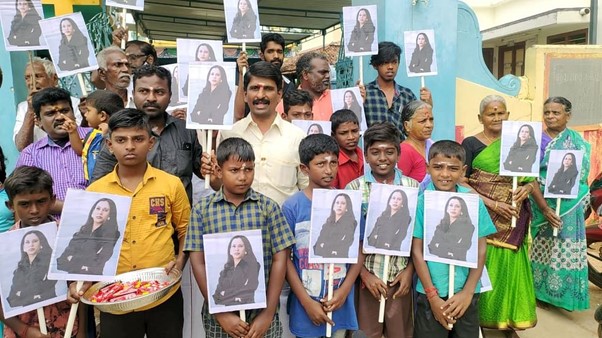
USA Vice President Kamala Harris shows how Indian migrant communities can be front and centre.

The statistics on Australian migrant communities tell a story of change – as Indian Australians take a leading role.

In 1996 here were the leading migrant communities:

England 956,000

New Zealand 312,000

Italy 250,000

Vietnam 158,000

(India was in 12th spot with just 80,000)

In 2020 Indian Australians claimed a leading place:

England 980,000

India 721,000

China 650,000

New Zealand 564,000

It is time for this community-minded group of Indian Australians to be fully represented in our political and other leading dialogues. US Vice President Kamala Harris has shown what can be done.

Right now, Indian Australians are not being heard.

UK and India pragmatic negotiators achieve a trade and investment deal

INTO INDIA has been advocating for Australia to do what deals can be done with India, and “park” a Free Trade Agreement for later on.

The UK-India Virtual Summit has done just that.

Their newly created Enhanced Trade Partnership (bureaucratic speak for “these are the things we can agree on now) will create immediate opportunities for British businesses in India across industries including food and drink, life sciences and the service sector.

Non-tariff barriers on fruit and medical devices will be lowered, allowing British businesses to export more of their products to India and boosting UK growth and jobs. It also commits both sides to addressing immediate market access barriers as well as continuing to seek further opportunities on the road to an FTA. That is, “parking” the FTA for later on – it is just too hard to achieve.

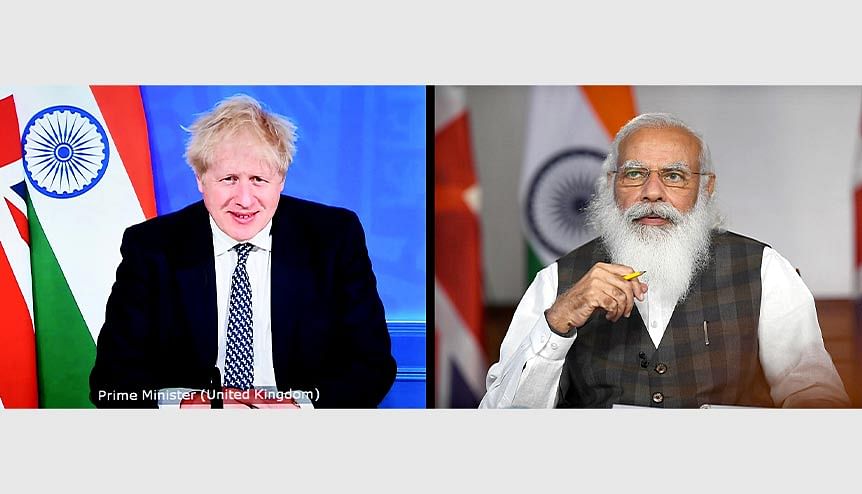
Prime ministers Narendra Modi and Boris Johnson held their Virtual Summit this week and agreed on a “Comprehensive Strategic Partnership” – the first European country to gain this status.

Australian PM Morrison achieved a CSP with India in 2020 and set out collaboration across science and technology, maritime issues, defence and more.

CSP deals are a sign that India is become more outward looking and – like everyone else – concerned about the behaviour of China.

The trade and investment package unveiled by the British government contains over £533 million of new Indian investment into the UK, covering areas such as healthcare and technology.

British businesses have also secured new export deals with India worth more than £446 million, which is expected to create more than 400 British jobs.

I hope our Australian trade officials are going through all the detail to see if any deals Australia has with India can now be updated on a deal-by-deal basis.

Indian startups – the real story

For decades Ashith Kampani has been in the Mumbai financial markets, giving him a front and centre seat to the Indian start-up environment. Here is his review – the real story.

Globally start-up names have become common in our lives – twenty years ago, today’s top names such as Apple, Google, Microsoft, Amazon, Facebook, Alibaba, WeChat, Baidu, Uber, Ola, Instagram, Slack, PayPal, Tesla, SpaceX, Flipkart etc. did not exist or barely made a mark in the mind of consumers. These brands have made it to the top of the valuation charts over the last two decades.

Each firm named above has been funded by the elite global VC and Private Equity firms. This trend continues.

India is still in the catch-upstage of having an organised and monitored ecosystem for its indigenous start-ups. In the Indian start-up ecosystem local ideas and local capital pools locally are mismatched.

Although Indian Angel and Seed investors have been on the rise, risk appetite has not increased.

What is needed to encourage investment? Local investors need a curator who will qualify founders, whet business models and create capacity building. This will allow deep tech to grow locally.

The areas that Indian needs to develop more efficiency in are BFSI (Banking, financial services and insurance), CPG(Consumer Packaged Goods), Smart Infrastructure, Health Care, Real Estate, Defence & Aerospace.

BFSI and Health Care have many start-up names where optimisation and efficiency levels have shown some improvement but many existing large players in Banking and Health Care are dependent on legacy systems which will require a large capex to upgrade.

In CPG & Smart Infrastructure there are fragmented players. Real Estate has many platforms, but they are part of a broken ecosystem as they are mainly matching and advertising platforms. Defence and Aerospace are a restricted sector due to government controls. However, India needs local start-ups to provide the “make & made in India” technology. This is urgently needed.

India based or born start-ups include PayTm, FlipKart, Ola, Oyo, Baiju, Swiggy, Zometo, Grofers, Nyakaa etc. They are all 10-12 years old. None of them have a dominant market share and are burning funds to acquire customers.

With a few exceptions, founders’ stakes are diluted below 15% ownership. I am OK with equity dilution as founders may have faced challenges initially to raise capital. However, if these early-stage capital pools were raised within India and in INR (Indian rupee) that would be preferable to an infusion of USD denominated funds.

Today hardly any start-ups are indigenously funded onshore in India. This is changing. Select names such as Lets Venture, angel groups which are city centric and micro-VC firms have started to commit between $100K to $1 Million in pre-seed or seed rounds.

India needs few hundred start-up names to work along with platforms like Lets Venture and a few more to provide risk capital.

Accelerators are scarce and should be encouraged to scale rapidly as well.

India also needs a centralised monitoring system on how start-ups are faring and what kind of ecosystem support is needed. These platforms can keep an eye on the progress of start-ups and create visibility and business opportunities for start­ups by bringing synergistic players on.

For example, start-ups can raise initial capital and receive visibility on the platform. They are then discovered by larger enterprises that need their services. Such platforms can be initially funded by enterprises (mid to Large) who shall have first access to the innovations of the nurtured start-ups.

Sector Analysis for India

CPG and Retail

There are four big players: Amazon, Flipkart, BigBasket, Reliance. The first three are attacking the market from an e-commerce angle with an internet front end paired with a warehouse back end. They negotiate hard with CPG players and offer attractive lower prices to consumers to as well as home delivery. The fourth, Reliance Retail has tied up with Kirana stores for last mile delivery and storage. However, Kirana may lose its business to Reliance Retail in the distant future.

Both the models pose challenges to existing small stores. Today 85% of FMCG & CPG sales are in single or small stores while Ecom and organised retail have a combined market share around 15% (other names like Delhivery, ShopX, Udaan, RingRing are still growing while some have given up).

BFSI

This is the most active and largest sector where digital offerings have taken the front row. Frontend players like Digital Lending / Neo Banks/ Payments/ Foreign Exchange offer services which compete with large banks and lenders. There are many players who digitise middle and back-ops for fintechs, lenders and banks.

Competition is fierce and it is a dog-eat-dog market where service levels and delivery are key as pricing is dictated via negotiated deals. Barriers to entry are also high. Large entrants such as Amazon Pay, Google Pay, Phone Pe Bharat Pe have been more visible than silent players like Razor Pay, Pine Labs, Pay U etc. New Neo Banks have been creating a buzz as well (Epify, Jupiter, Niyo, Ocare etc). I have not factored in Jio, but they have big plans in BFSI.

Smart Infrastructure

One of the biggest markets with select international players in this market as local start-ups do not have enough funding yet. Personally, I would watch this segment carefully as new Indian players enter.

Health Care

This is now a most vibrant sector thanks to the recent pandemic Covid19. Vaccine creation to efficient delivery is a large and needed segment. Connecting the health of each individual (with assessment) into a seamless hospital, insurance and finance model will make a positive impact on many lives. Today we have cashless health insurance, but it is a fragmented system. Start-ups are better positioned to offer a solution to repair such an awkward process.

Real Estate

Real Estate is also a broken system in India. Renting or purchasing needs to be repaired as the experience is not seamless. Only some parts are digitised, and none offers an end-to-end service. This is a totally broken experience and must be repaired end to end.

Conclusion

The Indian market of 1.4 Billion people needs many start-ups to create products and services which suits the needs of Indian people. The road ahead in India and South Asia is extremely optimistic as start-ups can simplify, digitise and link together transactions.

The market opportunity is vast but initial funding needs to be localised and customised to the India based entrepreneur. More platforms that can offer funding, visibility, sales and exit needs to be encouraged.

About the Author

Ashith Kampani has spent 38 years in capital market. Journey began with family stock broking firm on Dalal Street open outcry system to all digital online trading systems. During this journey he spent time with retail, wealth management, institutional equities, private equities, Investment Banking M&A and now in Venture Capital and early-stage Investment and advisory. Worked with JV partner Morgan Stanley and before stepping down he was MD at JM Financial. Currently Chairman at CosmicMandala15 Group & Member of Managing Committee Bombay Chamber.

You can learn so much from India – including Krishnamurti’s secret

Krishnamurti was a human of great peace, an Indian philosopher with compassion, friendship, and serenity.

Towards the end of his life, he said to his followers: “Do you want to know my secret?”

He went on to explain his secret: “I don’t mind what happens”.

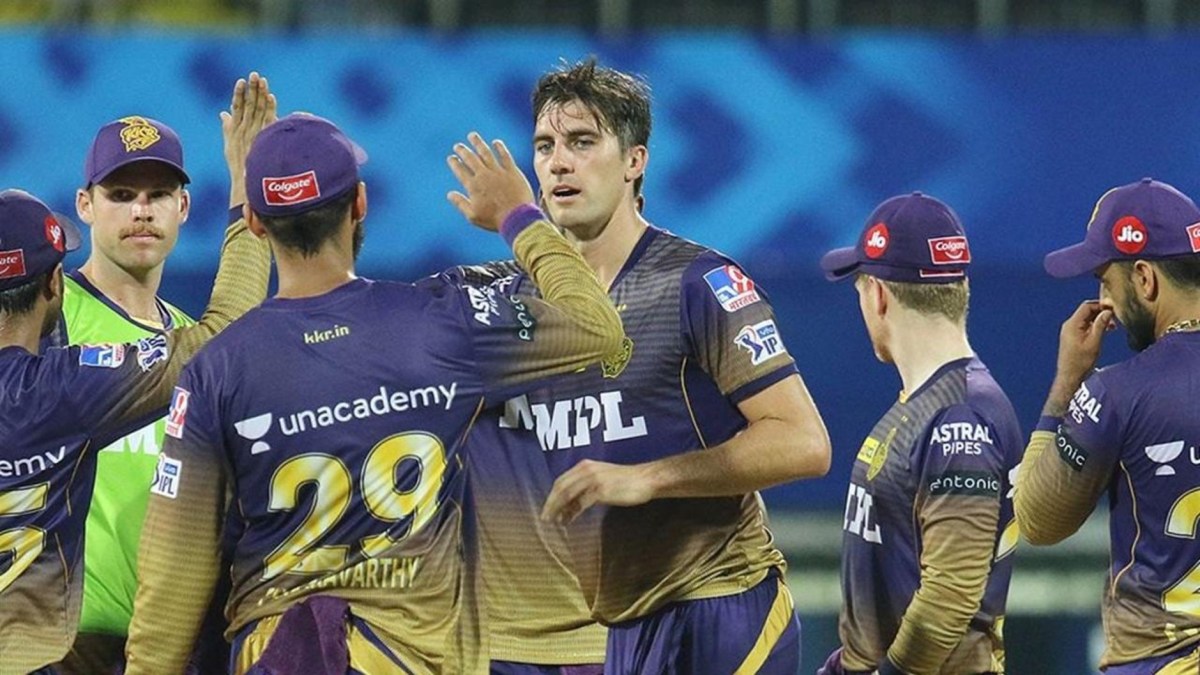
Pat Cummins role model for how all of us can help India

Many of us in business relations with India are wondering what is the right thing to do in the midst of India suffering so much from the pandemic.

Pat Cummins has showed us what to do.

He is staying because IPL creates some joy for lockdown people – and he has made a big donation.

For business and trade the message is striking – keep in touch, build business relations and where you can, donate to support India.

Cummins has starred for the Kolkata Knight Riders so far this season.

The Australian superstar wrote on Twitter on Monday night to announce a donation in the fight against the virus, and to urge fellow cricketers to donate.

I am reproducing his entire Tweet because it is moving and inspirational:

“India is a country I’ve come to love dearly over the years and the people here are some of the warmest and kindest I’ve ever met.

“To know so many are suffering so much at this time saddens me greatly.

“There has been quite a bit of discussion over here as to whether it is appropriate for the IPL to continue while Covid-19 infection rates remain high. I’m advised that the Indian government is of the view that playing the IPL while the population is in lockdown provides a few hours of joy and respite each day at an otherwise difficult time for the country.

“As players, we are privileged to have a platform that allows us to reach millions of people that we can use for good. With that in mind, I have made a contribution to the “PM Cares Fund”, specifically to purchase oxygen supplies for India’s hospitals.

“I encourage my fellow IPL players – and anyone around else the world who has been touched by India’s passion and generosity – to contribute. I will kick it off with $50,000.

“At times like this it is easy to feel helpless. I’ve certainly felt that of late. But I hope by making this public appeal we can all channel our emotions into action that will bring light into people’s lives.

“I know my donation isn’t much in the grand scheme of things, but I hope it will make a difference to someone.”

Come on India and Australia – time for an FTA to be number 1 priority

It is high time the close friendship between the PM’s Modi and Morrison led to an FTA.

It is great to see so much friendship and collaboration between India and Australia – but it is time to go to another level and have a serious shot at getting a free-trade agreement between the two countries.

Here’s 3 reasons why an FTA is now urgent:

India wants greater access to Australia’s resources.

Australia wants alternatives to China for resources and wine.

India wants investment and Australia has huge funds under management.

Patience around the FTA has been a good approach but now we have to step up the pace and get on with it.

We need some form of harvest agreements to take the heat out of agriculture – which is always a super-hot political topic in India.

Also, India seriously wants investment flows and Australia has not been forthcoming. Time for the Australian Government to lead our huge investment funds into India.

The reality is – close relations in trade mostly follow investment, and Australia has not invested heavily in India.

Wine barriers to India are huge – there is a 150% tariff – and yet wines like Orlando Jacob’s Creek have done well there.

One problem for India is they are encouraging their own wine industry, typically at the low end of the market. Perhaps they can free up tariffs on high end wine imports?

The relationship between Prime Ministers Modi and Morrison is close and could be a building block for an FTA.

Let’s put it top of the agenda!